Streamline Your Agency’s Brand Delivery
In the fast-paced world of creative agencies, the ability to deliver brand assets efficiently and professionally is no longer a competitive advantage—…

Table of contents
- The 2026 Reality: Why Scattered Brand Assets Are Still Costing Agencies
- The Hidden Costs of Inefficient Brand Handoffs
- Client Expectations in a Streamlined Digital Age
- The Problem: ‘Where’s that logo file again?’
- Building a Bulletproof Brand Delivery Workflow: The Foundation
- Defining Your Agency’s Brand Asset Standards
- Categorizing and Naming Conventions for Clarity
- Establishing Version Control Best Practices
- Beyond the Zip File: Architecting a Single Source of Truth
- The ‘One Link’ Advantage: Centralization for Clients and Teams
- Organizing Essential Brand Elements (Logos, Colors, Fonts)
- Integrating Visuals, Templates, and Supporting Files
- Crafting Crystal Clear Brand Guidelines for Client Success
- Key Components of Effective Brand Guidelines (Beyond the Basics)
- Visual Examples: Demonstrating Proper and Improper Usage
- Making Guidelines Accessible and Easy to Navigate
- The Client Handoff: Turning a Chore into a Collaborative Experience
- Setting Client Expectations from Project Kick-off
- Structuring the Delivery Package for Maximum Impact
- Providing Training and Support for Client Adoption
- Leveraging Technology for Effortless Brand Asset Management
- Evaluating Brand Asset Management Platforms in 2026
- Features That Matter: Searchability, Sharing, and Security
- Integrating with Existing Design and Collaboration Tools
- Preventing Repetitive Requests: Empowering Your Clients and Internal Teams
- Anticipating Client Needs and Common Questions
- Creating Self-Service Options for Standard Asset Retrieval
- The Role of Clear Documentation in Reducing Support Load
- Designing for Scalability: A Unified Approach to Brand Consistency
- Connecting Brand Delivery to Design System Principles
- Ensuring Future Brand Evolution is Seamless
- Maintaining Brand Integrity Across All Touchpoints
- The Freelancer’s Edge: Professionalizing Your Brand Deliverables
- Standing Out with Polished Client Handoffs
- Streamlining Workflow for More Project Capacity
- Building Trust and Repeat Business Through Professionalism
- Measuring Success: KPIs for Effective Brand Delivery
- Tracking Client Satisfaction with Brand Assets
- Reducing Internal Time Spent on Asset Retrieval
- Minimizing Brand Misuse Incidents
In the fast-paced world of creative agencies, the ability to deliver brand assets efficiently and professionally is no longer a competitive advantage—it’s a fundamental requirement. When brand assets are scattered across disparate cloud storage folders, email chains, or even individual hard drives, the chaos inevitably impacts both team productivity and client satisfaction.
This fragmentation leads to wasted time, missed deadlines, and a diluted brand experience for your clients. This section delves into the current challenges and lays the groundwork for a robust brand delivery workflow that ensures consistency and professionalism.
The 2026 Reality: Why Scattered Brand Assets Are Still Costing Agencies
Despite advancements in cloud technology, many agencies continue to struggle with disorganized brand asset management. This disarray stems from a lack of standardized processes and a failure to adopt dedicated solutions for brand delivery. The consequence is a persistent drain on resources, impacting profitability and client trust. Agencies that haven’t prioritized this aspect of their operations are finding themselves at a distinct disadvantage in an increasingly demanding market. It’s not just about aesthetics; it’s about operational efficiency and maintaining a professional front.
The ramifications of scattered assets extend beyond mere inconvenience. They manifest as tangible costs, including increased time spent searching for files, higher error rates due to incorrect asset usage, and the need for repeated explanations to clients about asset availability. This inefficiency can significantly slow down project timelines and increase the likelihood of costly revisions. Embracing a structured approach is crucial for agencies aiming to thrive in today’s competitive landscape.
The Hidden Costs of Inefficient Brand Handoffs
Inefficient brand handoffs are a silent profitability killer. Imagine a scenario where a new team member spends hours hunting for the correct version of a client’s logo, or a marketing team uses outdated brand colors because they couldn’t access the latest guidelines. These aren’t isolated incidents; they are symptoms of systemic disorganization. The hidden costs include billable hours lost to searching, the expense of redoing work due to asset errors, and the intangible but significant damage to your agency’s reputation for reliability and professionalism. Each instance of searching for a file or clarifying asset usage represents a missed opportunity for billable client work or internal development.
Consider a mid-sized agency with 30 employees. If each employee spends just 30 minutes per week searching for or verifying brand assets, that amounts to 15 hours of lost productivity weekly. At an average billable rate of $100 per hour, that’s $1,500 lost per week, totaling over $78,000 annually—purely from inefficient asset management. This doesn’t even account for the potential rework or client dissatisfaction caused by using incorrect assets. Implementing a system that consolidates these assets can directly contribute to increased profitability and reduced operational overhead.
Client Expectations in a Streamlined Digital Age
Today’s clients, accustomed to seamless digital experiences, expect the same level of organization and professionalism from their creative partners. They anticipate receiving brand assets in a clear, organized, and easily accessible format, often within a single, consolidated delivery. When an agency presents a disorganized collection of files or requires multiple follow-ups to provide complete asset packages, it creates a perception of amateurism and disarray, undermining the value of the work delivered. Clients are increasingly savvy and can spot operational inefficiencies, which can lead them to question the agency’s overall competence.
Clients are not just buying creative services; they are investing in a partnership that should enhance their brand’s visibility and consistency. A well-executed brand asset delivery signals that the agency understands the importance of brand integrity and has robust processes in place. Conversely, a messy handoff can sow seeds of doubt. This expectation for seamlessness is amplified by the rise of design systems and centralized digital hubs, which many clients themselves are adopting. They look for agencies that can match this modern standard, making a professional brand delivery a key factor in client retention and acquisition.
The Problem: ‘Where’s that logo file again?’
The ubiquitous question, “Where’s that logo file again?” is a stark indicator of a fundamental problem in many agency workflows. This isn’t just about a missing file; it’s about a breakdown in a structured system for managing and delivering critical brand assets. It signals a reliance on ad-hoc methods, often involving disorganized cloud storage, endless email threads, or even individual hard drives. This lack of a centralized, easily navigable repository leads to significant time wastage as team members hunt for the correct file formats (e.g., .EPS, .SVG, .PNG), the right color variations (e.g., full color, black and white, reversed), and the most up-to-date versions.
This recurring issue directly impacts project velocity and team morale. Designers might revert to creating their own versions of assets because finding the official one is too time-consuming, leading to brand inconsistencies. Marketing teams might use low-resolution JPEGs for print materials, resulting in pixelated, unprofessional outputs. The impact on client perception can be severe, as consistent brand application is paramount. Addressing this problem requires moving beyond informal file-sharing and implementing a systematic approach to asset organization and delivery, such as those discussed in resources on mastering brand delivery.

Building a Bulletproof Brand Delivery Workflow: The Foundation
A truly effective brand delivery workflow begins with establishing clear, non-negotiable standards for all brand assets. This foundation is crucial for ensuring consistency, regardless of who is accessing or using the assets. It moves beyond simply having files available to having the right files, organized in a way that minimizes ambiguity and maximizes usability for everyone involved, from internal teams to external partners and clients. This proactive approach prevents common errors and streamlines future brand application.
Think of this as building the bedrock of your agency’s brand management. Without a solid, well-defined framework, any attempt at organized delivery will be shaky and prone to collapse. Establishing these standards is an investment that pays dividends by reducing friction, increasing accuracy, and ultimately, enhancing the professionalism of your agency’s output. It’s about creating a system that is both robust and intuitive.
Defining Your Agency’s Brand Asset Standards
The first critical step in building a bulletproof workflow is to meticulously define your agency’s brand asset standards. This involves codifying the exact specifications for every type of asset you handle, from logos and color palettes to typography and imagery. For logos, this means specifying approved file formats (e.g., vector .SVG, .AI, .EPS for scalability, and high-resolution .PNG for web), acceptable color variations (full color, grayscale, single-color), and ensuring clear guidelines on minimum size and clear space. For color, define precise values for primary and secondary palettes across different color models (CMYK, RGB, Hex).
Typography standards should include approved fonts, their licensing details, and guidelines on their usage (e.g., hierarchy, weight, and size for headings, body text, and captions). This rigorous definition process prevents the use of incorrect or unofficial brand elements. It’s about creating a definitive source of truth for what constitutes a “correct” brand asset. For example, a client might have a primary brand color with a Hex value of 3498DB. Your agency’s standard should clearly state this, along with its CMYK and RGB equivalents, ensuring consistency across all digital and print applications. This meticulous documentation forms the bedrock of a reliable brand asset library, akin to the principles outlined in building a comprehensive design system for brand consistency.
Categorizing and Naming Conventions for Clarity
Once standards are defined, implementing a clear categorization and naming convention system is paramount. This ensures that every asset can be easily located and understood by anyone who accesses the brand library. Assets should be logically grouped by type (e.g., Logos, Colors, Fonts, Imagery, Templates) and then further sub-categorized as needed. For instance, within ‘Logos’, you might have folders for ‘Primary’, ‘Secondary’, and ‘Iconography’. This structured approach mirrors how users naturally look for information.
Naming conventions should be consistent, descriptive, and unambiguous. A good convention might follow a pattern like: `[ClientName]_[AssetType]_[Format]_[ColorVariation]_[Version]`. For example, a logo file could be named `AcmeCorp_Logo_Primary_FullColor_v1.0.svg`. This level of detail eliminates guesswork. If a client provides multiple logo variations, descriptive names like `AcmeCorp_Logo_Icon_Monochrome_v1.1.png` or `AcmeCorp_Logo_Wordmark_RGB_v1.0.ai` provide immediate context. This systematic approach is crucial for preventing errors and making the brand asset library easily searchable, a key component in stopping asset chaos through simple brand delivery.
Establishing Version Control Best Practices
Version control is indispensable for managing brand assets, preventing the use of outdated materials, and tracking changes over time. Every time an asset is updated or modified, it must be clearly versioned. This means implementing a system where each iteration is assigned a unique identifier, such as sequential numbering (v1.0, v1.1, v2.0) or date-based tagging. The most critical aspect is ensuring that only the latest approved version is easily accessible for active use, while older versions are archived but still retrievable if needed for historical reference.
To effectively manage versions, consider incorporating a dedicated feature within your asset management platform or adopting a disciplined manual process. For instance, when updating a logo, the new file should be named clearly (e.g., `AcmeCorp_Logo_Primary_v2.0.svg`) and the previous version (e.g., `AcmeCorp_Logo_Primary_v1.1.svg`) should be moved to an ‘Archived’ or ‘Legacy’ subfolder. This prevents accidental selection of older files and provides a clear audit trail of modifications. This discipline is vital for maintaining brand integrity, especially when dealing with multiple stakeholders or large, ongoing projects, ensuring that clients are always working with the most current brand identity elements and slashing revisions caused by outdated assets.
Beyond the Zip File: Architecting a Single Source of Truth
The traditional method of delivering brand assets via zip files or shared folders is fraught with limitations. It’s prone to version control issues, lacks clear organization, and often results in clients feeling overwhelmed or confused. The modern agency needs a more sophisticated solution—a single source of truth—that acts as a centralized, easily accessible hub for all brand assets. This dedicated platform goes beyond mere storage; it provides structure, context, and professional presentation, transforming the brand delivery process from a chore into a strategic advantage. This shift is critical for enhancing client experience and internal efficiency.
By establishing a single source of truth, agencies can empower their teams and clients with immediate access to the correct, up-to-date brand materials. This not only saves time but also significantly reduces the risk of brand dilution or misuse. It’s about creating a seamless, professional experience that reflects the quality of the agency’s creative work. A well-architected hub ensures that everyone is speaking the same visual language, leading to more cohesive and impactful branding across all touchpoints.
The ‘One Link’ Advantage: Centralization for Clients and Teams
The concept of a “one link” solution revolutionizes brand asset delivery. Instead of bombarding clients with multiple files, folders, or download links, agencies can provide a single, persistent URL that serves as a gateway to an entire branded ecosystem. This centralized hub, easily navigable and professionally presented, offers a superior user experience for both clients and internal teams. Whether it’s a new marketing manager at a client company or a junior designer joining your agency, they can access all necessary brand assets from one predictable location.
This single link acts as a dynamic, ever-updated repository. As new assets are added or existing ones are refined, they are immediately reflected in the linked hub, eliminating the need for constant resending or re-downloading. This dramatically reduces the “Where’s that logo file?” problem and minimizes the risk of clients working with outdated materials. This approach simplifies onboarding, speeds up project kick-offs, and ensures brand consistency across all applications, making it a cornerstone of effective master brand delivery.
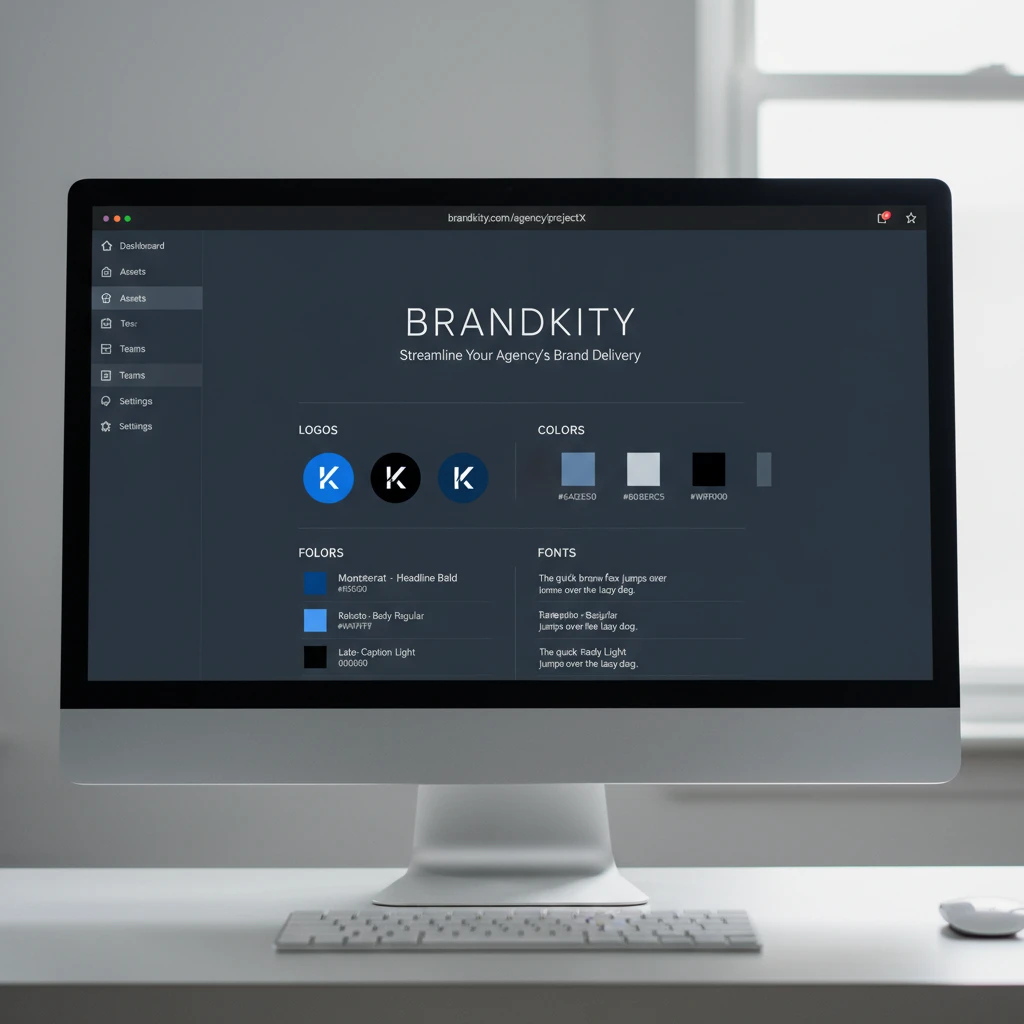
Organizing Essential Brand Elements (Logos, Colors, Fonts)
A robust brand asset delivery platform excels at organizing the core elements that define a brand. Logos should be presented in all necessary formats (vector, raster), color variations (full color, monochrome, reversed), and sizes, with clear indicators for their intended use (e.g., print vs. digital, dark vs. light backgrounds). Color palettes should be displayed with their precise values across different color models (HEX, RGB, CMYK, Pantone), ensuring accurate reproduction. Typography sections should clearly list approved fonts, their licensing information, and guidelines for usage hierarchy and styles.
This structured organization goes beyond simple file listing. It provides context and guidance. For example, a user might need a logo for a website. The platform can direct them to the appropriate web-optimized formats, such as .SVG or high-resolution .PNG, while clearly distinguishing them from print-ready vector files. Similarly, when selecting brand colors, users can see at a glance which shades are primary, secondary, or accent colors, and how they should be combined. This meticulous organization is fundamental to preventing brand misuse and ensuring a cohesive visual identity, forming a key part of your strategy to organize brand assets with a one-link solution.
Integrating Visuals, Templates, and Supporting Files
Beyond logos, colors, and fonts, a comprehensive brand asset delivery system should seamlessly integrate other crucial elements like imagery, templates, and supporting documentation. This includes organizing photography libraries with usage rights, guidelines for image style, and filters for easy searching (e.g., by subject, mood, or color). Pre-designed templates for common marketing collateral—such as social media posts, presentations, brochures, or email signatures—drastically speed up content creation and maintain visual consistency.
Supporting files might include documents like brand guidelines themselves, user manuals, style guides for specific campaigns, or even legal disclaimers. By housing all these diverse assets within a single, structured platform, agencies empower their clients and internal teams with everything they need to represent the brand accurately and effectively. This holistic approach ensures that brand consistency is applied not just to the core identity elements but to every piece of communication, transforming the platform into a true design system hub for client delivery.
Crafting Crystal Clear Brand Guidelines for Client Success
While a well-organized asset library is crucial, it’s only one part of the equation for successful brand delivery. Crystal clear, comprehensive brand guidelines are the bridge between assets and their correct application. These guidelines translate technical specifications and stylistic intentions into actionable instructions that anyone can follow, ensuring that your clients and their teams can confidently and consistently use the brand assets you’ve meticulously curated. Without them, even the most organized asset library can lead to misinterpretation and inconsistent brand representation.
Effective brand guidelines are more than just a PDF document; they are a living resource that educates, empowers, and guides users towards maintaining brand integrity. They serve as the authoritative source for understanding the brand’s personality, its visual language, and the rules governing its use across various touchpoints. Investing in well-crafted guidelines is investing in the long-term strength and recognition of your client’s brand.
Key Components of Effective Brand Guidelines (Beyond the Basics)
Effective brand guidelines go far beyond simply listing logo variations and color codes. They should delve into the ‘why’ behind the brand’s visual identity, articulating its core values, mission, and personality. This foundational understanding helps users connect emotionally with the brand and make more intuitive decisions about its application. Include sections on brand voice and tone, detailing how the brand should communicate in written and spoken word, providing examples of appropriate language and messaging strategies.
Furthermore, practical application is key. Detail specific use cases for various assets. For instance, when to use the primary logo versus a secondary mark, or when to employ a specific photographic style. Include guidelines for typography hierarchy, explaining the intended use of different font weights and sizes for headings, subheadings, and body text. Crucially, address common pitfalls and provide clear “do’s and don’ts” for logo placement, color usage, and imagery selection. This comprehensive approach ensures that the guidelines are not just a reference but a practical tool for successful brand implementation, contributing to more effective agency workflows for brand delivery.
Visual Examples: Demonstrating Proper and Improper Usage
Abstract rules can be difficult to grasp, which is why incorporating visual examples is paramount in brand guidelines. Show, don’t just tell. For each rule or standard, provide clear visual demonstrations of correct application alongside examples of incorrect usage. For logos, this means showing them scaled appropriately, with correct clear space, and in approved color variations, juxtaposed with examples of the logo stretched, distorted, placed on busy backgrounds, or in unauthorized colors.
Similarly, for color palettes, illustrate how primary and secondary colors should be used in harmony for marketing materials, contrasting this with examples of clashing color combinations or over-reliance on accent colors. For typography, demonstrate correct hierarchy and spacing versus illegible or overly dense text layouts. These visual comparisons make the guidelines immediately understandable and memorable, significantly reducing the likelihood of misuse. For instance, an example showing a website hero section with the logo correctly placed in the top-left corner with ample padding, next to an example where the logo is crammed into a corner or obscured by other design elements, drives the point home effectively. Such clarity is a hallmark of platforms designed for effortless asset delivery for creatives.
Making Guidelines Accessible and Easy to Navigate
The most meticulously crafted brand guidelines are useless if they are difficult to find or navigate. To ensure maximum adoption and adherence, guidelines must be easily accessible and intuitively structured. Consider hosting them on a dedicated section of your agency’s website, within your brand asset delivery platform, or as a well-organized, searchable digital document. Implement clear headings, a table of contents, and internal linking to allow users to jump directly to specific sections.
Employing a clean, modern design for the guidelines themselves will also enhance usability. Use ample white space, legible typography, and clear visual cues. If using a digital platform, ensure it’s mobile-responsive so users can access information on the go. The goal is to make finding answers quick and effortless. Imagine a client needing to check if a particular shade of blue is within the approved palette; they should be able to find this information within seconds, not minutes. This ease of access ensures that maintaining brand consistency becomes a seamless part of daily operations, as exemplified by services that aim to streamline client handoffs.
The Client Handoff: Turning a Chore into a Collaborative Experience
The client handoff is a critical juncture where the culmination of your agency’s creative effort meets the client’s ongoing brand stewardship. Traditionally viewed as a final administrative task, it’s ripe for transformation into a proactive, collaborative experience. This shift not only elevates the perceived value of your agency but also significantly reduces the potential for misunderstandings and future support demands. By viewing the handoff not as an endpoint but as the commencement of the client’s brand journey, you can build stronger relationships and ensure their continued success.
Failing to treat the handoff with strategic importance can lead to a cascade of negative outcomes. Clients may struggle to locate or properly use brand assets, leading to inconsistent brand application and, consequently, damage to their brand equity. This often results in repetitive, time-consuming requests for clarification or missing files, diverting your team’s resources away from new client work. A disorganized or overwhelming handoff can also diminish the client’s confidence in your agency’s professionalism and ability to manage complex projects.
Setting Client Expectations from Project Kick-off
The foundation for a seamless client handoff is laid long before the project nears completion. From the very first meeting, clearly define the scope of deliverables and the nature of the brand assets that will be provided. This includes specifying file formats, resolution requirements, and intended use cases for each asset. For instance, explicitly state whether print-ready vector files, web-optimized JPEGs, or animated logo variations are included. Documenting these agreements in a detailed project brief or statement of work leaves no room for ambiguity and sets a collaborative tone from the outset.
During the project, maintain open lines of communication regarding asset development. Provide regular updates on the creation and organization of logos, color palettes, typography, imagery, and other branding elements. This proactive approach allows clients to offer feedback and ask questions as assets are being finalized, rather than discovering issues during the final delivery. Consider a mid-project review specifically focused on brand asset readiness. This ensures alignment and helps manage expectations about what will be included in the final package, making the ultimate handoff feel like a natural conclusion rather than a surprise.
Structuring the Delivery Package for Maximum Impact
The way brand assets are organized and presented is paramount to their usability and the client’s perception of your agency’s thoroughness. A well-structured delivery package should be intuitive and easy to navigate. Employ a logical folder hierarchy, perhaps categorized by asset type (logos, imagery, typography) or by application (web, print, social media). Within each folder, ensure files are clearly named using a consistent naming convention that reflects the asset’s purpose and variation (e.g., `logo-primary-rgb-web.svg`, `color-palette-hex.ase`). This meticulous organization is a hallmark of professional brand delivery.
Beyond simple folder structures, consider a centralized hub or a single, shareable link that houses all approved assets. Platforms like BrandKity excel at consolidating disparate files into one accessible location, eliminating the chaos of scattered downloads or confusing cloud storage links. This approach not only streamlines retrieval for the client but also provides a professional and branded experience. For example, a client receiving a single, well-designed link to their complete brand kit feels more assured of its comprehensiveness and quality than a zipped folder of random files.
Providing Training and Support for Client Adoption
Delivering the assets is only part of the equation; ensuring your client can confidently use them is equally vital. A comprehensive brand handover should include some form of training or orientation on how to access and utilize the provided assets effectively. This could range from a brief video tutorial demonstrating how to navigate the delivery platform and download files to a more involved Q&A session. For clients less familiar with design software, explaining the difference between vector and raster formats, or when to use specific color modes (RGB vs. CMYK), can prevent common errors.
Offer clear, concise documentation alongside the assets. This might include a “Getting Started” guide that outlines the structure of the delivery package, explains key file types, and offers basic tips for application. For more complex deliverables, such as motion graphics or interactive elements, providing simple user guides is essential. Be prepared to offer a designated period of post-handoff support. This could be a week or two where clients can submit questions without incurring additional charges, reinforcing your commitment to their success and preventing minor issues from escalating.
Leveraging Technology for Effortless Brand Asset Management
In today’s digital-first landscape, relying on manual processes for brand asset delivery and management is a recipe for inefficiency and potential brand dilution. Technology offers powerful solutions to streamline, organize, and secure brand assets, transforming a often-tedious task into a smooth, reliable operation. Embracing the right digital tools not only benefits your agency by saving time and reducing errors but also empowers your clients with easy access to the resources they need to maintain a consistent brand presence.
The core of effective technological integration lies in a centralized system where all approved brand assets are stored, version-controlled, and easily retrievable. This eliminates the common pain points of scattered files across various cloud storage services, email attachments, or local drives. When a client or an internal team member needs a logo, color palette, or typeface, they can access it instantly from a single, reliable source. This not only enhances operational efficiency but also safeguards the integrity of the brand by ensuring only approved and up-to-date assets are used.
Evaluating Brand Asset Management Platforms in 2026
When selecting a brand asset management (BAM) platform in the current year, agencies should look beyond basic file storage. Modern platforms offer sophisticated features designed to facilitate collaboration, ensure brand consistency, and automate many aspects of asset delivery. Scalability and integration capabilities are paramount; the platform should grow with your agency and seamlessly connect with your existing creative and project management workflows. Consider the user interface—it should be intuitive for both your internal team and your clients, minimizing the learning curve and encouraging adoption.
Key decision criteria include the platform’s ability to handle various file types (from vector graphics and fonts to video and audio), its metadata tagging and search functionality, and its security features. Look for solutions that provide robust version control to prevent the use of outdated assets. Furthermore, assess the reporting and analytics features. Understanding who is accessing which assets and how often can provide valuable insights into client usage patterns and identify potential areas for improved training or asset organization. The goal is to find a system that acts as a single source of truth for all brand-related digital collateral.
Features That Matter: Searchability, Sharing, and Security
The true power of a BAM platform lies in its ability to make finding and using assets effortless. Advanced search functionality, driven by comprehensive metadata tagging, is non-negotiable. Users should be able to find assets quickly using keywords, categories, or custom tags, regardless of the number of files stored. For example, a client needing a specific social media graphic should be able to search for “Instagram Story” and instantly find all relevant variations. Equally important is the ease and control with which assets can be shared. Look for platforms that offer granular permission settings, allowing you to control who can view, download, or edit specific assets or collections.
Robust security protocols are also critical, especially when dealing with proprietary brand assets. Ensure the platform employs industry-standard encryption for data in transit and at rest. Features like two-factor authentication, activity logging, and the ability to revoke access remotely provide essential layers of protection. This not only safeguards your clients’ intellectual property but also instills confidence in your agency’s ability to manage sensitive brand information. A platform that allows for branded portals or custom landing pages for asset delivery further enhances the professional and secure impression made upon clients.
Integrating with Existing Design and Collaboration Tools
For maximum efficiency, your chosen BAM platform should not operate in a silo. It needs to integrate seamlessly with the tools your agency already uses daily. This means checking for native integrations or robust API capabilities that allow for smooth data flow between your BAM system, design software (like Adobe Creative Suite), project management tools (like Asana or Trello), and communication platforms (like Slack or Microsoft Teams). For instance, an integration might allow designers to directly access and update brand assets within Photoshop, or enable project managers to pull approved logos into new campaign briefs without leaving their primary workflow.
Consider how the BAM platform can enhance your existing workflows. Can it act as a central repository for design system components, ensuring all designers are pulling from the same, approved elements? Can it automate the process of uploading newly created assets directly from design software? Such integrations reduce manual duplication of effort and minimize the risk of errors that occur when assets are transferred or converted between systems. A well-integrated BAM solution becomes the connective tissue of your creative operations, making brand asset management an organic part of the design and production process rather than an afterthought.
Preventing Repetitive Requests: Empowering Your Clients and Internal Teams
One of the most significant drains on agency resources is the constant barrage of repetitive requests for brand assets or information. Clients frequently ask for the same logos in different formats, ask about approved color hex codes, or need clarification on font usage. Internally, new team members or even established colleagues might struggle to locate the latest approved versions of brand materials. By proactively addressing these predictable needs, agencies can drastically reduce support overhead and free up valuable time for strategic creative work. This empowerment stems from making information and assets readily accessible and easy to understand.
The key to preventing these recurring inquiries is to anticipate them and build systems that provide immediate answers and easy access. This involves a two-pronged approach: first, making brand assets incredibly easy for clients to find and download themselves, and second, creating comprehensive resources that answer common questions before they are even asked. When clients and internal teams are empowered to self-serve, it fosters independence and reduces reliance on direct support, leading to more efficient operations and happier stakeholders.
Anticipating Client Needs and Common Questions
Effective anticipation begins with understanding your client’s typical brand usage. What are their primary channels for brand application? Are they most concerned with digital assets for social media and web, or do they frequently require print collateral for marketing materials? By identifying these patterns, you can prepare relevant asset sets and address potential questions upfront. For example, if a client commonly uses their logo on social media, anticipate requests for square, horizontal, and profile-picture versions, along with color variations for different backgrounds (e.g., white logo on dark backgrounds, dark logo on light backgrounds).
Create a Frequently Asked Questions (FAQ) document or a dedicated help section within your asset delivery portal. This should cover topics like file format explanations (e.g., when to use JPG vs. PNG vs. SVG), guidelines for logo usage (clear space, minimum size), and accessibility of color palettes (hex codes, RGB values). Frame these FAQs from the client’s perspective, using clear, jargon-free language. For example, instead of stating “ensure CMYK for print,” explain “use the CMYK files for professional printing to guarantee accurate color reproduction.” This proactive documentation serves as a powerful first line of defense against common queries.
Creating Self-Service Options for Standard Asset Retrieval
The ultimate goal is to enable clients and internal teams to find and download what they need without requiring direct assistance. A well-organized, centralized brand asset hub is the cornerstone of this self-service model. Platforms that offer a clean, searchable interface, allowing users to filter assets by type, color, or intended use, are invaluable. Implement clear categorization and tagging so that users can quickly locate specific items. For instance, a dedicated section for “Logos” should clearly separate primary, secondary, and icon variations, with preview thumbnails for easy identification.
Beyond basic file access, consider incorporating features that automate common tasks. This might include a color palette generator that allows users to extract hex codes or RGB values directly from an image or the provided palette files. Similarly, offering a simple tool to resize or reformat common assets on the fly (within approved parameters) can empower users. By providing these self-service capabilities, you not only reduce direct support requests but also enable a more agile and responsive brand implementation for your clients, allowing them to access approved assets 24/7.
The Role of Clear Documentation in Reducing Support Load
Comprehensive and easily accessible documentation is fundamental to minimizing repetitive support queries. This documentation should go beyond a simple list of files; it needs to provide context and guidance on how to use the provided assets correctly. A brand style guide is an essential component, detailing proper logo lockups, typography hierarchy, color usage, imagery style, and tone of voice. This guide should be readily available within the asset delivery platform or linked prominently.
Consider creating short, focused video tutorials for common tasks or complex asset types. For example, a quick video demonstrating how to import a logo into a presentation software or how to apply brand fonts in a common document editor can save countless hours of explanation. Ensure all documentation is kept up-to-date with any brand evolution. Outdated guides are as problematic as no guides at all. By investing in clear, accessible, and comprehensive documentation, you equip both clients and internal teams with the knowledge they need to use brand assets correctly, significantly reducing the burden on your support staff.
Designing for Scalability: A Unified Approach to Brand Consistency
As brands evolve and market presence expands, maintaining a consistent visual identity across all touchpoints becomes increasingly challenging. A proactive approach to brand delivery, viewed through the lens of scalability, is essential. This means designing not just for the immediate needs of a project but with an eye toward future growth, adaptation, and widespread application. A unified approach ensures that every instance of the brand, from a small social media icon to a large-scale billboard, communicates a cohesive and recognizable message.
Scalability in brand delivery isn’t just about having the right file formats; it’s about establishing principles and systems that guide the creation and application of brand assets. This involves creating a flexible yet robust framework that can accommodate new products, services, or market entries without compromising the core brand identity. By embedding scalability into the design and delivery process, agencies can provide clients with a brand system that is not only effective today but also resilient and adaptable for years to come.
Connecting Brand Delivery to Design System Principles
The most scalable approach to brand delivery is deeply intertwined with the principles of design systems. A design system is a collection of reusable components, guided by clear standards, that can be assembled to build countless applications. When applied to brand delivery, it means providing clients with not just static assets but with the building blocks of their visual identity. Think of it as delivering a well-defined set of approved colors, typography scales, spacing units, and reusable graphic elements that adhere to strict brand guidelines.
By framing brand assets within a design system context, you empower clients to create new materials consistently. Instead of handing over individual logos, provide them with a logo system that includes variations for different contexts and guidelines for correct usage. This approach directly supports the idea of “one link” solutions often championed by platforms like Brandkity, where a single, structured delivery point acts as a comprehensive brand hub. When clients understand and can utilize these system components, their ability to scale their brand presence responsibly increases dramatically.
Ensuring Future Brand Evolution is Seamless
A brand is a living entity, and its ability to evolve is crucial for long-term relevance. A scalable brand delivery strategy anticipates this evolution. When creating brand assets, consider their flexibility. For instance, design logos that can adapt to different applications without losing their core recognizability. Develop color palettes with a clear primary and secondary structure, allowing for expansion with new thematic colors if needed, while maintaining brand coherence. Version control and clear deprecation strategies are also vital; as new assets or guidelines are introduced, it must be clear which previous versions are no longer supported.
The delivery mechanism itself should support future updates. Instead of delivering a static set of files, a dynamic platform or a well-maintained central repository allows for easy updates and additions. When your agency needs to refresh a brand element or introduce new guidelines, clients can access the latest versions from the same familiar link. This ensures that as the brand evolves, the delivery method remains consistent and reliable, minimizing disruption for the client and making the update process as seamless as possible. This foresight turns brand delivery from a one-time event into an ongoing, manageable process.
Maintaining Brand Integrity Across All Touchpoints
Scalability is intrinsically linked to maintaining brand integrity. When assets are easily accessible and presented within a structured system, the likelihood of their misuse decreases significantly. A unified approach means that whether a client is updating their website, launching a new social media campaign, or printing business cards, they are referring to the same approved set of brand elements. This consistency is what builds strong brand recognition and trust with the audience.
To truly maintain integrity at scale, consider providing guidelines not just for asset usage but also for application contexts. This might include templates for common marketing materials or examples of how different brand elements work together. The goal is to provide clients with the tools and knowledge to be good brand stewards. By fostering this understanding and providing a well-organized, scalable delivery solution, agencies ensure that the brand’s message remains clear, consistent, and impactful, regardless of how widely it is deployed. This comprehensive approach to brand delivery is key to long-term brand success and client satisfaction, directly supporting efforts to streamline client handoffs.
The Freelancer’s Edge: Professionalizing Your Brand Deliverables
For the independent creative, the difference between a good client experience and a great one often hinges on the professionalism of brand deliverables. This isn’t just about delivering the final logo files; it encompasses the entire process of presenting and handing over all brand assets. A polished client handoff acts as a tangible representation of your skills and attention to detail, directly impacting client perception and future opportunities. It demonstrates that you understand the significance of their brand identity and have taken meticulous care in its creation and delivery.
Standing Out with Polished Client Handoffs
A disorganized asset delivery can lead to confusion, frustration, and a general feeling that the project wasn’t handled with the utmost care. Conversely, a structured and aesthetically pleasing presentation of brand assets elevates the perceived value of your work. Consider providing assets in a clearly labeled folder structure, perhaps accompanied by a brief PDF document outlining the included files and their intended use. The goal is to make it effortless for the client to understand and utilize their new brand materials. This proactive approach minimizes the chances of them needing to ask clarifying questions, saving both parties time and fostering a sense of confidence in your process. For instance, instead of sending a zipped folder of various file types, consider a dedicated page that categorizes logos by format (vector, raster), color variations, and usage scenarios, much like a mini-brand guide.
Key decision criteria for a superior handoff include accessibility, clarity, and completeness. Can the client easily find what they need? Is it obvious which file is for which purpose? Have all necessary variations and formats been provided? A common pitfall is neglecting essential file types like EPS for print or PNG with transparent backgrounds for web use. Another is assuming the client understands complex file structures. By anticipating these needs and providing intuitive organization, you differentiate yourself. For example, a designer might include a brief video walkthrough demonstrating how to access and use the assets within the provided link, especially for clients less familiar with design software.
Streamlining Workflow for More Project Capacity
The efficiency of your brand asset delivery process directly influences your capacity to take on new projects. When asset management and handoff are manual, time-consuming, and repetitive, they drain valuable hours that could be spent on creative work or client acquisition. Implementing a streamlined workflow, perhaps through a dedicated platform, allows you to automate and centralize these tasks. This frees up significant time, enabling you to serve more clients or dedicate deeper focus to complex creative challenges. Think about the hours spent searching for specific file versions, re-exporting assets requested by clients, or compiling delivery folders manually. Automating this process can easily reclaim 5-10 hours per project, translating to a substantial increase in overall throughput.
To achieve this streamlining, evaluate your current process for bottlenecks. Are you spending too much time on repetitive communication about asset formats? Do clients frequently request the same assets repeatedly? Identifying these inefficiencies is the first step. Implementing a centralized digital solution can transform this. For example, instead of emailing multiple attachments, you can share a single, organized link. This not only saves time but also reduces the risk of version control errors. Resources on topics like organizing brand assets with a single link can provide actionable strategies to achieve this level of efficiency.
Building Trust and Repeat Business Through Professionalism
Professional brand delivery is more than just a transactional step; it’s a cornerstone of building lasting client relationships and securing repeat business. When clients experience a smooth, organized, and high-quality asset handoff, it reinforces their trust in your capabilities and reliability. This positive experience is often the deciding factor when they need further design work or recommendations for their network. A well-managed delivery process demonstrates that you value their investment and are committed to their brand’s success beyond the initial project scope. This professional integrity fosters loyalty.
Consider the impact of a seamless delivery. A client who receives their complete brand package, impeccably organized and easily accessible, feels confident and empowered to implement their new brand identity. This reduces their stress and maximizes the value they derive from your services. In contrast, a chaotic delivery can sow seeds of doubt, even if the design work itself was excellent. This can lead to hesitant future engagement or a reluctance to refer. By prioritizing a polished and professional handoff, you are essentially investing in future opportunities and establishing yourself as a go-to creative partner. This often leads to clients returning for brand refreshes, new marketing collateral, or expansion into different visual identity elements.
Measuring Success: KPIs for Effective Brand Delivery
To truly understand and improve your agency’s brand delivery process, it’s crucial to move beyond anecdotal feedback and implement measurable Key Performance Indicators (KPIs). These metrics provide objective insights into how well your current system is performing, highlighting areas of strength and identifying opportunities for optimization. Without data, it’s difficult to quantify the impact of changes or to make informed decisions about where to invest your efforts. Focusing on tangible results allows you to demonstrate the value of a refined delivery process to both your team and your clients, ultimately driving greater efficiency and client satisfaction.
When establishing KPIs, consider what aspects of brand delivery are most critical to your agency’s success. Are you aiming to reduce the time spent on asset management? Improve client happiness scores? Minimize instances of brand guideline violations? Defining these goals upfront will help you select the most relevant metrics. For example, if your primary objective is to reduce internal workload, tracking the average time spent per client on asset preparation and delivery will be a key indicator. If client retention is paramount, monitoring repeat business rates originating from clients who received a structured delivery process can be invaluable. Effective measurement ensures your efforts are aligned with strategic business objectives.
Tracking Client Satisfaction with Brand Assets
Client satisfaction directly reflects the effectiveness of your brand asset delivery. A satisfied client not only feels confident in the assets they receive but also perceives your agency as professional and reliable. One impactful way to measure this is through post-delivery surveys. These surveys can ask clients to rate the ease of accessing assets, the clarity of organization, and their overall satisfaction with the handover process. Incorporating questions like, “On a scale of 1 to 5, how easy was it to find and download the necessary brand assets?” provides quantifiable data. You can also include open-ended questions to gather qualitative feedback on what worked well or what could be improved, offering direct insights into the client experience.
Another effective KPI is the Net Promoter Score (NPS) specifically tailored to the delivery experience. After a client has received their brand assets, ask them: “How likely are you to recommend our brand delivery services to a colleague?” This metric, alongside direct feedback on the asset portal or handoff process, helps gauge overall client delight. A high NPS score indicates that clients not only found the delivery process satisfactory but were also impressed enough to advocate for your services. Analyzing the connection between a streamlined asset delivery and positive client testimonials can further validate the importance of this aspect of your service. For instance, if clients consistently mention the ease of use of your delivery link in positive reviews, it’s a strong indicator of success.
Reducing Internal Time Spent on Asset Retrieval
The internal effort required to locate and distribute brand assets is a significant drain on resources for many agencies. When assets are scattered across multiple cloud storage services, local drives, or email chains, team members spend excessive time searching for the correct files. Tracking the average time an employee spends on asset retrieval per project or per week can reveal substantial inefficiencies. Implementing a centralized, searchable repository for all brand assets can drastically cut down this wasted time, allowing designers, account managers, and marketing teams to access what they need instantly. This directly impacts project timelines and profitability.
To quantify this reduction, consider implementing a time-tracking system for tasks related to asset management and distribution, or conduct periodic audits of file-sharing requests. For example, if your team previously spent an average of 4 hours per week per person searching for assets, and a new system reduces this to 1 hour, that’s a significant saving. Analyzing the number of internal requests for specific logo files or brand guidelines before and after implementing a structured asset management solution can also provide valuable data. A clear, accessible system ensures that everyone on the team can quickly find the correct, up-to-date brand collateral, minimizing delays and errors.
Minimizing Brand Misuse Incidents
Brand misuse occurs when clients or internal teams use brand assets incorrectly, leading to inconsistencies and damage to the brand’s integrity. A primary goal of professional brand delivery is to equip clients with the knowledge and tools to use assets appropriately. Tracking the frequency of brand misuse incidents – such as incorrect logo usage, improper color applications, or unauthorized modifications – before and after implementing a refined delivery process can be a powerful KPI. A reduction in these incidents indicates that your delivery method is effectively educating and empowering users. This is often achieved through clear, accessible brand guidelines included within the asset delivery.
To effectively measure this, establish a system for identifying and logging instances of brand misuse. This could involve regular audits of client marketing materials or a feedback mechanism where team members can report observed deviations. If you see a sharp decrease in these occurrences after adopting a new delivery strategy, such as a comprehensive digital brand hub, it’s a clear sign of success. Resources on creating effective design systems as client delivery hubs can offer best practices for preventing misuse by providing context and clear instructions alongside assets. By proactively minimizing misuse, you protect your clients’ brands and reinforce your agency’s reputation for thoroughness and expertise.
Saurabh Kumar
Founder, BrandKity
Saurabh writes about practical brand systems, faster client handoffs, and scalable workflows for designers and agencies building repeatable delivery operations.
Connect on LinkedIn