Design Systems: Your Client Delivery Hub
Delivering a completed brand project to a client should feel like a victory lap, not a desperate scramble. Yet, for many agencies and designers, the f…

Table of contents
- The Client Handoff Headache: Are You Drowning in Scattered Brand Assets?
- Beyond Static Brand Books: What Clients Actually Need in 2026
- Introducing the Design System as Your Client Delivery Command Center
- Building Blocks of a Streamlined Brand Handoff: Core Components
- The Power of One Link: Unifying Brand Delivery for Clients
- From Messy Folders to Masterful Management: Structuring Your Design System
- Empowering Client Adoption: Making Your Design System User-Friendly
- Solving Repetitive Client Requests: The Self-Service Advantage
- Design Systems as a Foundation for Future Brand Evolution
- How a well-structured system supports brand consistency over time.
- Easier brand refreshes and asset updates.
- The long-term ROI of investing in a robust delivery system.
- Agency Success Stories: Real-World Impact of Design Systems for Delivery
- Case study snapshot: reduced client confusion and faster project close-outs.
- The ripple effect: improved client satisfaction and repeat business.
- Measuring the efficiency gains in your own agency workflow.
Delivering a completed brand project to a client should feel like a victory lap, not a desperate scramble. Yet, for many agencies and designers, the final handoff descends into a chaotic mess of scattered files, missed versions, and confused clients. This can quickly sour even the most successful collaboration.
Imagine a world where every brand asset, from the primary logo to the most obscure icon, is instantly accessible and perfectly organized. This isn’t a fantasy; it’s the power of a well-implemented design system as your ultimate client delivery hub.
The Client Handoff Headache: Are You Drowning in Scattered Brand Assets?
The familiar chaos of brand asset delivery often begins long before the final project phase. It’s a tangled web woven from countless email threads, sprawling shared drives, and a persistent fear of sending the wrong file version. Project managers and designers alike spend valuable hours hunting for that specific logo variant or the correct hex code, leading to delays and a creeping sense of unprofessionalism. This disarray isn’t just an annoyance; it’s a significant drain on resources and a direct impediment to efficient client collaboration, impacting overall project timelines and budget adherence. When critical brand elements are hard to find, the entire delivery process becomes a bottleneck.
Why does this disorganization so drastically erode client trust and project efficiency? When clients receive a disorganized collection of files, it signals a lack of thoroughness and attention to detail, even if the creative work itself is exceptional. This can lead to clients questioning the agency’s operational capabilities, fostering doubt about the quality of the entire brand implementation. For the agency, the constant back-and-forth to locate and resend assets eats into billable hours, directly impacting profitability and team morale. It’s a cycle that breeds frustration on both sides, making future collaborations more challenging and potentially damaging long-term relationships. The perceived professional polish of the final deliverable is significantly diminished.
The real cost of ‘just sending everything over’ is far greater than the immediate time spent compiling files. It extends to the risk of brand inconsistency when clients can’t easily access the correct assets. A client might inadvertently use an outdated logo or a misapplied color, leading to brand dilution and requiring costly rectifications down the line. Furthermore, the cumulative effect of inefficient processes can lead to missed deadlines, increased revision cycles, and ultimately, a lower client satisfaction score. In today’s competitive landscape, where agencies strive to differentiate themselves through exceptional service, a haphazard brand handoff can be a critical competitive disadvantage, undermining the very value proposition being delivered.
Beyond Static Brand Books: What Clients Actually Need in 2026
Client expectations for brand asset accessibility have evolved dramatically. Gone are the days when a hefty PDF brand book, rarely updated and seldom referenced, was sufficient. Today’s clients, accustomed to digital-first workflows and instant access to information, expect a more dynamic and integrated experience. They need to easily find, download, and implement brand assets across their various platforms without friction. This includes not only static files but also interactive elements and clear usage guidelines that can be accessed on demand. Meeting these evolving demands is crucial for demonstrating ongoing value and partnership.
There’s a discernible shift from passive brand documentation to an active brand resource. Clients no longer want a static repository of rules; they desire a living, breathing entity that empowers them to maintain brand integrity effortlessly. This means providing tools and platforms that not only store assets but also facilitate their correct application. Think of it as moving from a printed encyclopedia to an interactive online knowledge base. This active resource approach ensures that the brand remains consistent and effective over time, even as new marketing materials and digital touchpoints are developed. It positions the agency as a proactive partner in the client’s ongoing brand success.
Effectively bridging the gap between design creation and ongoing brand usage requires a strategic approach to asset management and delivery. It’s about creating a seamless transition where the finalized brand elements are not just handed over but are actively integrated into the client’s operational ecosystem. This involves ensuring that assets are provided in formats that are readily usable, coupled with clear, accessible guidance on their implementation. For agencies, this means adopting practices and tools that facilitate easy access and understanding, empowering clients to become confident brand custodians. This proactive step not only enhances client satisfaction but also minimizes potential misinterpretations and brand dilution. Effortless asset delivery is no longer a luxury; it’s a necessity.
Introducing the Design System as Your Client Delivery Command Center
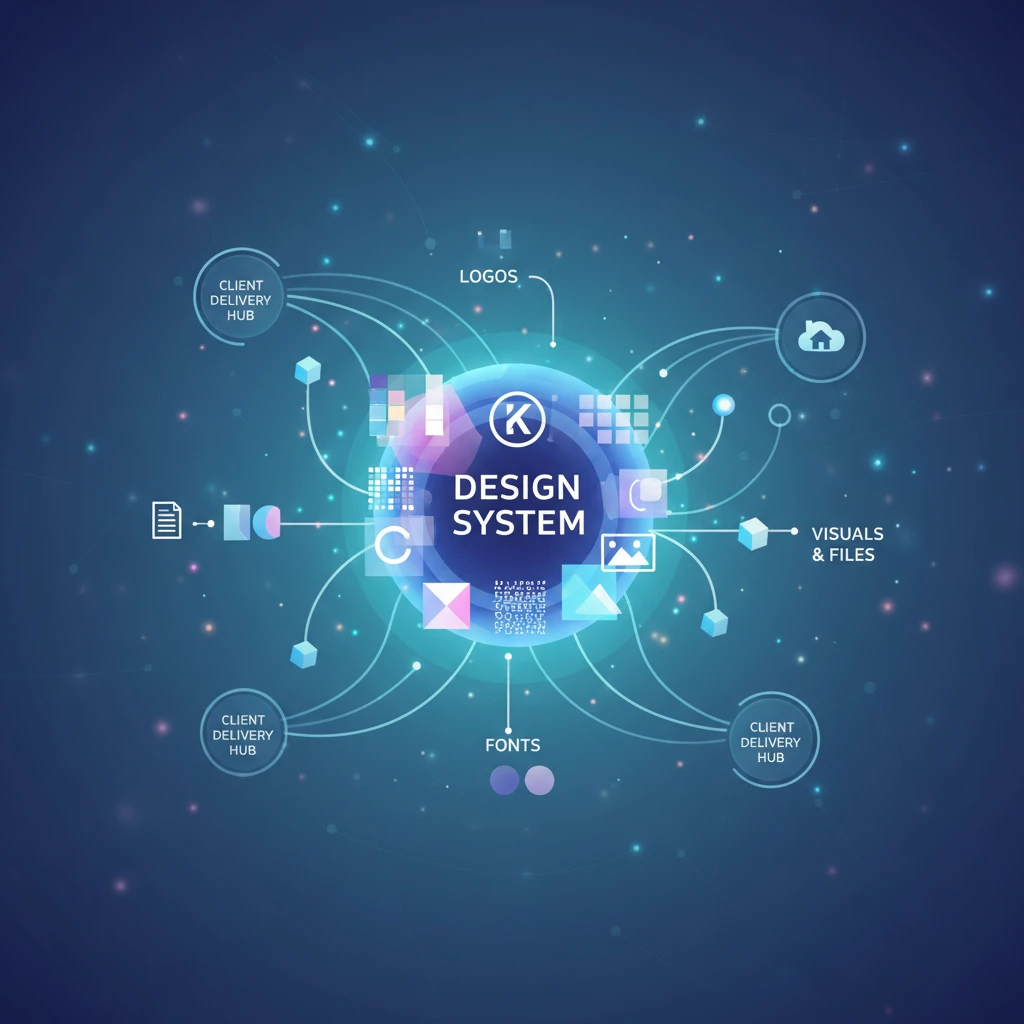
A design system, often thought of as a collection of reusable UI components for digital products, is far more expansive. In the context of client delivery, it becomes a comprehensive framework and repository that encapsulates every aspect of a brand’s visual identity. This includes not only design tokens like color palettes and typography scales but also foundational elements like logos, iconography, imagery guidelines, and even voice and tone. It’s a holistic approach to defining and managing a brand’s aesthetic and functional principles, ensuring consistency across all touchpoints. This centralized approach transforms asset delivery from a transactional event into an ongoing, integrated process.
The power of a design system lies in its ability to centralize your brand’s DNA. Every element, from the foundational color values to the nuanced rules for iconography, is documented, organized, and made accessible within a single, coherent structure. This eliminates the ambiguity and fragmentation that plague traditional delivery methods. When a client needs a specific asset or wants to understand a design principle, they can refer to the design system as the definitive source. This single point of reference ensures that everyone involved – from the client’s internal marketing team to external vendors – is working with the same, approved brand elements, fostering alignment and reducing misinterpretation.
This centralized hub operates on the principle of a ‘single source of truth’ for client assets. Instead of managing multiple versions across various platforms, a design system consolidates all approved brand materials in one location. This means that when an update is made to a logo or a color palette, the change is reflected universally within the system, guaranteeing that clients always access the most current and correct information. This not only streamlines the delivery process but also significantly reduces the likelihood of outdated assets being used, thereby protecting brand integrity. For agencies, this translates to fewer repetitive requests and a more professional, organized client experience. Streamlining client handoffs becomes an inherent outcome of this structured approach.
Building Blocks of a Streamlined Brand Handoff: Core Components
At the heart of a robust design system for client delivery are the meticulously organized visual elements. This encompasses the fundamental building blocks of a brand’s identity: logos in all necessary formats and variations (e.g., full color, monochrome, favicon), meticulously defined color palettes with accessible hex, RGB, and CMYK values, and precisely specified typography guidelines including font families, weights, and usage rules. Beyond merely listing these elements, a modern system provides them in easily downloadable formats, often with clear explanations of their intended application. This structured approach ensures clients have immediate access to the core visual language of their brand.
Moving beyond static files, a truly effective system incorporates interactive components that enhance user understanding and utility. Imagine clickable color swatches that allow clients to copy hex codes with a single click, or font previews that demonstrate characters and styles directly within the interface. This level of interactivity transforms the asset discovery process from a passive download into an engaging experience. Interactive elements significantly reduce the cognitive load on clients, making it easier for them to integrate brand assets correctly into their own projects. This is crucial for fostering brand consistency and empowering clients to act as confident brand stewards.
Managing visual assets like imagery, icons, and illustrations requires a similarly structured approach within the design system. This involves categorizing these assets logically, providing clear naming conventions, and offering metadata that aids in their search and understanding. Guidelines on when and how to use specific imagery styles or icon sets are essential for maintaining brand coherence. For example, a library of approved photography types or a set of custom-designed icons with clear usage permissions ensures that the brand’s visual narrative remains consistent. This comprehensive management of visual assets ensures that clients can readily access and deploy them appropriately, supporting the overall brand strategy. This level of detail is critical for a professional brand asset delivery workflow.
The Power of One Link: Unifying Brand Delivery for Clients
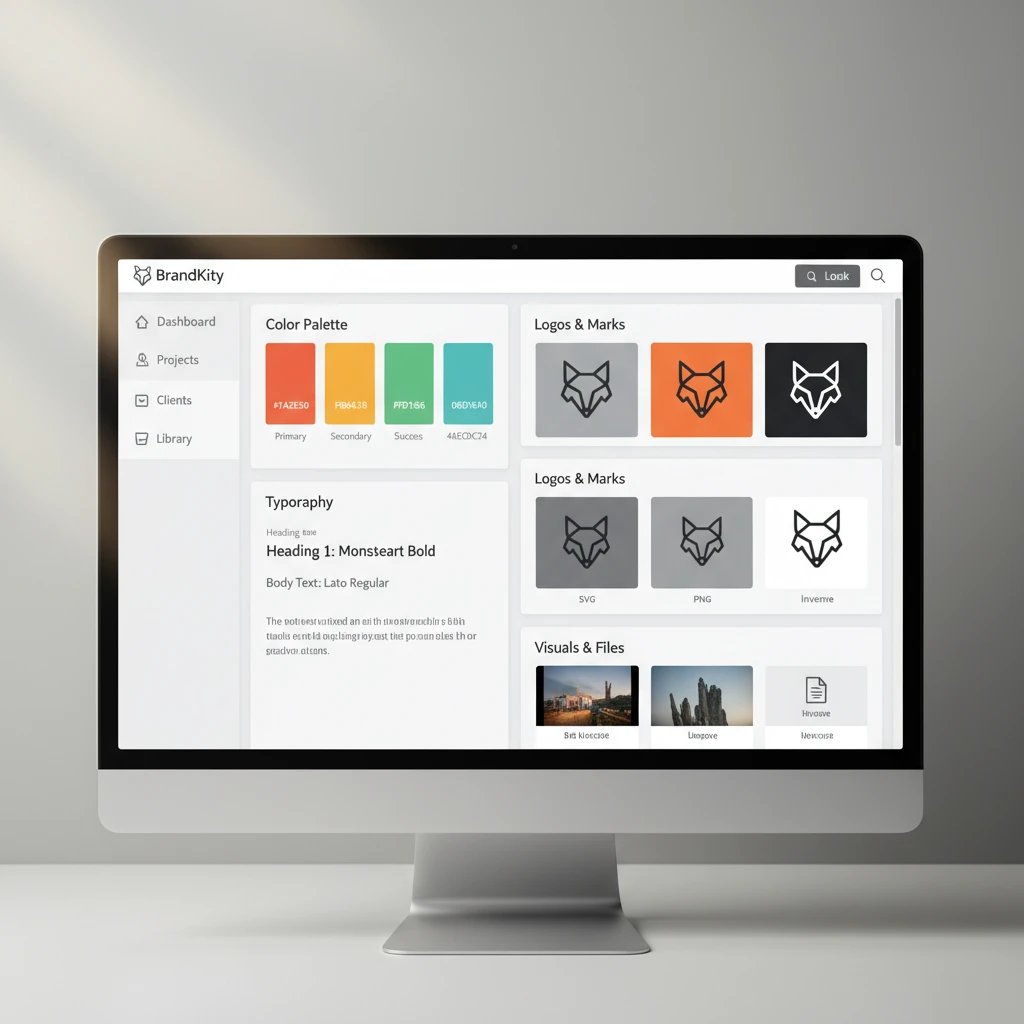
In the contemporary digital landscape, clients increasingly expect a seamless and unified experience. The traditional method of sharing multiple links for logos, fonts, and style guides often leads to confusion and a fragmented perception of your brand’s professionalism. By consolidating all brand assets under a single, dedicated link, you eliminate this friction. This approach not only simplifies the process for your clients but also powerfully reinforces the cohesive identity you’ve worked hard to establish. A singular point of access signifies control, organization, and a commitment to clarity, directly impacting how clients perceive the quality and reliability of your delivery.
The advantage of a unified link extends beyond mere convenience. It cultivates a highly professional and branded experience. Instead of navigating through generic cloud storage folders or multiple file-sharing services, clients are presented with a curated, on-brand destination. This dedicated portal acts as a visual extension of the brand itself, showcasing meticulous attention to detail. For agencies and freelancers, this is a critical differentiator, transforming a potentially mundane asset handover into a sophisticated touchpoint that can foster greater client trust and satisfaction. Consider this a proactive step in managing client expectations through superior presentation.
Platforms like BrandKity are engineered around this very philosophy of the “one link.” They centralize all necessary brand collateral—from logos in various formats to color palettes, typography guidelines, and imagery—into a single, easily shareable URL. This approach not only consolidates assets but also offers a structured interface for clients to explore and download what they need. By abstracting the complexity of file management and versioning, BrandKity allows you to streamline the final stage of client delivery, ensuring your clients receive a polished and organized package every time. This integrated solution is designed to make the entire process feel less like a task and more like a strategic advantage.
From Messy Folders to Masterful Management: Structuring Your Design System
The foundation of a successful design system for client delivery lies in rigorous organization. Implementing clear naming conventions and logical categorization is paramount. This means adopting a consistent system for naming files (e.g., `logo-primary-rgb.svg`, `font-inter-regular.woff2`) and organizing assets into intuitive folders or categories. Think about how a client would naturally search for an asset: by type (logos, icons), by brand application (web, print), or by color variation. This structured approach prevents ambiguity and significantly reduces the time clients spend searching for the specific files they require, turning potential frustration into efficient retrieval.
Beyond just organization, designing for accessibility within your system ensures it’s usable by everyone. This encompasses not only the visual clarity of the interface but also the practical aspects of asset delivery. Ensure that all files are provided in formats that are universally compatible and easy for clients to use, across different operating systems and software. Providing a variety of file types (e.g., SVG for web, EPS for print, JPG/PNG for general use) and clearly labeling them enhances accessibility. Furthermore, making download options straightforward, with bulk download capabilities where appropriate, contributes to an effortless asset delivery for creatives and their clients alike.
Managing updates and ensuring clients are always working with the latest versions is another critical structural element. Implementing robust version control within your design system is essential for maintaining brand consistency over time. Clearly indicate version numbers or dates for asset updates and, crucially, establish a system for notifying clients of these changes. This could involve automated alerts within the platform or a proactive communication strategy. For instance, if a logo is updated, clients need to know immediately to replace older versions. Platforms that handle this automatically, such as BrandKity, help prevent the use of outdated assets and maintain a single source of truth, avoiding the chaos of fragmented file repositories. This proactive approach is a hallmark of professional client handoffs.
Empowering Client Adoption: Making Your Design System User-Friendly
To ensure your design system is truly effective, it must be tailored to the diverse needs of your clients. Segmenting access and content based on client roles is a strategic approach. For instance, marketing teams might need access to finalized campaign visuals and social media assets, while developers will prioritize code snippets for fonts and color variables. A well-structured system allows you to create different views or permission levels, presenting each user group with precisely what they need. This role-based customization significantly enhances usability and demonstrates a deep understanding of your clients’ workflows, making the handover process feel more like a collaborative extension of their team.
Effective onboarding strategies are crucial for client adoption. Don’t just hand over a link and expect clients to intuitively understand its structure or how to best utilize the assets. Provide clear, concise onboarding materials, whether it’s a brief video walkthrough, a simple FAQ, or an interactive tutorial embedded within the system. Guiding clients through the navigation, explaining the purpose of different asset categories, and highlighting best practices for usage ensures they can leverage the system effectively from day one. This proactive support minimizes confusion and maximizes the value they derive from your carefully curated brand assets.
Providing context and usage guidelines directly within the system is a powerful way to empower clients with knowledge. Instead of expecting clients to refer back to separate brand guideline documents, integrate key rules and recommendations directly alongside the assets. For example, a logo asset could have a tooltip explaining approved usage scenarios and a link to detailed guidelines on clear space. Similarly, font assets can include notes on proper application. This in-context support acts as an ever-present brand guardian, ensuring that assets are used correctly and consistently, which ultimately protects the integrity of the brand you’ve helped build and solidifies your role as a trusted partner. This level of detail transforms a simple asset repository into an invaluable brand resource.
Solving Repetitive Client Requests: The Self-Service Advantage
One of the most significant benefits of a well-implemented design system is its ability to proactively address common client needs. By anticipating the questions and requests your clients frequently make—such as “Where is the high-res logo for print?” or “What’s the hex code for the primary brand color?”—you can build these answers directly into the system. This anticipation of needs transforms your design system from a mere repository into an intelligent resource. Clients can find the answers and assets they require independently, without needing to interrupt your team’s workflow. This self-service model is a cornerstone of efficient client collaboration.
The self-service advantage directly translates to reducing back-and-forth communication. Instead of clients emailing or messaging for individual assets or clarification on brand usage, they can simply navigate to their dedicated link. A structured design system acts as a living document and a comprehensive knowledge base, answering questions before they are even formally asked. For example, if a client needs to know the correct font for web body text, the system can provide the font file along with usage notes, eliminating the need for a query. This streamlined interaction fosters a more independent and empowered client, while simultaneously freeing up your team’s valuable time.
Ultimately, the implementation of a robust design system and the adoption of a self-service model result in freeing up your team for more creative, high-value work. By automating the delivery of assets and preemptively answering common queries, you reclaim hours previously spent on repetitive tasks. This allows your designers and project managers to focus on strategic initiatives, complex problem-solving, and innovative creative development. Imagine the impact on your agency’s capacity and profitability when your team can dedicate more energy to client strategy and less to administrative asset requests. This shift elevates your team’s role from asset managers to strategic brand partners, enhancing both job satisfaction and client outcomes. This is a crucial step in mastering the master brand asset delivery workflow.
Design Systems as a Foundation for Future Brand Evolution
A well-structured design system acts as the bedrock for enduring brand consistency, especially as brands expand and evolve. It provides a single source of truth for all brand elements, ensuring that every touchpoint, from digital interfaces to print collateral, adheres to established visual and functional guidelines. This unified approach is crucial for building a recognizable and trustworthy brand identity. Without it, disparate teams and external partners can inadvertently dilute the brand’s essence, leading to a fragmented and confusing user experience. By centralizing design tokens, components, and usage guidelines, a design system empowers teams to maintain fidelity to the core brand principles, even when working on diverse projects or across multiple platforms.
How a well-structured system supports brand consistency over time.
The core strength of a design system in maintaining brand consistency lies in its defined set of reusable components and patterns. These aren’t just visual assets; they encapsulate interaction behaviors, accessibility standards, and even semantic meaning. When designers and developers consistently pull from this established library, the result is a cohesive user experience that feels inherently familiar to the audience. This systemic approach minimizes ad-hoc decision-making and reduces the likelihood of stylistic drift. For instance, a specific button style or typography hierarchy, once defined and documented within the system, becomes the default choice, reinforcing the brand’s visual language across all applications. This adherence to a shared vocabulary ensures that every new feature or campaign feels like an organic extension of the existing brand, fostering trust and recognition.
Easier brand refreshes and asset updates.
A significant advantage of a robust design system is its capacity to streamline brand refreshes and asset updates. When the brand needs an evolution, such as a color palette tweak or a font change, these modifications can be implemented efficiently at the system level. Instead of manually updating thousands of individual files and instances across various projects, a single update to the design system’s core tokens or components propagates through. This not only saves immense amounts of time and resources but also significantly reduces the risk of errors. Imagine updating a logo or a primary brand color; with a well-maintained design system, this change can be applied universally with a few clicks, ensuring immediate consistency across all brand touchpoints. This agility is paramount in today’s fast-paced market, allowing brands to adapt without losing their established identity.
The long-term ROI of investing in a robust delivery system.
The return on investment (ROI) for a well-implemented design system extends far beyond immediate efficiency gains. It cultivates a culture of consistency and quality that directly impacts client relationships and project success rates. By reducing the cognitive load on designers and developers, a design system frees up valuable time for strategic thinking and innovation. Furthermore, it significantly lowers the cost of development and maintenance by minimizing redundant work and rectifying errors. For agencies, this translates to faster project turnaround times and the ability to handle more complex projects with fewer resources. Clients, in turn, benefit from a more polished and consistent brand experience, leading to increased trust and loyalty. Studies suggest that organizations with mature design systems report substantial reductions in development time and bug fixes, underscoring the long-term financial and operational advantages. This strategic investment ensures that brand integrity is maintained, driving sustained growth and market competitiveness.
Agency Success Stories: Real-World Impact of Design Systems for Delivery
The practical application of design systems within agencies consistently reveals a profound impact on client delivery and internal workflows. By establishing a clear, centralized hub for brand assets and guidelines, agencies empower their teams to work more efficiently and deliver higher-quality results. This systematic approach not only streamlines the creative process but also elevates the client experience, transforming how brands are managed and deployed. The tangible benefits often become apparent within the first few projects, demonstrating the immediate value of a well-architected system in a client-facing environment.
Case study snapshot: reduced client confusion and faster project close-outs.
Consider “Creative Solutions Agency,” a mid-sized branding firm that struggled with inconsistent asset delivery to their clients. Their files were scattered across shared drives, and handover documents were often outdated, leading to frequent client inquiries and delays. After implementing a centralized brand asset platform, a key component of their evolving design system, they observed a 40% reduction in client clarification requests within the first quarter. Projects that previously took an average of three weeks to finalize due to asset-related back-and-forth were now closing in an average of 1.5 weeks. This was largely due to clients having a single, accessible link to all approved logos, color palettes, typography, and imagery, presented with clear usage instructions. The ease of access and clarity directly translated to quicker approvals and a smoother client experience, allowing the agency to onboard new clients at a faster pace.
The ripple effect: improved client satisfaction and repeat business.
The enhanced delivery process fostered by a robust design system creates a positive ripple effect that extends to client satisfaction and the cultivation of repeat business. When clients receive well-organized, professional brand assets without confusion or delay, their perception of the agency’s competence and reliability significantly increases. This positive experience builds trust and strengthens the client relationship. According to internal metrics from “BrandBuilders Studio,” agencies that fully leverage their design system reported a 25% increase in client satisfaction scores and a 30% rise in repeat business within a year. Clients who feel confident in their brand’s representation are more likely to engage the agency for future projects, including brand expansions, new campaign developments, or ongoing maintenance. This fosters a sustainable business model where client loyalty is a direct outcome of efficient and professional service delivery, as highlighted in discussions about mastering brand asset delivery workflows.
Measuring the efficiency gains in your own agency workflow.
To truly understand the impact of a design system on an agency’s operations, it’s crucial to establish key performance indicators (KPIs) for measurement. Start by tracking the time spent on asset retrieval and distribution before and after implementation. Monitor the number of client queries related to brand assets and the average resolution time. Another vital metric is the reduction in rework or errors attributed to inconsistent brand application. Agencies can also gauge efficiency by measuring the number of projects completed within a given timeframe or the resource allocation per project. For instance, a simple survey asking team members about perceived time savings on asset-related tasks can provide qualitative insights. By consistently measuring these metrics, agencies can quantify the improvements in their brand delivery workflow and demonstrate the tangible value of their design system investment to both internal stakeholders and clients.
Saurabh Kumar
Founder, BrandKity
Saurabh writes about practical brand systems, faster client handoffs, and scalable workflows for designers and agencies building repeatable delivery operations.
Connect on LinkedIn