Slash Revisions: Master Brand Delivery
The journey from a brilliant design concept to a flawlessly executed brand identity is fraught with potential pitfalls, especially when it comes to de…

Table of contents
- The Agonizing Cost of Messy Brand Handoffs in 2026
- Why Client Confusion is the Silent Killer of Your Brand Reputation
- The ‘Where’s the Logo?’ Phenomenon: Common Client Pain Points
- Misinterpreting Brand Assets: The Ripple Effect on Marketing
- Lost Time, Lost Revenue: The True Price of Inefficient Delivery
- From Chaos to Clarity: Building a Streamlined Brand Asset Workflow
- Establishing a Single Source of Truth for All Brand Elements
- Categorizing Assets for Instant Retrieval (Logos, Colors, Fonts, Imagery)
- Versioning Control: Ensuring Clients Always Use the Latest Assets
- The Power of One: Unlocking Simplicity with a Unified Brand Link
- How a Single Link Organizes the Entire Brand Ecosystem
- Benefits for Designers: Faster Handoffs, Fewer Follow-Ups
- Benefits for Clients: Effortless Access to Essential Brand Materials
- Beyond the Download Button: Crafting a Professional Brand Presentation
- Visual Storytelling: Making Your Brand Assets Engaging
- Contextualizing Usage: Showing, Not Just Telling, How to Use Assets
- Adding Value: Including Brief Usage Guidelines and Do’s/Don’ts
- Essential Elements for a Bulletproof Brand Delivery Package
- Logo Variations: Primary, Secondary, Icon, File Formats (Vector, Raster)
- Color Palettes: HEX, RGB, CMYK, Pantone Codes and Usage Ratios
- Typography Hierarchy: Primary, Secondary, Web Fonts, and Licensing
- Visual Assets: Photography Style, Illustrations, Iconography Sets
- Implementing a ‘One Link’ Solution: A Practical Agency Checklist
- Step 1: Audit Your Current Brand Asset Management
- Step 2: Select the Right Platform (Think BrandKity!)
- Step 3: Organize and Upload Your Core Brand Assets
- Step 4: Define Your Access Permissions and Sharing Strategy
- Preventing Future Brand Drift: Empowering Your Clients for Long-Term Success
- Educating Clients on Brand Consistency
- Setting Expectations for Asset Updates and Maintenance
- The Role of a Centralized Link in Ongoing Brand Evolution
- Case Study: How Creative Solutions Agency Transformed Their Client Handoffs
- The ‘Before’ Scenario: Documenting the Pain Points
- The ‘After’ Scenario: Measuring the Impact of Streamlined Delivery
- Key Takeaways for Agencies of All Sizes
- Mastering Your Brand Delivery: Continuous Improvement in 2026 and Beyond
- Case Study: How [Agency Name/Type] Transformed Their Client Handoffs
Imagine the frustration of a client receiving a chaotic jumble of files, unsure which logo version to use or what color palette is the official one. This lack of clarity breeds doubt and can lead to costly mistakes, undermining the very essence of the brand you worked so hard to build. Effectively mastering brand delivery is no longer a nicety; it’s a critical business imperative for any design professional or agency aiming for sustained success.
The Agonizing Cost of Messy Brand Handoffs in 2026
In 2026, the repercussions of a disorganized brand asset delivery are more pronounced than ever. Clients expect polish and professionalism, and a messy handoff directly contradicts this. The immediate cost is often the dissatisfaction and confusion experienced by the client, leading to endless back-and-forth emails and clarification requests. This drains valuable time that could be spent on new projects or client nurturing. Beyond the immediate, the long-term cost can be severe: damaged reputation, lost future business, and a client who is hesitant to recommend your services.
A key decision criterion when evaluating your current handoff process is whether it prioritizes clarity and ease of access for the client. Are they presented with a structured system or a digital dumpster dive? Pitfalls include using generic cloud storage links that lack organization, failing to provide comprehensive brand guidelines alongside assets, and not clearly differentiating between file types (e.g., vector vs. raster, web vs. print). For instance, a marketing team might inadvertently use a low-resolution JPEG of a logo on a billboard, resulting in a pixelated disaster. This isn’t just an aesthetic issue; it’s a direct assault on the brand’s perceived quality and professionalism. To avoid this, focus on a process that is inherently intuitive for someone who may not be a design expert.
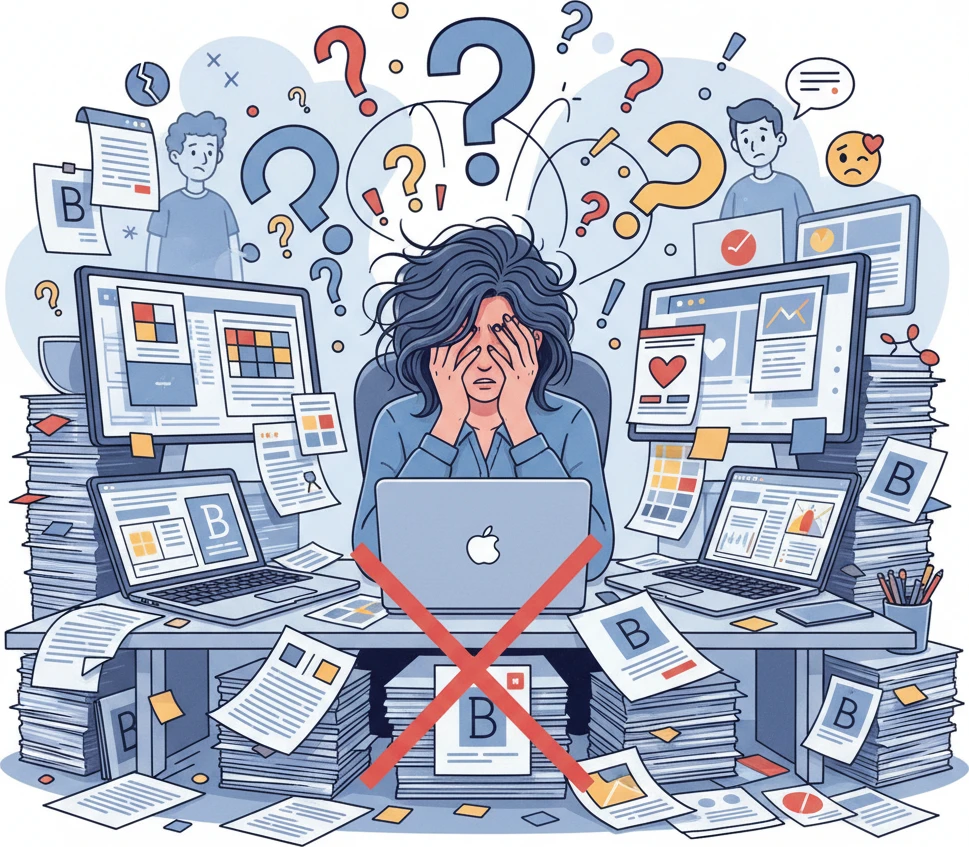
Actionable steps to mitigate these costs begin with acknowledging the problem. Conduct an internal audit of your current brand delivery workflow. Ask recent clients about their experience receiving assets. Implement a standardized template for your handoff packages, ensuring all necessary file formats, color codes (HEX, RGB, CMYK), and font information are included. For example, a small agency might implement a shared drive with meticulously named folders for each client project, containing subfolders for logos, color palettes, typography, and imagery. This proactive approach transforms a potential point of failure into a demonstration of your agency’s organizational prowess and commitment to client success, ensuring you avoid costly rework and reputational damage.
Why Client Confusion is the Silent Killer of Your Brand Reputation
Client confusion stemming from poorly delivered brand assets acts as a stealthy assassin of your professional reputation. When a client struggles to find the correct logo, understand color variations, or access the right font files, it erodes their confidence in your expertise and the quality of your work. This isn’t about minor oversights; it’s about creating an environment where your meticulously designed brand can be misrepresented, leading to inconsistencies that dilute its power. The longer the confusion persists, the deeper the damage to your perceived reliability and the harder it becomes to regain trust. This directly impacts your ability to secure future projects and fosters negative word-of-mouth.
The core of this problem lies in the assumption that clients possess the same level of understanding about design assets as you do. This is rarely the case. They are typically focused on leveraging the brand for their business goals, not on the technicalities of file management. Therefore, a successful handoff must bridge this gap by providing an experience that is not only comprehensive but also incredibly user-friendly. Without this consideration, even the most stunning visual identity can be compromised by improper application, directly stemming from the initial delivery chaos.
The ‘Where’s the Logo?’ Phenomenon: Common Client Pain Points
One of the most prevalent and frustrating pain points for clients is the classic “Where’s the logo?” scenario. This often arises when clients receive a sprawling collection of files without clear categorization or naming conventions. They might find multiple versions of the logo – sometimes saved with extraneous text or at incorrect resolutions – and struggle to discern the primary, approved version. For instance, a client might download a logo that includes an outdated tagline or a version intended only for specific digital applications and attempt to use it on print collateral, leading to immediate visual dissonance. This single, repeated question highlights a fundamental breakdown in the delivery process, indicating that the assets are not presented in a readily digestible format.
Another common issue is the ambiguity around file formats. Clients may not understand the difference between a vector EPS file for scalable applications and a raster PNG for web use. This can lead them to mistakenly use a low-resolution JPEG for a large-format banner, resulting in a blurry, unprofessional appearance. The lack of clear labeling or accompanying instructions on when and where to use each file type contributes significantly to this confusion. Addressing this requires not just providing the files but also offering a brief, clear explanation of their purpose and intended use. The ultimate goal is to remove any guesswork from the client’s side, ensuring they feel empowered rather than overwhelmed.
Misinterpreting Brand Assets: The Ripple Effect on Marketing
When clients misinterpret or misuse brand assets, the ripple effect can be devastating for their marketing efforts and, by extension, your reputation. Imagine a brand that has invested heavily in a specific color palette designed to evoke trust and professionalism, only for the marketing team to accidentally use a slightly different shade of blue from a poorly organized asset folder. This subtle deviation can subtly alter the emotional perception of the brand, making it appear less sophisticated or even amateurish. It’s these seemingly small errors, compounded over time across various marketing channels, that erode brand consistency and dilute its intended impact.
This misuse can extend to typography as well. If a client uses a secondary font as their primary heading font because they couldn’t easily locate the correct one, the entire visual hierarchy and brand personality can be distorted. For example, a sleek, modern brand might appear clunky and outdated if its established typeface is replaced with a less appropriate alternative due to delivery oversight. The underlying issue is a lack of readily accessible, authoritative information about brand usage. When clients are forced to make educated guesses, the integrity of the brand is put at risk, turning your creative work into a liability rather than an asset. This underscores the critical need for clear, actionable guidance alongside the assets themselves.
Lost Time, Lost Revenue: The True Price of Inefficient Delivery
The financial implications of inefficient brand asset delivery are substantial and often underestimated. Every minute a client or your own team spends searching for the correct file, clarifying usage, or rectifying a misuse is a minute that isn’t spent on revenue-generating activities. This constant cycle of “find, ask, fix” can accumulate into hours of lost productivity per project. For an agency, this translates directly into reduced profitability and stretched resources. If a client, due to a confusing handover, uses the wrong logo on a major advertising campaign, the cost of recalling and reprinting materials can be astronomical, far exceeding the initial design fee.
Consider a hypothetical scenario: An agency spends an average of 3 hours per client per project on back-and-forth communication related to asset delivery and clarification. For an agency handling 20 clients a month, this amounts to 60 hours of wasted time monthly. At an average billable rate of $100 per hour, this represents a loss of $6,000 per month. This doesn’t even account for the potential loss of future business from dissatisfied clients or the damage to your brand’s reputation that can deter new prospects. The true price is a compounding effect of lost efficiency, direct financial losses, and diminishing market standing. Effective brand asset delivery is therefore not just a logistical task; it’s a strategic investment in profitability and long-term business health, crucial for any agency looking to master their agency workflow.
From Chaos to Clarity: Building a Streamlined Brand Asset Workflow
Transitioning from a chaotic, ad-hoc brand asset delivery process to a streamlined workflow is paramount for modern design professionals and agencies. This shift involves implementing a structured system that prioritizes organization, accessibility, and version control. The goal is to create a predictable and user-friendly experience for clients, minimizing confusion and maximizing the impact of the brand identity you’ve so carefully crafted. A well-defined workflow ensures that every asset is accounted for, easily retrievable, and consistently applied, transforming potential points of failure into strengths that reinforce your agency’s professionalism and efficiency.
The foundation of a streamlined workflow lies in establishing clear protocols and utilizing the right tools. This isn’t about reinventing the wheel but about systematically organizing existing elements into a coherent and accessible system. It requires a proactive approach, anticipating client needs and potential misuse scenarios before they arise. By investing time in setting up this structure, you pave the way for smoother project completions, happier clients, and a more robust brand presence for all involved. This systematic approach is key to delivering on the promise of a strong brand identity, turning complexity into clarity and ensuring the brand’s vision is consistently realized across all touchpoints.
Establishing a Single Source of Truth for All Brand Elements
The cornerstone of an efficient brand asset workflow is the creation of a single source of truth for all brand elements. This centralized repository ensures that everyone involved – from your design team to the client’s marketing department – is working with the most accurate and up-to-date versions of logos, color palettes, typography, and imagery. Without this, inconsistencies inevitably creep in. Clients might pull outdated logos from old presentations, or team members might use unofficial color codes, leading to a fragmented brand experience. For example, if a company has multiple internal teams working on different projects, a single source of truth prevents each team from creating their own, potentially conflicting, versions of brand materials.
Implementing a single source of truth requires a dedicated platform or system where all approved assets are stored and managed. This could be a specialized brand asset management (BAM) tool, a well-organized cloud storage solution with strict access controls, or a dedicated page within your agency’s client portal. The critical factor is that it’s the only place clients and internal teams should be directed to for assets. This eliminates the confusion of multiple file locations and ensures that any updates or changes are immediately reflected for everyone. A robust system like this is fundamental to maintaining brand integrity and enabling consistent brand application across all platforms and communications, laying the groundwork for effective brand asset delivery workflows.
Categorizing Assets for Instant Retrieval (Logos, Colors, Fonts, Imagery)
Once a single source of truth is established, meticulous categorization of brand assets is the next crucial step. This involves organizing files into logical, intuitive categories that allow for instant retrieval. Imagine a client needing a specific logo format for a social media post; if the logos are clearly labeled and organized into subfolders (e.g., ‘Logos/Primary/Vector’, ‘Logos/Secondary/PNG’), they can find it in seconds. Common categories include: Logos (with subfolders for different formats like SVG, EPS, AI, PNG, JPG, and variations like full-color, monochrome, reversed), Color Palettes (listing HEX, RGB, CMYK, and Pantone codes), Typography (including font files and usage guidelines), Imagery (stock photos, illustrations, icons), and Brand Guidelines (PDF documents detailing usage rules).
The depth of categorization should be tailored to the complexity of the brand. For a simple brand, broad categories might suffice. For a more extensive brand system, deeper nesting within subfolders becomes essential. This structured approach directly combats the “Where’s the Logo?” phenomenon and significantly reduces the time clients spend searching for what they need. Consider the benefit for a marketing team launching a new campaign; if they can instantly access approved campaign imagery and correct logo files from a clearly labeled ‘Campaign Assets 2026’ folder, they can proceed with confidence and speed. This enhances efficiency and minimizes the risk of errors, ensuring that the brand’s visual identity is applied correctly and consistently, regardless of who is accessing the assets.
Versioning Control: Ensuring Clients Always Use the Latest Assets
In the dynamic world of branding, asset versions evolve. Logo updates, color palette refinements, or new campaign imagery require a robust versioning control system. Without it, clients can unknowingly use outdated assets, leading to brand inconsistencies and a diluted message. For instance, if a logo was updated three months ago, but the client still has access to and is using the previous version, their marketing materials will appear out of sync with the current brand identity. This is where clear versioning becomes a non-negotiable component of effective brand delivery, ensuring that your clients are always equipped with the most current and approved materials.
Effective versioning control involves clearly labeling files with dates or version numbers (e.g., ‘Logo_Primary_v3_20260315.svg’). More importantly, it means having a mechanism to retire old versions and prominently feature new ones within your asset delivery platform. This could involve archiving older files, clearly marking them as superseded, or simply ensuring that the most recent versions are always at the top of any given category. When a client downloads an asset, they should be confident it’s the definitive, latest iteration. This proactive approach eliminates ambiguity and reinforces the professionalism of your delivery process, preventing costly mistakes and ensuring the brand’s evolution is reflected accurately across all applications. This commitment to up-to-date assets is fundamental to streamlined asset delivery for creatives.
The Power of One: Unlocking Simplicity with a Unified Brand Link
The concept of “the power of one” in brand asset delivery centers around the idea of a unified, single link that serves as the sole gateway to an entire brand ecosystem. This approach drastically simplifies the process for both the creator and the recipient. Instead of sending multiple files, folders, or links to various cloud storage locations, you provide one clean, structured URL. This single point of access becomes the client’s trusted destination for all their brand needs, from logos and color palettes to fonts and imagery. It removes the complexity and potential for error associated with scattered digital assets, presenting a cohesive and professional front.
This unified link isn’t just a shortcut; it’s a testament to thoughtful organization and a commitment to user experience. It signifies that you’ve taken the time to curate and structure the brand’s visual identity in a way that is both comprehensive and easily navigable. The simplicity it offers directly addresses many of the common pain points experienced in traditional brand handoffs, such as lost files, outdated versions, and general confusion. By consolidating everything into one accessible location, you empower your clients and streamline your own operations, making the entire brand delivery process feel seamless and modern.
How a Single Link Organizes the Entire Brand Ecosystem
A single, unified brand link acts as a virtual hub, intelligently organizing the entire brand ecosystem for easy access. Behind this singular URL lies a meticulously structured repository where assets are categorized, versioned, and presented with clarity. For example, when a client clicks the link, they might see a dashboard with clear sections for ‘Logos’, ‘Colors’, ‘Typography’, and ‘Imagery’. Within each section, further sub-categorization ensures they can quickly locate precisely what they need—be it a vector EPS logo for print or a web-optimized PNG for digital use. This level of organization transforms what could be a chaotic jumble of files into an intuitive and efficient resource.
This centralized approach also simplifies updates. If a logo is revised, the change is made within the system, and the single link continues to point to the most current version. Clients don’t need to be notified about new file transfers or search for updated links; the existing one automatically directs them to the latest assets. This ensures consistency across all client applications and marketing efforts. By presenting a unified front, this single link becomes the definitive reference point, eliminating confusion and reinforcing the brand’s professional image. It effectively consolidates all essential brand materials into one easily managed and accessible location, streamlining the entire client handoff process.
Benefits for Designers: Faster Handoffs, Fewer Follow-Ups
For designers and agencies, the adoption of a unified brand link translates directly into significant time savings and operational efficiency. The process of preparing and delivering assets is dramatically accelerated. Instead of manually compiling folders, compressing files, and sending multiple download links via email, you simply share one URL. This reduces the administrative burden and allows designers to focus more on creative work rather than logistical tasks. Furthermore, by providing a clear, organized, and easily accessible resource for clients, the number of follow-up questions and requests for clarification plummets.
Imagine the time saved when a client can independently access the correct logo format or color code without needing to email you. This reduction in back-and-forth communication frees up valuable hours that can be reinvested in client acquisition, project development, or strategic planning. Moreover, a professional and organized delivery system enhances the designer’s reputation, positioning them as efficient and reliable partners. This proactive approach not only speeds up the immediate project completion but also contributes to a smoother workflow for future collaborations, ensuring fewer revisions and a higher level of client satisfaction with your entire service offering.
Benefits for Clients: Effortless Access to Essential Brand Materials
Clients reap substantial benefits from a unified brand link, primarily centered around ease of access and reduced confusion. They no longer have to navigate through cluttered email attachments or complex cloud storage interfaces to find the assets they need. A single, memorable link provides instant access to a well-organized library of logos, color palettes, fonts, and imagery. This empowers clients to use brand materials confidently and correctly, knowing they are always working with the latest, approved versions.
For instance, a client’s marketing team can quickly download the appropriate logo file for a new social media campaign or a printer can easily retrieve the correct CMYK color codes for a brochure, all from one central location. This seamless experience not only saves them time and frustration but also ensures brand consistency across all their communications. The clarity and simplicity of a unified link contribute to a positive overall client experience, reinforcing their trust in your agency and the brand you’ve helped them build. It transforms the potentially daunting task of brand asset management into a straightforward and stress-free process, allowing them to focus on leveraging their brand effectively.
Beyond the Download Button: Crafting a Professional Brand Presentation
Delivering brand assets goes far beyond simply providing a folder of files. It’s about presenting them in a way that reinforces the professionalism and value of your work. Think of it as the final flourish on a masterpiece – the frame, the gallery lighting, and the descriptive plaque all contribute to the viewer’s perception. A well-crafted presentation not only makes it easier for clients to understand and use their new brand identity but also builds trust and reduces the likelihood of misuse or confusion. This strategic approach transforms a mundane file transfer into a pivotal moment in the client-brand relationship, setting a precedent for future collaborations.
Visual Storytelling: Making Your Brand Assets Engaging
The way you visually present your brand assets can significantly impact their perceived value and usability. Instead of a sterile list of files, consider creating an engaging visual narrative. This might involve a brief, high-level overview document that showcases the brand’s personality and the essence of the assets. For example, a mood board or a curated selection of hero images can immediately convey the brand’s aesthetic. This approach helps clients connect with the brand on an emotional level, making them more invested in its consistent application. Think about how major brands present their guidelines; they don’t just list hex codes; they show them in context, evoking a feeling and a desired outcome.
Contextualizing Usage: Showing, Not Just Telling, How to Use Assets
Abstract rules are easily forgotten, but practical examples stick. To truly empower your clients, demonstrate how to apply the brand assets in real-world scenarios. This means going beyond a simple explanation of what a logo is and showing it correctly placed on business cards, websites, social media profiles, and marketing collateral. For color palettes, illustrate appropriate usage ratios – for instance, showing a primary color dominating a design with secondary and accent colors used sparingly. Similarly, demonstrate typography hierarchy by showing headlines, subheadings, and body copy in action. This visual context acts as an immediate reference guide, reducing ambiguity and fostering confident brand implementation. Many agencies find that a dedicated page or section within their delivery platform for “In Action” examples proves invaluable.
Adding Value: Including Brief Usage Guidelines and Do’s/Don’ts
While comprehensive brand guidelines are crucial, a concise summary of key usage rules within the asset delivery package can be incredibly helpful. This section should highlight the most critical do’s and don’ts, acting as a quick reference for clients who may not immediately dive into the full documentation. For logos, this could include clear instructions on minimum size, clear space requirements, and a definitive list of what not to do (e.g., stretching, recoloring, or placing on busy backgrounds). For typography, emphasize the approved font families and when to use them. This proactive approach to brand governance helps prevent common mistakes and reinforces the importance of maintaining brand integrity from day one. This clarity is a cornerstone of successful brand asset delivery.
Essential Elements for a Bulletproof Brand Delivery Package
A truly effective brand delivery package is more than just a collection of files; it’s a meticulously curated and organized set of assets that empowers clients to use their new brand identity confidently and consistently. Building this package requires careful consideration of every element, ensuring that clients have everything they need, presented in a way that minimizes confusion and maximizes usability. This comprehensive approach not only reflects the quality of your design work but also significantly reduces the number of follow-up questions and support requests you’ll receive. By anticipating client needs and providing clear, accessible resources, you lay the foundation for long-term brand success and a strong client relationship. The goal is to make the transition into using the new brand as seamless and intuitive as possible.
Logo Variations: Primary, Secondary, Icon, File Formats (Vector, Raster)
Your logo is the cornerstone of a brand’s visual identity, and providing a comprehensive set of variations is non-negotiable. The primary logo is typically the main lockup. The secondary logo, often a simplified or horizontal version, offers flexibility for different applications. An icon or logomark is essential for social media avatars, favicons, and app icons. Crucially, deliver these in multiple formats: vector files (like AI, EPS, SVG) for scalability without loss of quality, essential for print and large-format applications, and raster files (like JPG, PNG with transparent backgrounds) for web and digital use. Ensure clarity on which version to use in which context to prevent misapplication. A well-organized logo package is the first step in demonstrating a professional brand delivery workflow.
Color Palettes: HEX, RGB, CMYK, Pantone Codes and Usage Ratios
Color is a powerful brand identifier, and providing accurate color specifications is paramount. Your package should include HEX codes for web and digital applications, RGB values for screen displays, CMYK values for print, and ideally, Pantone Matching System (PMS) codes for precise color reproduction in professional printing. Beyond just listing the codes, offer guidance on usage ratios. For instance, illustrate how the primary brand color should be used most prominently, with secondary and accent colors supporting the overall design without overwhelming it. This ensures that the brand’s color story is consistently communicated across all mediums, from a website banner to a business card.
Typography Hierarchy: Primary, Secondary, Web Fonts, and Licensing
Typography plays a vital role in establishing a brand’s voice and readability. Define your primary typeface, typically used for headlines and key messaging, and your secondary typeface, often used for body copy, which should complement the primary font. Include specifications for both web fonts (e.g., .woff, .woff2) and desktop fonts (e.g., .otf, .ttf) to ensure consistency across digital and print. Critically, address licensing. Clearly state the terms of the font licenses included and, if applicable, guide clients on how to purchase their own licenses for broader usage or if they plan to use them on more than the initially agreed-upon number of projects or devices. Understanding typography hierarchy is key to effective brand communication.
Visual Assets: Photography Style, Illustrations, Iconography Sets
Beyond logos and text, brands often rely on a consistent visual language of photography, illustrations, and iconography. Detail the photography style – should images be candid or staged, brightly lit or moody, close-up or wide shots? Provide a selection of representative images or a link to a curated library. If illustrations are part of the brand, showcase the established illustration style, including examples of common elements or motifs. For iconography sets, ensure they are provided in an editable format (like SVG) and offer a guide on their consistent application across interfaces and collateral. These visual elements contribute significantly to the overall brand experience, and their clear presentation is vital for maintaining a cohesive look and feel, which is essential for any strong client handoff.
Implementing a ‘One Link’ Solution: A Practical Agency Checklist
The modern agency landscape demands efficiency and professionalism, especially when it comes to delivering finalized brand assets to clients. Scattered files across emails, cloud storage folders, and even physical drives are a recipe for disaster, leading to confusion, version control issues, and wasted time. Implementing a ‘one link’ solution, often facilitated by specialized platforms, consolidates all essential brand materials into a single, easily shareable URL. This approach not only streamlines the delivery process but also provides clients with a central, organized hub for all their brand assets, fostering better long-term brand adherence. It transforms a potentially chaotic handover into a polished, professional experience, setting a high standard from the outset.
Step 1: Audit Your Current Brand Asset Management
Before you can implement a streamlined delivery system, you must understand your current state. Conduct a thorough audit of your existing brand asset management practices. This involves identifying where brand files are currently stored, how they are organized (or disorganized), who has access, and what the common pain points are for both your team and your clients. Document all available assets, including logos, color palettes, typography files, imagery, templates, and any existing brand guideline documents. This inventory will highlight redundancies, missing assets, and inconsistencies that need to be addressed before migrating to a new system. A clear understanding of your starting point is fundamental to successful implementation.
Step 2: Select the Right Platform (Think BrandKity!)
Choosing the appropriate platform is critical for a successful ‘one link’ solution. Many tools offer varying degrees of functionality, from simple file-sharing services to comprehensive brand asset management systems. For agencies, a platform like BrandKity offers specialized features designed for creative professionals. Look for solutions that provide intuitive organization, granular permission controls, versioning capabilities, and a clean, branded interface for your clients. Consider factors such as ease of use, integration with your existing workflow, scalability, and customer support. The right platform will not only simplify asset delivery but also enhance your agency’s professional image and operational efficiency, making the entire brand asset delivery workflow smoother.
Step 3: Organize and Upload Your Core Brand Assets
Once you’ve selected your platform, the next step is to meticulously organize and upload your core brand assets. This means creating logical folder structures within the platform – perhaps categorized by asset type (Logos, Colors, Typography, Visuals, Templates) or by project phase. Ensure all files are correctly named, consistently formatted, and include necessary metadata. Upload all the essential logo variations, color specifications (HEX, RGB, CMYK, Pantone), font files with licensing information, approved imagery, and any other critical brand elements identified during your audit. A well-structured upload process ensures that the resulting ‘one link’ is intuitive and easy for clients to navigate and utilize.
Step 4: Define Your Access Permissions and Sharing Strategy
A robust ‘one link’ solution isn’t just about having everything in one place; it’s also about controlling who sees what. Define your access permissions carefully. Determine if clients need full access to all assets or if certain folders should be restricted. Consider different user roles within a client organization. Establish a clear sharing strategy: how will you generate and share the consolidated link? Will it be a password-protected URL? Will you send it via email, or embed it in a final project report? Implementing granular permissions prevents unauthorized access or misuse of sensitive assets and ensures clients only interact with the relevant components, streamlining their usage and maintaining brand integrity.
Preventing Future Brand Drift: Empowering Your Clients for Long-Term Success
The delivery of a new brand identity is not an endpoint but the beginning of a crucial ongoing relationship between designer and client. To ensure the brand’s longevity and impact, it’s imperative to equip your clients with the knowledge and tools to maintain consistency. Preventing brand drift—the gradual erosion of a brand’s intended identity through inconsistent application—requires proactive education and clear communication. By empowering clients to become stewards of their own brand, you not only safeguard your creative investment but also foster a deeper partnership built on shared understanding and mutual respect for the brand’s integrity. This commitment to long-term success is what distinguishes exceptional agency service.
Educating Clients on Brand Consistency
A significant factor in brand drift is a lack of understanding regarding the importance of consistency. Your role extends beyond asset creation to include client education. Dedicate time during the handover process to explain why brand consistency matters—how it builds recognition, trust, and perceived professionalism. Walk them through the core brand guidelines, emphasizing the intended application of logos, colors, typography, and visual elements. Use clear, jargon-free language and provide practical examples of both correct and incorrect usage. This proactive approach helps clients internalize the brand’s rules and encourages them to act as vigilant brand guardians, making them active participants in maintaining the brand’s integrity. This educational aspect is a key component of effortless asset delivery.
Setting Expectations for Asset Updates and Maintenance
Brands evolve, and so do their assets. It’s crucial to set clear expectations with your clients regarding the need for future updates and ongoing maintenance. This includes discussing the lifecycle of the brand identity, potential reasons for asset revisions (e.g., new marketing channels, changes in business strategy), and the process for requesting and implementing such changes. Outline your agency’s policy on post-project support and asset maintenance. Will you offer retainer services? What is the procedure for minor tweaks versus major overhauls? Establishing these parameters upfront prevents misunderstandings and ensures that clients know how to approach the brand’s evolution responsibly, safeguarding against haphazard modifications.
The Role of a Centralized Link in Ongoing Brand Evolution
A centralized link, such as one provided by a platform like BrandKity, plays a pivotal role in the ongoing evolution of a brand. As assets are updated or new ones are added, this single point of access ensures that clients always have the most current versions. Instead of distributing new files that can easily get lost, you simply update the existing assets within the platform. This makes version control seamless and provides a reliable source of truth for the brand’s identity. For clients, it means no more searching through old emails or folders; they can always access the definitive library of their brand assets. This continuous accessibility empowers them to maintain consistency, even as the brand grows and adapts over time, reinforcing the value of a structured agency workflow for brand delivery.
Case Study: How Creative Solutions Agency Transformed Their Client Handoffs
The ‘Before’ Scenario: Documenting the Pain Points
Creative Solutions Agency, a mid-sized branding firm with a reputation for impactful visual identities, consistently struggled with their client handoff process. Before implementing a structured system, their brand asset delivery was fragmented and time-consuming. Every project ended with a deluge of emails containing zipped folders, often with confusing file naming conventions. Clients frequently reported feeling overwhelmed by the sheer volume of files, unsure which versions were final or where to find specific assets like logo variations or color palettes. This led to a cascade of support requests, with designers spending valuable hours re-sending assets or clarifying usage guidelines. The agency also faced significant version control issues, where clients might mistakenly use outdated logos or incorrect color codes, leading to brand inconsistencies that undermined their hard work. The lack of a central, organized repository meant that retrieving past project assets for future reference or updates was a painstaking manual effort.
The agency’s internal team also felt the strain. Designers and project managers alike spent excessive time gathering, organizing, and distributing assets, diverting focus from core creative tasks and strategic client work. This manual approach was not only inefficient but also prone to human error. Forgetting to include a crucial file or sending the wrong format were common occurrences. The onboarding process for new clients became a test of patience, and the initial positive impression of the brand’s launch could be tarnished by a messy, unprofessional asset delivery. They estimated that each project’s handoff phase cost them an additional 8-10 hours of non-billable time, a significant drain on profitability and team morale. The frustration was palpable, as the final stages of a successful project were marred by these logistical nightmares, impacting both client satisfaction and the agency’s operational efficiency. This struggle highlighted a critical gap in their agency workflow for brand delivery.
The ‘After’ Scenario: Measuring the Impact of Streamlined Delivery
After adopting a dedicated brand asset delivery platform, Creative Solutions Agency witnessed a dramatic shift. The most immediate impact was the reduction in client support queries related to asset retrieval. By consolidating all brand elements—logos, color palettes, typography, imagery, and usage guidelines—into a single, shareable link, clients could easily access what they needed, when they needed it. The platform’s intuitive interface meant clients could navigate assets with ease, significantly reducing confusion and the need for repeated explanations. This directly translated into a quantifiable decrease in email back-and-forth, freeing up design time for more impactful work. Creative Solutions reported a 70% reduction in client-related support emails concerning asset requests within the first three months post-implementation. Furthermore, the consistent presentation of assets fostered a greater sense of professionalism and trust with their clients, enhancing the overall client experience during the crucial post-project phase.
The internal benefits were equally significant. Project managers saw a decrease of over 50% in time spent on asset collation and distribution. This reclaimed time was reinvested into client strategy and business development. Version control issues became a relic of the past, as the platform ensured only the latest, approved assets were accessible, preventing brand drift and maintaining design integrity. The agency also implemented a standardized brand guideline document within the platform, which clients could easily reference, further reducing ambiguity. This streamlined process not only boosted team productivity but also improved job satisfaction, as designers could focus on creation rather than administrative tasks. The agency even observed a positive impact on client testimonials, with several clients specifically mentioning the ease and professionalism of the brand asset handoff as a highlight of their experience, contributing to a 15% increase in positive client feedback. This shift to a more organized approach was a crucial step in their journey to mastering effortless asset delivery.
Key Takeaways for Agencies of All Sizes
The experience of Creative Solutions Agency underscores universal principles applicable to any agency, regardless of size. The primary lesson is the critical importance of a centralized, organized system for brand asset delivery. Scattering files across multiple cloud storage services or email threads is a recipe for inefficiency and client frustration. Investing in a dedicated platform that consolidates logos, fonts, color codes, imagery, and guidelines into a single, shareable link is not an expense but a strategic investment that pays dividends in time saved and client satisfaction. Another key takeaway is the need for clear, accessible documentation. Simply handing over files isn’t enough; clients need context. Providing easily digestible brand guidelines, usage examples, and clear versioning ensures that your brand’s integrity is maintained post-launch. For smaller agencies or freelancers, this might mean starting with a well-structured naming convention and a single, organized cloud folder, but the goal should always be towards a single point of truth for brand assets. The transition to a professional handoff process is a significant step in building client trust and fostering long-term relationships, directly impacting your agency’s reputation and repeat business. This foundational element is key to any successful client handoff workflow.
Furthermore, agencies must prioritize client education and empowerment. A well-designed delivery system empowers clients to easily find and use brand assets correctly, reducing their reliance on the agency for basic queries. This builds client confidence and autonomy. For larger agencies, integrating this system with existing project management tools can further enhance efficiency. Regularly reviewing and refining the asset delivery process is also crucial. As your agency grows and takes on more diverse projects, your delivery methods may need to adapt. Soliciting feedback from both clients and your internal team can provide invaluable insights for continuous improvement. Embracing tools that automate and standardize these processes frees up creative talent to focus on what they do best: creating exceptional brands. This proactive approach ensures that the final stage of any project is as seamless and professional as the initial design concept, solidifying your agency’s commitment to delivering value beyond the initial scope.
Mastering Your Brand Delivery: Continuous Improvement in 2026 and Beyond
The landscape of brand delivery is constantly evolving, driven by technological advancements and shifting client expectations. In 2026 and beyond, mastering brand asset management requires a commitment to continuous improvement and adaptation. Designers and agencies must proactively embrace tools and methodologies that not only streamline the delivery process but also enhance the overall client experience. This means moving beyond static file dumps and towards dynamic, interactive brand portals that can house a comprehensive suite of assets, including interactive mockups, motion graphics, and even snippets of code for digital implementation. The emphasis will increasingly be on providing a holistic brand ecosystem that clients can readily integrate into their operations, rather than just a collection of disparate files. Understanding the nuances of different file formats and their intended use across various platforms—from print to web to social media—will become even more critical, necessitating robust organization and clear guidance within the delivery system. The goal is to create a frictionless experience that reinforces the value of the brand you’ve painstakingly crafted.
To achieve this, agencies should focus on several key areas. Firstly, investing in scalable technology is paramount. Solutions that offer robust organizational features, version control, and secure sharing capabilities will be essential. Platforms that integrate with design software or project management tools can further automate workflows and minimize manual intervention. Secondly, developing comprehensive and user-friendly brand guidelines that are accessible within the delivery system is non-negotiable. These guidelines should go beyond basic rules to include contextual examples of brand application in real-world scenarios. Thirdly, fostering a culture of feedback is vital. Regularly soliciting input from clients and internal teams about the delivery process will uncover areas for refinement and ensure the system remains effective and relevant. The iterative nature of design extends to its delivery; continuously seeking ways to improve the client handoff experience is a hallmark of leading creative professionals and agencies. This dedication to refining the brand asset delivery workflow ensures long-term client satisfaction and strengthens your agency’s reputation for excellence.
Ultimately, mastering brand delivery in the coming years is about more than just handing over files; it’s about delivering a complete brand experience. It’s about ensuring that clients feel confident, empowered, and fully equipped to represent the brand you’ve helped them build. This requires foresight, a willingness to adopt new technologies, and a deep understanding of your clients’ needs. By prioritizing clarity, organization, and accessibility, you not only simplify the final stages of a project but also lay the groundwork for a successful and enduring brand presence for your clients. The commitment to a polished, professional brand handoff process ultimately reflects the quality and dedication of your agency’s work.
For ongoing strategies and tools to enhance your brand asset management and client communication, exploring resources like BrandKity can provide valuable insights and solutions tailored to the modern creative professional.
Case Study: How [Agency Name/Type] Transformed Their Client Handoffs
In today’s fast-paced digital landscape, the efficiency and clarity of brand asset delivery can significantly impact client relationships and project success. Consider the experience of a mid-sized branding agency that, like many, struggled with fragmented asset management and a time-consuming handoff process. Their previous system involved scattered cloud storage links, unorganized folders, and a lack of centralized brand guidelines, leading to client confusion and repeated requests for clarification.
Recognizing the need for a streamlined approach, the agency decided to implement a dedicated brand asset delivery platform. The transition involved several key steps. First, they conducted a thorough audit of all existing brand assets, categorizing them by type (logos, imagery, typography, templates) and ensuring each asset was properly tagged and had clear usage rights associated with it. Simultaneously, they developed a comprehensive digital brand guide, incorporating not just rules but also practical examples of how to apply brand elements across various media. This guide was designed to be easily navigable and searchable.
The core of their transformation was the adoption of a cloud-based platform that allowed for organized storage, version control, and secure sharing of all brand assets. This system enabled them to create distinct project portals for each client, populated with the relevant assets and the interactive brand guide. The handoff process was then redefined: instead of a chaotic email chain, clients received a single, secure link to their dedicated portal. This portal served as a single source of truth, providing clients with immediate access to all necessary materials and clear instructions on their usage.
The impact was immediate and profound. The agency reported a significant reduction in client inquiries related to asset access and usage, freeing up valuable time for their account managers and designers. Clients, in turn, expressed higher satisfaction levels due to the ease of access and the professional presentation of their brand materials. This improved handoff process not only solidified client trust but also positioned the agency as more organized and technologically adept, ultimately leading to a stronger reputation and increased client retention. The agency now views their brand asset delivery not just as a final step, but as a crucial element of the overall brand experience they provide.
Saurabh Kumar
Founder, BrandKity
Saurabh writes about practical brand systems, faster client handoffs, and scalable workflows for designers and agencies building repeatable delivery operations.
Connect on LinkedIn