Client Confusion? Master Brand Asset Delivery
Delivering brand assets to clients can be a surprisingly complex and often frustrating part of the creative process. When done poorly, it leads to con…

Table of contents
- Why Client Confusion Over Brand Assets is Costing You Time and Money
- The Foundation: Standardizing Your Brand Asset Organization
- Building the Bridge: Crafting a Crystal-Clear Handoff Process
- Beyond the Zip File: Why Traditional Delivery Fails
- The Power of One: Unifying Your Brand Assets with a Single Link
- How a centralized hub simplifies access for clients
- Ensuring brand consistency across all client touchpoints
- Empowering clients with self-service brand exploration
- Essential Components of a Professional Brand Asset Delivery
- High-resolution logos in multiple formats (vector and raster)
- Color palettes: HEX, RGB, CMYK, and Pantone values
- Typography details: font files, weights, and usage guidelines
- Imagery guidelines and approved visual assets
- Elevating Your Handoff with Interactive Brand Guidelines
- Making brand rules engaging and easily digestible
- Showcasing proper logo usage and clear space
- Demonstrating effective color and typography application
- Designing for Client Success: Accessibility and Usability
- Structuring assets logically for intuitive client navigation
- Providing clear instructions and helpful tips within the delivery
- Considering different client technical proficiencies
- Streamlining Agency Workflows: From Design to Delivery
- Future-Proofing Your Brand Deliveries in 2026 and Beyond
Delivering brand assets to clients can be a surprisingly complex and often frustrating part of the creative process. When done poorly, it leads to confusion, wasted time, and a less-than-professional impression. Mastering this final handoff is crucial for client satisfaction and the long-term success of your agency or freelance practice.
This guide will walk you through the common pitfalls of brand asset delivery and provide actionable strategies to ensure a smooth, efficient, and professional transfer of finalized creative work. Let’s transform this critical final step from a potential headache into a clear demonstration of your agency’s competence and organization.
Why Client Confusion Over Brand Assets is Costing You Time and Money
The seemingly simple act of handing over brand assets can become a significant drain on resources if not managed effectively. When files are scattered across various platforms, lack clear naming conventions, or are delivered in incompatible formats, clients are left with a jumbled mess. This immediately erodes confidence and forces them to spend valuable time trying to decipher what they’ve received. For designers and agencies, this translates directly into lost billable hours spent answering questions, re-sending files, and clarifying instructions, rather than focusing on new projects. The cumulative effect of these small inefficiencies can drastically impact your bottom line.
Clients often struggle with understanding the purpose of different file types (e.g., .AI vs. .PNG vs. .SVG) and the correct usage for each. This lack of clarity leads to frustration and a cycle of repeated requests for clarification or alternative formats. Imagine a client needing a logo for a social media post but only receiving a high-resolution vector file, which is cumbersome to use directly. Or perhaps they’ve received multiple versions of the same logo, unsure which one is the most up-to-date or appropriate for their needs. This client frustration is a direct consequence of an unorganized and unclear delivery process, prompting them to reach out for help, often repeatedly.
The repercussions extend beyond immediate project efficiency. A disorganized brand asset delivery process can significantly damage your agency’s reputation. Clients expect a professional and seamless experience from start to finish. If the final handover is chaotic, it suggests a lack of attention to detail and overall disorganization within your team. This can lead to negative reviews, reluctance from clients to refer you, and ultimately, a loss of future business. Furthermore, the internal strain of managing these requests, the time spent on rework, and the potential for errors can impact team morale and the overall efficiency of your agency’s workflow.
The Foundation: Standardizing Your Brand Asset Organization
Establishing a robust system for organizing brand assets internally is the bedrock of successful client delivery. This involves a deliberate approach to how files are structured, named, and maintained. Think of it as creating a “single source of truth” for all brand elements. Effective categorization means grouping assets logically. This typically includes distinct folders for logos (in various formats like vector and raster), color palettes (with HEX, RGB, and CMYK values), typography (font files and usage guidelines), imagery (photography, illustrations, icons), and any other specific brand elements like patterns or templates. A well-organized structure ensures that anyone on your team, or the client themselves, can quickly locate what they need without unnecessary searching.
Implementing clear and consistent naming conventions is paramount. Avoid generic names like “logo_final.jpg” or “website_graphic_v2.png”. Instead, adopt a structured approach, such as `[ClientName]_[AssetName]_[Format]_[Version].` For example, `AcmeCorp_Logo_Primary_Vector_V3.ai` or `AcmeCorp_BrandColor_Primary_HEX.txt`. This systematic naming not only makes files easily identifiable but also drastically reduces the chances of confusion and accidental misuse. It’s a simple habit that pays significant dividends in saving time and preventing errors throughout the project lifecycle and beyond. This clarity is a cornerstone of effective brand management.
Crucially, a system for versioning control must be in place. Clients need to be confident they are receiving the absolute latest and most approved versions of all assets. This means having a clear process for updating files and communicating those updates. When a logo is revised or a color palette is tweaked, the old versions should be clearly marked as obsolete or removed from easily accessible folders, with the new versions prominently displayed. Implementing a structured approach to versioning, perhaps through a centralized platform, ensures that clients are always working with the definitive brand assets, preventing the costly mistakes that arise from using outdated materials. This proactive approach supports organized brand asset management.
Building the Bridge: Crafting a Crystal-Clear Handoff Process
The transition from project completion to client satisfaction hinges on a meticulously planned and executed brand asset handoff process. This is more than just sending a file; it’s a comprehensive communication strategy. The step-by-step guide begins the moment the project is finalized. It involves compiling all approved assets, ensuring they are correctly formatted and named, and then packaging them in a user-friendly manner. This stage requires a checklist to confirm every required item is included. Think of it as the final polish before presenting the complete package, ensuring no critical elements are overlooked and the client receives everything they need to implement the brand effectively.
Defining precisely what constitutes a ‘complete’ brand asset package is a vital early step. This definition should be agreed upon with the client during the project’s initial scope. It involves outlining all the necessary file types, formats, and variations for each asset. For instance, a logo package might require vector files (.AI, .EPS, .SVG), raster files (.PNG, .JPG) in various sizes and backgrounds (transparent/solid), and potentially animated versions if applicable. Clearly articulating this scope upfront helps manage client expectations and ensures that the final delivery aligns perfectly with their anticipated needs, fostering unambiguous understanding.
Proactively communicating the delivery timeline and expectations is as important as the delivery itself. Inform the client in advance about when they can expect to receive the assets, what format the delivery will take (e.g., a direct download link, a dedicated portal), and what support, if any, will be provided post-delivery. This transparency builds trust and allows clients to plan their own next steps accordingly. By setting clear expectations, you minimize the likelihood of surprises or last-minute demands, transforming the handoff into a smooth and professional transition. This is a key component of streamlining client handoffs.
Beyond the Zip File: Why Traditional Delivery Fails
Relying solely on methods like email attachments or generic shared folders (like Dropbox or Google Drive without proper structure) often proves inadequate for professional brand asset delivery. Email attachments have strict file size limits, making it impossible to send large vector files or comprehensive asset libraries. Shared folders, while useful for collaboration, can become chaotic quickly if not meticulously managed. Clients may struggle to navigate through poorly organized folders, leading to them downloading incorrect or outdated versions. This lack of a structured, centralized system often results in fragmented and difficult-to-manage file collections, negating the professional image you aim to project.
One of the most significant challenges with traditional delivery methods is the inherent difficulty in implementing effective version control. When multiple files are shared via email or scattered across various cloud storage locations without a clear system, it becomes nearly impossible to track which is the most current or approved version. Clients might inadvertently use an older iteration of a logo or a superseded color palette, leading to brand inconsistencies. This “version control nightmare” can require significant effort to rectify, often involving tedious communication chains to identify and correct the mistake, and ultimately undermining the integrity of the brand.
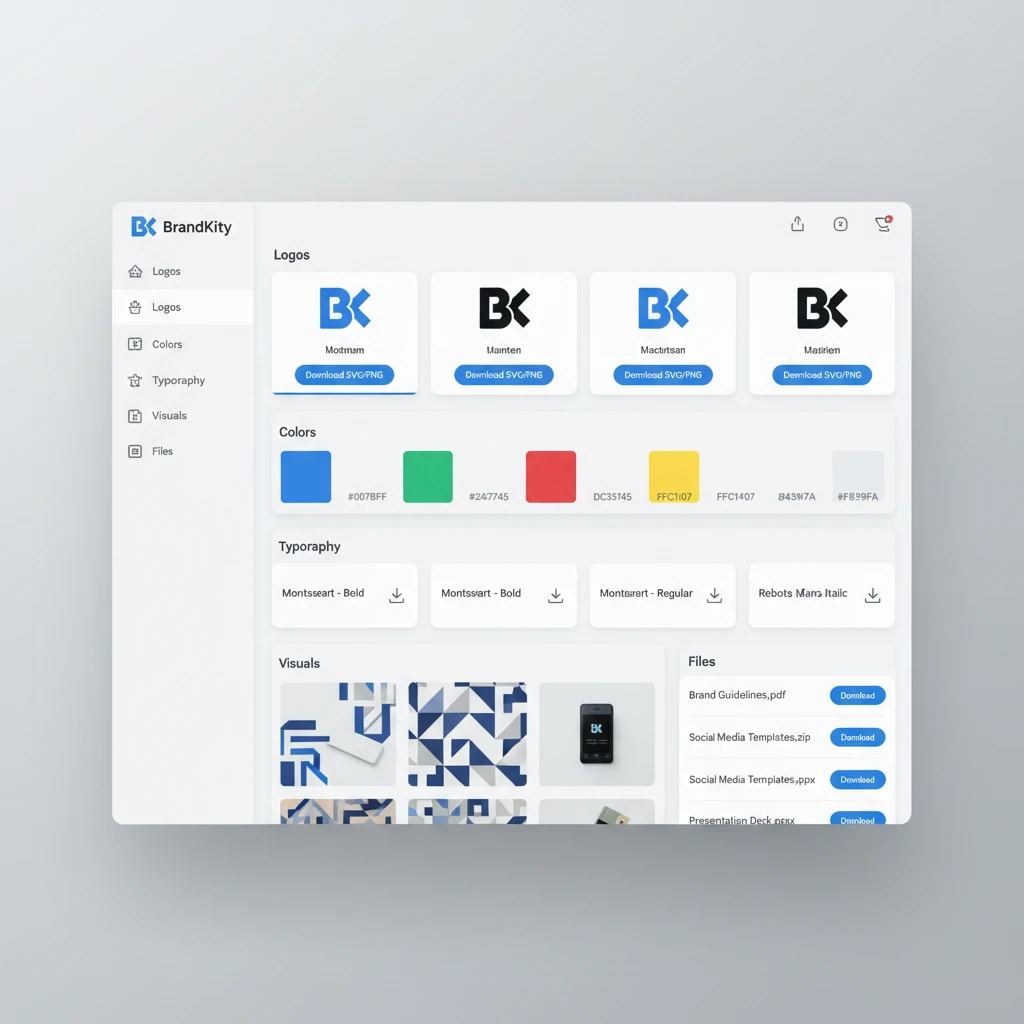
The risk of misplaced or outdated assets is a constant threat when relying on outdated delivery protocols. Clients may accidentally delete files, forget where they saved them, or simply lose track of them among their other digital clutter. This often leads to them returning to your agency for replacements, consuming valuable time and resources. Furthermore, the potential for clients to access and use misplaced or incorrect assets can lead to significant brand damage, impacting their marketing efforts and their perception of your agency’s professionalism. This highlights the need for a more robust and managed solution than simple file sharing. This is a core problem that platforms like BrandKity aim to solve, offering a more simple approach to brand delivery.
The Power of One: Unifying Your Brand Assets with a Single Link
In today’s fast-paced creative landscape, the chaos of scattered brand assets can lead to significant client confusion and brand inconsistencies. Implementing a centralized delivery system, most effectively achieved through a single, unified link, is paramount. This approach transforms the often-tedious brand handoff process into a streamlined, professional experience. A solitary link acts as a master key, unlocking all necessary brand elements for your client, eliminating the need to navigate multiple folders, email threads, or cloud storage services. This consolidation not only saves time for both the creative team and the client but also significantly reduces the risk of outdated or incorrect assets being used, safeguarding the integrity of the brand.
How a centralized hub simplifies access for clients
A centralized hub, accessible via a single, shareable link, acts as a digital vault for all brand assets. Imagine a client needing a specific logo variation for a new marketing campaign. Instead of digging through their inbox or a shared drive, they can access your curated link and find precisely what they need. This simplicity is crucial. Decision criteria for choosing a centralized system include ease of navigation, robust search functionality, and clear organization. Pitfalls to avoid are overly complex folder structures, insufficient categorization, and a lack of clear naming conventions, which can negate the benefits of centralization. For instance, a graphic designer might provide a client with a single link to their entire brand kit, encompassing logos, color codes, and font files, rather than sending dozens of individual files. This immediate access empowers clients and builds trust.
Ensuring brand consistency across all client touchpoints
Brand consistency is the bedrock of a strong brand identity. When clients have easy access to approved, up-to-date assets, they are far more likely to use them correctly across all their platforms and materials. A unified delivery link acts as the single source of truth, preventing the proliferation of incorrect logo versions, off-brand color usage, or improper typography. This is especially critical for larger organizations with multiple teams or external partners who might not have direct access to the original design files. By providing a single point of access, you minimize the opportunity for errors. For example, a marketing team needing social media graphics can pull approved logos and color palettes directly from the brand hub, ensuring a cohesive look and feel that aligns with the established brand strategy. This proactive approach prevents costly rebranding efforts down the line.
Empowering clients with self-service brand exploration
Beyond mere delivery, a well-structured brand asset hub empowers clients to explore and understand the brand guidelines independently. This self-service capability fosters a deeper appreciation for the brand’s visual identity and reduces reliance on repeated queries to the creative team. When clients can easily browse through approved imagery, understand logo spacing rules, and access font hierarchies, they become more capable custodians of the brand. Decision criteria for an effective self-service hub include intuitive navigation, clear explanations, and readily available examples. A common pitfall is a lack of context, leaving clients guessing about asset application. For example, a small business owner can log in to their brand portal, review the usage guidelines for their logo, and confidently apply it to a new business card design without needing to ask for clarification, demonstrating enhanced client autonomy.
Essential Components of a Professional Brand Asset Delivery
A truly professional brand asset delivery goes beyond simply dumping files into a folder. It requires careful curation and presentation of essential components that empower clients to use the brand effectively and consistently. This comprehensive approach minimizes confusion and fosters a sense of clarity, ensuring that every application of the brand reflects the intended vision. The goal is to provide not just the assets themselves, but also the context and guidance needed for their proper implementation. Without these core elements, even the most beautifully designed assets can fall into disuse or misapplication, undermining the entire branding effort.
High-resolution logos in multiple formats (vector and raster)
Logos are the visual cornerstone of any brand. A professional delivery must include high-resolution versions in various formats to cater to diverse application needs. This means providing vector formats like SVG and AI, which are scalable to any size without loss of quality, making them ideal for print, signage, and large-scale applications. Equally important are raster formats such as PNG (with transparent backgrounds for web use) and JPG (for general web and digital use). Offering these variations ensures clients can seamlessly integrate the logo into everything from a tiny favicon to a massive billboard. For instance, a client might need a high-resolution vector logo for a large banner but a smaller PNG version for their website’s header. Providing both eliminates the need for them to scale or convert files themselves, which can lead to quality degradation.
Color palettes: HEX, RGB, CMYK, and Pantone values
Precise color representation is critical for maintaining brand recognition. A professional brand asset delivery will include the full spectrum of color values required for different media. This encompasses HEX codes for digital and web applications, RGB values for screen-based designs, CMYK values for professional printing, and Pantone (PMS) codes for exact color matching in offset printing and merchandise. Ensuring these values are clearly listed and easily accessible prevents costly color shifts and ensures the brand’s visual identity remains consistent across all touchpoints. For example, a client working with a printer for brochures needs the CMYK and Pantone values to ensure the printed colors accurately match the digital representations. Without these, the final product might appear noticeably different from the intended brand colors, leading to client dissatisfaction and potential rework. This meticulous detail underpins accurate brand color implementation.
Typography details: font files, weights, and usage guidelines
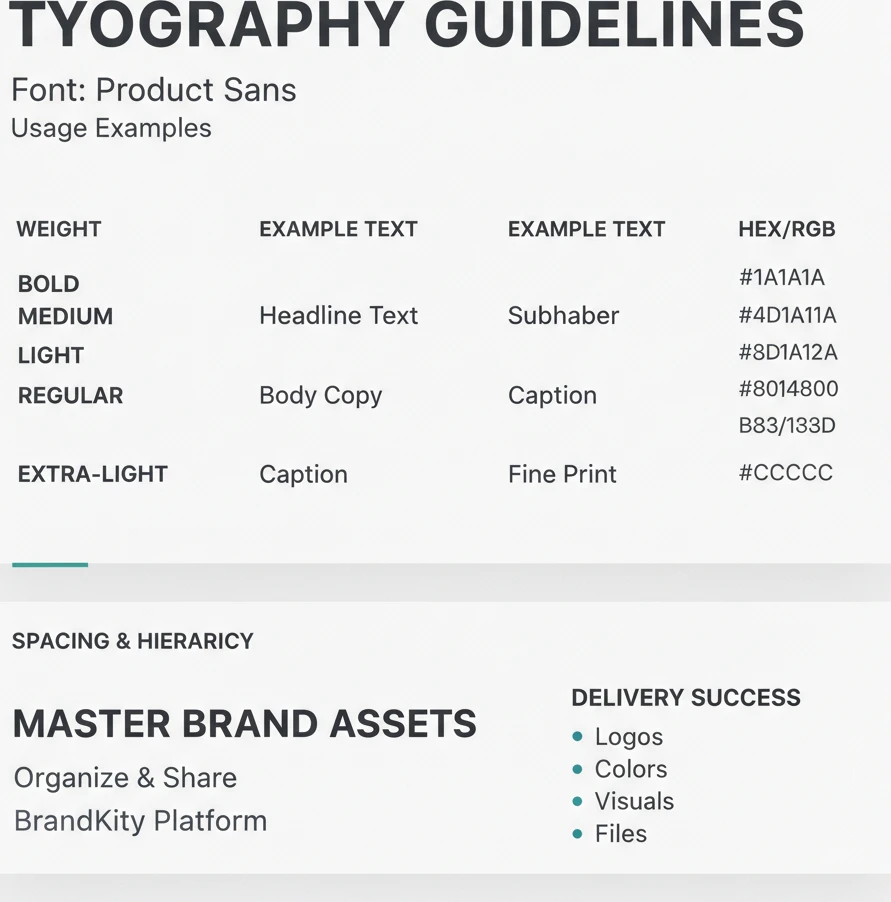
Typography plays a vital role in conveying a brand’s personality and ensuring readability. A comprehensive delivery includes the actual font files, along with detailed instructions on their usage. This typically involves providing different font weights (e.g., light, regular, bold, italic) and specifying which weights are intended for headings, body text, and other applications. Clear guidelines on acceptable font pairings and any restrictions on usage are also essential. For instance, a client might be provided with the primary brand font for headlines and a secondary, more legible font for body copy. Accompanying these files with a typography guide that demonstrates proper hierarchy and usage best practices empowers the client to create professional-looking documents and web content, avoiding common pitfalls like overusing bold text or selecting inappropriate font sizes for different mediums.
Imagery guidelines and approved visual assets
Visual assets, including photography and illustrations, significantly shape a brand’s perception. A professional delivery will include a curated selection of approved imagery, alongside guidelines for their use. This means providing a library of high-quality photos and illustrations that align with the brand’s aesthetic, tone, and messaging. Crucially, it also involves establishing clear rules about what kind of imagery is acceptable and what should be avoided. Decision criteria for selecting imagery include relevance to the brand’s values, demographic targeting, and overall visual style. Pitfalls include providing generic stock photos or failing to specify the emotional tone expected from imagery. For example, a client launching a new product might be provided with a set of lifestyle photos showcasing the product in aspirational yet relatable scenarios, along with guidelines that emphasize natural lighting and authentic representation, ensuring visual storytelling remains on-brand.
Elevating Your Handoff with Interactive Brand Guidelines
Moving beyond static PDF documents, interactive brand guidelines transform the handoff process into an engaging and educational experience for clients. These digital resources are designed to be more than just a reference manual; they are a dynamic tool that simplifies complex branding rules and demonstrates their practical application. By leveraging interactive elements, you can significantly enhance client understanding and compliance, leading to a more cohesive and professional brand presence across all their communications. The shift towards interactive guidelines reflects a broader trend in user experience design – making information accessible, digestible, and actionable.
Making brand rules engaging and easily digestible
Interactive brand guidelines leverage technology to make complex branding rules understandable and memorable. Instead of pages of dense text, think clickable elements, embedded videos, and visual examples that respond to user interaction. This approach caters to modern learning styles and makes the information far more accessible. Decision criteria for creating engaging guidelines include intuitive navigation, clear visual hierarchy, and multimedia integration. A common pitfall is creating an interactive experience that is technically complex or slow to load, which can detract from its usefulness. For instance, a client can click on a logo variation within the interactive guide, and a short animation might play demonstrating the correct way to resize it while maintaining proportions, making the rule instantly practical.
Showcasing proper logo usage and clear space
Interactive guidelines excel at demonstrating the nuances of logo usage, particularly concepts like clear space and proper exclusion zones. Rather than relying on static diagrams, an interactive element can allow clients to hover over a logo and see the defined clear space dynamically expand or contract, visually reinforcing the rule. This hands-on approach makes the abstract concept of “breathing room” around a logo tangible. Pitfalls to avoid include overly rigid interactive elements that don’t allow for exploratory clicks or overly simplistic representations that fail to convey the importance of the rule. For example, a client can interact with a logo element, dragging a simulated “safe zone” around it to understand the minimum required distance from other graphical elements, ensuring logo integrity is maintained in all applications.
Demonstrating effective color and typography application
Interactive brand guidelines can vividly illustrate how colors and typography should be applied in real-world scenarios. Clients can click through various design mockups—website headers, social media posts, print ads—and see the brand’s color palette and typography system in action. This allows them to grasp the intended mood and impact of specific combinations. Decision criteria for effective demonstration include using realistic mockups and providing clear explanations for each application. A pitfall is using generic or uninspired examples that don’t effectively showcase the brand’s unique visual language. For instance, a client can select a paragraph within an interactive guideline and see it automatically rendered in the approved body font, then click a button to change the font weight, observing the immediate visual shift and understanding its impact on readability, thus mastering visual hierarchy.
Designing for Client Success: Accessibility and Usability
The ultimate goal of brand asset delivery is client success. This means designing the entire handoff process with the client’s needs and experience at the forefront. Accessibility and usability are not afterthoughts; they are fundamental pillars that ensure clients can effortlessly utilize the provided assets. A well-designed delivery system empowers clients, builds confidence, and ultimately strengthens the brand by enabling consistent and correct application of its visual identity. Prioritizing these aspects transforms a technical transfer of files into a collaborative step towards a stronger brand presence.
Structuring assets logically for intuitive client navigation
The way brand assets are organized within the delivery system directly impacts a client’s ability to find what they need quickly and efficiently. A logical structure is paramount. This involves grouping assets by type (logos, colors, fonts, imagery), by application (web, print, social media), or a combination of both. Clear labeling and consistent categorization are key decision criteria. Pitfalls include haphazard file placement, vague naming conventions, or an overwhelming number of subfolders that make navigation a chore. For example, a client needing a logo for a website can intuitively navigate to a “Web Logos” folder and find optimized PNG and SVG files, rather than sifting through dozens of print-ready vector files. This structured approach ensures a frictionless retrieval experience.
Providing clear instructions and helpful tips within the delivery
Beyond simply providing the assets, including clear, concise instructions and helpful tips significantly enhances usability. This contextual guidance acts as a supportive layer, anticipating client questions and offering solutions proactively. Think of it as a mini-user manual embedded within the asset delivery. Decision criteria for effective instructions include simplicity, clarity, and relevance to common client challenges. A pitfall is overwhelming clients with jargon or overly technical instructions. For instance, alongside the font files, a brief note might explain the primary use case for each font weight, such as “Use Bold for Headlines” or “Regular for Body Text,” ensuring immediate understanding and preventing misuse, thereby facilitating informed asset utilization.
Considering different client technical proficiencies
Clients possess varying levels of technical expertise. A successful brand asset delivery must cater to this spectrum, from technically savvy marketing managers to small business owners with limited design software knowledge. This means offering assets in universally compatible formats and providing accessible guidance. Decision criteria include offering both raw vector files for designers and simpler, ready-to-use raster files for less technical users. A common pitfall is assuming all clients have the same software or understanding. For example, providing instructions on how to embed a font in a Microsoft Word document, alongside guidelines for using advanced vector editing software, ensures that clients of all skill levels can effectively work with the brand assets, promoting universal brand application.
Streamlining Agency Workflows: From Design to Delivery
Effective brand asset delivery is more than just sending files; it’s about embedding a seamless process into your agency’s core operations. Integrating asset management directly into your project lifecycle means clients receive everything they need, precisely when they need it, without delays. This isn’t just about tidiness; it’s about enhancing client satisfaction and building trust. When assets are organized and accessible from the outset, it minimizes the risk of miscommunication and ensures everyone is working with the latest versions. This proactive approach reduces the likelihood of last-minute panics or the need for urgent asset resends, which can derail project timelines and strain client relationships. For instance, a project kicking off with a clearly defined brand kit link allows designers to immediately pull correct logos, color palettes, and typography, ensuring brand consistency across all deliverables from day one. This practice supports a more streamlined agency workflow overall.
Reducing internal friction and back-and-forth communication is a significant benefit of a well-oiled brand asset delivery system. Without a central, organized repository, designers and account managers often spend valuable time searching for specific files, clarifying formats, or confirming usage rights. This can lead to frustrated team members and, more importantly, potentially incorrect asset usage by the client. Implementing a single source of truth, like a dedicated platform, cuts down on these repetitive tasks. For example, instead of emailing multiple versions of a logo, a client can access the definitive set of approved assets through a shared link. This also empowers clients to self-serve for common asset needs, freeing up agency personnel to focus on higher-value tasks. The result is a more efficient team and a happier client.
By automating and simplifying the asset delivery process, you are actively freeing up your designers’ time. Designers often get bogged down by administrative tasks related to file management and delivery – tasks that pull them away from their core creative responsibilities. When asset organization and distribution are handled efficiently, designers can dedicate more energy to conceptualizing, designing, and refining creative solutions. Consider a scenario where a designer no longer needs to manually package and upload multiple file formats for each asset. Instead, they can trust a system to manage this, allowing them to spend an extra hour or two per project on strategic visual development. This shift not only boosts individual productivity but also contributes to higher quality creative output and increased job satisfaction for your design team.
Future-Proofing Your Brand Deliveries in 2026 and Beyond
The digital landscape is in constant flux, and client needs evolve just as rapidly. To future-proof your brand asset deliveries, you must remain agile and adapt to these changes. This means moving beyond static, one-time deliveries and embracing dynamic, accessible brand hubs. Clients today expect not only a comprehensive set of assets but also clarity on how to use them effectively across a growing number of digital platforms – from social media to emerging metaverse applications. Preparing for these shifts involves anticipating new file formats, resolution requirements, and interactive elements. For example, a client might need animated logo variations for video content or specific icon sets for a new AR experience. Proactive planning ensures you’re not just meeting current demands but are also ready for future marketing channels and technological advancements, maintaining your brand’s relevance and impact. Understanding how to adapt to evolving client needs is crucial for sustained success.
Leveraging technology is paramount for maintaining a cutting-edge approach to brand asset management and delivery. In 2026, relying on outdated methods like shared cloud folders with inconsistent naming conventions is no longer viable. Instead, embracing platforms designed for streamlined asset delivery offers significant advantages. These tools can automate file conversion, organize assets by use case (e.g., web, print, social media), and provide version control, ensuring clients always have access to the most appropriate and up-to-date materials. For instance, a system that automatically generates different file types and sizes of a logo upon request saves immense time and reduces errors. This technological integration not only simplifies the delivery process but also enhances the security and integrity of your brand assets, preventing unauthorized use or modification. A robust solution acts as your central hub for all brand elements, simplifying complex workflows.
The long-term benefits of a well-defined and executed brand asset handoff strategy are substantial. Beyond immediate client satisfaction, it cultivates a reputation for professionalism and reliability. Clients who experience a smooth, organized delivery process are more likely to return for future projects and refer new business. Furthermore, by establishing clear guidelines and accessible assets, you empower clients to maintain brand consistency independently, which reflects positively on your agency’s work. Think of it as building a foundation for ongoing brand success. A comprehensive asset delivery also acts as a valuable reference point for the client, reducing the likelihood of them deviating from brand standards over time. This continuous support solidifies your role as a trusted partner, ensuring the longevity and impact of the brands you help build.
Saurabh Kumar
Founder, BrandKity
Saurabh writes about practical brand systems, faster client handoffs, and scalable workflows for designers and agencies building repeatable delivery operations.
Connect on LinkedIn