Stop Asset Chaos: Simple Brand Delivery
Imagine the relief of knowing exactly where to find any brand asset, from the primary logo to the approved secondary color palette. No more frantic se…
Table of contents
- The Hidden Costs of Scattered Brand Assets
- The frustrating reality of “Where did I save that file?”
- Client confusion and the “Can you send me the logo again?” loop
- Impact on project timelines and agency efficiency
- Defining a ‘Chaos-Free’ Brand Handoff
- What truly constitutes a professional and simple brand delivery?
- Beyond just sending files: the importance of context and organization
- Setting client expectations for a smooth transition
- The Power of a Single Source of Truth for Brand Assets
- Why multiple file versions lead to inconsistencies
- Establishing a centralized repository for logos, colors, fonts, and more
- How a structured link simplifies access for everyone
- Organizing Your Brand Kit for Ultimate Clarity
- Categorizing assets logically: logos, visuals, typography, etc.
- Naming conventions that prevent future headaches
- Version control and audit trails: knowing what’s current
- Crafting Effective Brand Guidelines: More Than Just a PDF
- Key elements of a comprehensive brand guideline document (even in a digital format)
- Making guidelines accessible and actionable
- Integrating guidelines with asset delivery for context
- Streamlining Client Handoff: Best Practices for Designers & Agencies
- The ideal timeline for brand asset delivery
- Communicating the value of organized assets to clients
- Checklist: What to include in every brand kit delivery
- Leveraging Technology for Seamless Brand Asset Delivery
- Exploring platforms designed for brand asset management
- The ‘one link’ concept: benefits and implementation
- Automating repetitive tasks and reducing manual effort
- Alternatives to Centralized Brand Delivery Platforms (and when to choose them)
- Manual methods: Cloud storage and shared folders (pros and cons)
- Dedicated brand guideline software (when it makes sense)
- The trade-offs between DIY solutions and specialized platforms
- The Impact on Your Freelance or Agency Workflow
- Future-Proofing Your Brand: Integrating with Design Systems
Imagine the relief of knowing exactly where to find any brand asset, from the primary logo to the approved secondary color palette. No more frantic searches through email chains or shared drives. This isn’t a distant dream; it’s the reality of a structured approach to brand delivery that eliminates chaos.
For designers and agencies, delivering brand assets professionally is more than just sending files; it’s about fostering trust and ensuring your client’s brand identity remains cohesive and impactful. When assets are scattered, this professionalism erodes, leading to a cascade of avoidable problems.
The Hidden Costs of Scattered Brand Assets
The seemingly minor inconvenience of a misplaced file or an outdated logo can snowball into significant operational inefficiencies and damage client relationships. The immediate frustration of not being able to locate a needed asset is just the tip of the iceberg. This disorganization breeds wasted time, unnecessary expenses, and a perception of unprofessionalism that can be hard to overcome.
When team members, clients, or even external collaborators spend precious minutes or hours searching for brand elements like logos, fonts, or imagery, that time is directly subtracted from productive, billable work. This constant digging for files often leads to project delays, increasing the risk of missed deadlines and impacting your agency’s overall throughput. Furthermore, the mental energy expended on these unproductive searches can lead to burnout and decreased morale among your creative team. It’s a drain on resources that could be far better allocated to actual creative work.
The frustrating reality of “Where did I save that file?”
This question echoes through countless design studios and agency offices. It signifies a breakdown in organization, where brand assets are spread across disparate cloud storage services, personal hard drives, and overflowing email inboxes. Without a centralized system, finding the correct version of a logo or the precise HEX code for a brand color becomes a treasure hunt. This often results in duplicate efforts, as team members might recreate assets that already exist but cannot be found. The core problem lies in the lack of a single, authoritative source, forcing individuals to rely on memory or the hope that a colleague knows where the “official” files reside. This is not a scalable or sustainable way to manage valuable brand collateral, inevitably leading to wasted hours and mounting frustration.
Client confusion and the “Can you send me the logo again?” loop
Clients often aren’t designers, and their understanding of file management can be limited. When they receive a disorganized collection of files, or when they need an asset and have to ask for it repeatedly, it creates a cycle of confusion and frustration. This common request, “Can you send me the logo again?”, is a clear indicator that the initial handover was not sufficiently clear or organized. Each time this happens, it erodes the client’s confidence in your process and your attention to detail. It also means your team has to stop what they’re doing to fulfill the request, interrupting workflow and adding further delays. For clients, it can feel like the agency isn’t on top of their own materials, which can translate to concerns about the overall management of their brand.
Impact on project timelines and agency efficiency
Scattered brand assets have a direct and detrimental impact on project timelines and overall agency efficiency. When designers, marketers, or project managers can’t quickly access the correct logos, brand colors, or approved imagery, projects stall. This delay isn’t just a minor inconvenience; it can push back critical launch dates, delay marketing campaigns, and impact client satisfaction. For agencies, this inefficiency translates directly into lost revenue. Every hour spent searching for files is an hour that cannot be billed to a client or used for new business development. Streamlining asset delivery is therefore not just about good practice, but a fundamental aspect of optimizing an agency’s operational capacity and profitability. Ultimately, a chaotic asset management system acts as a bottleneck, hindering the agency’s ability to deliver high-quality work promptly.

Defining a ‘Chaos-Free’ Brand Handoff
A chaos-free brand handoff is more than just a final file dump; it’s a carefully orchestrated delivery designed to empower your client and ensure the long-term integrity of their brand identity. It signifies a professional culmination of your creative work, providing clarity and confidence to all parties involved. This process should feel like a seamless transition, where all necessary components are readily accessible and easy to understand. It’s the moment where all your meticulous planning and creative execution come together in a way that sets the client up for success.
This level of delivery instills trust and reinforces the value of your services. It demonstrates a commitment to not just creating a brand, but ensuring it can be effectively implemented and maintained. The goal is to move beyond the transactional nature of just sending files and embrace a holistic approach that provides genuine support and ongoing brand guardianship. A well-executed handoff prevents future issues and builds a strong foundation for continued collaboration.
What truly constitutes a professional and simple brand delivery?
A professional and simple brand delivery goes far beyond merely emailing a zipped folder. It means providing a curated and organized collection of all essential brand assets in a format that is easily digestible and usable by the client. This includes not only the final logo files in various formats (SVG, PNG, JPG) but also defined color palettes (HEX, RGB, CMYK), typography guidelines, imagery samples, and any other critical visual elements. A truly professional delivery is accessible and intuitive, minimizing the need for the client to ask follow-up questions. It anticipates their needs, offering clear instructions and context for each asset. The aim is to make it as effortless as possible for the client to implement their brand consistently across all their platforms and materials.
Beyond just sending files: the importance of context and organization
Simply transferring files without context is a recipe for future misunderstandings and misapplications of the brand. A professional brand delivery provides more than just the assets themselves; it offers a structured environment where each element has a purpose and clear usage guidelines. This means including a brief overview of the brand strategy, explaining the rationale behind design choices, and providing clear do’s and don’ts for asset usage. For example, demonstrating how different logo variations should be used in specific contexts ensures brand integrity. Organizing these elements logically, perhaps within a dedicated platform or a well-structured digital folder, makes it easy for clients to navigate and find what they need. This contextual information is crucial for empowering the client and ensuring the brand is applied correctly over time.
Setting client expectations for a smooth transition
A critical, yet often overlooked, aspect of a smooth brand handoff is proactively setting clear client expectations. This begins early in the project, during the contract and onboarding phase. It’s essential to communicate exactly what the final brand delivery will entail: what types of assets will be provided, in what formats, and how they will be organized and accessed. Discussing the timeline for the final handover and any post-delivery support or training you offer can prevent surprises. For instance, informing clients that they will receive a single, structured link to their brand assets, rather than a large email attachment, manages their expectations about the delivery method. By clearly outlining the process and deliverables, you foster trust and ensure the client feels prepared and confident about managing their new brand identity. This upfront communication minimizes confusion and prevents common post-delivery friction points.
The Power of a Single Source of Truth for Brand Assets
In the digital age, maintaining brand consistency across all touchpoints is paramount. The proliferation of digital channels and marketing materials means that having a single, reliable source for all brand assets is no longer a luxury, but a necessity. This centralized repository acts as the definitive guide for anyone interacting with the brand, from internal teams to external partners. It eliminates the ambiguity and potential for error that arise from multiple, unmanaged sources of truth.
Implementing a single source of truth significantly reduces the risk of brand dilution and ensures that every piece of communication adheres to the established visual identity. It empowers users with confidence, knowing that the assets they are accessing are current, approved, and ready for use. This approach not only streamlines workflows but also protects the brand’s integrity, making it a cornerstone of effective brand management.
Why multiple file versions lead to inconsistencies
When brand assets are scattered across various folders, emails, and individual computers, the likelihood of using an outdated or incorrect version skyrockets. Imagine a scenario where a client uses an old logo file because they can’t find the latest approved version, or a marketing team applies slightly off-brand colors because they’re working from an old digital swatch. These seemingly small discrepancies, when multiplied across numerous applications and collaborators, lead to a fragmented brand image. This inconsistency erodes brand recognition and can make a business appear unprofessional and disorganized. It’s a direct consequence of not having a designated, authoritative location where the most current and approved assets are consistently stored and accessible to everyone who needs them.
Establishing a centralized repository for logos, colors, fonts, and more
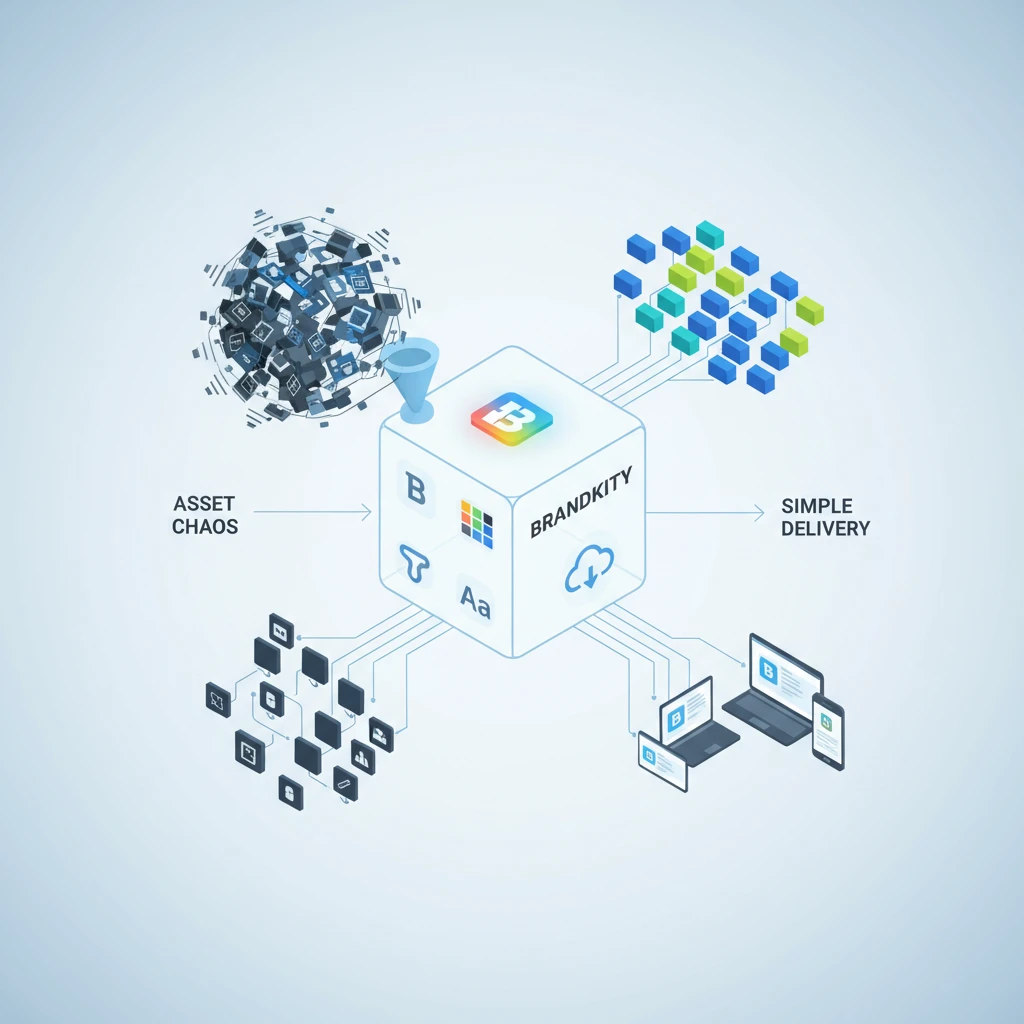
The foundation of a chaos-free brand delivery is a centralized repository, often referred to as a digital asset management (DAM) system or a brand hub. This system acts as the single source of truth for all approved brand elements. Within this repository, you can store and organize everything: primary and secondary logos in various formats, approved color palettes with their corresponding codes (HEX, RGB, CMYK, Pantone), brand typography (font files and licensing information), photography guidelines, illustration styles, and even templates for common collateral like social media posts or presentations. This consolidation ensures that all team members and external stakeholders are accessing the exact same, up-to-date assets, drastically reducing the chance of errors and promoting brand consistency across all communications and applications.
How a structured link simplifies access for everyone
Once a centralized repository is established, the next logical step is to provide a single, structured link that grants access to these organized assets. Instead of clients or team members needing to log into complex systems or navigate through multiple folders, they are presented with a clean, intuitive interface accessible via one URL. This link acts as a universal key to the brand’s visual identity. It can be shared easily via email, added to project management tools, or included in onboarding materials. The beauty of a structured link is that it can be updated dynamically; as new assets are added or old ones retired, the link automatically reflects these changes without requiring re-sharing or re-downloading. This ensures everyone is always referencing the most current brand elements, promoting effortless brand consistency.
Organizing Your Brand Kit for Ultimate Clarity
A well-organized brand kit is the backbone of effective brand delivery. It’s not enough to simply gather all your assets; they must be structured in a way that makes sense to anyone who needs to use them. This means implementing logical categorization, adhering to clear naming conventions, and maintaining rigorous version control. The goal is to create a system so intuitive that finding the right asset is a quick and painless process, minimizing confusion and maximizing efficiency for both your team and your clients. Investing time in this organization upfront pays significant dividends in the long run, preventing ongoing headaches and ensuring brand integrity.
Think of your brand kit as a meticulously curated library. Each book (asset) has its place, its title (name), and its edition (version). When this system is in place, the discovery and usage of brand elements become seamless. This clarity not only benefits external stakeholders but also empowers your internal creative teams, allowing them to focus on creating impactful work rather than wrestling with disorganized files. It’s about building a foundation for consistent brand execution.
Categorizing assets logically: logos, visuals, typography, etc.
The first step in creating an exceptionally clear brand kit is to employ a logical categorization system. Grouping similar assets together makes navigation intuitive. Common categories include: Logos (primary, secondary, favicon, usage variations), Color Palettes (main colors, accent colors, shades, with associated codes), Typography (primary and secondary fonts, web fonts, usage guidelines), Imagery (photography style, approved stock imagery, illustrations), and potentially Templates or Brand Guidelines documents. Each category should be clearly labeled and contain subfolders for specific variations or use cases. This systematic approach ensures that users can quickly locate precisely what they need without sifting through irrelevant files, making the entire brand asset management process far more efficient and user-friendly.
Naming conventions that prevent future headaches
Consistent and descriptive naming conventions are a critical but often overlooked aspect of brand asset organization. A well-defined naming system acts as an immediate identifier, telling users exactly what a file is without needing to open it. A good convention might include the brand name, asset type, format, and version, separated by hyphens or underscores (e.g., `BrandName-Logo-Primary-Vector.svg` or `BrandName_ColorPalette_CMYK_v2`). This standardized approach eliminates ambiguity and prevents the accumulation of generic file names like “logo_final_final_real.png” that plague disorganized systems. Implementing and enforcing these conventions across your team is essential for long-term maintainability and ensures that anyone, at any time, can easily understand and retrieve the correct asset.
Version control and audit trails: knowing what’s current
In the dynamic world of branding, assets evolve. To maintain consistency and prevent the use of outdated materials, robust version control and audit trails are indispensable. Version control systems allow you to track changes made to assets over time, assign unique version numbers (e.g., v1.0, v1.1, v2.0), and easily revert to previous iterations if necessary. An audit trail provides a chronological record of who accessed, modified, or downloaded specific assets and when. This transparency is crucial for accountability and troubleshooting. For instance, if a client reports an issue with a logo, the audit trail can pinpoint exactly which version they are using and when it was last accessed. This ensures that everyone is working with the latest approved versions and provides a clear history of asset management.
Crafting Effective Brand Guidelines: More Than Just a PDF
Brand guidelines are the bedrock of consistent brand expression. They serve as a universal language for anyone interacting with a brand, ensuring that every touchpoint, from a social media post to a billboard, feels cohesive and professional. Moving beyond a static PDF is crucial in today’s dynamic digital landscape. A well-structured set of guidelines, even if primarily digital, empowers teams to implement the brand correctly and efficiently. This involves more than just listing color codes and font names; it’s about providing clear rationale and practical applications.
Key elements of a comprehensive brand guideline document (even in a digital format)
A robust brand guideline document, whether a PDF or an interactive online resource, should meticulously detail several critical components. At its core, it must outline the brand’s mission, vision, and values, providing the foundational narrative that informs all visual and verbal communications. This is followed by an in-depth exploration of the visual identity, including logo variations (primary, secondary, and favicon), clear usage rules (minimum size, clear space, incorrect usage), and a definitive color palette with primary, secondary, and accent colors specified in CMYK, RGB, HEX, and Pantone values. Typography sections should specify primary and secondary typefaces, their intended uses (headings, body copy, etc.), and hierarchy examples. Imagery and illustration styles must be defined with examples of approved and discouraged visuals, alongside guidelines for tone of voice and grammar. Even in a digital format, these elements are non-negotiable for maintaining brand integrity. For instance, defining the specific emotional response a brand should evoke through its visuals helps designers make better creative decisions.
Making guidelines accessible and actionable
The most comprehensive brand guidelines are ineffective if they are difficult to find or understand. Accessibility means ensuring that the document is easily discoverable by all relevant stakeholders, whether they are internal marketing teams, external agencies, or freelance collaborators. This often translates to a centralized, easily navigable digital hub rather than a buried PDF. Actionability goes a step further by providing practical examples and templates. Instead of just stating “use a friendly tone,” include examples of approved and disapproved phrasing for common scenarios like customer service inquiries or promotional copy. For visual elements, provide downloadable assets (like pre-sized social media templates) or embed interactive elements that showcase correct application. This reduces ambiguity and the likelihood of errors. Consider a scenario where a new team member needs to create a presentation; easily accessible templates and clear usage rules for fonts and colors dramatically speed up their workflow and ensure brand consistency from the outset. This aligns with the principles of creating a design system link for brand consistency.
Integrating guidelines with asset delivery for context
Guidelines should not exist in a vacuum, separate from the actual brand assets they govern. Effective brand delivery integrates these two components, providing context at the point of access. When a designer downloads a logo file, for example, they should be able to immediately see or access information detailing its correct usage, acceptable sizes, and any associated brand messaging. This contextualization is best achieved through platforms that can link assets directly to their guideline documentation. This approach eliminates the guesswork for users, ensuring that assets are used as intended. Imagine a client needing to brief an external printer; providing them with a structured link that includes both the high-resolution logos and a brief on their correct application drastically reduces the chances of misprints or off-brand materials. This layered approach supports a more robust master brand asset delivery workflow.
Streamlining Client Handoff: Best Practices for Designers & Agencies
The client handoff is a critical juncture in the design and branding process. It’s the moment when all the hard work culminates in the delivery of tangible assets and foundational branding elements. A disorganized or unprofessional handoff can lead to client confusion, create unnecessary revisions, and undermine the perceived value of your services. Conversely, a streamlined, well-structured delivery demonstrates professionalism, builds trust, and empowers the client to effectively utilize the brand assets moving forward. This process is not merely about transferring files; it’s about ensuring the client understands how to maintain brand integrity and consistency independently. For agencies, this step is crucial for client retention and generating positive referrals, making it an integral part of any successful agency workflow for brand delivery.
The ideal timeline for brand asset delivery
The timing of brand asset delivery is as important as the content itself. Ideally, the full suite of brand assets and guidelines should be delivered upon final project approval and payment confirmation, before the client begins implementing the new brand independently. This ensures that they have all the necessary resources before they need them, preventing delays or the creation of off-brand materials. A phased approach can also be effective for larger projects; for instance, delivering core identity elements (logo, color, typography) alongside foundational guidelines shortly after sign-off, with additional assets like templates and social media kits following as they are finalized. A common pitfall is delaying delivery, leading clients to request access to incomplete or preliminary files, which can cause inconsistencies. Establishing a clear delivery schedule upfront in your client contract sets expectations and avoids ambiguity. For example, delivering a comprehensive brand kit within 7-10 business days of final project sign-off provides a realistic and professional cadence.
Communicating the value of organized assets to clients
Clients may not always grasp the importance of organized brand assets until they experience the pain of disorganization themselves. It’s your responsibility as a designer or agency to articulate this value clearly. Frame the organized delivery not just as a final deliverable, but as an investment in their brand’s future consistency and scalability. Explain that providing them with a structured kit, complete with clear guidelines and easily accessible files, saves them time and money in the long run by reducing errors, streamlining internal marketing efforts, and ensuring their brand always looks professional. Highlight how a single, unified source of truth for their brand assets prevents brand dilution and strengthens their market presence. For instance, you can demonstrate how readily available, correctly formatted logos reduce the chance of a printer misinterpreting requests or a marketing intern using an outdated version.
Checklist: What to include in every brand kit delivery
A comprehensive brand kit delivery should leave no room for doubt or missing pieces. A standard checklist ensures consistency across all client projects and provides a clear scope for what the client receives. Essential inclusions typically encompass all logo variations (vector and raster formats for different applications), a complete color palette (with specified values), primary and secondary typography files or clear instructions on sourcing them, and potentially a selection of brand photography or illustration examples. Crucially, this should be accompanied by a concise, user-friendly brand guideline document that summarizes key usage rules. For digital projects, include UI element libraries or style guides. Finally, ensure all files are clearly named and organized within logical folders. A sample delivery might include: `/Logos` (EPS, SVG, PNG, JPG), `/Colors` (ASE, HTML), `/Typography` (link to font foundry/license), `/BrandGuidelines.pdf`, and `/SocialMediaTemplates` (PSD). This systematic approach significantly simplifies their brand management and ensures professional implementation, helping to achieve effortless asset delivery for creatives.
Leveraging Technology for Seamless Brand Asset Delivery
In the digital age, technology offers powerful solutions to transform brand asset delivery from a cumbersome task into a seamless experience. Gone are the days of endless email attachments and scattered cloud folders. Modern platforms are designed to centralize, organize, and distribute brand assets efficiently, ensuring consistency and accessibility for all stakeholders. These tools not only simplify the process for designers and agencies but also empower clients with the resources they need to maintain brand integrity independently. By embracing technology, you can significantly reduce manual effort, minimize errors, and elevate the professionalism of your client handoffs, moving towards a more strategic approach to streamline client handoffs.
Exploring platforms designed for brand asset management
A growing ecosystem of specialized platforms caters to the unique needs of brand asset management and delivery. These solutions, often referred to as Digital Asset Management (DAM) systems or Brand Hubs, offer robust features beyond simple file storage. Key functionalities include version control to ensure users always access the latest approved assets, granular permission settings to control who can view, download, or edit specific files, and comprehensive usage analytics to track how assets are being utilized. Many also provide built-in tools for brand guideline documentation, ensuring that rules and assets are presented contextually. Examples range from enterprise-level DAM solutions to more focused platforms tailored for creative professionals and agencies. These platforms are engineered to provide a single source of truth for all brand collateral, fostering consistency and brand governance across an organization or with client partners. Their structured approach is invaluable for maintaining brand identity across numerous campaigns and touchpoints.
The ‘one link’ concept: benefits and implementation
The “one link” concept, often facilitated by brand asset management platforms, represents a significant leap forward in simplifying brand delivery. Instead of sending multiple files or directing clients to complex folder structures, you provide a single, clean, and branded URL that serves as a central repository for all brand assets and guidelines. The benefits are manifold: it streamlines communication, reduces the risk of clients downloading outdated or incorrect files, and presents a highly professional image. Implementation involves selecting a platform that supports custom branding for these delivery links and offers intuitive organization within the shared portal. This single point of access can house everything from logos and color palettes to typography guides, image libraries, and even pre-designed templates. For clients, it means immediate access to everything they need, precisely when they need it, eliminating friction and potential brand erosion. This unified access point is a cornerstone of efficient client collaboration and empowers them to become brand advocates.
Automating repetitive tasks and reducing manual effort
Technology plays a pivotal role in automating the mundane and repetitive aspects of brand asset delivery, freeing up designers and agencies to focus on more strategic creative work. Features like automated file formatting (e.g., generating PNG, JPG, and SVG versions of a logo automatically upon download) and bulk asset uploading with pre-defined metadata significantly reduce manual effort. Many platforms also offer automated notifications for asset updates or expiration, ensuring stakeholders are always working with the most current information. Workflow automation can be configured to trigger asset distribution upon project completion or client approval. For instance, instead of manually resizing and exporting logos for various client needs, a platform can handle these transformations on demand. This not only saves considerable time but also minimizes the human error inherent in manual processes, ensuring a higher degree of accuracy and professionalism in every delivery. This focus on efficiency directly contributes to slashing revisions and mastering brand delivery.
Alternatives to Centralized Brand Delivery Platforms (and when to choose them)
While dedicated brand asset management platforms offer the most comprehensive solution, they aren’t always the immediate necessity or the most budget-friendly option for every designer or agency, especially smaller ones or those just starting. Understanding alternative methods allows for flexibility and strategic choices based on project scope, client needs, and available resources. These alternatives, while potentially less feature-rich, can still provide effective brand delivery if implemented thoughtfully and with a clear understanding of their limitations. The key is to match the solution to the complexity of the brand and the client’s requirements, ensuring that professionalism and consistency are never compromised.
Manual methods: Cloud storage and shared folders (pros and cons)
Utilizing cloud storage services like Google Drive, Dropbox, or OneDrive with well-organized shared folders is a common and often cost-effective approach for brand asset delivery. The primary pro is accessibility and familiarity; most clients and designers already use these services, making adoption easy and requiring minimal training. Folder structures can be created to mimic a brand guide, separating logos, colors, and typography. However, the cons are significant. These platforms lack robust version control, making it easy for users to access outdated files. Granular permission settings can be complex to manage across multiple clients and collaborators, leading to accidental deletions or unauthorized access. Furthermore, there’s often a lack of contextual guidance; files are just files, without embedded rules or interactive examples, increasing the potential for misuse. This method is best suited for very small businesses with simple branding needs or for internal project sharing rather than comprehensive client handoffs.
Dedicated brand guideline software (when it makes sense)
For entities that primarily need to document and disseminate brand rules but may not require full-scale asset management, dedicated brand guideline software can be a strategic choice. These tools excel at creating interactive, easily updatable brand manuals, often with sections for style inspiration, tone of voice, and visual examples. They are ideal when the focus is heavily on the “why” and “how” of brand expression. This approach makes sense for marketing departments within larger corporations that already have asset libraries managed elsewhere, or for branding agencies that want to provide clients with a polished, digital representation of their brand’s strategic framework. If a client’s main challenge is understanding brand application rather than just accessing files, this specialized software offers a targeted solution. It bridges the gap between a static PDF and a full DAM by providing a richer, more engaging guideline experience.
The trade-offs between DIY solutions and specialized platforms
Choosing between a DIY approach using existing tools and investing in specialized brand delivery platforms involves weighing distinct trade-offs. DIY methods (like cloud storage) offer lower upfront costs and immediate availability but come with a substantial risk of inconsistency, manual overhead, and a less professional presentation. They require diligent manual organization and can become unmanageable as a brand or client base grows. Specialized platforms, conversely, demand a financial investment and a learning curve but provide significant benefits such as enhanced security, robust version control, automated workflows, and a superior, unified user experience. They automate processes that would otherwise be time-consuming and error-prone in a DIY setup. The decision hinges on your business’s scale, budget, the complexity of the brands you manage, and your commitment to long-term brand consistency and client satisfaction. For agencies aiming for scalability and premium service, specialized platforms often prove more cost-effective in the long run by reducing errors and saving time, as highlighted in discussions about design systems as your client delivery hub.
The Impact on Your Freelance or Agency Workflow
Disorganized brand assets can quickly become a bottleneck, significantly slowing down your creative process. When files are scattered across various cloud storage services, email threads, or local drives, the time spent searching for the correct logo version, color palette, or font file adds up. This inefficiency directly impacts your project timelines and profitability. Imagine a client requesting a specific file format for a new marketing campaign; without a centralized, organized system, this simple request can devolve into a lengthy treasure hunt. Implementing a streamlined brand delivery process means significantly reducing the time spent on asset requests and revisions. Instead of sifting through endless folders, you can access and share precisely what’s needed in seconds, freeing up valuable hours for creative work or client engagement.
Beyond internal efficiencies, a robust brand asset delivery system plays a crucial role in building strong client relationships. When you present your clients with a professionally organized collection of their brand assets, it signals competence and attention to detail. This transparency and ease of access improve client satisfaction and foster trust. Instead of clients feeling like they’re burdening you with repetitive requests, they can confidently navigate and utilize their brand elements independently, reinforcing their perception of your value. This clear, structured approach to brand assets leads to smoother communication and fewer misunderstandings, ultimately enhancing the overall client experience and paving the way for repeat business.
As your freelance business or agency grows, the ability to scale your operations becomes paramount. Inefficient asset delivery can become a major impediment to this growth. Manually managing and distributing assets for multiple clients becomes unsustainable and prone to errors. By adopting an efficient delivery process, you create a repeatable system that can handle an increasing workload without a proportional increase in administrative overhead. This means scaling your operations with efficient delivery processes allows you to take on more projects and serve more clients effectively. It’s about building a foundation that supports expansion, ensuring that your client handoffs remain as smooth and professional as they were when you had only a few clients.
Future-Proofing Your Brand: Integrating with Design Systems
The evolution of design tools and methodologies has brought design systems to the forefront of modern branding and development. At its core, a design system is a comprehensive set of standards, principles, and reusable components used to manage design and development effectively. The connection between organized brand assets and robust design systems is fundamental. Think of your brand assets (logos, colors, fonts, icons) as the foundational building blocks. When these blocks are meticulously organized and accessible, they seamlessly integrate into a design system, ensuring that every component and interface built adheres to the established brand identity. This structured approach moves beyond static files to a dynamic, living framework for brand expression. You can learn more about how design systems streamline processes in our article on Design Systems: Your Client Delivery Hub.
In today’s multi-channel marketing landscape, maintaining a consistent brand presence is more critical than ever. From websites and social media to print materials and app interfaces, every touchpoint must reflect the same brand identity. A well-organized asset delivery system, especially when integrated with a design system, is key to ensuring consistency across all brand touchpoints. When designers and developers have immediate access to approved, up-to-date brand assets through a single source of truth, the risk of using incorrect or outdated elements is drastically reduced. This guarantees that your brand’s visual language remains cohesive, reinforcing brand recognition and professional credibility across every platform. This consistency is a cornerstone of effective branding, amplifying your message and impact.
The digital landscape is constantly shifting, with new platforms, technologies, and design trends emerging regularly. Your brand’s visual identity needs to be agile enough to adapt to these changes without compromising its core essence. A flexible brand asset delivery system, particularly one that supports integration with evolving design systems, is crucial for future-proofing your brand. It allows you to adapt to evolving brand needs with a flexible delivery system. When your brand guidelines and assets are managed in a structured, easily updatable manner, you can quickly roll out updates, introduce new elements, or respond to market shifts. This adaptability ensures your brand remains relevant, resonant, and ready for whatever comes next, minimizing friction during brand refreshes or expansions.
Saurabh Kumar
Founder, BrandKity
Saurabh writes about practical brand systems, faster client handoffs, and scalable workflows for designers and agencies building repeatable delivery operations.
Connect on LinkedIn