Client Revisions? Master Brand Delivery
Delivering finished brand assets to clients can feel like navigating a minefield. What should be a triumphant moment of project completion often devol…
Table of contents
- The Unseen Cost of Brand Asset Chaos: Why Client Revisions Go Sideways
- The common scenario: a jumble of files, conflicting versions, and endless back-and-forth.
- How disorganization fuels client dissatisfaction and erodes trust.
- The ripple effect: wasted time, missed deadlines, and strained client relationships.
- Shifting from ‘File Dump’ to ‘Brand Sanctuary’: The Power of Structured Delivery
- Defining what constitutes ‘master brand delivery’.
- Why a single, organized link is your secret weapon.
- The psychological impact of professional brand handoff on clients.
- Beyond the Logo: What Truly Constitutes Complete Brand Assets
- Essential visual assets: logos (all formats), color palettes, typography.
- Supporting visuals: imagery styles, icons, illustrations.
- Functional assets: font files, motion graphics templates, even website UI kits.
- Streamlining Revisions: The ‘Single Source of Truth’ Principle
- How a centralized platform minimizes confusion during feedback loops.
- Tracking changes and version control without the spreadsheet nightmare.
- Empowering clients with clarity: what they *actually* need to see and approve.
- Crafting the Perfect Brand Asset Library: Key Organizational Strategies
- Categorization best practices: by asset type, project phase, or usage.
- Naming conventions that actually work (and save you headaches).
- Tagging and metadata: unlocking effortless searchability for clients and yourself.
- The ‘One Link’ Revolution: Simplifying Client Handoff for All Stakeholders
- How a single, shareable link replaces clunky folders and email chains.
- Ensuring accessibility and ease of download for various client technical proficiencies.
- The long-term benefit: a living, breathing brand resource for your client.
- Preempting Revisions: Setting Clear Expectations from Day One
- The role of a comprehensive brand brief in defining project scope.
- Communicating the asset delivery process upfront.
- Building in client review stages to minimize scope creep.
- From Feedback to Final Delivery: A Seamless Revision Workflow
- Best practices for receiving and processing client feedback.
- Implementing changes efficiently within your structured system.
- The final review: ensuring client satisfaction and asset completeness.
- Empowering Clients: Educating Them on Brand Asset Usage
- Providing clear guidelines on how and where to use assets.
- Demonstrating the value of consistency for their brand.
- The ‘why’ behind your asset organization – fostering client appreciation.
- Leveraging Technology for Effortless Brand Delivery in 2026
- Why traditional methods fall short in today’s fast-paced digital landscape.
- The impact of dedicated brand asset management platforms on efficiency and professionalism.
- Focusing on tools that automate, organize, and simplify the entire process.
Delivering finished brand assets to clients can feel like navigating a minefield. What should be a triumphant moment of project completion often devolves into a frustrating exchange of chaotic files and endless clarification requests. This disorganization doesn’t just prolong the process; it actively undermines the professional image you’ve worked hard to build.
When clients receive a disorganized collection of files, their perception of your agency’s competence and attention to detail immediately suffers. This is where mastering brand asset delivery becomes crucial, transforming potential pain points into opportunities for demonstrating professionalism and solidifying client trust.
The Unseen Cost of Brand Asset Chaos: Why Client Revisions Go Sideways
The common scenario: a jumble of files, conflicting versions, and endless back-and-forth.
Picture this: the project is ostensibly complete, but instead of a clean handover, the client receives a zip file containing dozens of similarly named folders. Inside, you find a mix of AI, EPS, JPG, PNG, and SVG files, often with ambiguous naming conventions like “logo_final_v3_reallyfinal.ai” or “color_palette_updated.psd.” This lack of clear organization is a breeding ground for confusion. The client, unsure which file is the correct version or suitable for their intended use, will inevitably resort to asking questions. This leads to inefficiency and frustration, not just for them but for your team, who now have to play detective and guide them through your own disarray.
A chaotic file structure often reflects a broader lack of process. It suggests that brand guidelines haven’t been meticulously assembled or that the final output wasn’t properly packaged. This can leave clients questioning the rigor of your entire design process, even if the final creative output was strong. The danger lies in the perception of unprofessionalism, which can overshadow the quality of the work itself.
How disorganization fuels client dissatisfaction and erodes trust.
When clients struggle to locate or understand the brand assets they’ve paid for, their confidence in your agency plummets. Imagine a marketing manager needing a specific logo format for a last-minute campaign. If they can’t quickly find it among a jumbled collection, or if they mistakenly use an outdated version, it reflects poorly on the entire brand. This dissatisfaction stems from the perceived lack of control and clarity the client experiences. They expected a professional toolkit; they received a digital scavenger hunt. Each unnecessary email, each clarifying phone call, chips away at the trust built during the project. This is why establishing a clear and organized brand asset delivery system is paramount for long-term client relationships.
Eroded trust translates directly into potential issues down the line. A client who feels let down by the handover process may be less likely to recommend your agency, less open to future collaborations, and more prone to nitpicking minor details. They might also become more hesitant to invest in further brand development, fearing a repeat of the disorganized experience. The foundation of a strong client relationship is built on reliable and transparent processes, and disorganized asset delivery cracks that foundation.
The ripple effect: wasted time, missed deadlines, and strained client relationships.
The consequences of poor brand asset delivery extend far beyond the initial handover. What might seem like a minor inconvenience—a few extra emails—can escalate into significant problems. Your team spends valuable hours answering repetitive questions about file types, usage, and correct applications, diverting resources from new projects or other critical tasks. This unforeseen time expenditure directly impacts profitability and team morale. Furthermore, if a client’s inability to access or use assets causes delays in their marketing campaigns or product launches, it can lead to missed deadlines and financial repercussions for them, which they will inevitably associate with your agency.
Ultimately, this cascade of issues strains the client relationship. What began as an exciting partnership can devolve into a transactional, even adversarial, dynamic. Clients may feel they received less value than they paid for, leading to potential disputes or negative reviews. It becomes a vicious cycle: a messy handover leads to a negative client experience, which makes future collaboration or referrals difficult, thereby hindering your agency’s growth and reputation.
Shifting from ‘File Dump’ to ‘Brand Sanctuary’: The Power of Structured Delivery
Defining what constitutes ‘master brand delivery’.
Master brand delivery is more than just sending over a folder of files; it’s the professional, organized, and comprehensive handover of all essential brand assets to a client. This includes not only the core visual elements like logos, color palettes, and typography but also supporting graphics, icons, and even functional elements like font files. A master delivery is characterized by its clarity, completeness, and ease of access. It provides the client with everything they need to consistently apply the brand across all touchpoints, without ambiguity or requiring further clarification. Think of it as a curated brand toolkit, designed for immediate and effective use.
This structured approach ensures that clients can easily navigate and utilize the assets provided. It signifies a commitment to their success beyond the creative phase. A truly master brand delivery is an ecosystem of assets, presented in a way that facilitates understanding and application. It’s about empowering the client to become a confident steward of their brand, and this begins with a well-organized and professional handoff. This is a critical step in fostering brand consistency and trust, as detailed in guides on client confusion and master brand asset delivery.
Why a single, organized link is your secret weapon.
In the digital age, a single, well-organized link to a dedicated brand asset repository is the ultimate secret weapon for professional brand delivery. Instead of overwhelming clients with large zip files or scattered cloud storage folders, you provide a clean, navigable URL. This link acts as a central hub, housing all necessary brand collateral in a structured manner. It’s simple for the client to access and share internally, and it presents your agency as organized and forward-thinking. This approach minimizes the chances of clients using incorrect or outdated files, thereby ensuring brand consistency.
This centralized approach also streamlines future updates. Should the brand evolve, you can simply update the assets within the repository, and the single link remains the authoritative source. It eliminates the need to re-send entire packages of files. The psychological impact of this singular, authoritative source cannot be overstated; it fosters a sense of control and professionalism for the client, demonstrating that you’ve considered their ongoing needs. This is a key component of a successful agency brand asset delivery strategy.
The psychological impact of professional brand handoff on clients.
A professional brand handoff has a profound psychological impact on clients, shifting their perception from mere transaction to valued partnership. When assets are delivered in a structured, easily accessible format—like a single, organized link—it communicates competence, attention to detail, and a genuine commitment to the client’s success. This builds immediate trust and confidence. Clients feel reassured that they are in capable hands, and that their investment has resulted in a tangible, usable outcome. It’s the difference between feeling overwhelmed by a pile of disorganized papers and being handed a beautifully bound, comprehensive manual.
This positive experience can significantly influence client retention and referrals. A client who feels impressed and empowered by the delivery process is more likely to become a repeat customer and an advocate for your services. Conversely, a chaotic handover breeds doubt and dissatisfaction, potentially leading to negative reviews or a reluctance to engage your services again. Therefore, prioritizing a polished and professional brand delivery isn’t just about logistics; it’s about managing client expectations and fostering long-term loyalty.
Beyond the Logo: What Truly Constitutes Complete Brand Assets
Essential visual assets: logos (all formats), color palettes, typography.
At the core of any brand asset delivery are the indispensable visual elements that define a brand’s identity. This begins with the logo, provided in all necessary formats: vector files (AI, EPS, SVG) for scalability without quality loss, and raster files (JPG, PNG with transparent backgrounds) for web and general use. Beyond the logo itself, a comprehensive delivery must include the defined color palette, specifying primary, secondary, and accent colors with their HEX, RGB, CMYK, and Pantone values. Equally crucial is the typography suite, which includes the specific font families used for headings, body text, and other applications, along with the actual font files if licensing permits their distribution. These foundational elements are non-negotiable for any brand to maintain visual consistency across all platforms.
Ensuring these assets are correctly formatted and clearly explained is paramount. For instance, providing a guide on when to use the full-color logo versus a single-color or inverse version adds significant value. The clarity around color values prevents unintended shifts in hue, which can dilute brand recognition. Similarly, providing the correct font files (and any necessary usage guidelines) ensures that text renders consistently, whether in a client’s presentation or on their website. This meticulous attention to detail in delivering these fundamental visual components sets a professional standard.
Supporting visuals: imagery styles, icons, illustrations.
Beyond the foundational logo, colors, and typography, a truly complete brand asset delivery encompasses the supporting visual language that enriches a brand’s communication. This includes establishing a clear imagery style guide, which might define the types of photography (e.g., lifestyle, product-focused, abstract), preferred lighting, composition, and any overarching mood or aesthetic. Iconography is another vital component; providing a consistent set of icons that align with the brand’s visual style ensures recognition and usability across digital interfaces, presentations, and marketing materials. If the brand utilizes illustrations, a library of these elements, showcasing their style, application, and perhaps even editable templates, is invaluable.
These supporting visuals allow clients to build a richer, more cohesive brand experience. For example, a guide on selecting appropriate imagery can prevent the use of generic stock photos that detract from the brand’s unique personality. A well-designed icon set can streamline user interfaces and improve navigation. When these elements are provided in an organized fashion, clients gain the tools to create more impactful and consistent communications. This level of detail demonstrates a holistic approach to brand building, equipping the client with a comprehensive visual vocabulary.
Functional assets: font files, motion graphics templates, even website UI kits.
The scope of a comprehensive brand asset delivery can extend into functional elements that empower clients to create and implement with greater ease and consistency. This includes providing actual font files (ensuring proper licensing is considered and communicated) for direct installation on client systems, enabling perfect typographic rendering. For brands that incorporate motion, delivering templates for common animations—such as social media video intros, animated logos, or presentation transitions—can save clients significant time and effort while maintaining brand integrity. In some cases, a delivery might even include a website UI kit, offering pre-designed components, style guides for interface elements, and sometimes even basic code snippets, streamlining web development and ensuring a consistent user experience.
These functional assets move beyond static visuals to provide dynamic tools for ongoing brand application. For instance, providing motion graphics templates allows a marketing team to quickly produce branded video content without needing specialized design skills for each piece. A UI kit ensures that digital interfaces remain aligned with the brand’s aesthetic and functional requirements, crucial for modern businesses. By including these types of assets, you are offering a future-proofed brand toolkit that supports the client’s evolving needs and reduces their reliance on external design services for routine tasks.
Streamlining Revisions: The ‘Single Source of Truth’ Principle
How a centralized platform minimizes confusion during feedback loops.
Implementing a ‘single source of truth’ for brand assets fundamentally transforms the revision process, particularly during client feedback loops. By housing all approved logos, color palettes, typography, imagery, and other collateral in one organized, accessible location—like a dedicated brand portal—you eliminate the confusion stemming from scattered files and multiple versions. When a client provides feedback, they can refer to specific assets within this centralized system, making their comments clearer and more actionable. This reduces ambiguity and the need for constant clarification, as everyone is referencing the exact same approved materials. It ensures that feedback is given and received based on the most current and correct versions of the assets.
This centralized approach not only speeds up the feedback process but also builds confidence. Clients know they are working with the definitive set of brand elements, reducing the anxiety of accidentally using an outdated logo or incorrect color code. It fosters a sense of order and professionalism, making the entire revision cycle smoother and more collaborative. A well-managed platform acts as a clear reference point, preventing subjective interpretations and misunderstandings that often plague revision rounds. This is a cornerstone of boosting agency efficiency through asset delivery.
Tracking changes and version control without the spreadsheet nightmare.
The ‘single source of truth’ principle naturally integrates robust version control, which is critical for managing revisions without resorting to tedious spreadsheets. A centralized platform automatically logs changes, timestamps updates, and clearly indicates the current version of each asset. This eliminates the notorious “final_v3_really_final.ai” naming conventions and the associated confusion. Clients can see a history of revisions if necessary, providing transparency and accountability. This automated tracking system ensures that everyone is always working with the most up-to-date files, preventing errors and saving significant time previously spent cross-referencing versions or deciphering change logs.
This streamlined approach to version control is a major win for both agencies and clients. For the agency, it means less time spent managing file versions and more time on creative work. For the client, it means confidence that they are always accessing the correct asset, whether for a new marketing campaign or a website update. The transparency of version history adds another layer of trust, showing clients that their brand is being meticulously managed. This is a key benefit of modern design systems acting as an asset delivery hub.
Empowering clients with clarity: what they *actually* need to see and approve.
A well-structured brand asset delivery system empowers clients by presenting them with exactly what they need to review and approve, removing extraneous details and potential distractions. Instead of a deluge of technical file formats, the focus shifts to clear categories and previews. This means presenting the final logo variations ready for use, showcasing the definitive color palette, and highlighting approved typography. The platform should make it easy for clients to visualize and understand the impact of each asset, often through clear labels, example applications, and intuitive navigation. Approval workflows can be integrated directly, allowing clients to sign off on specific assets or entire collections with a simple click.
This clarity ensures that client feedback is focused on the strategic and aesthetic aspects of the brand, rather than getting bogged down in technicalities. When clients understand what they are approving and why, they feel more in control and confident in their decisions. The ‘single source of truth’ concept means that once an asset is approved, it’s instantly available in its final, correct form. This empowerment through clarity not only streamlines revisions but also enhances the client’s overall satisfaction and their ability to confidently manage their brand moving forward.
Crafting the Perfect Brand Asset Library: Key Organizational Strategies
An organized brand asset library is the bedrock of professional client delivery. It’s not merely a storage solution; it’s a strategic tool that ensures consistency, saves time, and projects a polished image. Without a well-structured system, your clients can face confusion, leading to potential misuse of assets and increased revision requests. The goal is to create a space where every asset is easily discoverable, understandable, and ready for immediate use across various platforms and applications. This proactive approach to organization significantly reduces the friction in the brand delivery workflow.
Categorization best practices: by asset type, project phase, or usage.
Effective categorization hinges on anticipating how your clients will interact with the assets. Primarily, organizing by asset type is fundamental. This means creating distinct folders for logos (vector, raster), color palettes (HEX, RGB, CMYK, Pantone), typography (font files, web fonts), imagery (photos, illustrations), and supporting documents (brand guidelines, mockups). Beyond type, consider organizing by project phase if applicable, especially for large-scale branding projects where assets might evolve. For instance, ‘Phase 1 Concepts’ versus ‘Final Approved Assets’. A third effective method is categorization by usage, such as ‘Web Use,’ ‘Print Use,’ or ‘Social Media.’ This helps clients quickly find the right format and resolution for their specific needs, preventing common mistakes like using a low-resolution JPEG for a large print banner. A robust categorization system simplifies finding assets, preventing client confusion and enabling more efficient brand asset management.
Naming conventions that actually work (and save you headaches).
A consistent and logical naming convention is crucial for reducing ambiguity and speeding up asset retrieval. Avoid vague names like ‘logo_final.png’ or ‘color_palette.ai’. Instead, adopt a structured approach. A widely accepted format includes the brand name, the asset type, specific variations, and potentially a version number or date. For example: ‘ClientName_Logo_Primary_Vector_v1.ai’, ‘ClientName_ColorPalette_Print_CMYK.ase’, or ‘ClientName_Font_Primary_Web.woff2’. This systematic approach ensures that when a client searches for a specific asset, they can find it with confidence. It also aids in version control, making it clear which iteration of an asset is the most current and approved. Implementing clear naming conventions is a key step in our approach to mastering brand asset delivery.
Tagging and metadata: unlocking effortless searchability for clients and yourself.
While categorization provides broad organization, tags and metadata offer granular searchability. Think of tags as keywords that describe the essence and application of each asset. For logos, tags could include ‘icon,’ ‘wordmark,’ ‘logomark,’ ‘full color,’ ‘monochrome,’ or even industry-specific terms like ‘tech,’ ‘finance,’ or ‘fashion.’ For imagery, tags might describe the subject matter, mood, or style. Metadata, such as file creation date, author, and usage rights, provides deeper context. Investing time in adding comprehensive tags and metadata transforms your asset library from a simple storage system into a powerful, searchable database. This capability is especially valuable for larger libraries, enabling clients to find precisely what they need without having to navigate complex folder structures, thereby minimizing client confusion.
The ‘One Link’ Revolution: Simplifying Client Handoff for All Stakeholders
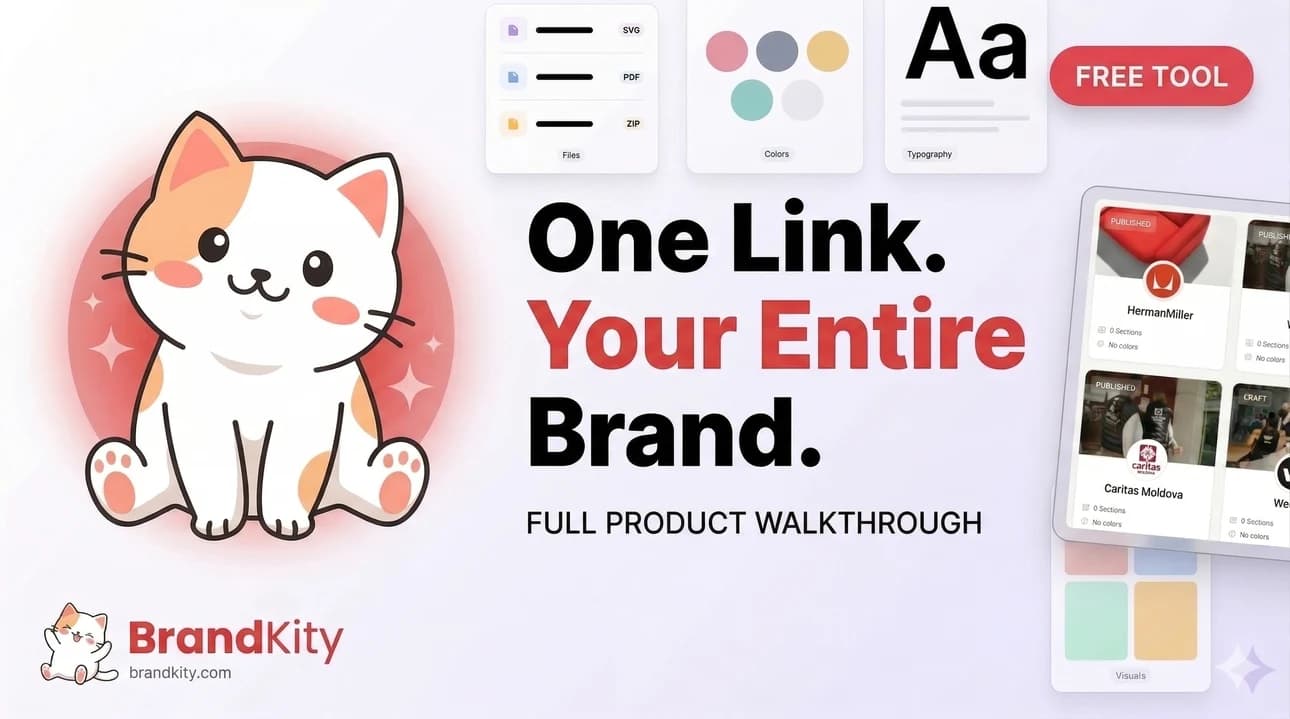
The traditional method of delivering brand assets—often a ZIP file or a series of shared folders—is cumbersome and prone to versioning issues. The ‘one link’ approach, facilitated by platforms like BrandKity, revolutionizes this process by consolidating all necessary brand assets into a single, easily shareable URL. This creates a clean, professional, and unified experience for your client, ensuring they have a single source of truth for all their brand collateral. It elevates the perceived value of your service by offering a streamlined and modern delivery method that is both intuitive and efficient. This singular point of access eliminates the need for clients to manage multiple downloads or navigate disparate file systems, significantly improving their overall experience.
How a single, shareable link replaces clunky folders and email chains.
Imagine a client receiving a single link that opens to a beautifully organized, branded portal containing every asset they need. This is the power of the ‘one link’ revolution. It replaces the chaotic mess of downloading multiple ZIP files, sifting through poorly named folders, and the constant back-and-forth via email asking for specific file formats. A well-structured link delivers a curated experience, presenting assets in a logical and accessible manner. This not only saves your client time and frustration but also drastically reduces the chances of them using incorrect or outdated assets. It’s a more professional and sophisticated way to complete the brand delivery process, ensuring clarity and immediate usability.
Ensuring accessibility and ease of download for various client technical proficiencies.
The ‘one link’ model is designed for universal accessibility, catering to clients with varying levels of technical expertise. Whether your client is a tech-savvy marketer or someone less familiar with digital tools, the experience is standardized and intuitive. Assets are presented with clear previews and straightforward download options, often allowing clients to select specific file formats (e.g., PNG, JPG, SVG, AI) relevant to their immediate needs. This eliminates the need for clients to have specialized software to extract or view certain file types. The focus is on providing a frictionless download experience, ensuring that every stakeholder, regardless of their technical background, can easily access and utilize the brand assets provided. This universal design principle fosters greater client satisfaction and encourages broader asset adoption.
The long-term benefit: a living, breathing brand resource for your client.
A well-managed brand asset library delivered via a single link evolves into a dynamic, living resource for your client. It’s not a static delivery of files that quickly become outdated. As new assets are created or existing ones updated, they can be seamlessly added to the existing link, ensuring your client always has access to the latest approved materials. This continuous resource fosters brand consistency over time and reduces the likelihood of them resorting to outdated versions. It empowers your client to maintain brand integrity independently, knowing they have a reliable and up-to-date repository. This ongoing value proposition significantly strengthens client relationships and positions you as a long-term brand guardian.
Preempting Revisions: Setting Clear Expectations from Day One
The most effective way to handle client revisions is to minimize the need for them in the first place. This proactive stance begins the moment a project is initiated. By establishing clear expectations and documenting every aspect of the project scope, you lay the groundwork for a smoother delivery process. This involves not only defining what will be delivered but also how and when it will be delivered, including the feedback and revision process itself. A client who understands the workflow and deliverables from the outset is far less likely to request scope creep or significant changes later on. This strategic upfront planning is key to maintaining project timelines and budget, ultimately leading to higher client satisfaction and a more efficient design process.
The role of a comprehensive brand brief in defining project scope.
A detailed brand brief is the cornerstone of defining project scope and preventing misunderstandings. It serves as a formal agreement between you and your client, outlining objectives, target audience, brand personality, key messaging, and desired deliverables. A thorough brief leaves no room for assumptions. For example, specifying the exact number of logo variations, the required file formats (e.g., vector, raster, web-optimized), and the intended applications (e.g., web, print, social media) helps avoid post-project requests for assets that were never discussed. It also clarifies the creative direction, ensuring alignment on the aesthetic and functional requirements of the brand. This document is invaluable for managing expectations and serves as a reference point throughout the project lifecycle.
Communicating the asset delivery process upfront.
Transparency regarding the asset delivery process is crucial for managing client expectations. From the initial proposal or kickoff meeting, clearly outline how and when assets will be delivered. This includes explaining the structure of the asset library, the naming conventions used, and the expected file formats. Inform your client about the platform you’ll be using for delivery (e.g., a branded portal via a link) and what they can expect from it. For instance, explain that they will receive a single link containing all approved assets, organized for ease of use. By setting this communication standard early, you demystify the final stage of the project and assure them of a professional and organized handoff, contributing to overall streamlined brand delivery.
Building in client review stages to minimize scope creep.
Integrating structured client review stages into your project workflow is a powerful method for managing revisions and preventing scope creep. Instead of waiting until the final asset delivery to receive feedback, schedule specific checkpoints for review and approval throughout the design process. For example, present initial logo concepts for feedback, followed by a round of revisions on the chosen concept, and then a final review of all delivered assets. Clearly define the number of revision rounds included in the project scope and what constitutes a revision versus a new request. This systematic approach ensures that feedback is gathered incrementally, allowing for adjustments while the project is still malleable and minimizing the risk of major changes or additional demands emerging at the very end of the project. This practice is vital for any agency looking to boost agency efficiency.
From Feedback to Final Delivery: A Seamless Revision Workflow
Even with the best upfront planning, some level of revision is often part of the creative process. The key is to manage this feedback loop efficiently and professionally, ensuring that changes are implemented accurately and without disrupting the overall project momentum. A structured workflow for handling feedback transforms potentially frustrating interactions into opportunities for refinement and client reassurance. This involves clear communication channels, organized feedback processing, and a meticulous approach to implementing changes. The goal is to ensure that the final delivery not only meets the client’s expectations but also aligns perfectly with the established brand strategy, culminating in a truly satisfying client experience.
Best practices for receiving and processing client feedback.
Effective feedback management begins with establishing clear channels for communication. Encourage clients to consolidate their feedback into a single document or via a designated platform rather than scattered email threads or casual messages. When receiving feedback, practice active listening and seek clarification to ensure you fully understand their concerns and suggestions. Avoid making assumptions. Organize feedback by asset and by specific comment, noting whether it’s a minor tweak, a stylistic preference, or a more significant strategic adjustment. Prioritize feedback based on the project brief and agreed-upon objectives. For instance, if a client requests a color change that clashes with the core brand identity, you may need to professionally guide them back to the established palette, referencing the initial brief. This organized approach ensures that all input is considered systematically, contributing to a more polished final output and maintaining the integrity of the brand.
Implementing changes efficiently within your structured system.
Once feedback is processed and approved, the next step is efficient implementation. Utilize your organized asset library and file management system to locate the relevant files quickly. Make changes directly within the source files, adhering strictly to the project’s established naming conventions and version control. For example, if a logo color needs adjustment, update the master vector file and export new versions accordingly. Ensure that any changes cascade correctly across all related assets. If you’re using a system like BrandKity, updating an asset in the library makes the latest version immediately available through the shareable link, ensuring your client always has access to the most current iteration. This methodical approach to implementing changes is critical for maintaining accuracy and consistency throughout the delivery process and is a hallmark of professional design systems.
The final review: ensuring client satisfaction and asset completeness.
Before the final handover, conduct a thorough final review to ensure client satisfaction and the completeness of all assets. This involves meticulously checking every delivered file against the original brief and all agreed-upon revisions. Verify that all requested changes have been implemented correctly and that no new errors have been introduced. Confirm that all necessary file formats and variations are present and correctly named. Present the final collection of assets to the client for their ultimate approval. A clear, organized final review process not only guarantees that the client receives exactly what they expect but also solidifies your reputation for delivering high-quality, complete brand assets. This final step is crucial for achieving client sign-off and closing the project successfully, ensuring a positive final impression of your agency’s brand asset delivery.
Empowering Clients: Educating Them on Brand Asset Usage
Effectively handing over brand assets goes beyond simply providing files. It’s about empowering your clients to use these assets correctly and consistently, which ultimately strengthens their brand identity. This requires a proactive approach to education, ensuring they understand not just what to do, but why it’s crucial. When clients grasp the importance of brand consistency, they become better stewards of their own brand, reducing the likelihood of off-brand usage and saving you from future correction cycles. This educational component transforms a transactional delivery into a collaborative partnership for brand integrity.
Providing clear guidelines on how and where to use assets.
A foundational element of client education is the provision of crystal-clear brand guidelines. These aren’t just style guides; they are actionable documents detailing the appropriate and inappropriate uses of logos, color palettes, typography, imagery, and other visual elements. For instance, specify acceptable logo variations (e.g., full color, single color, horizontal vs. stacked), minimum clear space around the logo, and the specific brand fonts to be used in different contexts like web headings versus print documents. Examples of incorrect usage can be particularly illuminating, showing clients precisely what to avoid. Properly documented guidelines help prevent common mistakes, such as stretching logos, using unapproved color combinations, or substituting brand fonts, thereby safeguarding the integrity of the brand you’ve helped build.
Demonstrating the value of consistency for their brand.
Clients often need to be shown the tangible benefits of brand consistency. A unified brand message across all touchpoints builds recognition and trust with their audience. When a brand looks and feels the same everywhere – from their website and social media to business cards and marketing materials – it signals professionalism and reliability. Conversely, inconsistent branding can confuse customers, dilute brand impact, and even suggest a lack of attention to detail. By illustrating how consistent application of assets contributes to a stronger market presence and greater customer loyalty, you highlight the long-term value of your meticulous brand delivery. Think of a well-known global brand like Coca-Cola; their consistent red and script font are instantly recognizable, a testament to decades of unwavering application.
The ‘why’ behind your asset organization – fostering client appreciation.
Clients may not always understand the intricate organization of the assets you deliver. Explaining the rationale behind your structured approach, such as grouping files by use case (e.g., web, print, social media) or providing different file formats for various applications, fosters a deeper appreciation for your process. When clients can easily find what they need without confusion, it saves them time and frustration. This streamlined accessibility demonstrates your foresight and commitment to their ongoing success. For example, providing both vector (.AI, .EPS) and raster (.PNG, .JPG) logo files, along with clear naming conventions, ensures they have the right tool for any job, whether it’s a small social media icon or a large-format billboard. This level of organization directly contributes to how well they can implement your design work independently.
Leveraging Technology for Effortless Brand Delivery in 2026
The landscape of brand asset delivery is rapidly evolving, and in 2026, relying solely on traditional methods can create significant bottlenecks. As businesses operate at an increasingly digital pace, the demand for quick, seamless access to brand assets is paramount. Manual file sharing via email or cloud storage folders often leads to version control issues, scattered assets, and a frustrating experience for both the agency and the client. Embracing modern technological solutions is no longer a luxury but a necessity for maintaining efficiency, professionalism, and client satisfaction in the competitive market.
Why traditional methods fall short in today’s fast-paced digital landscape.
Traditional methods of brand asset delivery, such as emailing zipped folders or sharing generic cloud storage links, are increasingly inadequate for several key reasons. Firstly, they are inherently prone to version control chaos. Clients often end up with outdated logo files or the wrong color variations, leading to inconsistent branding and the need for repeated corrections. Secondly, these methods lack structure and searchability. When a client needs a specific asset quickly, sifting through disorganized folders can be time-consuming and frustrating, diminishing the perceived value of your work. Furthermore, there’s no centralized hub for guidelines or updates, making it difficult to ensure clients are always using the most current brand elements. This disorganization can lead to significant downstream problems, impacting brand integrity and requiring urgent, often costly, interventions to fix. For a comprehensive understanding of these issues, explore how to end client confusion with brand assets.
The impact of dedicated brand asset management platforms on efficiency and professionalism.
Dedicated Brand Asset Management (BAM) platforms are transforming how agencies deliver and clients receive brand assets. These platforms offer a centralized, organized, and accessible repository for all brand elements, from logos and color palettes to fonts and imagery. The impact on efficiency is profound: search functionality allows clients to find what they need instantly, while clear versioning ensures they always access the latest approved assets. This dramatically reduces back-and-forth communication, saving valuable time for both parties. Moreover, integrating brand guidelines directly within the platform provides context and ensures correct usage. The professional presentation of a dedicated platform, often accessible via a single, branded link, elevates the client handover experience. It signals a commitment to organization, clarity, and a superior client service, reinforcing your agency’s expertise and reliability, and contributing to a more boosted agency efficiency in asset delivery.
Focusing on tools that automate, organize, and simplify the entire process.
In 2026, the most effective brand asset delivery solutions are those that prioritize automation, organization, and simplicity. Look for platforms that offer features like automatic file format conversion, ensuring clients receive assets in the exact specifications they need without manual intervention. Robust organizational capabilities, such as tagging, categorization, and intuitive search, are crucial for making assets easily discoverable. The ultimate goal is to simplify the entire handover process into a single, clean, and branded link that clients can access anytime, anywhere. This not only streamlines your workflow but also empowers clients to manage their brand assets independently and confidently. Tools that integrate seamlessly with your existing design software and project management systems can further amplify these benefits, creating a cohesive and efficient ecosystem for brand asset management, much like the principles behind design systems that unify brand assets.
Saurabh Kumar
Founder, BrandKity
Saurabh writes about practical brand systems, faster client handoffs, and scalable workflows for designers and agencies building repeatable delivery operations.
Connect on LinkedIn