Boost Agency Profit: Streamline Brand Delivery
In today’s fast-paced creative landscape, the efficiency of your agency’s brand delivery process directly impacts its profitability. Disorganized asse…
Table of contents
- The High Cost of Scattered Brand Assets: Are You Losing Money?
- Optimizing Your Agency’s Brand Asset Workflow for Maximum Profit
- Mastering the Client Handoff: The ‘One Link’ Advantage
- Beyond Deliverables: Building Comprehensive Brand Guidelines
- Leveraging Design Systems for Scalable Brand Consistency
- How design systems streamline asset creation and reuse.
- Connecting your brand asset platform to your design system components.
- The long-term financial benefits of a mature design system.
- Streamlining Freelancer and Agency Collaboration
- Providing external collaborators with instant access to the latest brand assets.
- Reducing back-and-forth for asset clarification and updates.
- Ensuring brand consistency across all agency projects and teams.
- The Power of Automation in Brand Asset Management
- Automating version control and asset updates.
- Setting up notifications for asset usage and expiry.
- Reducing manual tasks to free up valuable team time.
- Alternatives to Centralized Brand Delivery Platforms (and When to Choose Them)
- Traditional methods: Shared drives, cloud storage, and their limitations.
- Specialized tools: When a full platform might be overkill.
- Factors to consider when evaluating different solutions for your agency’s needs.
- Measuring the ROI of Efficient Brand Delivery
- Future-Proofing Your Agency’s Brand Delivery for 2026 and Beyond
In today’s fast-paced creative landscape, the efficiency of your agency’s brand delivery process directly impacts its profitability. Disorganized assets and convoluted handoffs don’t just cause headaches; they represent a tangible loss of revenue and opportunity. Streamlining how you package and present brand elements is no longer a luxury but a necessity for sustainable growth.
Imagine reclaiming hours spent searching for files, reducing client confusion, and ensuring your agency’s work is always presented with the professionalism it deserves. This transformation begins with understanding the hidden costs of inefficiency and then implementing targeted solutions to optimize your workflow.
The High Cost of Scattered Brand Assets: Are You Losing Money?
The struggle to locate the correct logo version, the latest brand color palette, or the approved font files is a pervasive issue within many agencies. This disorganization creates a domino effect, significantly impacting project timelines and, consequently, your bottom line. When designers spend an average of 20% of their time searching for assets, that’s billable hours lost that could be spent on revenue-generating work. Furthermore, using outdated or incorrect assets can lead to costly rework, brand inconsistencies that damage client trust, and missed deadlines. The cumulative effect of these small inefficiencies can drastically erode an agency’s overall profit margin over time.
Client frustration is another significant, albeit often overlooked, profit drain. When clients repeatedly request assets they were already provided, or have to clarify which version of a logo is correct, it signals a lack of professionalism and organization on the agency’s part. Each such interaction, while seemingly minor, consumes valuable team time and can lead to a perception of incompetence. This can result in unhappy clients, negative reviews, and a reduced likelihood of repeat business or referrals. Think about a scenario where a client needs a specific banner size for a social media campaign and has to wait 24 hours for you to locate and send the correct logo file – this delays their campaign launch and reflects poorly on your agency’s responsiveness, a critical factor in client retention and satisfaction.
In the competitive agency environment of 2026, simply delivering “good enough” brand assets is no longer sufficient. Clients expect a seamless, professional, and intuitive experience from start to finish. They are increasingly sophisticated and aware of best practices. An agency that delivers a disorganized collection of files in a shared folder or via a flurry of emails appears amateurish compared to competitors who offer a structured, easily navigable portal for all their brand collateral. This expectation for polished delivery is crucial for retaining high-value clients and attracting new ones who prioritize efficiency and professionalism. Agencies that fail to meet this standard risk being perceived as outdated and less capable, ultimately impacting their ability to secure premium projects.
Optimizing Your Agency’s Brand Asset Workflow for Maximum Profit
To combat the profit drain associated with disorganized brand assets, the first critical step is to meticulously map your current brand delivery process. This involves documenting every stage, from initial asset creation or receipt to final client handover. Identify every touchpoint where assets are stored, shared, accessed, and utilized. Pay close attention to where delays commonly occur, where files are duplicated, and where versions become unclear. Common bottlenecks include inconsistent naming conventions, reliance on individual hard drives or scattered cloud folders, and a lack of standardized procedures for updates. By visualizing this workflow, you can pinpoint exactly where inefficiencies are costing you time and money, allowing for targeted improvements.
Implementing a centralized asset management system is a foundational strategy for streamlining brand delivery. Look for a platform that offers robust features such as version control, secure storage, easy search functionality, and customizable access permissions. Key features to prioritize include drag-and-drop uploading, metadata tagging for quick retrieval, and the ability to group assets into project-specific or brand-specific collections. A good system should also integrate seamlessly with other tools your agency uses, such as project management software or design applications. Platforms like BrandKity are designed specifically for this purpose, offering a structured environment to organize and share all your brand elements effectively.
The role of clear naming conventions and file organization cannot be overstated. Establish a universal system that all team members adhere to. This system should dictate how files are named (e.g., `ClientName_AssetName_Version_Date.ext`), how folders are structured (e.g., by client, by project, by asset type), and where final approved assets are stored. For example, a consistent naming convention like `[ClientAbbreviation]_[AssetType]_[Format]_[Version].svg` for logos ensures anyone can instantly understand a file’s identity. This standardization drastically reduces search time and eliminates the risk of using incorrect or outdated versions. A well-organized repository makes it simple to locate any asset quickly, which is crucial for both internal efficiency and client satisfaction. For more on improving these processes, consider exploring how to streamline brand delivery.
Mastering the Client Handoff: The ‘One Link’ Advantage
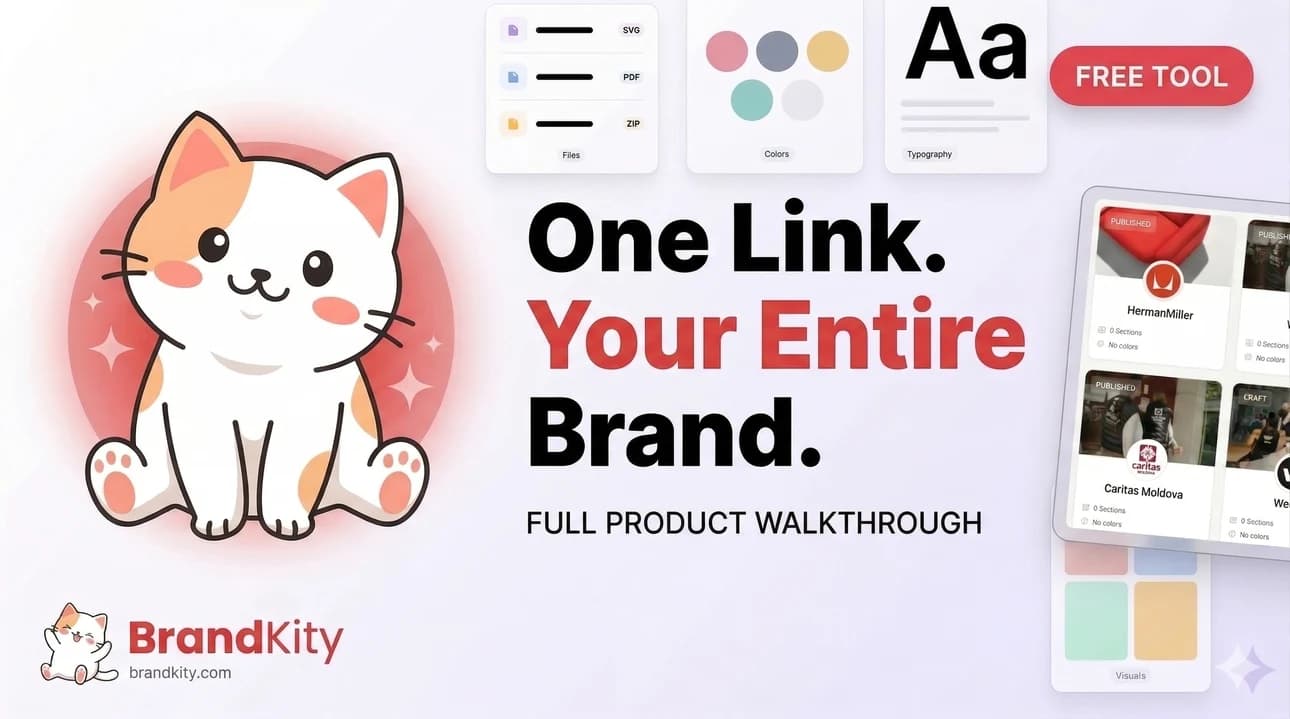
Transitioning from a scattered collection of files to a single, curated link for brand assets fundamentally transforms the client experience. This “one link” approach simplifies delivery, acting as a definitive, easily accessible hub for all brand collateral post-project. Instead of clients sifting through emails or shared drives, they receive a clean, professional URL that grants them immediate access to everything they need. This not only reduces the number of client queries regarding asset location and format but also instills confidence in your agency’s organizational capabilities. For example, providing a single link instead of multiple attachments for logos, color codes, and fonts ensures the client doesn’t miss any critical pieces of the brand package.
Structuring your brand kit link for intuitive navigation is paramount to its success. Organize assets logically within the delivered package. This typically includes dedicated sections for logos (with various formats like SVG, PNG, JPG), color palettes (with HEX, RGB, CMYK values), typography (font files or links to licenses), imagery or illustration styles, and any other relevant brand elements. Clear categorization, perhaps using subfolders or distinct sections within the platform, allows clients to quickly find precisely what they are looking for without confusion. A well-organized structure might present logos first, followed by color guidelines, then typography, making it easy for a client to implement their new brand identity accurately.
Adopting best practices for presenting your brand kit link to clients post-project elevates your agency’s professionalism. Clearly communicate the existence and purpose of this link in your final project handover documentation. Explain that it serves as their comprehensive brand resource moving forward. Include a brief overview of what they will find within the link and how to navigate it. For instance, a handover email could state: “Attached is your final project invoice and a link to your complete brand asset kit, organized for your easy access and future use.” This proactive approach not only delights clients but also minimizes follow-up questions and ensures they have the tools to maintain brand consistency, potentially leading to more streamlined future collaborations and fewer requests for repetitive information. This is a core component of delivering brand assets the professional way.
Beyond Deliverables: Building Comprehensive Brand Guidelines
Delivering brand assets is only part of the equation; ensuring they are used correctly requires robust brand guidelines. An essential element of a professional brand guideline document includes clear definitions of the brand’s visual identity, covering logos (clear space, minimum size, incorrect usage), color palettes (primary, secondary, and tertiary with defined usage scenarios), typography (font families, weights, hierarchies, and web/print applications), imagery style (photography, illustration, tone), and voice and tone principles. These guidelines serve as the definitive rulebook for maintaining brand integrity across all communications and marketing materials. They move beyond just providing files to educating the client and their future partners on how to represent the brand effectively.
Ensuring accessibility and clarity for non-designers is crucial for the practical application of brand guidelines. Avoid overly technical jargon or design-specific terminology. Use straightforward language, clear visuals, and concise explanations. For example, when explaining logo usage, show explicit examples of “do” and “don’t” scenarios rather than just describing them. Provide accessible color values in multiple formats (HEX, RGB, CMYK, Pantone). When discussing typography, offer sample text blocks demonstrating correct hierarchy. The goal is to empower anyone within the client’s organization, regardless of their design background, to apply the brand consistently and correctly, thereby preventing common misuse.
Robust brand guidelines are instrumental in preventing brand dilution and minimizing costly rework. When clients or their external partners understand the ‘why’ behind the brand’s visual elements and have clear instructions on their application, they are far less likely to make errors. This proactive approach saves time and resources that would otherwise be spent correcting misapplied logos, incorrect color usage, or inconsistent messaging. For instance, a well-defined guideline stating that the primary brand color should always be used in a specific context prevents its misuse in less impactful areas, preserving its strategic importance. This proactive measure ensures the brand remains strong and recognizable, contributing significantly to its long-term value and recallability, and is a key part of future-proofing brand assets.
Leveraging Design Systems for Scalable Brand Consistency
A well-implemented design system acts as the single source of truth for all brand elements. It comprises reusable components, clear guidelines, and a library of approved assets. This structured approach significantly accelerates the creation and distribution of marketing collateral, website elements, and other visual touchpoints. By codifying design principles and asset specifications, teams can rapidly assemble new materials that adhere to brand standards, minimizing subjective interpretation and reducing the time spent on rework. The initial investment in building a robust design system pays dividends by ensuring that every piece of communication reinforces the brand identity, regardless of who is creating it or where it will be deployed. This is particularly valuable for agencies working across multiple client projects simultaneously, where maintaining a high degree of visual fidelity is paramount.
How design systems streamline asset creation and reuse.
Design systems offer a powerful solution for efficient asset management by providing pre-built, documented, and tested components. These components can range from basic elements like color palettes and typography scales to complex UI elements such as buttons, forms, and navigation bars. When designers and developers adhere to the design system, they don’t need to reinvent the wheel for every new project or feature. Instead, they can simply pull the relevant components from the system, ensuring immediate brand alignment and functionality. This drastically reduces the time spent on individual asset creation, allowing teams to focus on higher-level strategic thinking and creative problem-solving. Furthermore, the inherent documentation within a design system clarifies how each asset should be used, minimizing misinterpretations and ensuring consistent application across all outputs. This approach directly combats the common agency pain point of scattered files and inconsistent branding, making brand delivery workflows more efficient.
Connecting your brand asset platform to your design system components.
The true power of a design system is amplified when it’s seamlessly integrated with a dedicated brand asset management platform. This integration ensures that the digital assets defined within the design system—such as logos, icons, imagery, and typography files—are readily accessible, properly versioned, and organized within a centralized hub. By linking these directly, designers and developers can instantly access the latest, approved versions of assets without searching through disparate folders or relying on outdated versions. This connection fosters a single source of truth for both the design principles and the physical assets. For instance, when a logo is updated in the design system, that update should automatically reflect in the asset platform, ensuring all collaborators are using the correct iteration. This prevents embarrassing inconsistencies and significantly speeds up the handoff process, whether it’s to internal teams or external clients, making delivering brand assets professionally a reality.
The long-term financial benefits of a mature design system.
Investing in a mature design system yields substantial long-term financial advantages for agencies. The primary benefit is a significant reduction in wasted time and resources. By standardizing components and assets, the need for repeated design and development of common elements is eliminated. This directly translates to lower project costs and increased profitability. Furthermore, improved brand consistency across all client projects enhances client satisfaction and retention, leading to a more stable revenue stream. A mature design system also speeds up project timelines, allowing agencies to take on more work and improve overall throughput. Reduced errors and rework due to consistent asset usage also prevent costly rectifications. As per estimates, companies that successfully implement design systems can see efficiency gains of up to 30% in their design and development processes, directly impacting the bottom line by boosting agency efficiency.
Streamlining Freelancer and Agency Collaboration
Effective collaboration with freelancers and external agencies hinges on providing them with immediate, reliable access to the most up-to-date brand resources. When external partners can easily find and download the exact logos, color palettes, fonts, and imagery they need, it drastically reduces the time spent on back-and-forth communication. This immediate access eliminates the common scenario of freelancers working with outdated assets, which inevitably leads to costly revisions and delays. A centralized platform that hosts all approved brand materials ensures that everyone involved in a project is operating from the same, current set of assets. This not only saves time but also minimizes the risk of brand dilution or misrepresentation. The goal is to make the process so straightforward that external collaborators can integrate seamlessly into the brand’s visual identity without extensive onboarding or repeated queries, thereby streamlining client delivery.
Providing external collaborators with instant access to the latest brand assets.
Granting external collaborators, such as freelancers or partner agencies, instant access to your brand assets is a critical step in optimizing project workflows. Instead of emailing large files, sharing outdated links, or relying on potentially unorganized cloud folders, a dedicated platform provides a single, always-updated source. This means when a logo variation is updated, or a new set of approved images becomes available, external team members can access them immediately without requiring manual distribution. This eliminates the common bottleneck of waiting for asset updates, ensuring projects can move forward without delay. A key decision criterion here is the platform’s ease of use and permissioning capabilities. Can you easily grant access to specific individuals or teams, and can you control what they see and download? For instance, a graphic designer might need access to vector logos and brand guidelines, while a social media manager might only require approved image templates and specific font files. This granular control ensures everyone gets precisely what they need, fostering simplified client delivery.
Reducing back-and-forth for asset clarification and updates.
The iterative process of requesting and providing brand assets can be a significant drain on agency resources. When freelancers or internal teams have to repeatedly ask for clarification on file formats, specific color codes (e.g., HEX, RGB, CMYK), or the correct usage of a logo, valuable time is lost. A robust brand asset management system, integrated with clear guidelines, minimizes this friction. By providing comprehensive metadata for each asset—such as its intended use, approved variations, and technical specifications—and making this information readily accessible alongside the asset itself, you drastically reduce the need for clarifying questions. For example, a clear distinction between a primary logo and a secondary or favicon version, along with their respective use-case scenarios, prevents confusion. Similarly, listing precise CMYK, RGB, and HEX values for brand colors ensures accurate reproduction across print and digital mediums, preventing the need for repeated color correction requests and improving overall agency efficiency.
Ensuring brand consistency across all agency projects and teams.
Maintaining consistent brand representation is non-negotiable for agency credibility and client satisfaction. When multiple designers, copywriters, and account managers work on a project, especially across different client accounts, it’s easy for variations to creep in if asset access and usage aren’t strictly managed. A centralized platform acts as a guardian of brand integrity, ensuring that every team member and external collaborator is consistently referencing and using the approved brand assets. This uniformity builds a stronger, more recognizable brand identity for the client and positions the agency as professional and detail-oriented. For example, if an agency manages branding for five different companies, each with its own unique visual identity, the platform ensures that the team working on Company A doesn’t accidentally pull assets intended for Company B. This systematic approach is crucial for delivering high-quality, cohesive work that truly reflects the client’s brand strategy, embodying the principles of unified brand assets.
The Power of Automation in Brand Asset Management
Automation is transforming how agencies manage and distribute brand assets, moving beyond manual processes that are prone to errors and time consumption. By implementing automated systems, agencies can ensure that their brand assets are always up-to-date, consistently applied, and efficiently delivered. This includes automating tasks like version control, where new iterations of logos or templates are automatically flagged and superseded, preventing the use of outdated materials. Furthermore, automation can trigger notifications based on asset usage or expiration dates, helping to maintain compliance and proactively manage asset lifecycles. The significant reduction in manual intervention frees up valuable team time, allowing designers, marketers, and project managers to focus on more strategic and creative endeavors rather than administrative overhead. This shift is fundamental to improving overall operational efficiency and delivering a superior client experience through streamlined brand delivery.
Automating version control and asset updates.
One of the most significant benefits of automation in brand asset management is the handling of version control and updates. Manual tracking of logo revisions, template changes, or guideline updates is cumbersome and highly susceptible to human error. Automated systems, however, can manage this seamlessly. When a new version of an asset is uploaded, the system can automatically mark the previous version as ‘archived’ or ‘legacy’ and clearly designate the new version as the ‘current’ or ‘approved’ one. This ensures that everyone accessing the assets is always using the latest iteration, preventing inconsistencies and brand misrepresentation. For instance, if a company decides to update its logo, the automated system can instantly make the new logo the default while archiving the old one, notifying users of the change. This drastically reduces the risk of marketing materials or digital interfaces displaying outdated branding, a common pitfall that agencies must avoid to maintain client trust and deliver professional results, contributing to better future-proofing brand assets.
Setting up notifications for asset usage and expiry.
Proactive management of brand assets extends to understanding their lifecycle and usage patterns, which automation can significantly enhance. By setting up automated notifications, agencies can stay informed about crucial asset-related events. For example, a system can alert administrators when a particular logo or image is downloaded frequently, indicating its importance or potential overuse. More critically, it can notify users or administrators when specific assets are nearing their expiry date, such as stock imagery licenses or promotional campaign assets. This foresight allows for timely renewals, replacements, or archival, preventing situations where valuable brand collateral becomes unusable or legally problematic. Imagine a campaign asset expiring just as the campaign is meant to launch; automated expiry notifications can prevent such costly oversights, ensuring continuous and compliant brand representation, which is key to avoiding brand asset confusion for clients.
Reducing manual tasks to free up valuable team time.
The sheer volume of manual tasks involved in brand asset management can bog down even the most efficient agency teams. These tasks include sorting files, renaming them according to a convention, manually updating spreadsheets with asset details, distributing assets via email, and responding to repetitive asset requests. Automation directly tackles these inefficiencies. By leveraging a platform that automates uploading, tagging, categorization, and distribution, agencies can reclaim hours of employee time each week. This liberated time can then be redirected towards more strategic activities, such as creative brainstorming, client strategy development, or improving overall campaign performance. For example, instead of spending half a day finding and sending the correct logo variations for a new client presentation, an automated system can provide that with a few clicks, freeing up that time for refining the presentation’s core message. This shift from administrative burden to strategic focus is a cornerstone of simplifying agency workflows.
Alternatives to Centralized Brand Delivery Platforms (and When to Choose Them)
While dedicated brand delivery platforms offer robust solutions, they aren’t always the sole answer for every agency’s needs. Understanding the alternatives is crucial for making an informed decision. Traditional methods like shared drives (e.g., Google Drive, Dropbox) and cloud storage services have long been the go-to for file sharing. These are generally cost-effective and familiar to most users. However, they often lack the structure, version control, and granular access management essential for professional brand delivery. For smaller agencies or those with very limited client interaction requiring minimal asset sharing, these might suffice. Specialized tools, such as project management software with file-sharing capabilities or dedicated digital asset management (DAM) systems, offer more focused functionality than generic cloud storage but might not encompass the full suite of features found in an integrated brand delivery platform. The decision hinges on a careful evaluation of an agency’s specific requirements, team size, client base, and budget, ensuring the chosen solution truly enhances professional brand delivery.
Traditional methods: Shared drives, cloud storage, and their limitations.
Shared drives and cloud storage services like Google Drive, Dropbox, or OneDrive are ubiquitous in modern workplaces. They offer easy-to-use interfaces and are generally affordable, making them accessible for many agencies. Their primary advantage lies in their familiarity and the ability to store and share a large volume of files. However, their limitations become apparent when managing complex brand assets. Version control is often manual and error-prone, leading to confusion over which file is the latest. Organization can quickly become chaotic, with poorly named folders and files scattered across various locations. Granular permissions are typically limited, making it difficult to control who can view, edit, or download specific assets. This lack of structure and control can lead to significant time wasted searching for files, using outdated assets, and conducting lengthy email chains for clarification, which undermines the goal of efficient agency workflows.
Specialized tools: When a full platform might be overkill.
For some agencies, a comprehensive brand delivery platform might represent more functionality—and cost—than they currently need. In such cases, specialized tools can offer a more targeted solution. For instance, an agency that primarily deals with static visual assets and requires robust version control and tagging might find a dedicated Digital Asset Management (DAM) system to be more appropriate. If the primary challenge is internal team collaboration on creative projects rather than client handoffs, project management tools with strong file-sharing and review features could suffice. Similarly, a graphic design studio that only occasionally needs to share final assets with clients might find that an enhanced cloud storage solution with better organization and perhaps a custom-built template for sharing links meets their requirements. The decision hinges on identifying the most pressing pain points and selecting a tool that effectively addresses them without introducing unnecessary complexity or expense, ensuring that their asset delivery is optimized without overspending.
Factors to consider when evaluating different solutions for your agency’s needs.
When evaluating brand asset management solutions, agencies should consider several key factors to ensure the chosen tool aligns with their unique operational landscape. Scalability is paramount; can the solution grow with the agency’s client base and asset library? Ease of use for both internal teams and external clients is crucial for adoption and efficiency. Integration capabilities with existing software, such as design tools or project management platforms, can significantly streamline workflows. Security features, including access control and data protection, are vital, especially when handling sensitive client branding. The cost structure, whether per user, per asset, or a tiered subscription, must fit the agency’s budget. Finally, consider the level of support and training offered by the vendor, as this can impact the successful implementation and ongoing utilization of the platform, ultimately affecting the agency’s ability to provide seamless client delivery.
Measuring the ROI of Efficient Brand Delivery
Quantifying the financial benefits of streamlined brand delivery goes beyond simple cost-cutting. It involves a holistic view of how efficiency impacts client relationships and overall revenue. One critical area to measure is the time saved on asset retrieval and client queries. Imagine a scenario where a client needs a specific logo variation or a brand guideline document. Without a centralized system, your team might spend 15-30 minutes searching through shared drives, email chains, or project folders. Multiply this by several requests per week, per client, and the hours add up significantly. Implementing a dedicated platform can reduce this retrieval time to mere seconds, freeing up designers and account managers to focus on higher-value tasks like strategy and creative execution. For example, an agency using a structured asset delivery system reported a 40% reduction in time spent on locating and sending brand assets, translating directly into billable hours that were previously lost to administrative overhead.
The direct correlation between efficient brand delivery and client satisfaction and retention is undeniable. When clients receive brand assets quickly, professionally, and in an organized manner, it fosters trust and demonstrates your agency’s reliability. Frustration over missing files or unclear instructions can lead to client churn, even if the creative work is excellent. Conversely, a seamless delivery experience elevates the perception of your agency’s professionalism. A study by [Source Name/Industry Report Link] found that 85% of clients are more likely to work with agencies that provide a clear and organized onboarding and delivery process. Consider a mid-sized agency that transitioned to a unified brand asset platform. They saw a measurable increase in positive client feedback specifically mentioning the ease of access to assets and a 15% improvement in client retention rates within the first year, as clients appreciated the friction-free experience.
Ultimately, the consistent application of efficient brand delivery processes directly contributes to increased agency profitability. This isn’t just about saving time; it’s about optimizing the entire client lifecycle. Reduced time spent on administrative tasks means more billable hours available for client projects, or the capacity to take on additional clients without compromising quality. Furthermore, improved client satisfaction leads to repeat business and valuable referrals. When your agency can deliver brand assets reliably and professionally, it reduces the risk of project delays caused by asset-related issues, thereby safeguarding profit margins. An agency specializing in branding services found that by standardizing their brand asset delivery through a centralized platform, they could serve 20% more clients annually without increasing headcount, directly boosting their bottom line and enhancing their ability to boost agency efficiency.
Future-Proofing Your Agency’s Brand Delivery for 2026 and Beyond
As the digital landscape continues its rapid evolution, agencies must proactively adapt their brand delivery mechanisms to remain competitive and relevant. This involves anticipating and integrating new technologies and methodologies to meet increasingly sophisticated client demands. A key aspect of future-proofing is adapting to evolving client expectations and digital workflows. Clients today expect immediate access to high-quality, perfectly formatted assets, often across multiple platforms and formats. They are also increasingly adopting advanced digital workflows themselves, demanding seamless integration with their own systems. Agencies that cling to outdated methods like sending zipped folders via email will find themselves at a distinct disadvantage. Staying ahead means embracing solutions that offer flexibility, robust organization, and a professional, white-labeled presentation, ensuring your agency aligns with modern operational standards. This proactive stance is crucial for maintaining relevance and securing long-term partnerships.
The transformative potential of Artificial Intelligence (AI) in revolutionizing brand asset management is significant. AI can automate many of the repetitive and time-consuming tasks involved in organizing, tagging, and distributing brand assets. For instance, AI-powered tools can automatically categorize logos, identify color palettes, and even suggest appropriate asset versions based on context, significantly speeding up the process of making assets available to clients or internal teams. This automation not only enhances the speed and accuracy of brand asset management but also frees up human resources for more strategic and creative endeavors. By leveraging AI, agencies can build more agile and responsive brand delivery systems capable of handling large volumes of assets with exceptional efficiency, moving beyond manual processes. This forward-thinking approach ensures that your agency remains at the forefront of innovation in asset management.
In today’s competitive market, delivering a superior client experience is not just a differentiator; it’s a necessity for survival and growth. Agencies that master this aspect will inevitably build stronger client relationships and secure a leading position in their respective niches. This involves a commitment to providing not only exceptional creative work but also an equally exceptional service experience, which includes the seamless and professional delivery of all brand assets. By investing in robust systems and processes that prioritize client ease and accessibility, agencies can create a noticeable advantage. This focus on ace client delivery not only fosters loyalty but also serves as a powerful marketing tool, encouraging positive word-of-mouth and repeat business, thereby helping to unlock agency efficiency and maintain a critical edge.
Saurabh Kumar
Founder, BrandKity
Saurabh writes about practical brand systems, faster client handoffs, and scalable workflows for designers and agencies building repeatable delivery operations.
Connect on LinkedIn