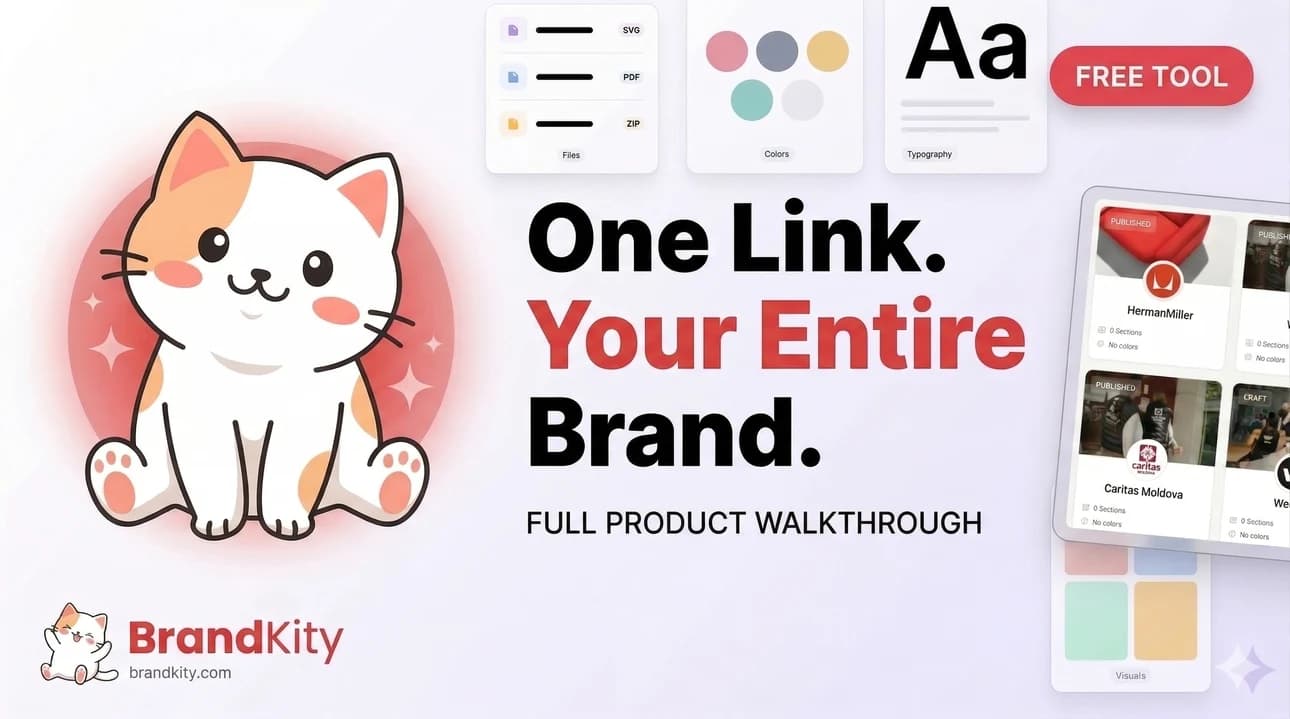
Agency Workflow: Simplify Brand Assets
In today’s fast-paced digital landscape, agencies are constantly juggling multiple projects, clients, and deliverables. The efficient management and d…

Table of contents
- Tired of Brand Asset Chaos? Streamlining Your Agency’s Workflow is Key in 2026
- The Modern Agency’s Asset Management Challenge
- Why a Structured Workflow is Non-Negotiable Today
- The Pain Points of Disorganized Brand Assets for Agencies
- Scattered Files: The Search That Steals Billable Hours
- Client Confusion: The Frustration of Inconsistent Branding
- Repeated Requests: The Drain on Creative Resources
- Building the Foundation: Essential Components of a Smooth Asset Handoff
- Defining Your Core Brand Elements (Logos, Colors, Typography)
- Establishing Clear Naming Conventions and Folder Structures
- Version Control: Ensuring Everyone Works with the Latest Files
- From Project End to Client Bliss: Mastering the Brand Asset Delivery
- Pre-Handoff Checklist for Design Agencies
- The Power of a Centralized Brand Hub for Clients
- Best Practices for Communicating Asset Usage to Clients
- Beyond the Basics: Advanced Strategies for Agency Asset Management
- Integrating Visuals, Photography, and Illustrations Effectively
- Managing Brand Voice and Copy Assets
- The Role of Motion Graphics and Video Assets in Modern Branding
- Leveraging Technology for Effortless Brand Asset Delivery
- Choosing the Right Platform: Key Features for Agencies
- The ‘One Link’ Concept: Simplifying Access for Everyone
- Automating Updates and Notifications for Clients
- Client Education: Empowering Your Clients to Use Assets Correctly
- Creating Bite-Sized Brand Guideline Summaries
- Interactive Demos of Asset Usage
- Providing Support for Common Asset-Related Questions
- The Agency-Client Relationship: How Better Asset Workflows Build Trust
- Demonstrating Professionalism Through Organized Delivery
- Reducing Client Friction and Improving Satisfaction
- Turning Brand Assets into Ongoing Value for Your Clients
- Future-Proofing Your Agency: Adapting to Evolving Brand Asset Needs
- The Rise of AI in Asset Generation and Management
- Ensuring Accessibility and Inclusivity in Brand Assets
- Scalability: Growing Your Asset Management Process with Your Agency
In today’s fast-paced digital landscape, agencies are constantly juggling multiple projects, clients, and deliverables. The efficient management and delivery of brand assets aren’t just a nice-to-have; they’re a critical component of client satisfaction and operational success. Disorganized assets lead to wasted time, frustrated clients, and a tarnished brand reputation.
This is where a streamlined workflow comes into play. By implementing best practices for asset organization and delivery, agencies can transform a chaotic process into a seamless experience, ultimately boosting efficiency and client trust. Let’s explore how to achieve this.
Tired of Brand Asset Chaos? Streamlining Your Agency’s Workflow is Key in 2026
The sheer volume and variety of brand assets—logos in different formats, color palettes, typography files, imagery, and more—can quickly become overwhelming. Without a system, these vital components can get lost, duplicated, or become outdated, leading to significant operational friction. In 2026, the expectation for polished, professional brand delivery is higher than ever. Agencies that fail to adapt risk falling behind.
The Modern Agency’s Asset Management Challenge
Modern agencies face a dual challenge: managing internal assets effectively while ensuring clients can easily access and utilize them. This involves not only organizing files on internal servers or cloud storage but also presenting them in a clear, usable format for external stakeholders. The rapid iteration of design projects, coupled with the diverse needs of different client platforms, exacerbates this complexity. A common pitfall is relying on ad-hoc file sharing methods like email attachments or generic cloud folders, which lack structure and discoverability. Consider an agency managing assets for 10 clients simultaneously; without a robust system, tracking which version of a logo belongs to which client becomes a daily struggle.
Why a Structured Workflow is Non-Negotiable Today
A structured workflow for brand assets is no longer a luxury; it’s a fundamental requirement for agency survival and growth. It directly impacts your bottom line by reducing time spent searching for files and minimizing costly errors. Furthermore, it significantly enhances client perception. When clients receive organized, professional brand packages, it signals competence and attention to detail, fostering greater trust and repeat business. For instance, a structured process can cut down the time spent on asset retrieval by up to 30%, freeing up creative teams to focus on higher-value tasks. This efficiency is crucial for agencies aiming to boost agency efficiency: asset delivery in a competitive market.
The Pain Points of Disorganized Brand Assets for Agencies
The consequences of haphazard brand asset management ripple throughout an agency, affecting productivity, client relationships, and overall profitability. These pain points are common but solvable with the right strategies and tools.
Scattered Files: The Search That Steals Billable Hours
Imagine a designer needing a specific logo variant for a last-minute client request. If that file is buried in an unorganized folder structure across multiple drives or cloud services, the ensuing search can consume precious minutes, or even hours. This not only delays project completion but also directly eats into billable time. A report from 2025 indicated that design professionals spend an average of 5 hours per week searching for digital assets. This lost productivity translates into significant financial drain for an agency. It’s like trying to find a needle in a haystack, but the haystack is digital and constantly growing.
Client Confusion: The Frustration of Inconsistent Branding
When clients receive brand assets that are inconsistent, outdated, or difficult to understand, it breeds confusion and erodes confidence. This can manifest as them using the wrong logo, incorrect color codes, or outdated visual elements, leading to fragmented brand representation across their own channels. This inconsistency is a direct result of poor asset delivery and organization. One example involved a startup that received assets from three different agencies over two years; their website and marketing materials ended up looking like a patchwork, damaging their professional image until a unified system was implemented. This highlights the critical need for agencies to provide clarity to end client confusion.
Repeated Requests: The Drain on Creative Resources
A frequent byproduct of disorganized asset management is clients repeatedly asking for the same files or clarification on usage. This creates a cycle of inbound requests that pull creative teams away from their core design work. Instead of focusing on new creative strategies, they’re spending time answering the same questions and resending files that should have been readily available. This inefficiency is a major drag on resources and can lead to burnout. For example, a medium-sized agency reported that 15% of their support tickets were related to simple asset requests, a problem easily solved by a centralized, accessible repository.
Building the Foundation: Essential Components of a Smooth Asset Handoff
A smooth brand asset handoff begins long before the final delivery. It requires establishing a solid internal foundation for organizing and standardizing your brand elements. This foundational work ensures that what you deliver is accurate, consistent, and easy for clients to use.
Defining Your Core Brand Elements (Logos, Colors, Typography)
The first step in creating an organized asset library is clearly defining and documenting your core brand elements. This includes establishing definitive versions of logos (in all necessary formats: vector, raster, different color variations), specifying exact color codes (HEX, RGB, CMYK, Pantone), and listing approved typography with any licensing information. Having these established and accessible internally prevents discrepancies down the line. For instance, ensuring your primary logo is always the correct vector EPS file, and your brand’s primary blue is consistently defined as `#007bff`, sets a standard. This meticulous documentation is key to future-proofing your brand assets.
Establishing Clear Naming Conventions and Folder Structures
Consistency in how you name files and organize them within folders is paramount. A well-defined naming convention allows for quick identification and sorting, while a logical folder structure makes navigation intuitive. Consider a convention like `[ClientName]_[AssetName]_[Format]_[Version]_[Date]`, e.g., `AcmeCorp_Logo_Vector_Primary_20260524.eps`. Similarly, a folder structure might include top-level folders for each client, with subfolders for `Logos`, `Colors`, `Typography`, `Imagery`, and `Guidelines`. This approach prevents ambiguity and makes it significantly easier to locate specific files, a critical step in any professional brand delivery process. Effectively implementing these can be learned by exploring how to deliver brand assets the professional way.
Version Control: Ensuring Everyone Works with the Latest Files
In design, versions matter. Without clear version control, teams and clients can inadvertently use outdated files, leading to brand inconsistencies and rework. Implementing a system where each iteration of an asset is clearly marked with its version number or date is crucial. This could be as simple as `Logo_v1.0.png`, `Logo_v1.1.png`, or more sophisticated with date stamps like `Logo_20260524.png`. This practice ensures that everyone, both internally and externally, is always referencing the most current and approved versions of brand materials, preventing the common pitfall of using a retired logo or an incorrect color swatch.
From Project End to Client Bliss: Mastering the Brand Asset Delivery
The final stage of the design process—delivering brand assets—is a critical moment that can either solidify client satisfaction or create lingering friction. Approaching this with a strategic checklist and a clear communication plan transforms a routine task into a positive client experience.
Pre-Handoff Checklist for Design Agencies
Before any assets are shared with a client, a thorough pre-handoff checklist is essential. This ensures all necessary components are present, correctly formatted, and accompanied by clear instructions. The checklist should include verifying that all final approved assets are included, that they are in the correct file formats (e.g., vector for logos, high-resolution for images), and that they adhere to established naming conventions. It should also confirm that any brand guidelines documents are up-to-date and easily accessible. A well-executed checklist acts as a final quality assurance step, preventing errors and ensuring a professional presentation. This is a core aspect of how agencies can unlock agency efficiency: brand delivery.
The Power of a Centralized Brand Hub for Clients
Moving away from scattered email attachments or generic cloud links, a centralized brand hub offers a superior client experience. Platforms like BrandKity provide a single, organized link where clients can access all their brand assets, guidelines, and related documentation. This hub becomes their go-to resource, eliminating the need to sift through multiple communications or folders. It ensures clients always have access to the most current versions and understand how to use them correctly. This unified approach not only simplifies their workflow but also reinforces the professional image your agency projects, demonstrating a commitment to their brand’s success.
Best Practices for Communicating Asset Usage to Clients
Delivering the assets is only half the battle; ensuring clients know how to use them effectively is equally important. This involves providing clear, concise usage guidelines. This can be integrated directly into the brand hub or provided as a separate, easily digestible document. Highlight key rules, such as maintaining proper logo spacing, avoiding color alterations, and understanding the appropriate use of different file formats. When clients understand these nuances, they can become better brand ambassadors, reducing the likelihood of misuse. Sharing practical tips and examples can significantly aid client comprehension and adherence, contributing to a stronger, more consistent brand identity for them. This is key to helping clients ace client delivery: organized brand assets.
Beyond the Basics: Advanced Strategies for Agency Asset Management
Moving past foundational asset organization requires a strategic approach to ensure all brand elements, from the smallest icon to the most complex animation, are managed effectively. This involves a deep understanding of how different asset types interact and contribute to the overall brand experience. For instance, consistently integrating visual assets—whether they are custom photography, illustrations, or stock imagery—within a unified framework is crucial. This consistency reinforces brand identity and prevents visual clutter. Agencies must define clear criteria for selecting and approving visuals, considering factors like aesthetic alignment, emotional resonance, and technical specifications (e.g., resolution, file format compatibility). A common pitfall here is the unchecked proliferation of visual styles, leading to a fragmented brand perception. By establishing rigorous approval processes and maintaining a curated library, agencies can ensure every visual asset serves a specific, brand-aligned purpose.
Integrating Visuals, Photography, and Illustrations Effectively
The effective integration of visual assets begins with a clear asset strategy that dictates their intended use and context. For photography, this means defining the stylistic direction—documentary, aspirational, candid—and ensuring photographers adhere to specific shot lists and lighting guidelines. Similarly, illustrations require a defined style guide, detailing line weight, color palettes, and character design if applicable. When managing these assets, agencies should implement robust tagging systems that include keywords related to theme, emotion, subject matter, and intended application (e.g., website hero, social media post, print ad). Decision criteria for selecting visuals should include brand alignment, quality, and potential for reusability across various platforms. A pitfall to avoid is the inconsistent application of visual styles, which can dilute brand recognition. For example, an agency might use highly polished, studio-shot product photography alongside gritty, urban street photography without a clear narrative connecting them. To prevent this, a central asset repository, such as a digital asset management (DAM) system, allows for centralized control and previewing of assets in situ, ensuring coherence before they are distributed.
Managing Brand Voice and Copy Assets
Brand voice and copy assets are just as critical as visual elements in shaping perception. This extends beyond a simple style guide to encompass tone, terminology, and messaging frameworks. Agencies need to establish clear guidelines for how copy should be written and used across different touchpoints, from website content and social media captions to ad taglines and press releases. Decision criteria for copy development include target audience relevance, clarity, conciseness, and adherence to brand personality (e.g., authoritative, playful, sophisticated). A significant pitfall is inconsistent messaging or tone across different campaigns or platforms, which can confuse customers and undermine brand credibility. For instance, a brand that presents itself as approachable and friendly on social media might use overly formal and technical language on its support pages. To manage this effectively, agencies should maintain a centralized glossary of approved terms, a library of pre-approved boilerplate copy, and actively train content creators on the brand’s voice. Regularly reviewing and updating these guidelines ensures they remain relevant and actionable. Consider creating a “brand voice checklist” that writers can use to self-evaluate their work before submission.
The Role of Motion Graphics and Video Assets in Modern Branding
In today’s dynamic digital landscape, motion graphics and video assets have become indispensable tools for capturing attention and conveying complex information effectively. Their strategic use can significantly enhance brand storytelling and engagement. Agencies must define the purpose and style of these assets, whether it’s short-form social media clips, animated explainer videos, or longer brand films. Decision criteria should focus on narrative clarity, emotional impact, visual appeal, and platform optimization (e.g., aspect ratios, length, sound design). A common pitfall is the creation of generic or poorly executed video content that fails to resonate with the target audience or align with the brand’s visual identity. For example, a tech company might produce a video with jarring transitions and amateur voiceovers, detracting from its innovative image. To mitigate this, agencies should develop a clear video content strategy, outline detailed storyboards, and ensure consistent use of brand colors, typography, and music. Leveraging tools that simplify video editing and asset management can also be a game-changer, allowing for quicker iteration and delivery. A crucial element is maintaining a library of editable video templates that can be quickly adapted for new campaigns, ensuring consistency and efficiency.
Leveraging Technology for Effortless Brand Asset Delivery
The digital age demands streamlined processes, and this is particularly true for brand asset delivery. Gone are the days of sending sprawling zip files or relying on cloud storage links that quickly become outdated. Embracing technology for asset delivery is no longer a luxury but a necessity for agencies aiming to provide a professional and efficient client experience. The right platforms can consolidate all brand assets—logos, fonts, images, templates, and more—into a single, organized, and easily accessible location. This not only saves valuable time for both the agency and the client but also significantly reduces the risk of clients using incorrect or outdated assets. The core principle is to centralize and simplify, making it effortless for anyone, anywhere, to find and download the exact asset they need. This technological shift empowers agencies to focus more on creative strategy and less on the administrative burden of asset distribution.
Choosing the Right Platform: Key Features for Agencies
Selecting the appropriate technology platform for brand asset delivery is a critical decision that impacts agency efficiency and client satisfaction. Agencies should prioritize platforms offering robust organizational features, such as hierarchical folder structures, advanced tagging, and powerful search capabilities. Essential functionalities include secure sharing options with customizable permissions, version control to track asset updates, and analytics to understand asset usage. Consider platforms that support a wide range of file formats and offer integration with other creative tools or project management software. The platform should also be user-friendly for clients, with an intuitive interface that doesn’t require extensive training. Decision criteria should include scalability, security protocols, and the availability of dedicated customer support. A common pitfall is choosing a platform that is overly complex or lacks the necessary integrations, leading to continued workflow inefficiencies. For example, an agency might opt for a generic cloud storage solution that doesn’t offer brand-specific features like style guide integration or template management. Investigating platforms specifically designed for creative professionals, like streamlining brand asset delivery, can provide the tailored functionality needed.
The ‘One Link’ Concept: Simplifying Access for Everyone
The “one link” concept represents a paradigm shift in how brand assets are delivered and accessed. Instead of inundating clients with multiple files, folders, or complex login procedures, a single, curated URL provides access to the entire brand asset library. This central hub can be customized to reflect the client’s branding, further enhancing the professional presentation. Decision criteria for implementing this concept include the platform’s ability to create branded landing pages, organize assets logically within the link, and control access permissions. The primary benefit is the drastic reduction in client confusion and the elimination of time spent searching for specific files. A pitfall to avoid is creating a single link that is poorly organized or lacks clear navigation, which can negate its intended simplicity. For instance, a generic folder structure within a single link can still be overwhelming. To ensure success, agencies should meticulously categorize assets within the platform, use clear naming conventions, and provide a brief introductory guide for clients. This approach not only simplifies delivery but also serves as a testament to the agency’s organized and professional approach to brand stewardship, similar to how a well-structured collection of brand assets simplifies client handoff.
Automating Updates and Notifications for Clients
Maintaining an up-to-date brand asset library is an ongoing process, and effective communication regarding changes is paramount. Automating updates and notifications ensures clients are always working with the latest versions of logos, imagery, and other brand collateral. This technology-driven approach minimizes the risk of clients using outdated assets, which can lead to brand inconsistencies and costly revisions. Key features to look for in an asset management platform include automated version control, where updated files automatically replace older ones in the library, and notification systems that alert users via email or in-app messages when changes occur. Decision criteria for implementing these features should focus on the clarity and immediacy of the notifications, ensuring clients are not missed. A common pitfall is relying on manual email blasts, which can be easily overlooked or mismanaged. For example, an agency might forget to notify a client about a new logo variation, leading to its incorrect use in a marketing campaign. Platforms that offer automated workflows for asset updates, ensuring all relevant parties are informed instantly, are invaluable. This proactive communication builds trust and demonstrates an agency’s commitment to maintaining brand integrity for its clients.
Client Education: Empowering Your Clients to Use Assets Correctly
Delivering a comprehensive set of brand assets is only half the battle; ensuring clients understand how to use them effectively is equally crucial for maintaining brand consistency and maximizing their impact. Client education transforms them from passive recipients into active brand stewards. This involves providing clear, concise, and easily digestible information about brand guidelines, asset usage, and best practices. The goal is to empower clients to confidently apply brand elements across their own marketing efforts, reducing errors and reinforcing the visual identity. Without proper guidance, even the most well-organized asset library can be misused, leading to brand dilution and confusion. Therefore, investing time and resources into client education is an investment in the long-term success of the brand itself and a key differentiator for agencies.
Creating Bite-Sized Brand Guideline Summaries
Comprehensive brand guidelines can often be overwhelming for clients, especially those who may not have dedicated marketing teams. The key to effective client education lies in breaking down complex information into digestible formats. Creating bite-sized summaries of brand guidelines focuses on the most critical elements clients need to know for daily use. This might include a quick reference for logo usage (dos and don’ts), primary and secondary color palettes with HEX/RGB codes, and key typography rules. Decision criteria for what to include in these summaries should prioritize clarity, conciseness, and immediate applicability. A pitfall is creating summaries that are too brief, omitting essential details, or conversely, ones that are still too dense. For example, a summary that only lists colors without specifying their appropriate contexts might lead to misuse. Agencies should consider visual aids, such as infographics or short animated videos, to illustrate key points. A practical approach is to create a “quick start” guide that complements the full brand guidelines, ensuring clients can access core information rapidly and apply it effectively, thereby reinforcing the professional delivery of brand assets for simplified client delivery.
Interactive Demos of Asset Usage
Moving beyond static documents, interactive demos offer a dynamic and engaging way for clients to learn about brand asset usage. These demos can showcase how to correctly apply logos in different scenarios, utilize approved color combinations, or implement typography across various media. Platforms that allow for embedded examples or interactive modules can significantly enhance client comprehension. Decision criteria for developing these demos should focus on real-world application and ease of interaction. A pitfall is creating demos that are too generic or don’t accurately reflect the client’s specific needs and platforms. For instance, a demo showing logo placement on a business card is less helpful if the client primarily uses social media. Agencies can leverage screen recording software or interactive presentation tools to create these demos. A highly effective example would be a short, clickable simulation where a client can drag and drop a logo onto a mock social media post template, receiving instant feedback on correct placement and sizing. This hands-on approach solidifies understanding and builds client confidence in using the provided assets correctly.
Providing Support for Common Asset-Related Questions
Even with excellent education materials, clients will invariably have questions regarding brand asset usage. Proactive support and a clear channel for addressing these queries are vital for a positive client relationship and consistent brand application. Agencies should anticipate common questions and provide readily accessible resources, such as FAQs, dedicated support emails, or even chatbot functionalities within an asset delivery platform. Decision criteria for support provision should include response time, clarity of answers, and the availability of human intervention when needed. A significant pitfall is leaving clients to navigate their questions independently, leading to frustration and potential misapplication of assets. For example, a client might struggle with exporting a specific file format for a print job and, without timely support, might resort to an unsuitable format. Establishing clear support protocols, such as a commitment to respond to asset-related queries within 24 business hours, demonstrates professionalism and a dedication to client success. This ongoing support fosters trust and ensures the brand’s integrity is maintained long after the initial project delivery, making the entire process of brand assets ending client confusion much smoother.
The Agency-Client Relationship: How Better Asset Workflows Build Trust
The way an agency handles brand asset delivery profoundly impacts the client relationship. A disorganized, inconsistent, or difficult-to-navigate asset handoff can sow seeds of doubt and frustration, while a streamlined, professional, and user-friendly process builds confidence and strengthens trust. In essence, the quality of asset delivery is a tangible reflection of the agency’s overall professionalism, attention to detail, and commitment to the client’s success. By investing in sophisticated asset management workflows, agencies don’t just deliver files; they deliver peace of mind, demonstrating their capability and dedication to upholding the client’s brand integrity.
Demonstrating Professionalism Through Organized Delivery
The act of delivering brand assets is often one of the final, tangible touchpoints in a project, making it a critical moment for reinforcing an agency’s professionalism. An organized and structured delivery process signals competence, attention to detail, and respect for the client’s time and investment. This involves presenting assets in a logical, easily navigable format, free from redundant files or unclear naming conventions. Decision criteria for an organized delivery include clear categorization, version control, and a comprehensive overview of what is being provided. A common pitfall is delivering assets haphazardly, using generic file-sharing links, or providing incomplete documentation, which can make the client question the agency’s overall meticulousness. For instance, a client receiving a collection of unorganized folders with cryptic file names might feel less confident in the agency’s ability to manage their brand effectively. Conversely, a client who receives a single, clean link to a branded portal containing all assets, clearly labeled and accompanied by a concise summary of their usage, experiences a sense of order and assurance. This organized approach, much like the principles behind streamlining brand delivery to stop wasting time, directly translates to a stronger perception of the agency’s capabilities.
Reducing Client Friction and Improving Satisfaction
Friction in any part of the client experience can lead to dissatisfaction, and asset delivery is no exception. When clients struggle to find the right logos, understand file formats, or access updated brand guidelines, it creates unnecessary obstacles. Implementing efficient and intuitive asset management workflows directly addresses this friction. Decision criteria for reducing client friction include the ease of access, clarity of organization, and the availability of support. A pitfall is assuming clients are tech-savvy or have ample time to decipher complex file structures. For example, a client needing a specific web-optimized logo might spend hours searching through a generic cloud drive, becoming increasingly frustrated. By offering a centralized platform like BrandKity, where assets are clearly labeled, categorized, and readily downloadable via a single link, agencies dramatically simplify the process. This not only saves the client time and effort but also creates a positive, hassle-free experience, significantly boosting overall satisfaction and reducing the likelihood of follow-up questions about asset retrieval.
Turning Brand Assets into Ongoing Value for Your Clients
Brand assets are not merely final deliverables; they are foundational tools that clients can leverage for continuous growth and marketing efforts. Agencies that position asset delivery as the beginning of ongoing value demonstrate a commitment to long-term partnership. This involves not just handing over files but providing clients with the means to use them effectively and adapt them as needed. Decision criteria for creating ongoing value include offering flexible asset formats, providing training on asset utilization, and ensuring the asset library is easily updatable. A pitfall is treating asset delivery as a one-time event, leaving clients without resources for future needs. For instance, a client might need to adapt a logo for a new product launch but lack the correct editable file. Agencies can add ongoing value by offering editable templates, regularly updating asset libraries with new campaign materials, and providing access to tools that allow clients to easily generate basic marketing collateral. This proactive approach transforms a standard delivery into a strategic advantage, solidifying the agency’s role as a valuable, long-term partner invested in the client’s continued success and brand evolution, much like a well-managed design system for unified brand assets.
Future-Proofing Your Agency: Adapting to Evolving Brand Asset Needs
The landscape of brand asset management is constantly shifting, driven by technological advancements and changing client expectations. Agencies that embrace a proactive approach to future-proofing their workflows are better positioned to maintain relevance and efficiency. This involves not just adopting new tools, but also understanding the underlying trends that shape how brands are created, delivered, and utilized. A key aspect of this is recognizing that brand assets are no longer static files; they are dynamic components that need to be adaptable across various platforms and contexts. Agencies must continuously evaluate their current asset management practices against emerging technologies and best practices to ensure they remain competitive. This foresight allows for strategic investments in systems and training that will serve the agency well into the future, preventing costly overhauls down the line.
The Rise of AI in Asset Generation and Management
Artificial intelligence is rapidly transforming how agencies create and manage brand assets. AI-powered tools can now assist in generating visual content, optimizing image sizes, and even suggesting asset variations based on brand guidelines. For instance, AI can quickly create multiple logo lockups or suggest color palette expansions that align with existing brand DNA. Beyond generation, AI plays a crucial role in asset management by automating tagging, categorization, and searching, drastically reducing the time spent on administrative tasks. Some advanced platforms are even using AI to analyze asset performance and predict future needs. The decision to integrate AI should be based on its capacity to enhance efficiency and creativity, not replace human oversight. Pitfalls to watch out for include over-reliance on AI without proper quality control and ethical considerations regarding data privacy and bias in generated content. To get started, identify specific pain points in your current workflow that AI could address, such as repetitive design tasks or manual asset organization. Research AI tools that integrate with your existing creative software to ensure a smoother transition.
Ensuring Accessibility and Inclusivity in Brand Assets
As societal awareness grows, ensuring brand assets are accessible and inclusive is not just a matter of compliance but a fundamental aspect of responsible branding. This means going beyond standard file formats to consider factors like color contrast ratios for users with visual impairments, alternative text for images, and the diversity represented in visual assets. For example, a logo should be tested for legibility across various screen readers and zoom levels. When developing visual assets, agencies should actively seek to represent a diverse range of individuals and perspectives, avoiding stereotypes. Decision criteria for asset creation should include adherence to accessibility standards like WCAG (Web Content Accessibility Guidelines) and a conscious effort to reflect global inclusivity. A common pitfall is treating accessibility as an afterthought, leading to costly redesigns. Instead, integrate accessibility checks early in the design and delivery process. For example, when providing font libraries, ensure they include support for a wide range of characters and languages. This commitment to inclusivity builds trust with clients and their audiences, fostering a stronger brand connection.
Scalability: Growing Your Asset Management Process with Your Agency
An agency’s asset management system must be capable of growing alongside its client base and project volume. What works for a small startup might quickly become a bottleneck for a rapidly expanding firm. Scalability in asset management means choosing platforms and processes that can handle an increasing number of assets, users, and complex project requirements without sacrificing performance or ease of use. When evaluating asset management solutions, consider their ability to support advanced permission controls, version history, and integration with other project management tools. A scalable system should also facilitate seamless onboarding of new team members and clients. For instance, a centralized platform simplifies access for a growing team, ensuring everyone is working with the latest approved assets. A potential pitfall is investing in a rigid system that cannot adapt to new types of assets or evolving client needs. To ensure scalability, prioritize flexible, cloud-based solutions that offer tiered plans or modular features. This allows you to expand your capabilities as your agency’s demands grow, optimizing your asset delivery workflow for sustained success.
Implementing these strategies for future-proofing, AI integration, accessibility, and scalability will equip your agency to handle the dynamic demands of brand asset management effectively, ensuring smooth client handoffs and robust brand integrity.
Saurabh Kumar
Founder, BrandKity
Saurabh writes about practical brand systems, faster client handoffs, and scalable workflows for designers and agencies building repeatable delivery operations.
Connect on LinkedIn