
Selecting the Best Brand Asset Management Platform: Agency Focus
In the fast-paced world of creative and branding agencies, effectively managing client brand assets can quickly become a significant bottleneck, stifl…
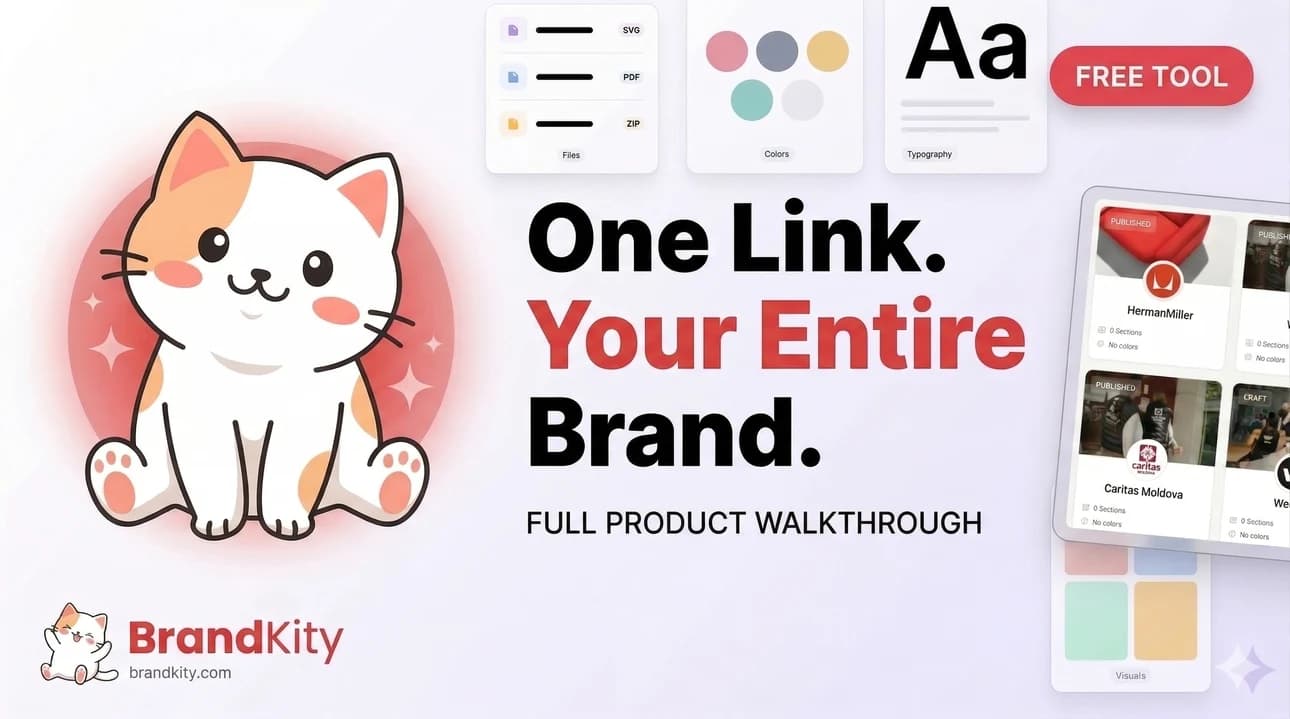
Table of contents
- The Agency’s Brand Asset Dilemma: From Scattered Files to Strategic Advantage
- Navigating the Complexities of Client Brand Management
- Understanding Brand Asset Management Platforms (BAMPs) Through an Agency Lens
- Beyond Traditional DAM: Unique Needs of Creative and Branding Agencies
- The Power of a ‘Single Source of Truth’ for Client Brand Portals
- Core Features Agencies Cannot Afford to Miss in a BAMP
- Intuitive Client Delivery & Shareable BrandKit Links
- Robust Brand Guidelines Integration and Governance
- Transforming Agency Productivity and Client Relationships
- Reducing Project Overheads and Enhancing Efficiency
- Elevating Brand Consistency Across All Client Projects
- Strengthening Client Trust Through Professional Brand Delivery
- A Strategic Framework for Selecting Your Agency’s Ideal BAMP
- Evaluating Usability, Onboarding, and Adoption Rates
- Assessing Integration Ecosystems and API Capabilities
- Understanding Pricing Models: Value vs. Volume for Agencies
- Prioritizing Security, Compliance, and Data Ownership
- Implementing and Maximizing Your Brand Asset Management Investment
- Seamless Asset Migration and Establishing Brand Taxonomy
- Training Your Team and Empowering Client Self-Service
- Measuring Impact and Iterating Your Brand Operations Strategy
- Practical Agency Use Cases: BAMPs in Action
- Streamlining New Client Onboarding & Brand Handoffs
- Managing Multi-Channel Campaign Assets & Approvals
- Ensuring Brand Governance for Freelancers and Partner Agencies
- The Advantages and Potential Considerations of Adopting a Dedicated BAMP
- Unlocking Efficiency, Consistency, and Client Satisfaction
- Addressing Common Implementation Hurdles and Change Management
- Future-Proofing Agency Brand Operations with Advanced BAMPs
- Adapting to AI, Automation, and Evolving Brand Experiences
- Leveraging Analytics for Strategic Brand Performance
- Frequently Asked Questions for Agencies Considering a BAMP
- Final Verdict: Empowering Your Agency with the Right Brand Asset Platform
In the fast-paced world of creative and branding agencies, effectively managing client brand assets can quickly become a significant bottleneck, stifling creativity and impeding efficiency. From scattered digital files across various cloud storage platforms to outdated logos lingering in old email threads, the challenge of maintaining brand integrity and operational fluidity is a constant battle. A robust Brand Asset Management Platform (BAMP) offers a strategic, comprehensive solution, transforming this potential chaos into a streamlined, powerful competitive advantage for agencies committed to delivering excellence.
For agencies scaling their operations and diversifying their client portfolio, the transition from ad-hoc asset sharing and informal processes to a centralized, rigorously governed system is not merely an optional upgrade—it’s an absolute necessity. This guide delves into precisely how BAMPs are engineered to address the unique and demanding requirements of modern agency workflows, ensuring unwavering brand consistency, dramatically boosting team productivity, and ultimately strengthening vital client relationships through professional, organized delivery.
The Agency’s Brand Asset Dilemma: From Scattered Files to Strategic Advantage
Navigating the Complexities of Client Brand Management
Agencies regularly juggle an intricate web of multiple clients, each presenting with distinct brand identities, comprehensive guidelines, and an ever-growing library of diverse assets. The intricate dance of managing everything from foundational logos and precise typography to captivating photography and high-resolution video across myriad campaigns and digital platforms presents a formidable and ongoing challenge. Without a unified, centralized system, agencies frequently encounter critical issues such as the unwitting use of incorrect assets, significant difficulties in efficiently tracking client approvals, and the constant, time-consuming hunt for the most recent version of a critical file. This fragmented, decentralized approach inevitably leads to palpable brand dilution across various channels and creates substantial operational inefficiencies, directly consuming valuable creative time and unnecessarily straining vital client relationships. Implementing clear, systematic protocols for effective brand inconsistency—where the client’s brand appears fragmented or mismanaged—erodes crucial client trust and can severely damage the agency’s hard-earned reputation for meticulous delivery and strategic brand stewardship. Implementing a streamlined system that drastically cuts down on these pervasive inefficiencies can therefore profoundly improve both an agency’s financial health and its standing with clients.
Understanding Brand Asset Management Platforms (BAMPs) Through an Agency Lens
Beyond Traditional DAM: Unique Needs of Creative and Branding Agencies
While general-purpose Digital Asset Management (DAM) platforms are highly effective at efficiently organizing and storing vast volumes of internal digital files, Brand Asset Management Platforms (BAMPs) are specifically engineered to address the more nuanced, client-facing requirements inherent to creative and branding agencies. Unlike generic DAMs, which often focus on enterprise-wide internal asset libraries, BAMPs strategically prioritize features like streamlined client-centric delivery, intuitive and interactive brand guideline integration, and highly efficient external sharing capabilities. Agencies require more than just a sophisticated storage solution; they critically need a system that actively functions as a dynamic, collaborative brand portal, facilitating seamless and secure collaboration not only with internal teams but also with external clients, freelancers, and third-party vendors. Many creative agencies rely on specialized design software, often from companies like Adobe, making the integration with asset management crucial. This specialized focus elevates a BAMP from being merely a static repository to becoming a truly strategic tool for comprehensive brand governance and successful client engagement.
The Power of a ‘Single Source of Truth’ for Client Brand Portals
At its core, a BAMP operates as a powerful single source of truth by centralizing all officially approved brand assets—from logos and imagery to video and documents—alongside comprehensive and up-to-date brand guidelines into easily accessible, client-specific portals. This fundamental centralization effectively eliminates the pervasive confusion and costly errors that invariably arise from fragmented storage solutions, outdated email attachments, or disparate cloud drives. When a client, an external marketing partner, or a third-party vendor requires a specific logo, the latest color palette, or particular typography files, they can instantly and securely access the most current, approved versions through a secure, branded link. This unparalleled level of organization not only saves immense amounts of time for both agency and client but also profoundly impacts global brand consistency, rigorously ensuring that every campaign, advertisement, or digital touchpoint aligns perfectly with the client’s meticulously established brand identity. This unified and consistent approach empowers clients with self-service capabilities while simultaneously simplifying and accelerating complex agency workflows, fostering greater collaboration.
Core Features Agencies Cannot Afford to Miss in a BAMP
Intuitive Client Delivery & Shareable BrandKit Links
For agencies, the ability to effortlessly deliver brand assets to clients and external partners is paramount. A leading BAMP must offer highly intuitive client delivery mechanisms, primarily through generating secure, shareable BrandKit links. These innovative links allow clients to engage in self-service, accessing only the approved, current assets specifically relevant to their brand, without requiring direct platform logins or extensive, time-consuming training. This crucial functionality significantly reduces the laborious back-and-forth communication inherent in traditional asset sharing, rigorously ensures clients always have the precisely correct and latest files, and effectively streamlines the entire asset handoff process, making it professional, efficient, and exceptionally user-friendly. It moves well beyond basic file-sharing services to provide a branded, meticulously organized, and fully managed client experience.
Robust Brand Guidelines Integration and Governance
Effective brand asset management extends far beyond mere file storage to encompass robust enforcement of established brand standards. Agencies critically need a BAMP that seamlessly integrates and comprehensively showcases their clients’ detailed brand guidelines. This means embedding usage rules directly alongside specific assets, providing essential contextual information, approved color codes, precise typography specifications, and clear “do’s and don’ts” for logo application. Features that allow for dynamic, interactive style guides ensure that clients, external collaborators, and even internal teams have immediate, up-to-date access to the very latest branding rules and standards. Such integrated governance is absolutely crucial for maintaining impeccable
Transforming Agency Productivity and Client Relationships
Reducing Project Overheads and Enhancing Efficiency
The strategic and thoughtful implementation of a BAMP directly and positively impacts an agency’s bottom line by significantly reducing project overheads. By automating critical asset distribution processes, standardizing internal workflows, and definitively eliminating the wasted time previously spent searching for files, agencies can free up valuable creative hours that were often lost to tedious administrative tasks. For example, a creative team that historically spent 10% of their time on asset management activities can now reallocate that substantial portion of time to core creative work, thereby increasing billable hours or overall project capacity. This enhanced efficiency allows agencies to effectively take on more projects, deliver results faster, and ultimately improve overall profitability without necessarily increasing headcount or resources.
Elevating Brand Consistency Across All Client Projects
One of the most profound and impactful benefits for agencies adopting a BAMP is the ability to achieve unprecedented levels of brand consistency across every single client project. With all approved assets and comprehensive guidelines meticulously housed within a
Strengthening Client Trust Through Professional Brand Delivery
Providing clients with a streamlined, meticulously organized, and professionally branded portal for their critical assets elevates the agency-client relationship to an entirely new level of trust and professionalism. This capability builds immense client trust, as it unequivocally demonstrates the agency’s unwavering commitment to meticulous organization, proactive brand stewardship, and cutting-edge operational excellence. When clients can easily and instantly access their approved logos, comprehensive brand guidelines, and crucial campaign assets via a simple, secure, and branded link, it powerfully reinforces the agency’s competence, reliability, and strategic foresight. This professional brand delivery system not only dramatically simplifies client workflows but also brilliantly positions the agency as a sophisticated, indispensable strategic partner rather than just a transactional service provider, fostering long-term, fruitful collaborations.
A Strategic Framework for Selecting Your Agency’s Ideal BAMP
Evaluating Usability, Onboarding, and Adoption Rates
For creative agencies, the success of a Brand Asset Management Platform (BAMP) hinges significantly on its usability and ease of adoption. A platform might boast extensive features, but if your team finds it cumbersome, or if clients struggle to navigate it, the investment loses its value. When evaluating, prioritize intuitive user interfaces that minimize the learning curve for both your internal creative and account teams, and most importantly, your clients. Look for features like drag-and-drop functionality, clear dashboards, and straightforward search capabilities. The onboarding process offered by the vendor is also critical; a comprehensive onboarding package, including tutorials and dedicated support, ensures a smoother transition and accelerates team proficiency. A common pitfall is choosing a complex system that leads to low internal adoption, meaning your team reverts to less efficient, older methods, and clients continue to request assets via email, undermining the very purpose of the BAMP.
Assessing Integration Ecosystems and API Capabilities
An agency’s workflow is typically a complex tapestry of various tools, from design software to project management platforms and marketing automation systems. Therefore, a BAMP’s ability to seamlessly integrate with your existing technology stack is paramount. Evaluate the platform’s integration ecosystem: does it offer native connectors with tools like Adobe Creative Cloud, Slack, or popular project management solutions? A robust API (Application Programming Interface) is equally important, allowing your agency to build custom integrations or connect with niche tools not supported natively. Without strong integration capabilities, your team risks creating data silos, necessitating manual transfers that introduce inefficiencies and potential errors. For instance, an agency using a BAMP that doesn’t integrate with their chosen social media scheduler will still face the manual task of downloading and re-uploading campaign assets, negating a significant efficiency gain. Prioritize platforms that enable a single source of truth across your brand operations.
Understanding Pricing Models: Value vs. Volume for Agencies
Navigating BAMP pricing models requires a discerning eye, as different structures can drastically impact an agency’s budget and scalability. Common models include per-user licensing, storage-based tiers, and feature-dependent packages. Agencies must consider their unique operational needs: how many internal users will access the platform? How many client portals do you anticipate needing? What is your projected storage requirement, especially if dealing with high-resolution video or large design files? A significant pitfall is encountering hidden costs or unexpected overage charges, particularly as your agency grows or takes on more asset-heavy projects. For example, a platform charging per client portal can become prohibitively expensive for an agency managing dozens of client brands. Evaluate whether the pricing model aligns with your agency’s client volume, asset output, and growth projections. Always request a clear breakdown of costs, including any potential future fees for additional storage, users, or premium features, to ensure long-term value over mere volume.
Prioritizing Security, Compliance, and Data Ownership
In an era of heightened data sensitivity, the security posture and compliance certifications of a BAMP are non-negotiable for agencies. You are entrusted with sensitive client brand assets, often including confidential product launches, campaign strategies, and proprietary visual identities. A robust platform must offer comprehensive data encryption both at rest and in transit, multi-factor authentication, and granular role-based access controls (RBAC) to ensure only authorized personnel can view or modify assets. Additionally, inquire about compliance certifications like SOC 2, ISO 27001, or GDPR adherence, which demonstrate a commitment to security best practices. Equally critical is understanding the platform’s terms regarding data ownership and portability. Agencies must retain full ownership of their clients’ assets and have the ability to easily export all data should they ever decide to switch providers. Neglecting these aspects can expose your agency to significant reputational damage, legal liabilities, and a loss of client trust.
Implementing and Maximizing Your Brand Asset Management Investment
Seamless Asset Migration and Establishing Brand Taxonomy
The successful implementation of a BAMP begins with a meticulous approach to asset migration and the establishment of a robust brand taxonomy. Agencies often grapple with years of accumulated assets scattered across various cloud drives, local servers, and even email attachments. The initial phase requires a strategic plan for centralizing these assets. Platforms offering bulk upload tools and intelligent metadata tagging capabilities can significantly ease this process. However, the true long-term value comes from defining a clear, consistent brand taxonomy. This involves creating logical folder structures, consistent naming conventions, and comprehensive metadata fields (e.g., client, campaign, asset type, usage rights, expiration date). A poorly organized migration can lead to the “digital junk drawer” effect, making assets just as hard to find as before. Dedicate time to mapping out your desired structure and consider appointing a ‘brand librarian’ within your agency to oversee the initial setup and ongoing maintenance of this critical organizational system.
Training Your Team and Empowering Client Self-Service
Even the most advanced BAMP will fail to deliver its full potential if agency teams and clients are not adequately trained and empowered to use it. Internal training is crucial for ensuring everyone understands how to upload, tag, search, and share assets efficiently. Conduct workshops that demonstrate the platform’s features, highlighting how it streamlines daily tasks and improves agency workflows. Beyond internal use, a key advantage of BAMPs for agencies is enabling client self-service. By setting up intuitive client portals, agencies can empower clients to access and download approved brand assets independently. This significantly reduces repetitive asset requests, freeing up creative and account teams for more strategic work. Create simple, visual guides for clients on how to use their dedicated portal and emphasize the platform as the single source of truth for all brand materials. This proactive approach to training and empowerment is vital for maximizing adoption rates and realizing tangible time savings.
Measuring Impact and Iterating Your Brand Operations Strategy
Implementing a BAMP is not a one-time event; it’s an ongoing process of optimization and iteration. To truly maximize your investment, agencies must establish clear metrics for measuring its impact and commit to regularly evaluating and refining their brand operations strategy. Define key performance indicators (KPIs) before implementation, such as the reduction in time spent searching for assets, the decrease in email requests for logos, the rate of correct brand asset usage, or the improvement in client satisfaction scores. Most modern BAMPs offer analytics dashboards that can track asset downloads, popular searches, and user activity, providing valuable insights. Use this data to identify areas for improvement, such as gaps in your taxonomy, training needs, or underutilized features. Regular feedback sessions with your team and clients can uncover pain points and opportunities. By continuously measuring, analyzing, and adapting, your agency can ensure the BAMP remains a dynamic and invaluable tool that evolves with your business and client needs, consistently delivering ROI.
Practical Agency Use Cases: BAMPs in Action
Streamlining New Client Onboarding & Brand Handoffs
For agencies, the initial stages of a client relationship and the final project handoff are critical touchpoints where a BAMP can dramatically improve efficiency and professionalism. When a new client comes on board, rather than sifting through scattered files or requesting assets piecemeal, an agency can use the BAMP to create a dedicated client-specific brand portal. This serves as the centralized repository for all brand guidelines, logos, typography, color palettes, and other core assets. This streamlined approach minimizes the “missing logo” scramble and ensures that all agency teams, from creative to account management, are working with the most current and approved brand elements from day one. During project handoffs, especially when delivering final brand assets or comprehensive style guides, the BAMP provides a secure and organized method to grant clients easy access to their deliverables, reinforcing the agency’s commitment to efficiency and brand consistency. This proactive organization elevates the client experience and establishes the BAMP as an indispensable tool for agency workflows.
Managing Multi-Channel Campaign Assets & Approvals
Modern marketing campaigns are increasingly complex, spanning numerous digital and print channels, each requiring specific asset formats and versions. A BAMP becomes indispensable for agencies managing these intricate multi-channel initiatives. It provides a central hub where all campaign assets—images, videos, copy blocks, and design files—are stored, versioned, and tagged with relevant metadata. This ensures that every team member, from social media managers to web developers, accesses the correct, most recent versions. Crucially, BAMPs facilitate streamlined approval workflows. Instead of endless email threads and scattered feedback, clients can review and approve assets directly within the platform, with clear audit trails and version history. This significantly reduces approval times, prevents the use of unapproved assets, and mitigates the risk of costly brand inconsistencies across diverse platforms. Agencies can confidently launch campaigns knowing that every asset aligns perfectly with the brand’s visual and messaging guidelines.
Ensuring Brand Governance for Freelancers and Partner Agencies
As agencies frequently collaborate with a network of freelancers, contractors, and partner agencies, maintaining consistent brand governance across all external contributors can be a significant challenge. A BAMP offers a powerful solution by serving as the definitive single source of truth for brand assets and guidelines. Agencies can create specific user roles with granular access permissions, granting external partners access only to the assets and guidelines relevant to their tasks. For instance, a freelance photographer might only see specific image usage guidelines, while a partner PR agency could access approved press release templates and logo variations. This eliminates the need to email large files, ensures everyone is working with the latest versions, and minimizes the risk of brand dilution or misuse. The platform empowers external collaborators to self-serve, reducing the administrative burden on agency staff while providing robust control over how and where brand assets are used, thereby bolstering overall brand consistency and integrity.
The Advantages and Potential Considerations of Adopting a Dedicated BAMP
Unlocking Efficiency, Consistency, and Client Satisfaction
Adopting a dedicated BAMP offers transformative advantages for agencies by directly addressing common pain points related to asset management and brand consistency. Primarily, it unlocks significant operational efficiency. Teams spend less time searching for files, fewer hours are wasted on recreating lost assets, and repetitive client requests for logos or brand guidelines become a relic of the past. This frees up valuable creative and account management time, allowing staff to focus on higher-value strategic work. Secondly, a BAMP acts as the ultimate guardian of brand consistency. By ensuring all approved assets and guidelines are centralized and easily accessible, agencies can guarantee that every piece of client communication, across all channels, adheres to the established brand identity. This consistency strengthens brand recognition and reinforces client trust. Finally, by streamlining workflows and providing clients with effortless access to their brand materials through intuitive portals, agencies can dramatically enhance client satisfaction, positioning themselves as organized, professional, and forward-thinking partners.
Addressing Common Implementation Hurdles and Change Management
While the benefits of a BAMP are clear, agencies must be prepared to address common implementation hurdles and navigate the complexities of change management. One significant hurdle is the initial data migration and taxonomy setup, which can be time-consuming and resource-intensive if not planned meticulously. Agencies should allocate dedicated time and personnel for this phase. Another challenge often comes from user resistance; team members accustomed to established, albeit inefficient, workflows may be reluctant to adopt a new system. Overcoming this requires clear communication about the benefits, comprehensive training, and appointing internal champions to advocate for the platform. Budget allocation is also a consideration, as the investment in a robust BAMP needs to be justified against its long-term ROI. By proactively identifying these potential obstacles—such as integration complexities or unforeseen customization needs—and developing strategies to mitigate them, agencies can ensure a smoother rollout and greater long-term success, ultimately maximizing their investment in brand asset management for agencies.
Future-Proofing Agency Brand Operations with Advanced BAMPs
Adapting to AI, Automation, and Evolving Brand Experiences
The landscape of brand management is continually reshaped by technological advancements, with artificial intelligence (AI) and automation playing increasingly pivotal roles. For agencies, adopting a Brand Asset Management Platform (BAMP) that anticipates these shifts is crucial for long-term success. Modern BAMPs are moving beyond mere storage, offering features like AI-powered tagging and categorization that dramatically reduce manual effort, ensuring assets are easily discoverable and consistently applied across client projects. This automation extends to integrations with leading creative tools like Adobe Creative Cloud further empowers creative teams to work more efficiently, ensuring that brand guidelines are upheld automatically, saving countless hours and preventing costly errors.
Leveraging Analytics for Strategic Brand Performance
In an increasingly data-driven world, the ability to measure and optimize brand performance is a key differentiator for agencies. Advanced BAMPs provide invaluable analytics capabilities, offering deep insights into how brand assets are being utilized, by whom, and with what frequency. This goes beyond simple download counts, extending to asset popularity, usage trends, and even potential compliance issues. Such granular data empowers agencies to make data-driven decisions, refining their creative strategies and ensuring every asset contributes effectively to a client’s brand goals.
Agencies can use these analytics to demonstrate clear Return on Investment (ROI) to clients, showcasing the impact of their creative work through tangible metrics. For instance, an agency might discover that specific campaign imagery consistently drives higher engagement, informing future content creation. Conversely, identifying underutilized assets can prompt repurposing or retirement, optimizing an agency’s and its clients’ resource allocation. By transforming raw data into strategic insights, BAMPs become more than just storage solutions; they evolve into powerful tools for continuous improvement and demonstrating the true value of brand asset management for clients.
Frequently Asked Questions for Agencies Considering a BAMP
Agencies often have specific concerns when evaluating new technology, particularly systems as central as a Brand Asset Management Platform. One common question is, “How does a BAMP differ from a traditional Digital Asset Management (DAM) system for an agency?” While both manage assets, BAMPs, like BrandKity, are specifically engineered for brand delivery workflows, emphasizing client sharing, simplified onboarding, and maintaining brand integrity across various external stakeholders. They typically offer more intuitive brand portals and direct guideline enforcement features, which are critical for agency-client relationships.
Another frequent inquiry pertains to the Return on Investment (ROI). Agencies can expect ROI through reduced time spent on asset searches, fewer version control errors, faster client approvals, and improved overall project turnaround times. Consider an agency managing ten clients, each with multiple campaigns annually. If a BAMP saves just two hours per week per client on asset management tasks, that’s over 1,000 hours saved annually, translating directly into increased billable hours or reduced operational costs. Implementation time is also a concern; platforms focused on agency needs, like BrandKity, prioritize fast onboarding, often allowing agencies to be operational with their core brand kits in days, not months.
Finally, agencies often ask about integration capabilities. A robust BAMP should integrate seamlessly with existing creative tools (e.g., Adobe Creative Suite), project management software, and even marketing automation platforms to create a unified ecosystem. This ensures that assets flow effortlessly from creation to distribution, maintaining a
Final Verdict: Empowering Your Agency with the Right Brand Asset Platform
For agencies navigating the complexities of modern branding and client delivery, selecting the right Brand Asset Management Platform is not merely an operational decision; it’s a strategic imperative. The platforms that truly empower agencies are those that go beyond simple storage, offering intuitive workflows, robust governance, and insightful analytics tailored to the unique demands of agency-client relationships. These platforms foster operational efficiency, ensuring that creative teams can focus on innovation rather than administrative hurdles like searching for misplaced logos or dealing with outdated brand guidelines.
Ultimately, a sophisticated BAMP equips agencies to provide exceptional value to their clients. By maintaining a single, shareable brand portal, agencies can guarantee brand consistency, streamline client communication, and accelerate project delivery. This translates directly into enhanced client satisfaction and stronger, more enduring partnerships. Investing in a platform designed for agility, scalability, and seamless integration positions an agency for sustained growth, allowing it to tackle new challenges and opportunities in an ever-evolving digital landscape with confidence and unparalleled brand control.
Saurabh Kumar
Founder, BrandKity
Saurabh writes about practical brand systems, faster client handoffs, and scalable workflows for designers and agencies building repeatable delivery operations.
Connect on LinkedIn