
Top Brand Asset Management for Creative Agencies
In the fast-evolving landscape of 2026, creative agencies are under increasing pressure to deliver high-quality, on-brand work with unprecedented spee…
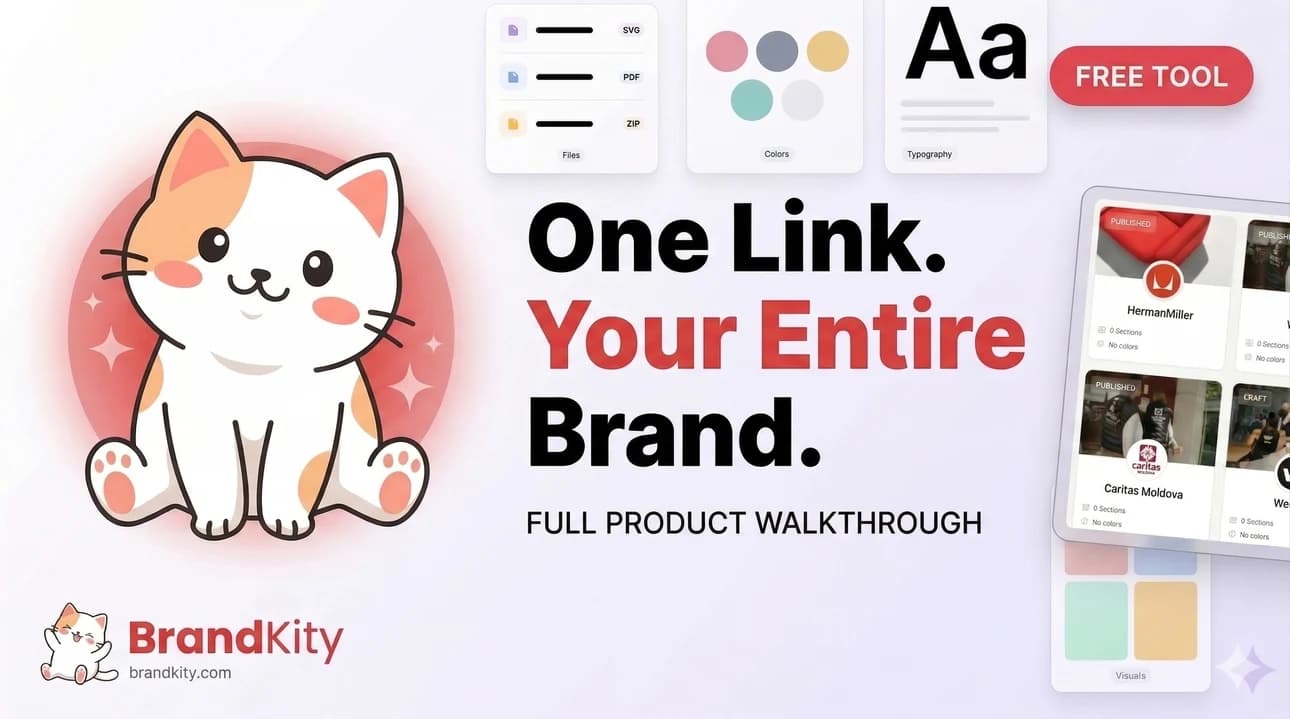
Table of contents
- Beyond Dispersed Files: Why Modern Agencies Need Dedicated Brand Asset Management
- The Everyday Challenges Creative Agencies Face with Brand Assets
- The Hidden Costs of Brand Inconsistency and Asset Search for Client Projects
- What Defines Top-Tier Brand Asset Management for Creative Workflows?
- Core Features for Agency Productivity and Client Satisfaction
- Beyond Traditional DAM: Prioritizing Simplicity and Client Delivery
- Essential Integrations for Seamless Creative Operations
- Building a Single Source of Truth for Every Brand with Dedicated Portals
- The Power of Branded Client Portals for Agencies
- Automating Brand Guidelines Distribution and Enforcement
- Empowering Clients with Self-Service Access to Approved Assets
- Revolutionizing Client Handoff and Brand Delivery Workflows
- The ‘One Shareable BrandKit Link’ Advantage for Agencies
- Minimizing Revision Cycles Through Clear Asset Management
- Practical Agency Use Cases: How BAM Transforms Daily Operations
- Onboarding New Clients and Projects with Speed and Precision
- Managing Marketing Campaigns and Asset Localization Effortlessly
- Choosing the Right Platform: Key Considerations for Creative Agencies
- User Experience and Fast Onboarding for Creative Teams
- Scalability to Grow with Your Agency and Client Portfolio
- Security, Access Control, and Version Management
- The Tangible ROI: Boosting Profitability and Reputation with Smart BAM
- Reducing Time Spent on Asset Search, Approval, and Distribution
- Enhancing Client Relationships Through Professional Brand Delivery
- Future-Proofing Your Agency: Embracing Modern Brand Operations
- Adapting to Evolving Digital Landscape and Client Demands
- Leveraging Brand Portals for Competitive Advantage
- The Role of Brand Governance in Agency Success
- Frequently Asked Questions About Brand Asset Management for Agencies
- How does BAM differ from cloud storage for agencies?
- Can BAM systems integrate with project management tools?
- Recommendations for Elevating Your Agency’s Brand Asset Strategy
In the fast-evolving landscape of 2026, creative agencies are under increasing pressure to deliver high-quality, on-brand work with unprecedented speed and efficiency. Managing client brand assets effectively is no longer a luxury but a fundamental requirement for success, distinguishing leading agencies from their competitors.
The traditional methods of asset organization – relying on chaotic shared drives, scattered email attachments, or outdated cloud folders – have become significant bottlenecks. This approach directly impedes creativity, introduces costly inconsistencies, and ultimately erodes client trust and agency profitability. A robust brand asset management strategy is essential.
Beyond Dispersed Files: Why Modern Agencies Need Dedicated Brand Asset Management
The Everyday Challenges Creative Agencies Face with Brand Assets
Creative agencies routinely grapple with a multitude of challenges when managing client brand assets. The most prevalent issue is the sheer difficulty in locating the correct, approved version of a logo, typeface, or image amidst a sea of project folders and communication threads. This constant search leads to significant time wastage, diverting creative talent from actual design work to administrative tasks.
Version control is another critical pain point. Without a centralized system, designers often unknowingly use outdated assets, resulting in extensive rework and client dissatisfaction. Furthermore, ensuring every team member and client has access to the precise assets they need, while simultaneously preventing access to sensitive or unapproved material, becomes a complex logistical nightmare. This fragmented approach undermines the agency’s ability to maintain a
The Hidden Costs of Brand Inconsistency and Asset Search for Client Projects
The repercussions of poor brand asset management extend far beyond mere inconvenience, translating into significant hidden costs for agencies. Perhaps the most substantial is the direct impact on team productivity; hours spent searching for files equate to billable time lost or non-billable overhead. For an agency with 10 creatives, even 30 minutes lost per day per person can accumulate into hundreds of unproductive hours monthly.
Beyond time, brand inconsistency due to outdated assets can damage a client’s market perception and erode their trust in the agency. This often leads to extensive revision cycles, scope creep, and ultimately, a reduction in project profitability. Moreover, the reputational risk for an agency that consistently delivers off-brand materials can deter future client engagements, making effective
What Defines Top-Tier Brand Asset Management for Creative Workflows?
Core Features for Agency Productivity and Client Satisfaction
A top-tier brand asset management solution for creative agencies must offer a robust set of features designed to enhance both internal productivity and client satisfaction. At its heart, this includes an intuitive central repository for all asset types – logos, images, videos, fonts, and documents – ensuring everything is easily searchable and retrievable. Advanced search capabilities, leveraging AI-powered tagging and custom metadata, are crucial for quickly locating specific assets.
Beyond storage, critical features include version control to track changes and revert to previous iterations, comprehensive access permissions to control who sees and uses which assets, and integrated usage guidelines that dictate how assets can be applied. These functionalities collectively empower agencies to maintain brand integrity across all projects while drastically reducing the time spent on asset retrieval and validation, directly contributing to higher client satisfaction through faster, more accurate deliveries.
Beyond Traditional DAM: Prioritizing Simplicity and Client Delivery
While traditional Digital Asset Management (DAM) systems offer extensive capabilities, many are often overly complex and cumbersome for the agile needs of creative agencies. Top-tier brand asset management solutions prioritize simplicity and a focus on client delivery, differentiating themselves from enterprise-grade DAMs like those sometimes offered by larger media companies. These platforms are built with the agency workflow in mind, offering intuitive interfaces that reduce onboarding time and friction for creative teams and external collaborators.
The emphasis is on streamlined sharing mechanisms, easy access for clients, and clear presentation of brand guidelines rather than deep, highly technical asset lifecycle management. This approach ensures that the technology serves the creative process, facilitating rapid project execution and seamless client communication without imposing unnecessary operational complexity. Agencies require a tool that enhances their ability to quickly and accurately deliver on-brand creative work, not one that adds layers of technical overhead.
Essential Integrations for Seamless Creative Operations
For a brand asset management platform to be truly effective in a creative agency setting, it must integrate seamlessly with the existing tools that designers and project managers use daily. Key integrations often include popular creative suites, such as products within Adobe Creative Cloud, allowing assets to be pulled directly into design projects without manual downloads and re-uploads. This direct connectivity significantly reduces friction and ensures designers are always working with the approved versions.
Furthermore, integration with project management platforms (e.g., Asana, Trello) and communication tools (e.g., Slack) can help link assets directly to tasks and discussions, fostering better collaboration and transparency. These ecosystem integrations ensure that brand assets are not isolated but are an integral part of the entire creative operational pipeline, from initial brief to final client delivery, driving efficiency and minimizing errors.
Building a Single Source of Truth for Every Brand with Dedicated Portals
The Power of Branded Client Portals for Agencies
Dedicated branded client portals are a game-changer for creative agencies, transforming how brand assets and guidelines are shared and managed with clients. These portals act as a centralized, secure hub where clients can access everything related to their brand, presented within an interface that reflects their unique brand identity. This personalized experience enhances the perceived value of the agency’s services, fostering stronger client relationships and trust.
Beyond aesthetics, branded portals significantly improve communication efficiency. Clients no longer need to request specific files or guidelines, nor do agencies need to send multiple attachments. Everything is available on-demand, reducing back-and-forth emails and improving response times. This streamlined interaction allows agencies to focus more on strategic creative work rather than administrative tasks.
Automating Brand Guidelines Distribution and Enforcement
One of the most significant advantages of dedicated brand portals is the ability to automate the distribution and enforcement of brand guidelines. Agencies can embed comprehensive guidelines – covering logo usage, typography, color palettes, and imagery – directly within the portal, alongside the downloadable assets. This ensures that clients and their extended teams always have access to the most current and accurate brand rules.
By making guidelines an integral part of the asset access point, agencies can proactively mitigate brand inconsistencies. This approach shifts from reactive correction to proactive prevention, significantly reducing instances where incorrect assets or applications are used. It effectively creates a self-governing system, saving valuable agency time previously spent on educating and re-educating stakeholders.
Empowering Clients with Self-Service Access to Approved Assets
Empowering clients with self-service access to approved brand assets through dedicated portals fundamentally changes the client-agency dynamic. Instead of waiting for an agency contact to email specific files, clients can log in and download what they need, precisely when they need it. This 24/7 on-demand access is invaluable for clients operating in different time zones or requiring immediate assets for urgent campaigns.
This self-service model not only accelerates client workflows but also reduces the administrative burden on agency teams, allowing them to allocate resources to more strategic and creative endeavors. It fosters a sense of independence and control for the client, while simultaneously ensuring that they are only accessing assets that have been officially approved and comply with brand standards, thanks to the portal’s integrated governance.
Revolutionizing Client Handoff and Brand Delivery Workflows
The ‘One Shareable BrandKit Link’ Advantage for Agencies
The concept of a ‘one shareable BrandKit link’ represents a paradigm shift in how creative agencies manage client handoffs and brand delivery. Instead of compiling numerous files into zip folders, uploading them to generic cloud storage, or sending a series of email attachments, agencies can provide a single, secure URL. This link grants clients immediate access to their entire brand ecosystem – from logos and imagery to typography and comprehensive brand guidelines. The simplicity of this approach is a major advantage for modern
Minimizing Revision Cycles Through Clear Asset Management
One of the most tangible benefits of a streamlined brand delivery workflow is the dramatic reduction in revision cycles. Many revisions stem from miscommunication about brand assets, the use of incorrect versions, or a lack of clarity regarding brand guidelines. By providing a clear, accessible, and up-to-date repository via a BrandKit link, agencies can preemptively address these issues. When clients and their teams can easily find and understand the approved assets and their usage, the likelihood of errors decreases significantly.
This leads to projects progressing more smoothly, with fewer iterations caused by asset-related issues. For agencies, this means faster project completion, improved resource allocation, and ultimately, higher profitability per project. For clients, it translates into quicker time-to-market for their campaigns and a more efficient, less frustrating collaboration experience, reinforcing the agency’s value as a reliable and organized partner.
Practical Agency Use Cases: How BAM Transforms Daily Operations
Onboarding New Clients and Projects with Speed and Precision
For creative agencies, the initial phase of client onboarding and project initiation is critical. A robust Brand Asset Management (BAM) platform serves as a central hub, providing a
Managing Marketing Campaigns and Asset Localization Effortlessly
Modern marketing campaigns are increasingly complex, often requiring assets tailored for multiple channels, regions, and languages. BAM plays an indispensable role in organizing and distributing these varied assets. It ensures brand consistency across all touchpoints, from social media graphics to print ads and video content, regardless of localization requirements. Agencies can utilize comprehensive tagging and metadata functionalities within their BAM system to efficiently categorize and retrieve specific assets for different markets, simplifying the adaptation of content. This proactive management prevents costly errors and accelerates campaign launches. For example, during a global product launch, a creative agency can quickly filter for translated video assets, regional imagery, and market-specific copy, ensuring every localized campaign variant adheres perfectly to the master brand guidelines and reaches its audience efficiently and effectively.
Choosing the Right Platform: Key Considerations for Creative Agencies
User Experience and Fast Onboarding for Creative Teams
The success of any new technology adoption within a creative agency hinges significantly on its user experience (UX). A BAM platform must offer an intuitive interface that resonates with designers, marketers, and project managers alike, allowing for rapid onboarding without extensive training. Complex or clunky systems are a common pitfall, leading to low adoption rates and negating the intended benefits. Look for features such as drag-and-drop functionality for uploads, straightforward navigation, and visually rich dashboards that allow creative teams to quickly find, preview, and utilize assets. The ease with which an agency can migrate its existing asset library and integrate it into a new platform is also a crucial factor. Platforms designed with a focus on simplicity and efficiency for creative workflows ensure that teams spend more time creating and less time managing the tools.
Scalability to Grow with Your Agency and Client Portfolio
As creative agencies expand, so too does their volume of digital assets and the number of clients and projects they manage. A chosen BAM platform must offer robust scalability, capable of handling an ever-increasing asset library, a growing user base, and evolving collaboration needs. Cloud-native solutions often provide the necessary flexibility in storage capacity and user licensing, allowing agencies to scale up or down based on current demands. Before committing, agencies should assess their current asset volume and project their growth over the next few years, considering how the platform’s architecture and pricing model will accommodate this expansion. Overlooking scalability can lead to performance bottlenecks, prohibitive costs, or the need for another costly migration down the line, disrupting operations and impacting profitability.
Security, Access Control, and Version Management
Protecting sensitive client brand assets is paramount for creative agencies. A leading BAM platform must provide enterprise-grade security, offering granular access controls that allow administrators to define who can view, edit, download, or approve specific assets. Robust version management is equally critical, ensuring that only the latest, approved assets are in circulation, while maintaining a comprehensive history of all changes. The pitfall of lax security or poor version control can lead to devastating consequences, including the use of outdated brand elements in critical campaigns, exposing the agency to reputational damage and potential legal liabilities. Agencies should prioritize platforms that offer features like multi-factor authentication, single sign-on (SSO) integration, detailed audit trails, and compliance with industry-standard security certifications. For example, a platform that clearly delineates permissions can prevent a junior designer from accidentally publishing an unapproved logo while allowing senior creatives full editing access, safeguarding brand integrity.
The Tangible ROI: Boosting Profitability and Reputation with Smart BAM
Reducing Time Spent on Asset Search, Approval, and Distribution
One of the most immediate and quantifiable returns on investment (ROI) from a BAM system is the significant reduction in non-creative, administrative time. Designers frequently spend hours each week searching for correct files, while project managers chase approvals or distribute assets manually. A centralized BAM platform virtually eliminates this wasted effort through intuitive search, organized categorization, and automated workflows. Agencies can track the time spent on these tasks before and after BAM implementation to reveal substantial savings. For instance, an agency employing 20 designers might save an average of 5 hours per designer per week on asset-related tasks, translating to 100 hours saved weekly. This efficiency gain frees up valuable creative time, allowing teams to focus on higher-value work, directly impacting project capacity and overall profitability. By streamlining
Enhancing Client Relationships Through Professional Brand Delivery
Beyond internal efficiencies, a well-implemented BAM strategy profoundly enhances client relationships. Clients value organization, clarity, and easy access to their brand assets and guidelines. Providing a professionally managed brand portal, akin to a personalized digital brand handbook, elevates the client experience from a transactional interaction to a true partnership. This proactive approach to
Future-Proofing Your Agency: Embracing Modern Brand Operations
Adapting to Evolving Digital Landscape and Client Demands
The digital landscape is in constant flux, with new platforms, content formats, and client expectations emerging regularly. A future-proofed agency must be agile and equipped to adapt quickly. A sophisticated BAM platform is an essential tool in this regard, providing a flexible framework to manage an expanding array of asset types—from traditional print files to 3D models, augmented reality elements, and AI-generated content. By centralizing assets and metadata, agencies can swiftly repurpose existing materials for new channels or adapt to evolving client briefs without starting from scratch. Regularly reviewing and updating BAM features, seeking out new integrations, and leveraging capabilities like AI-powered tagging ensures the agency remains at the forefront of creative operations and client service, ready for whatever the next wave of digital transformation brings.
Leveraging Brand Portals for Competitive Advantage
In a highly competitive agency market, differentiation is key. Brand portals, powered by a robust BAM system, offer a significant competitive advantage. More than just a simple file-sharing link, these portals act as a branded, interactive extension of the agency’s professionalism and expertise. They provide a seamless, branded experience for clients, giving them 24/7 access to their complete brand ecosystem—logos, guidelines, campaign assets, and even marketing collateral—all within a secure, easy-to-navigate environment. This level of curated, professional brand delivery sets an agency apart from competitors still relying on generic cloud storage or email attachments. It showcases a commitment to meticulous brand management and provides clients with a premium experience, solidifying the agency’s reputation as a forward-thinking and highly organized partner.
The Role of Brand Governance in Agency Success
Establishing and maintaining strong brand governance is fundamental to an agency’s long-term success, especially when managing multiple client brands or large, complex projects. A BAM platform serves as the indispensable foundation for enforcing these governance policies. It ensures consistent application of brand rules across all internal teams and external stakeholders, providing clear guidelines on asset usage, approval workflows, and version control. Without effective brand governance, inconsistencies can creep in, eroding brand equity and leading to disjointed messaging. The right BAM platform facilitates the creation of a definitive “rulebook” for each brand, ensuring that every asset produced aligns perfectly with established standards. This commitment to rigorous governance through a centralized BAM system empowers agencies to deliver impeccable brand consistency, build stronger client trust, and ultimately, drive their own growth and reputation within the industry.
Frequently Asked Questions About Brand Asset Management for Agencies
How does BAM differ from cloud storage for agencies?
While both brand asset management (BAM) platforms and cloud storage solutions offer file storage, their functionalities and purposes diverge significantly, especially for creative agencies. Cloud storage, such as Google Drive or Dropbox, provides generic file hosting and basic sharing capabilities. It primarily serves as a repository without specialized features for managing the lifecycle of creative assets. In contrast, a BAM system like BrandKity is purpose-built for brand assets, offering robust features such as advanced metadata tagging for effortless discoverability, comprehensive version control to track iterations and revert when necessary, and integrated brand guideline enforcement. Agencies relying solely on generic cloud storage often contend with outdated versions, poor asset discoverability, and inconsistent brand application, whereas BAM platforms streamline these processes by providing dedicated brand portals for controlled access and distribution, approval workflows, and on-the-fly asset transformations.
Can BAM systems integrate with project management tools?
Absolutely, integration with project management (PM) tools is a critical advantage for modern agencies adopting BAM solutions. Most contemporary BAM platforms offer APIs or direct connectors to popular PM tools like Asana, Monday.com, or Jira. These integrations enable a truly streamlined workflow, allowing creative teams, project managers, and clients to access and utilize approved brand assets directly within their project environments. The benefits are substantial: reduced manual effort from downloading and re-uploading, enhanced collaboration by ensuring everyone works with the latest files, and maintaining a
The onboarding process for a new brand asset management solution, while varying by provider, generally follows a structured methodology to ensure successful adoption and integration into an agency’s workflow. It typically begins with a Discovery & Planning phase, where agency needs are assessed, key stakeholders identified, and an asset migration strategy formulated. This is followed by Configuration & Setup, involving the establishment of the brand portal, defining user roles and permissions, customizing metadata fields, and applying agency branding. The next crucial step is Asset Migration, transferring existing brand assets into the new system, often with initial tagging and organization efforts. Finally, comprehensive Training & Rollout is conducted for all team members—designers, project managers, and account managers—to ensure proficiency in using the platform for uploads, searching, sharing, and approvals. Ongoing support and optimization are vital post-launch. For agencies, designating an internal BAM champion often expedites adoption and maximizes the return on investment.
Recommendations for Elevating Your Agency’s Brand Asset Strategy
To truly empower your creative agency and client delivery, elevating your brand asset strategy beyond mere storage is essential. Our primary recommendation is to Centralize Everything. Migrate all logos, typography, color palettes, brand guidelines, marketing assets, and supporting files into a dedicated brand asset management platform. This proactive step creates a definitive single source of truth, eradicating the inefficiencies of scattered folders and outdated documents. Furthermore, it’s crucial to Define a Naming and Tagging Convention from the outset, establishing consistent metadata practices that make assets instantly discoverable and usable across all teams. A well-organized system significantly reduces time spent searching and ensures compliance.
Agencies must also Prioritize Client Delivery by leveraging the BAM’s client portal functionalities. Platforms designed for agency workflows, like BrandKity, allow for the creation of secure, branded portals that provide clients with immediate access to their latest, approved assets. This enhances client satisfaction and fortifies your agency’s professional image. Concurrently, Integrate with Existing Workflows by exploring how your BAM can connect with project management, design, and communication tools. Seamless integrations minimize friction, boost productivity, and ensure that brand assets are always in context. Regular Audits and Updates of your asset library are non-negotiable; archive obsolete materials and introduce new ones to maintain relevance and adherence to current
brand guidelines and marketing strategies. This ongoing maintenance prevents clutter and ensures your team always works with the most accurate and up-to-date resources.
Saurabh Kumar
Founder, BrandKity
Saurabh writes about practical brand systems, faster client handoffs, and scalable workflows for designers and agencies building repeatable delivery operations.
Connect on LinkedIn