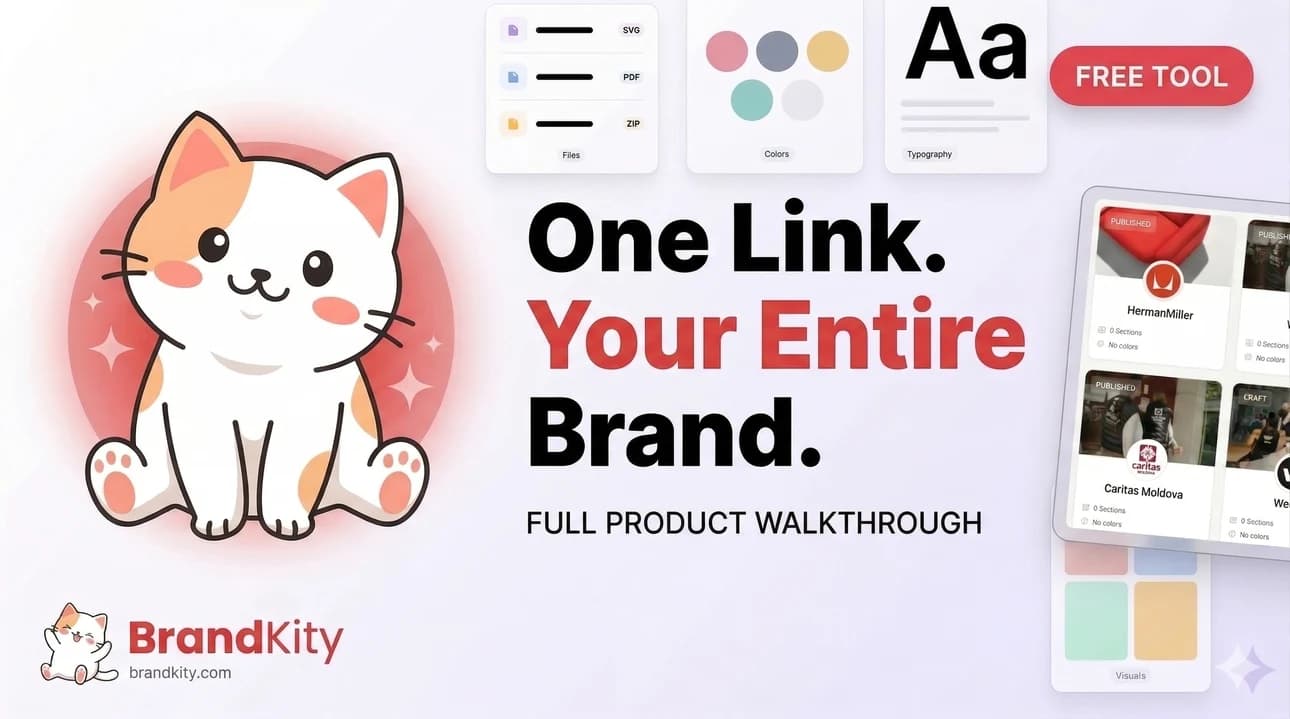
Simplify Branding: The Designer’s Link
In today’s fast-paced digital landscape, delivering a cohesive brand experience is paramount. For designers, this means not only creating stunning vis…
Table of contents
- The End of Brand Asset Chaos: Delivering Polished Brands, One Link at a Time
- The pain points of scattered files and miscommunication.
- Why current brand delivery methods fall short for designers and clients.
- Introducing the ‘designer’s link’ as a modern solution.
- Streamlining the Handoff: From Final Files to Client Confidence
- Building Your Master Brand Kit: The Foundation of Effortless Delivery
- Essential brand assets every designer must include (logos, colors, fonts, imagery).
- Organizing visual elements for clarity and accessibility.
- The role of a structured link in presenting your work professionally.
- Beyond Just Files: Embedding Brand Guidelines for Client Empowerment
- The ‘One Link’ Advantage: Transforming Client Perception and Workflow
- How a single, curated link combats confusion and repeated requests.
- Providing clients with instant access to approved brand assets.
- Examples: Delivering for a startup vs. an established brand.
- Designing for Scalability: How a Unified Brand Link Supports Growth
- Mastering Brand Asset Management for Freelancers and Agencies
- The Designer’s Secret Weapon: Efficiency in Every Client Interaction
- Streamlining Communication and Collaboration
- Future-Proofing Your Design Business with Brand Portals
- Practical Steps to Implement a ‘Designer’s Link’ Workflow Today
- Future-Proofing Your Brand Delivery: Embracing Design Systems and Beyond
- Measuring Success: How a Simplified Handoff Impacts Your Bottom Line
Imagine a world where your meticulously crafted brand assets are not lost in email chains or scattered across multiple cloud storage folders. A world where your clients can effortlessly find and use the logos, colors, and fonts you’ve painstakingly selected. This is the promise of a streamlined, modern approach to brand asset delivery.
The End of Brand Asset Chaos: Delivering Polished Brands, One Link at a Time
The pain points of scattered files and miscommunication.
The struggle is real: clients email asking for “the latest logo file” only to receive a version from six months ago. This leads to inconsistent branding across marketing materials, websites, and social media. Designers often find themselves bogged down in repetitive requests for specific file formats or color variations. This administrative burden detracts from creative work and can strain client relationships. The sheer volume of assets—logos in various formats (SVG, PNG, JPG), color palettes, typography files, image libraries, and even presentation templates—becomes unmanageable when stored haphazardly. This chaos breeds errors, frustration, and ultimately, a diluted brand identity for the client.
Furthermore, miscommunication regarding brand usage can be a significant pitfall. Without clear guidelines or easy access to correct assets, clients might inadvertently misuse brand elements, leading to brand dilution or even legal issues. This is particularly problematic for smaller businesses or startups that may not have dedicated marketing teams and rely heavily on designers for brand stewardship. The lack of a centralized, easily navigable system means valuable design time is spent on asset retrieval and correction rather than on evolving the brand or other critical design tasks.
Why current brand delivery methods fall short for designers and clients.
Traditional methods like sending large ZIP files via email, using generic cloud storage links, or even creating dedicated client portals that are difficult to navigate, all present significant drawbacks. ZIP files are prone to version control issues, and clients often struggle to extract or find specific assets within them. Cloud storage links, while convenient for large files, can become unwieldy without proper organization and often lack a professional presentation layer. Generic portals might be clunky, overwhelming, or require client logins that are quickly forgotten, rendering them ineffective. This approach fails to instill confidence in the client and often requires designers to act as ongoing asset managers, a role that is neither scalable nor profitable.
For clients, this means a frustrating and time-consuming process to access the very tools needed to represent the brand accurately. They might delay marketing initiatives simply because they can’t locate the correct brand assets. For designers, it translates to endless email threads, repeated explanations, and the constant worry that clients are using outdated or incorrect brand elements. This inefficient workflow can significantly impact project timelines and client satisfaction, especially when dealing with multiple stakeholders on the client side who all need access to different sets of assets.
Introducing the ‘designer’s link’ as a modern solution.
The concept of a “designer’s link” emerges as a powerful antidote to this brand asset chaos. It’s more than just a shared folder; it’s a curated, structured, and professionally presented hub for all final brand assets. This singular link provides a clean, intuitive interface where clients can easily find, download, and understand how to use their brand elements. Think of it as a mini-website dedicated solely to the brand’s visual identity, accessible anytime, anywhere. This approach consolidates everything a client needs, from primary and secondary logos to specific color codes and font families, into one accessible location.
This “designer’s link” serves as a centralized source of truth, ensuring consistency and empowering clients. It bridges the gap between the design completion and the client’s ongoing brand implementation. By offering a single, memorable URL, you provide a professional and efficient way to hand over your work, significantly reducing the back-and-forth communication. It’s a tangible demonstration of your commitment to the client’s long-term brand success, moving beyond the delivery of static files to the provision of an ongoing brand resource. This concept transforms the final delivery phase from a potential point of friction into a moment of clarity and client empowerment, embodying the principles of simplify brand delivery.
Streamlining the Handoff: From Final Files to Client Confidence
The final delivery of brand assets is a critical juncture in the designer-client relationship. It’s the moment where all your hard work culminates in a set of tangible resources the client will use to represent their brand moving forward. A streamlined handoff process, centered around a well-organized and accessible link, transforms this crucial step from a potential point of confusion into a moment of profound client confidence. When clients can easily navigate and download exactly what they need, they feel supported and assured that they have the correct tools to maintain brand integrity. This professionalism not only reflects positively on your design services but also sets the stage for future collaborations and positive referrals.
A well-executed handoff goes beyond simply sending files; it’s about empowering the client. By providing a clear, structured link, you’re essentially giving them a user manual for their brand. This reduces the likelihood of misapplication, saves them time and potential frustration, and ultimately helps them present a more polished and consistent brand image. This proactive approach to client support demonstrates a deep understanding of their needs and a commitment to their success, fostering a stronger, more trust-based relationship. The entire process becomes less about transferring ownership of files and more about embedding the client with the tools and knowledge to effectively wield their brand identity.
Building Your Master Brand Kit: The Foundation of Effortless Delivery
Essential brand assets every designer must include (logos, colors, fonts, imagery).
A comprehensive master brand kit is the bedrock of effortless brand asset delivery. At its core, it must include all primary and secondary logo variations in essential formats (e.g., SVG for scalability, PNG with transparent backgrounds for versatile use, and JPG for web). Crucially, these should be clearly labeled by application (e.g., “Primary Logo – Web,” “Secondary Logo – Print”). Beyond logos, the kit needs definitive color palettes, specifying primary, secondary, and accent colors with their exact HEX, RGB, and CMYK values. Typography is another cornerstone; include all approved fonts, noting their designated uses (headings, body text, etc.) and providing links to official foundries or licensing information if necessary.
Don’t overlook visual assets like approved photography styles, illustration guidelines, or icon sets. If your brand project included unique graphical elements or patterns, these must be accessible. For digital brands, consider including UI elements, button styles, or even animated assets. The goal is to create a single, comprehensive repository that covers every visual touchpoint. This thoroughness ensures clients have everything they need, preventing them from having to hunt down disparate elements or resort to using unsuitable substitutes. It’s about anticipating their needs and providing a complete, ready-to-use toolkit that simplifies their ongoing brand management.
Organizing visual elements for clarity and accessibility.
The effectiveness of your master brand kit hinges on its organization. Implement a logical folder structure that mirrors the categories of assets you’ve included. Use clear, descriptive naming conventions for all files; avoid generic labels like “logo_final_v3.png.” Instead, opt for names that indicate the logo type, format, and intended use, such as “Logo_Primary_FullColor_RGB.png” or “Font_Heading_Montserrat_Bold.woff2.” This meticulous naming convention significantly reduces ambiguity and speeds up retrieval for both you and your client. Grouping assets by type (e.g., Logos, Color Palettes, Typography) and then by sub-type or application (e.g., Print, Web, Social Media) creates an intuitive hierarchy.
Consider implementing search functionality within your delivery platform or linking to a well-indexed document. The aim is to make finding a specific asset as quick and effortless as possible. This structured approach not only aids in immediate delivery but also serves as a long-term reference for the client, reinforcing good brand practices. Think of it as creating a miniature design system that is easily digestible. This level of detail and organization demonstrates a high degree of professionalism and foresight, contributing to organized brand assets and building client trust.
The role of a structured link in presenting your work professionally.
A single, structured link acts as your brand asset’s dedicated storefront, offering a professional facade for your creative output. Instead of a chaotic dump of files, this link presents a curated experience. It’s a final, polished deliverable that reflects the quality of your design work. This curated presentation instills confidence in the client, assuring them that they are receiving a complete and expertly managed brand package. This is a key aspect of how designers can deliver brand assets professionally.
This structured link provides an immediate overview of the brand’s visual identity, allowing clients to grasp the full scope of assets available. It’s a proactive measure that minimizes the need for follow-up questions and demonstrates your commitment to their brand’s long-term success. For agencies, this professional handoff can be a significant differentiator, enhancing client satisfaction and encouraging repeat business. It moves the delivery from a transactional exchange to a strategic partnership, solidifying your role as a trusted brand advisor. This approach is central to the idea of a one-link solution for all brand assets.
Beyond Just Files: Embedding Brand Guidelines for Client Empowerment
The most effective brand asset deliveries go beyond simply providing files; they equip clients with the knowledge to use those assets correctly. Embedding comprehensive brand guidelines directly within the delivery link is a crucial step in empowering your clients. This means including detailed explanations on logo usage, color application, typography hierarchy, imagery style, and tone of voice. When clients can easily access these guidelines alongside the assets, they are far less likely to make costly brand missteps. This acts as an ongoing educational tool, ensuring brand consistency even after the project concludes.
Think of these guidelines as the instruction manual for the brand identity you’ve so carefully crafted. They translate your design decisions into actionable rules. For instance, clearly demonstrating correct logo placement, minimum size requirements, and prohibited modifications prevents misuse. Specifying acceptable color combinations and discouraging off-brand hues reinforces visual identity. This level of detail and clarity not only protects the brand’s integrity but also reduces the need for future design interventions for simple brand application questions. It’s an investment in the client’s autonomy and the longevity of the brand’s impact. This proactive guidance transforms the delivery from a static file transfer to a dynamic resource that continues to support the client’s branding efforts, which is a fundamental part of mastering your delivery, as discussed in resources on brand assets for the current landscape.
The ‘One Link’ Advantage: Transforming Client Perception and Workflow
In the fast-paced world of design, a single, well-organized link can be a game-changer. It’s not just about delivering files; it’s about elevating the client experience and streamlining your own processes. When clients receive a unified, branded link to their assets, they perceive a higher level of professionalism and preparedness. This combats the inherent confusion that arises from scattered files, multiple downloads, or unclear naming conventions. Instead of clients repeatedly asking for specific file formats or versions, they have instant, self-serve access to everything they need, precisely when they need it.
This curated access is particularly powerful for brand asset delivery. Imagine a client needing a specific logo variation for a social media ad or a font file for a quick internal document. With a single link to a well-structured repository, they can locate and download these assets without needing to bother you. This empowers clients and frees up your valuable time, allowing you to focus on more strategic design work rather than being bogged down by administrative requests. It’s a proactive approach to client service that prevents misunderstandings and fosters a more efficient working relationship.
The impact of this approach varies depending on the client’s stage. For a burgeoning startup, a polished, single-link delivery can be instrumental in building immediate trust and demonstrating your agency’s or freelancer’s competence and organization from the outset. It sets a professional tone that can influence their perception of the brand you’ve helped them build. For an established brand, which often has complex brand guidelines and a multitude of assets, a unified link acts as a crucial centralized hub. It ensures consistency across all their internal and external communications, preventing brand dilution and simplifying asset management for their larger teams. Learn more about how to organize your assets for maximum impact at winning client trust with organized brand assets.
How a single, curated link combats confusion and repeated requests.
Confusion often stems from disorganization. When clients are presented with a jumble of files in a generic cloud storage folder, or worse, as email attachments across various threads, the potential for errors and frustration escalates. A single, branded link, however, acts as a clear point of reference. It visually organizes assets into logical categories (logos, colors, typography, imagery, etc.) and often includes preview functionality, allowing clients to quickly identify what they need without opening multiple files. This structured approach inherently reduces the likelihood of clients downloading the wrong file version or format, thereby cutting down on the need for them to circle back with clarifying questions or correction requests. This structured delivery minimizes the “did you send me the CMYK or RGB version?” type of inquiries.
Providing clients with instant access to approved brand assets.
The true power of a single link lies in providing clients with immediate, self-sufficient access to their approved brand assets. Once you’ve finalized the brand elements and uploaded them to your delivery platform, that link becomes their dedicated portal. This means they can access logos in various formats (PNG, JPG, SVG, EPS), color palettes (HEX, RGB, CMYK), typography files, and brand guideline documents at any time, day or night, without needing to involve you. This on-demand availability is particularly beneficial for clients operating in different time zones or those who need to deploy brand materials urgently. It transforms asset delivery from a synchronous, potentially time-consuming process into an asynchronous, empowering experience for the client, fostering a sense of autonomy and reliability.
Examples: Delivering for a startup vs. an established brand.
For a startup receiving their first comprehensive brand package, the single link is an introduction to best practices. They might be used to receiving files via email, so a professionally organized link to a dedicated brand portal feels exceptionally polished, solidifying their confidence in their new brand identity and the designer who created it. For instance, a startup might receive a link with clear folders for ‘Logo Files’ (including variations for web and print), ‘Color Palettes’ (with HEX, RGB, and CMYK codes), and ‘Typography’ (linking to font licenses or providing the files directly). Conversely, an established brand, perhaps undergoing a refresh or expansion, might receive a link to a more extensive asset library. This could include multiple logo lockups, a diverse range of approved imagery, specific campaign assets, and even interactive elements, all categorized logically. The key is that regardless of scale, the single link streamlines access, preventing the chaos of a large, unwieldy file dump and ensuring adherence to their established brand standards, which can be further optimized through professional delivery practices like those discussed at delivering brand assets the professional way.
Designing for Scalability: How a Unified Brand Link Supports Growth
A unified brand link is more than just a delivery mechanism; it’s a foundation for scalable brand management. As a business grows, so does its need for consistent brand representation across an ever-expanding array of touchpoints. A well-structured asset hub, accessible via a single link, ensures that this consistency isn’t compromised. It provides a reliable source of truth for all brand elements, making it easier for internal teams or external partners to access and use approved assets correctly, regardless of their technical proficiency or location. This reduces the risk of brand fragmentation as the company scales, preventing outdated logos, incorrect color usage, or off-brand imagery from appearing in marketing materials or products. It’s about building a robust system that can accommodate future expansion without sacrificing brand integrity.
This scalability is particularly evident when new marketing campaigns are launched, new product lines are introduced, or new team members join. Instead of embarking on a frantic search for the latest approved assets, any authorized user can simply navigate to the provided link and retrieve the necessary files. This efficiency is critical for agile growth. For agencies, offering clients a scalable brand asset solution means they are providing a service that directly supports the client’s long-term success and brand evolution. It positions the agency as a strategic partner, not just a service provider, by equipping the client with the tools to manage their brand effectively as they grow. This foresight in planning for scalability is a hallmark of excellent design and client service, ensuring that the brand remains strong and cohesive even as the business expands exponentially, a concept vital for future-proofing brand assets.
Mastering Brand Asset Management for Freelancers and Agencies
For freelancers and agencies, effective brand asset management is not merely about organization; it’s a direct contributor to profitability and client retention. The traditional method of sending files via email or generic file-sharing services can lead to significant inefficiencies. Think about the hours lost searching for specific file versions, the potential for clients to misuse outdated assets, and the repeated requests for information that could be readily available. By adopting a centralized system, accessible through a single, professional link, designers and agencies can transform their delivery workflow. This not only saves valuable time that can be reinvested in creative work or client acquisition but also presents a polished, professional image to clients. It demonstrates a commitment to best practices and a deep understanding of brand stewardship, fostering trust and encouraging repeat business. This proactive approach to asset management is a key differentiator in a competitive market.
Implementing a robust asset management system also significantly reduces the burden of client revisions related to asset access. Instead of clients contacting you because they can’t find the correct logo for a press release, they can simply visit their dedicated brand portal. This empowers clients to self-serve, cutting down on unnecessary back-and-forth communication. For agencies, this streamlined process directly impacts their bottom line. Less time spent on administrative tasks means higher billable hours available for design work and strategic consultation. Furthermore, by providing a seamless and professional asset handover, you enhance the client’s overall experience, which is crucial for building long-term relationships and securing ongoing projects. A well-managed brand asset delivery system can even become a selling point, assuring potential clients of your agency’s efficiency and professionalism, as highlighted in discussions about boosting agency profit through streamlined brand delivery.
The Designer’s Secret Weapon: Efficiency in Every Client Interaction
Efficiency is the lifeblood of a successful freelance or agency design practice. Every minute saved on administrative tasks or file hunting is a minute that can be dedicated to creative problem-solving, client strategy, or business development. A unified brand link acts as a powerful tool for achieving this efficiency. It centralizes all brand assets—logos, color palettes, typography, imagery, and more—into a single, easily navigable location. This means no more sifting through endless email chains or cluttered cloud storage folders. Clients and team members alike have instant, organized access, dramatically reducing the need for manual intervention from the designer. This streamlined approach to asset provision is a fundamental shift from reactive file-sending to proactive, self-serve access, ultimately saving everyone time and reducing frustration.
The impact on revision cycles is profound. When clients have clear, immediate access to approved brand assets, the likelihood of them requesting revisions based on incorrect asset usage or outdated files plummets. They can confidently pull the correct logo for a presentation or the right color code for a web update without needing to consult you. This prevention of minor errors saves both the client and the designer significant time and effort, allowing projects to move forward smoothly. Imagine a scenario where a client needs a specific graphic for an urgent social media post; with a single, well-organized link, they can download the correct, approved version instantly, rather than waiting for your response. This proactive delivery mechanism directly addresses a common bottleneck in design workflows, ensuring that revisions are focused on substantive creative feedback rather than correcting basic asset errors.
Ultimately, this elevated efficiency translates directly into stronger client relationships and increased repeat business. When clients experience a smooth, professional, and hassle-free asset delivery process, their perception of your service improves significantly. They view you as reliable, organized, and easy to work with. This positive experience fosters loyalty and encourages them to return for future projects. The dreaded “where’s that file?” email becomes a relic of the past, replaced by a confident reliance on the provided brand portal. By saving time and preventing confusion, you not only optimize your own workflow but also enhance the client’s overall satisfaction, laying the groundwork for continued collaboration and successful brand evolution, a key aspect of mastering client delivery discussed at acing client delivery with organized brand assets.
Beyond the tangible benefits of organized assets and reduced revisions, a well-implemented brand portal becomes a designer’s secret weapon for fostering unparalleled efficiency across all client interactions. It’s not just about handing over files; it’s about establishing a proactive, empowering system that elevates the entire design service. This operational upgrade allows designers to dedicate more of their valuable time and creative energy to the core task of design, rather than getting bogged down in administrative overhead. Think of the hours saved weekly from answering repetitive asset requests – hours that can now be reinvested into conceptualizing new designs, exploring innovative solutions, or simply taking on more projects. This enhanced capacity directly impacts profitability and allows for greater scalability of services. Furthermore, by presenting a highly professional and organized front through the brand portal, designers project an image of competence and reliability, which is crucial for winning new business and retaining existing clients. It’s a testament to their commitment to delivering not just great design, but also a superior client experience.
Streamlining Communication and Collaboration
A robust brand portal goes beyond mere asset storage; it serves as a central hub for communication and collaboration, further enhancing efficiency. Instead of fragmented email chains and scattered feedback, all project-related discussions, approvals, and comments can be housed within the portal. This creates a clear, chronological record of all interactions, minimizing the risk of misinterpretations or lost information. Clients can easily access the latest project updates, review mockups, and provide feedback directly within the platform, eliminating the need for multiple back-and-forth communications. This streamlined approach saves valuable time for both the designer and the client, ensuring that everyone is on the same page and project timelines are adhered to more effectively. The ability to track feedback and approvals in one place also provides a valuable audit trail, essential for managing expectations and resolving any potential disputes. This unified approach to communication fosters a more transparent and productive working relationship, as demonstrated in best practices for improving communication with clients.
Future-Proofing Your Design Business with Brand Portals
In today’s rapidly evolving digital landscape, adaptability and forward-thinking are paramount for any design business. Implementing a brand portal is not just a current-day solution; it’s a strategic investment in future-proofing your operations. As client expectations continue to rise and the demand for integrated digital experiences grows, a centralized and organized approach to brand assets becomes increasingly vital. A brand portal provides the foundation for scalable growth, allowing you to effortlessly manage an expanding client base and an ever-increasing volume of digital assets without sacrificing quality or efficiency. It also positions your business as technologically advanced and client-centric, a crucial differentiator in a competitive market. By embracing this modern approach to asset management and client delivery, you are not only streamlining current processes but also building a resilient and future-ready business capable of adapting to new challenges and opportunities. The benefits extend to how you can foster long-term client partnerships by maintaining consistency and accessibility, a key takeaway from insights on building long-term client partnerships.
Practical Steps to Implement a ‘Designer’s Link’ Workflow Today
Transitioning to a streamlined brand asset delivery workflow, often referred to as a ‘designer’s link,’ requires a methodical approach. Start by conducting an **audit of your current asset storage and delivery methods**. Identify where files are scattered—cloud drives, email attachments, project management tools—and the common pain points clients express. This inventory is crucial for understanding the scope of the problem you aim to solve. Next, define a **standardized naming convention and folder structure** for all brand assets. Consistency here prevents confusion later. For example, always organize by asset type (logos, fonts, imagery) and then by version or usage (e.g., `logo_primary_rgb_v2.ai`).
The core of a ‘designer’s link’ is centralizing these assets. Choose a platform that allows for organized collection and easy sharing. Consider features like customizable branding for the delivery link, password protection for sensitive projects, and version control. When creating your first comprehensive link, involve a small test group or a willing client to gather feedback. The goal is to make it **intuitive for recipients**, regardless of their technical proficiency. Common pitfalls include overcrowding the link with unnecessary files or failing to provide clear instructions on how to use the assets. A well-structured link acts as a mini-brand guide, offering context and clarity. For a deeper dive into crafting these essential connections, explore how to organize and present all your brand assets effectively.
Actionable steps include creating templates for your brand delivery links, ensuring all necessary file formats (e.g., vector AI/EPS, raster JPG/PNG, web-optimized SVG) are included, and adding a brief descriptive text for each asset or folder. Think about the questions a client might ask and preemptively answer them within the link’s structure or accompanying notes. For instance, specify the primary color codes (HEX, RGB, CMYK, Pantone) and font usage guidelines. Regularly update the link as new assets are created or existing ones are revised. This proactive approach minimizes last-minute requests and ensures stakeholders are always working with the most current brand identity elements. Embracing this system is a significant step towards more professional and less frustrating client interactions.
Future-Proofing Your Brand Delivery: Embracing Design Systems and Beyond
As the digital landscape evolves, static brand asset delivery can quickly become outdated. To future-proof your processes, integrating principles of **design systems** is paramount. A design system is more than just a collection of assets; it’s a living library of reusable components, guided by clear standards, that serves as the single source of truth for a brand’s visual identity. This approach ensures consistency across all touchpoints, from websites and apps to marketing materials. Implementing a design system starts with codifying your brand’s core elements—colors, typography, spacing, iconography, and UI components—into accessible, developer-friendly formats.
Beyond the foundational assets, consider how your brand identity will adapt to emerging technologies. This includes preparing assets for various screen densities (e.g., @1x, @2x, @3x for mobile), defining guidelines for motion graphics, and even thinking about how your brand might manifest in augmented or virtual reality. A robust ‘designer’s link’ should accommodate these forward-looking requirements. For instance, you might include a folder dedicated to animation assets or specific guidelines for AR integration. Think about the long-term adaptability of your brand assets. This proactive stance prevents costly redesigns and ensures your brand remains relevant and cohesive in an ever-changing digital environment. It’s about building a flexible foundation, not just delivering a snapshot in time.
Furthermore, consider the scalability of your asset management strategy. As projects grow and teams expand, the need for a centralized, version-controlled system becomes critical. This is where platforms that support comprehensive design system management shine. They allow for granular control over asset permissions, facilitate collaboration between designers and developers, and automate updates. Pitfalls to avoid include treating the design system as a static document or failing to establish clear governance around its maintenance and evolution. A truly future-proof brand delivery workflow anticipates change, embraces modularity, and fosters a culture of continuous improvement, making it easier to maintain a consistent brand identity across all future endeavors.
Measuring Success: How a Simplified Handoff Impacts Your Bottom Line
Quantifying the impact of a simplified brand asset delivery workflow goes beyond client satisfaction; it directly influences profitability and efficiency. One of the most immediate metrics is the **reduction in time spent on asset retrieval and re-creation requests**. When clients or internal teams can easily access organized, up-to-date assets via a single link, they spend less time searching through emails or asking designers for specific files. This frees up valuable creative and technical resources. For example, an agency might track the average number of daily asset requests per client. If this number drops by 50% after implementing a structured delivery system, it represents a significant saving in employee hours, which can be reinvested in billable work or strategic development.
Another key indicator is the **decrease in errors and inconsistencies**. When brand assets are clearly defined and readily available, the likelihood of incorrect logo usage, wrong color application, or outdated font inclusion diminishes. This not only upholds brand integrity but also prevents costly mistakes that require rework. Consider the cost of reprinting marketing materials or redeveloping web components due to brand misrepresentation. By streamlining the handoff, you reduce the potential for such errors, thus **minimizing costly rework**. A study might reveal that client revision cycles related to asset usage have shortened by an average of two days per project. To understand how to leverage this, learn how to deliver brand assets professionally and effectively.
Finally, a professional and efficient brand delivery process enhances your reputation and client trust, leading to increased client retention and referrals. Clients who experience a seamless handoff are more likely to view your service as reliable and high-quality. This positive experience can translate into repeat business and enthusiastic testimonials. Track metrics like client feedback scores related to the delivery process or the number of new clients acquired through referrals. An increase in positive reviews or a higher rate of repeat projects can be directly attributed to the professionalism and ease of your asset delivery system. Ultimately, simplifying the handoff is an investment in both operational efficiency and long-term business growth, helping to streamline your brand delivery and boost profitability.
Saurabh Kumar
Founder, BrandKity
Saurabh writes about practical brand systems, faster client handoffs, and scalable workflows for designers and agencies building repeatable delivery operations.
Connect on LinkedIn