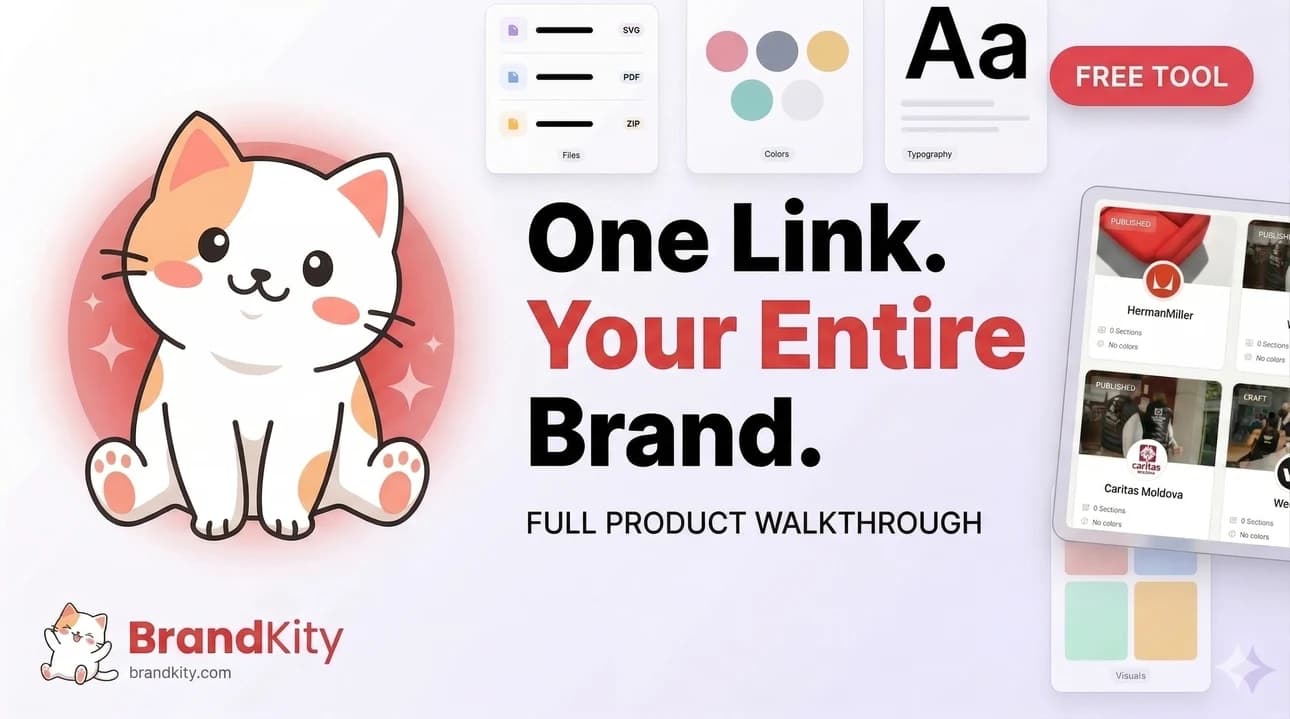
Why You Should Move From Pdf Brand Guidelines
Why You Should Move From PDF Brand Guidelines Hey there! Let’s have a chat about something that’s probably sitting on a few shared drives or tucked away in an email chain somewhere in your organization: your brand guidelines. Chances are, they’re in PDF format. It’s a common starting point, right? Easy to create, easy to

Table of contents
- Why You Should Move From PDF Brand Guidelines
- The Limitations of PDF Brand Guidelines: Why They Fall Short
- 1. Static and Outdated Quickly
- 2. Poor Searchability and Accessibility
- 3. Limited Asset Delivery
- 4. Lack of Interactivity and Dynamic Content
- 5. Version Control Nightmares
- 6. Collaboration Challenges
- 7. Ineffective for Modern Workflows
- The Power of a Centralized Brand Hub: What You Gain
- 1. Always Up-to-Date, Always Accessible
- 2. Enhanced Searchability and Discoverability
- 3. Seamless Asset Delivery and Management
- 4. Interactive and Engaging Learning
- 5. Robust Version Control and Audit Trails
- 6. Streamlined Collaboration and Feedback
- 7. Integration with Existing Workflows
- 8. Scalability for Growth and Multiple Brands
- Real-World Scenarios: When PDFs Fail and Platforms Shine
- Scenario 1: The New Product Launch Frenzy
- Scenario 2: The Global Expansion Challenge
- Scenario 3: The Freelancer Conundrum
- Scenario 4: The Rebranding Effort
- Making the Leap: What to Consider
- 1. Identify Your Needs
- 2. Think About Scalability
- 3. User Experience is Key
- 4. Integration Capabilities
- 5. Budget and ROI
- The Future of Brand Guidelines is Dynamic
Why You Should Move From PDF Brand Guidelines
Hey there! Let’s have a chat about something that’s probably sitting on a few shared drives or tucked away in an email chain somewhere in your organization: your brand guidelines. Chances are, they’re in PDF format. It’s a common starting point, right? Easy to create, easy to share. But if your brand is growing, evolving, or frankly, just trying to keep up in today’s fast-paced digital world, that trusty PDF might be holding you back more than you realize. Think of it like using a flip phone in the age of smartphones – it gets the job done, but oh, the missed opportunities!
We’re living in an era where brand consistency is no longer a nice-to-have; it’s a fundamental pillar of trust and recognition. From a small startup looking to make a splash to a global enterprise managing multiple sub-brands, ensuring everyone is on the same page visually and tonally is crucial. And while a PDF can be a great initial step in documenting your brand, it quickly becomes a bottleneck. It’s static, it’s hard to search, and it’s often out of date before the ink is even dry (figuratively speaking, of course!).
At Brandkity, we see this all the time. Brands invest so much in crafting their identity – the perfect logo, the resonant color palette, the distinctive typography, the authentic voice. Then, they package it all up in a PDF. And then what? It gets emailed around, downloaded, possibly printed (yes, that still happens!), and then… well, it’s often lost in the digital shuffle. This is where the real problem starts. Inconsistency creeps in. A designer uses the wrong shade of blue, a marketing team crafts a social media post with an off-brand font, a new employee struggles to find the right logo file. These aren’t just minor annoyances; they chip away at your brand’s credibility and dilute its impact.
So, let’s dive into why making the move away from PDF brand guidelines isn’t just a good idea, it’s becoming an essential step for any brand that wants to thrive. We’ll explore the limitations of PDFs, the advantages of more dynamic solutions, and how this shift can truly empower your team and elevate your brand.
The Limitations of PDF Brand Guidelines: Why They Fall Short
Let’s be honest, PDFs have their place. They’re fantastic for documents that need to be viewed exactly as intended, like contracts or finalized reports. But when it comes to living, breathing brand assets and guidelines, they are inherently limited. They’re like a photograph of a meal instead of the actual delicious dish – it shows you what it looks like, but you can’t interact with it, taste it, or learn from its preparation in a hands-on way.
1. Static and Outdated Quickly
This is perhaps the biggest issue. A PDF is a snapshot in time. Once you create it, the moment a brand element is updated – a logo variation is added, a font is refreshed, a new campaign color is introduced – your PDF is already outdated. Keeping it current requires a constant, often tedious, process of editing, re-exporting, and redistributing. This leads to team members using old versions, causing visual inconsistencies. Imagine a company launching a major campaign with new imagery, but half the marketing team is still referencing an old PDF that doesn’t include the new guidelines for that campaign. It’s a recipe for visual chaos.
2. Poor Searchability and Accessibility
Try finding a specific logo variation or a precise color code within a 50-page PDF. It’s a nightmare! You’re often scrolling, squinting at tiny images, or relying on basic text search that might miss variations or contextual mentions. For new team members or external partners, navigating a dense PDF to find the one piece of information they need can be incredibly frustrating and time-consuming. This friction discourages them from using the guidelines effectively, leading to errors.
3. Limited Asset Delivery
A PDF can tell you what the logo looks like, but it can’t easily provide you with the actual logo file in the format and size you need. Users often have to go elsewhere – a shared drive, a quick email request – to find downloadable assets. This disconnect is a major source of frustration and potential for using the wrong file type (e.g., a JPG for a print job instead of a high-res EPS). It breaks the workflow and introduces unnecessary steps.
4. Lack of Interactivity and Dynamic Content
Brand guidelines aren’t just static rules; they are living documents that can benefit from interaction. A PDF can’t offer interactive examples, clickable links to related assets, or dynamic previews. For instance, showing how a logo should and shouldn’t be used is much more impactful with interactive examples or animated demonstrations than static “do” and “don’t” graphics. This static nature limits the learning and application experience.
5. Version Control Nightmares
How many versions of the “BrandGuidelines_v3_final_reallyfinal_useThisOne.pdf” are floating around your organization? It’s a common problem. Without a central, authoritative source, it’s impossible to guarantee that everyone is working from the latest, approved version. This leads to confusion, duplicated efforts, and ultimately, brand inconsistency across different touchpoints.
6. Collaboration Challenges
Collaborating on a PDF can be clunky. Sharing feedback often involves annotating separate copies or sending lengthy email chains. For teams working across different time zones or departments, this asynchronous and disjointed process slows down approvals and makes it difficult to maintain momentum. Imagine a global marketing team trying to coordinate a new product launch collateral – a PDF becomes a major hurdle.
7. Ineffective for Modern Workflows
Today’s teams rely on integrated digital tools. A PDF is an island. It doesn’t easily connect with design software, content management systems, or project management tools. This disconnect forces manual workarounds, increasing the chance of errors and reducing overall efficiency. The workflow from guideline to execution becomes a series of manual transfers rather than a seamless flow.
The Power of a Centralized Brand Hub: What You Gain
So, if PDFs are the old school, what’s the new wave? It’s about moving towards a centralized, digital platform for your brand assets and guidelines. Think of it as your brand’s single source of truth – a dynamic, accessible, and always up-to-date resource for everyone who needs it. This isn’t just about fancier technology; it’s about fundamentally improving how your brand is managed, understood, and executed.
1. Always Up-to-Date, Always Accessible
This is the game-changer. A digital platform ensures that your brand guidelines are always current. When an update is made, it’s live for everyone instantly. No more hunting for the latest version. This real-time access is critical for maintaining brand integrity, especially as your brand evolves. Consider how quickly trends change in design or marketing; being able to update your guidelines and have that change reflected everywhere immediately is invaluable. This ties into the broader discussion of how to future-proof your brand, ensuring it remains relevant and adaptable.
2. Enhanced Searchability and Discoverability
Imagine searching for “blue color code” and instantly getting the primary, secondary, and accent blues, along with their HEX, RGB, and CMYK values, perhaps even seeing them applied in examples. Modern platforms offer robust search capabilities, tagging, and categorization, making it incredibly easy to find exactly what you need, when you need it. This drastically reduces the time spent searching and increases the likelihood that the correct assets and information are used.
3. Seamless Asset Delivery and Management
Beyond just guidelines, a central hub provides direct access to all your brand assets – logos, images, templates, videos, icons, etc. Users can download the exact file format and size they need, directly from the platform. This eliminates the messy process of searching through folders or making individual requests. For example, a marketing team needing a web-optimized logo can download it in seconds, while a print designer can access the high-resolution vector file. It streamlines the entire asset retrieval process.
4. Interactive and Engaging Learning
These platforms go beyond static pages. They can offer interactive examples, video tutorials, usage guides with clear “do’s and don’ts,” and even quizzes to ensure understanding. This makes learning about the brand more engaging and effective. For instance, instead of just stating “don’t stretch the logo,” you can show an animation of a stretched logo and explain why it’s detrimental. This active learning approach is far more effective than passive reading.
5. Robust Version Control and Audit Trails
Never worry about “which version is the right one” again. Digital platforms have built-in version control. You can track changes, revert to previous versions if necessary, and see who made what changes and when. This provides a clear audit trail, which is essential for accountability and for understanding the evolution of your brand assets. It’s like having a detailed history book for your brand.
6. Streamlined Collaboration and Feedback
Many platforms offer features for commenting, approvals, and project management. This allows teams to collaborate on brand asset usage, provide feedback on guideline updates, and manage projects directly within the brand hub. Imagine a designer uploading a new social media template for review; the marketing team can leave comments and approve it all within the same system, drastically speeding up the workflow.
7. Integration with Existing Workflows
The best brand management platforms integrate with the tools your team already uses – design software, content management systems, project management tools, and more. This creates a more seamless workflow, reducing manual work and the potential for errors. For example, a plugin for your design software could allow designers to pull approved logos and colors directly, ensuring immediate compliance.
8. Scalability for Growth and Multiple Brands
As your organization grows, or if you manage multiple brands, a centralized digital solution becomes indispensable. It can easily scale to accommodate more assets, more users, and even different brand identities under one umbrella, especially with features supporting multi-brand architecture. This is crucial for maintaining order and consistency across a diverse brand portfolio.
Real-World Scenarios: When PDFs Fail and Platforms Shine
Let’s put this into perspective with some relatable scenarios. Imagine these situations:
Scenario 1: The New Product Launch Frenzy
The PDF Problem: A major product is launching next week. The marketing team needs updated product imagery, new ad copy with specific keywords, and social media graphics. They dig out the brand guidelines PDF, but it doesn’t mention the new product line’s specific visual cues or approved tagline variations. They send an urgent email to the design team asking for clarification and assets. The design team is swamped, and there’s a delay. Meanwhile, a well-meaning intern creates a social post using an old logo format because they couldn’t find the right one in the PDF.
The Platform Solution: The brand hub has a dedicated section for the new product launch. It includes approved product shots, specific taglines, color palettes for the campaign, and downloadable logo variations for web and print. The marketing team accesses the platform, downloads everything they need, and creates consistent materials in a fraction of the time. The intern can easily find and use the correct logo from the platform.
Scenario 2: The Global Expansion Challenge
The PDF Problem: Your company is expanding into a new international market. The local marketing team needs to adapt existing materials, but the PDF brand guidelines are in English and don’t account for local language nuances or any potential regional visual preferences (even if subtle). They try to translate the PDF, but it’s cumbersome, and they’re unsure about font compatibility or color differences across regional printing standards. This leads to materials that look slightly “off” and don’t resonate as well locally. This is where thinking about brand localization vs. standardization becomes critical.
The Platform Solution: The brand hub supports multiple languages and regions. The local team can access the guidelines in their native tongue, view examples relevant to their market, and download assets pre-formatted for local requirements. The platform might even offer suggestions for localized imagery or color variations approved by global brand strategy. If your company uses WordPress for its websites, then having the best WordPress translation plugins to integrate with your brand assets would be a huge advantage.
Scenario 3: The Freelancer Conundrum
The PDF Problem: You’ve hired a freelance graphic designer for a specific project. You send them the brand guidelines PDF. They spend hours trying to decipher it, can’t find the right file formats, and end up sending back designs that are off-brand because they misinterpreted a rule or couldn’t access the correct assets. You then have to spend valuable time providing feedback, sending corrections, and waiting for revisions, all while your project timeline slips.
The Platform Solution: You grant the freelancer temporary access to your brand hub. They log in, find all the necessary logos, color palettes, typography files, and usage examples in one place, in the formats they need. They can then deliver on-brand work quickly and efficiently, saving you time and ensuring quality from the outset.
Scenario 4: The Rebranding Effort
The PDF Problem: Your company is undergoing a significant rebranding. The process involves many stakeholders and requires updating countless assets. If your current system is just PDFs, you’re looking at a monumental task of updating potentially hundreds of documents, tracking which ones have been changed, and ensuring everyone receives the absolute final versions. This is a logistical nightmare and a major risk for inconsistency during a critical transition. A thorough rebranding process demands better tools.
The Platform Solution: A robust brand asset management platform allows you to upload new brand elements and immediately update guidelines. You can manage the transition of old assets to new, provide clear communication about the changes, and ensure all teams and external partners are working with the new brand identity from day one. It turns a chaotic project into a manageable, controlled process.
Making the Leap: What to Consider
Moving from PDFs to a more dynamic system might seem daunting, but it’s an investment that pays dividends. Here’s what to think about as you make the transition:
1. Identify Your Needs
What are your biggest pain points with the current PDF system? Do you struggle with asset delivery, consistency, searchability, or collaboration? Understanding your specific needs will help you choose the right type of platform. Are you looking for a simple style guide repository, a full-fledged DAM (Digital Asset Management) system, or something in between?
2. Think About Scalability
How do you see your brand growing? Will you be managing more assets, more users, or perhaps multiple brands in the future? A solution that can scale with your organization is crucial for long-term success. This is where understanding concepts like Multi-Brand Architecture becomes important if you manage more than one brand.
3. User Experience is Key
The best platform is one that your team will actually use. Look for intuitive interfaces, easy navigation, and features that simplify workflows. If it’s complicated, people will revert to old habits or find workarounds.
4. Integration Capabilities
Consider how the new system will integrate with your existing tech stack. Seamless integration with design tools, CMS, and other software will maximize efficiency and minimize disruption.
5. Budget and ROI
While there’s an investment involved, think about the return on investment. Reduced errors, increased efficiency, faster time-to-market for marketing materials, and a stronger, more consistent brand image all contribute to significant cost savings and revenue growth. The importance of investing in your brand cannot be overstated, and a good platform is a key part of that investment.
The Future of Brand Guidelines is Dynamic
The world of branding and marketing is constantly evolving. Tools and strategies that worked yesterday might not be sufficient for tomorrow. PDFs have served their purpose as a foundational document, but the demands of modern business require a more agile, accessible, and integrated approach to brand management. Embracing a digital brand hub is not just about adopting new technology; it’s about empowering your team, safeguarding your brand’s integrity, and ultimately, building stronger connections with your audience.
Think about how AI is transforming brand craft, enabling faster content creation and personalized experiences. A static PDF simply cannot keep pace with these advancements. A dynamic, centralized platform, on the other hand, is built for the future, ready to adapt and integrate with emerging technologies. It allows your brand to be more responsive, more consistent, and more impactful than ever before. It’s time to stop treating your brand guidelines as a static document and start treating them as the dynamic, living asset they are.
So, take a good look at your PDF guidelines. Are they serving you, or are they holding you back? The transition to a more robust system is an investment in your brand’s future, its consistency, and its overall success. It’s time to move beyond the PDF and unlock the full potential of your brand.
Saurabh Kumar
Founder, BrandKity
Saurabh writes about practical brand systems, faster client handoffs, and scalable workflows for designers and agencies building repeatable delivery operations.
Connect on LinkedIn