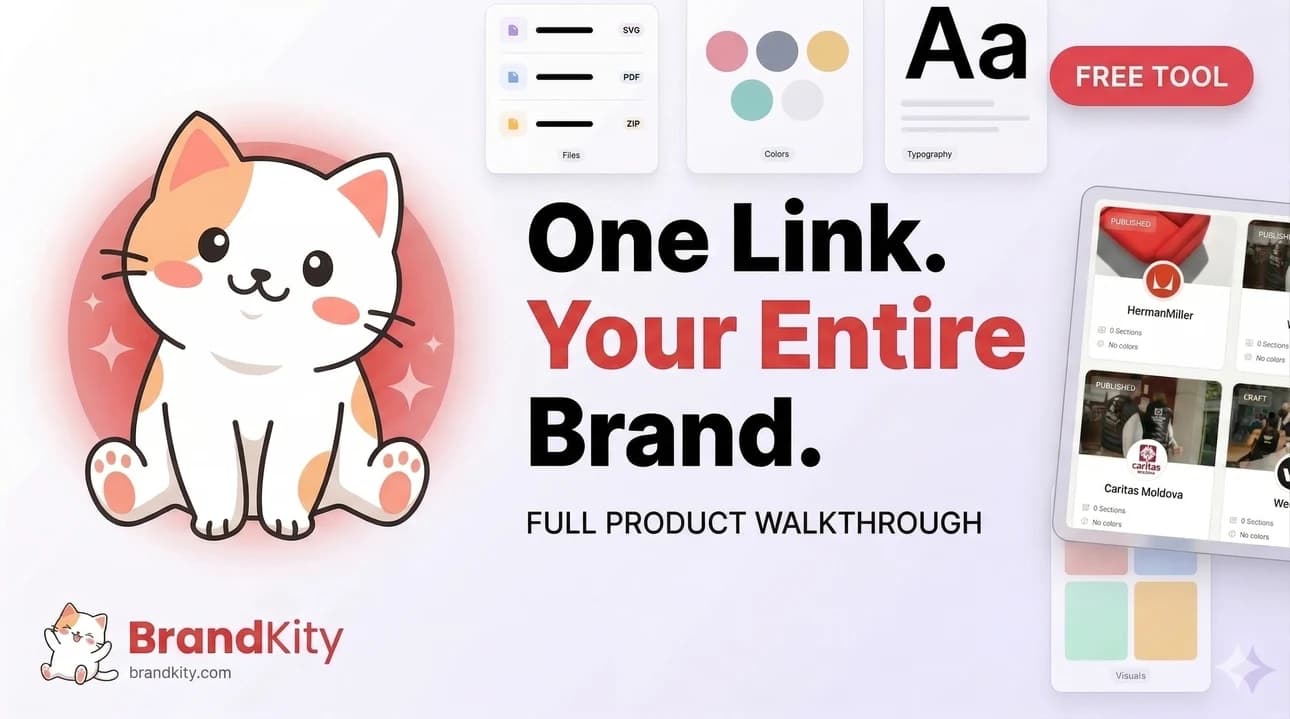
Brand Management Platforms vs Figma Slides: The Ultimate Comparison
Brand Management Platforms vs Figma Slides: The Ultimate Comparison Hey there, fellow brand builders! It’s [Your Name] from Brandkity, and today we’re diving into a topic that often sparks a bit of friendly debate: the role of dedicated Brand Management Platforms versus the ubiquitous Figma, specifically when it comes to creating and sharing brand assets.

Table of contents
- Brand Management Platforms vs Figma Slides: The Ultimate Comparison
- The Familiar Territory: Figma for Brand Presentations
- The Upsides of Using Figma for Brand Assets
- The Challenges of Relying Solely on Figma Slides for Brand Management
- Enter the Brand Management Platform: The Dedicated Solution
- What Makes a Brand Management Platform Different?
- Figma Slides vs. Brand Management Platform: A Direct Comparison
- 1. Accessibility & Usability
- 2. Organization & Discovery
- 3. Version Control & Consistency
- 4. Scalability
- 5. Collaboration & Permissions
- 6. Brand Governance
- When Might Figma Slides Still Be the Right Choice (for a Specific Task)?
- The Synergy: How Brand Management Platforms and Design Tools Work Together
- Making the Right Choice for Your Brand
Brand Management Platforms vs Figma Slides: The Ultimate Comparison
Hey there, fellow brand builders! It’s [Your Name] from Brandkity, and today we’re diving into a topic that often sparks a bit of friendly debate: the role of dedicated Brand Management Platforms versus the ubiquitous Figma, specifically when it comes to creating and sharing brand assets. You know, those moments when you need to present your brand guidelines, share logos, or ensure everyone’s using the right color palette. It’s easy to default to what’s familiar, and for many creative teams, that means Figma, especially for quick presentations or internal docs. But is it the best tool for the job when it comes to comprehensive brand management?
We’re going to break down the strengths and weaknesses of both approaches. Think of this not as picking a “winner,” but as understanding which tool serves which purpose best. We’ll explore how each can fit into your workflow, what challenges you might face, and ultimately, how to make the most informed decision for your brand’s success. Let’s get started!
The Familiar Territory: Figma for Brand Presentations
Let’s be honest, Figma is a powerhouse. Its collaborative features, intuitive interface, and design capabilities have revolutionized how many of us create visual assets. For designers, it’s often the primary workspace. So, when it comes to presenting brand guidelines, demonstrating logo usage, or showcasing a color system, it’s natural to think, “Why not just use Figma slides?”
It’s a perfectly valid thought. You can, after all, create beautiful, visually engaging presentations within Figma. You can mock up screens, illustrate typographic hierarchies, and even embed interactive elements. For a design team that lives and breathes Figma, it feels like a seamless extension of their design process. You can easily pull in existing brand elements, ensure pixel-perfect accuracy, and maintain a high level of visual fidelity.
Imagine a scenario where a small startup’s design lead needs to quickly put together a presentation for the marketing team on how to use the new logo. They’re already in Figma, so they can whip up a few slides showing correct and incorrect logo usage, specify color codes, and perhaps even include some approved imagery. It’s fast, it’s efficient, and it uses a tool they’re already proficient with. This is where Figma shines for these kinds of ad-hoc, design-centric presentations.
The Upsides of Using Figma for Brand Assets
- Familiarity and Accessibility: For design teams, Figma is likely already part of their daily toolkit. This means less of a learning curve and quicker adoption for those already comfortable with the platform.
- Design Fidelity: You can achieve a very high level of visual accuracy. If you need to show exactly how a gradient should be applied or the precise kerning for a headline, Figma excels.
- Integration with Design Workflow: Brand assets can be directly pulled from ongoing design projects, ensuring consistency and reducing the need to export and re-import into a separate system.
- Interactive Elements: Figma allows for prototyping and interactive elements, which can be useful for demonstrating how certain brand components should behave in digital contexts.
Think about a small agency crafting a pitch deck for a potential client. They’re already using Figma to design the visuals for the pitch. Naturally, they might incorporate sections on brand identity and how they envision the client’s brand coming to life, using Figma slides to showcase this. It’s efficient because the design work and the brand presentation are happening in the same environment.
The Challenges of Relying Solely on Figma Slides for Brand Management
Now, here’s where we start to see the seams. While Figma is fantastic for designing and presenting brand elements, using it as a central hub for managing all your brand assets can quickly become… well, messy. Let’s consider some of the common pain points.
Accessibility for Non-Designers: This is perhaps the biggest hurdle. Your marketing team, sales reps, HR, or even external partners might not have Figma accounts, or more importantly, they might not have the training or inclination to navigate a complex design tool just to download a logo or check a color code. Imagine trying to explain to someone in sales how to find and export a specific vector logo from a Figma file. It can lead to frustration, incorrect usage, and ultimately, brand inconsistency.
Version Control Nightmares: As your brand evolves, so do your assets. Logos get updated, color palettes are refined, and new templates are created. In Figma, managing different versions of assets within presentation files can become a labyrinth. Which version of the logo is the latest? Where is that approved set of social media icons? Without a dedicated system, it’s easy to use outdated assets, which can significantly damage your brand’s perception. This is a critical factor when considering the importance of brand perception.
Discovery and Organization: Finding the specific asset you need can be like searching for a needle in a haystack. Figma files, especially large ones with multiple artboards for presentations, aren’t inherently organized for quick asset retrieval. You might have dozens of logo variations scattered across different slides. This lack of a centralized, easily searchable library makes it difficult for anyone, especially those outside the design team, to find and use assets efficiently. This is a stark contrast to the dedicated search and filtering capabilities found in specialized platforms.
Permissions and Access: Who should have access to what? In a large organization, you might want marketing to access all approved assets, while perhaps a new intern only needs access to basic logos. Managing these granular permissions within Figma files can be cumbersome and error-prone, potentially leading to unauthorized use or accidental deletion of critical brand materials.
Scalability: As your brand grows and your asset library expands, a Figma file structure will inevitably become unwieldy. Imagine a company with thousands of assets – product images, campaign collateral, video assets, and more. Trying to manage this volume within design files is simply not practical or efficient. This is where the conversation shifts towards more robust solutions, much like comparing specialized tools to general-purpose ones, similar to how we discuss Brand Asset Management vs Dropbox: Why Specialized Tools Win.
Consider a global organization with multiple regional offices. If brand guidelines are housed solely within Figma presentations, how do you ensure that the French marketing team can easily access and use the correct, localized versions of assets without needing to ask the design team in HQ every single time? The inefficiency and potential for error are immense.
Enter the Brand Management Platform: The Dedicated Solution
So, if Figma slides aren’t the ideal long-term solution for managing your brand assets, what is? This is where Brand Management Platforms come into play. Think of these platforms as the central, organized, and accessible hub for everything related to your brand’s visual identity and collateral.
A Brand Management Platform is designed from the ground up to store, organize, distribute, and track brand assets. It’s not just a file repository; it’s a comprehensive system that ensures brand consistency across your entire organization and beyond. It acts as your brand’s single source of truth.
What Makes a Brand Management Platform Different?
Let’s break down the core functionalities that set these platforms apart:
- Centralized Asset Library: This is the heart of any brand management platform. All your brand assets – logos, images, videos, fonts, templates, campaign materials, even brand guidelines documents – are stored in one organized, searchable location. Assets can be tagged, categorized, and metadata-rich, making them incredibly easy to find.
- Advanced Search and Filtering: Forget scrolling through endless folders. These platforms offer robust search capabilities, allowing users to find assets by keywords, tags, file types, usage rights, and more. Need a square logo in EPS format? You can find it in seconds.
- Version Control and History: Every asset has a clear version history. You can see when it was updated, by whom, and revert to previous versions if necessary. This eliminates confusion and ensures everyone is using the most current approved assets.
- User Permissions and Access Control: Granular control over who can view, download, and edit assets is a cornerstone. You can set up different user roles and permissions, ensuring that only authorized individuals have access to sensitive or specific assets.
- Brand Guidelines Integration: Many platforms allow you to embed your brand guidelines directly or link to them, providing context and instructions alongside the assets themselves. This is a much more dynamic and accessible approach than static PDF documents. You can easily create a comprehensive What Is Brand Portal? which is essentially a user-friendly gateway to your brand assets and guidelines.
- Usage Rights and Compliance: Track licensing information, expiry dates, and usage restrictions for assets. This helps prevent misuse and legal issues.
- Distribution and Sharing: Easily share assets with internal teams, external agencies, partners, or even directly with customers through secure links or dedicated portals.
- Analytics and Reporting: Understand how your brand assets are being used, which ones are most popular, and identify potential areas of inconsistency. This data can be invaluable for measuring brand performance.
- Integration Capabilities: Many platforms integrate with other tools you use daily, such as design software, content management systems (CMS), and marketing automation platforms, streamlining your creative operations.
Think of a large retail brand that launches new product lines multiple times a year. They need a way for their marketing teams, e-commerce specialists, and even their advertising agencies to access high-resolution product imagery, approved campaign visuals, and specific promotional graphics. A Brand Management Platform allows them to upload all these assets, categorize them by product line and campaign, set usage rights for different regions, and provide secure access to all stakeholders. This ensures that when a new campaign launches, everyone is working with the correct, on-brand materials, leading to a cohesive customer experience and reducing the potential for costly errors.
This is fundamentally different from trying to manage these assets within a collection of Figma files. While Figma is excellent for creating the visual assets, it’s not built for the long-term, organized, and accessible management of a vast library of brand collateral for diverse user groups.
Figma Slides vs. Brand Management Platform: A Direct Comparison
Let’s put them head-to-head on key aspects:
1. Accessibility & Usability
- Figma Slides: High barrier for non-designers. Requires an account and some familiarity with Figma. Can be overwhelming for users just needing a quick download.
- Brand Management Platform: Designed for ease of use for all users, regardless of technical skill. Intuitive interfaces, clear navigation, and focused on quick asset retrieval.
2. Organization & Discovery
- Figma Slides: Relies on manual organization within files, which can become chaotic. Finding specific assets can be time-consuming and frustrating.
- Brand Management Platform: Centralized, structured library with robust search, filtering, and tagging. Assets are easily discoverable.
3. Version Control & Consistency
- Figma Slides: Prone to outdated versions being used if not meticulously managed. Versioning can be manual and confusing within design files.
- Brand Management Platform: Automatic version tracking ensures users always access the latest approved assets. Clear history and audit trails.
4. Scalability
- Figma Slides: Becomes unmanageable as the asset library grows. Not designed for large-scale asset storage and distribution.
- Brand Management Platform: Built to handle vast libraries of assets and a growing number of users and assets over time.
5. Collaboration & Permissions
- Figma Slides: Collaboration is primarily design-focused. Managing granular permissions for asset access across different teams is difficult.
- Brand Management Platform: Offers sophisticated permission controls, allowing administrators to define access levels for different user groups and individuals.
6. Brand Governance
- Figma Slides: Limited capabilities for enforcing brand guidelines or tracking asset usage.
- Brand Management Platform: Facilitates brand governance by providing a single source of truth, enforcing usage rules, and enabling compliance monitoring. This is crucial for maintaining the integrity of your brand and ensuring a strong Brand Differentiation Guide.
Consider the example of a company that uses a specific shade of blue. Let’s call it “Ocean Blue.” In Figma, you might have this color defined in a document. But how do you ensure that everyone across marketing, web development, and print production is using the exact same hex code, RGB value, and CMYK equivalent? A Brand Management Platform can store this information with the color swatch asset, and potentially even integrate with design tools to enforce its usage. This level of detail is critical for maintaining brand integrity. It’s like the difference between having a recipe on a napkin versus having a professionally printed cookbook with precise measurements – a concept that resonates when we discuss the importance of clear instructions, such as in a Logo Usage Guidelines document.
When Might Figma Slides Still Be the Right Choice (for a Specific Task)?
It’s important to reiterate that Figma is an exceptional tool. There are absolutely scenarios where using Figma for brand-related presentations makes sense:
- Internal Design Team Reviews: When designers are iterating on new brand elements or presenting concepts to each other, Figma is the natural environment.
- Quick, Ad-Hoc Presentations: If you need to quickly put together a few slides for an internal meeting about a specific design element, and the audience is primarily designers, Figma is efficient.
- Prototyping Brand Interactions: For demonstrating how a specific brand element (like an animated logo or interactive button style) should behave in a digital product, Figma’s prototyping capabilities are unmatched.
- Onboarding New Designers: Providing a Figma file with core brand components can be a good starting point for bringing new design talent up to speed.
The key differentiator is the purpose. Is it for creating and designing brand elements, or for managing, distributing, and governing them long-term for a broad audience?
The Synergy: How Brand Management Platforms and Design Tools Work Together
The most effective brands don’t necessarily choose one over the other. Instead, they leverage the strengths of both. A Brand Management Platform serves as the central, authoritative source for all approved assets and guidelines. Figma, on the other hand, remains the primary tool for the creative team to produce and innovate with those assets.
Here’s how that synergy often looks:
- Asset Creation in Figma: Designers create logos, illustrations, templates, and other visual assets in Figma.
- Export and Upload: Once approved, these assets are exported in the necessary formats and uploaded to the Brand Management Platform. This is where you can also create image URLs for easy sharing, as detailed in guides on how to Create Image Url On Computer.
- Centralized Storage and Governance: The Brand Management Platform becomes the single source of truth, with all assets tagged, versioned, and governed.
- Distribution to Wider Teams: Marketing, sales, HR, and external partners access the approved assets from the Brand Management Platform.
- Designers Access Approved Assets: Even designers can pull the latest approved versions from the Brand Management Platform to ensure they are working with the official assets for new projects, maintaining alignment with the established brand.
- Brand Guidelines Live in the Platform: Instead of static PDFs or complex Figma files, comprehensive brand guidelines are accessible and interactive within the platform, providing context and instruction alongside the assets.
This creates a streamlined workflow that enhances efficiency, ensures consistency, and empowers everyone in the organization to be a brand champion. It’s about building a robust system that supports the entire lifecycle of your brand assets, from creation to ongoing use. This approach is fundamental to successful Creative Operations Guide and ensures that your brand message is consistent across all touchpoints.
Making the Right Choice for Your Brand
So, where does that leave you? If you’re a small team with a very limited set of brand assets and your primary need is simply to share some design mockups internally, Figma slides might suffice for a short while. However, as your brand grows, your team expands, and your asset library becomes more complex, relying solely on design tools for brand management will inevitably lead to inefficiencies, inconsistencies, and frustration.
A dedicated Brand Management Platform is an investment in your brand’s long-term health and consistency. It empowers your entire organization, streamlines workflows, reduces errors, and ultimately helps you build a stronger, more recognizable brand. It’s about moving beyond simply creating visuals to truly managing and leveraging your brand assets as the valuable strategic tools they are.
Don’t let your brand assets become an afterthought, lost in disconnected files and forgotten folders. It’s time to embrace a solution that truly supports your brand’s journey. Explore how a dedicated platform can elevate your brand consistency and unlock new levels of operational efficiency. Your brand deserves it.
Saurabh Kumar
Founder, BrandKity
Saurabh writes about practical brand systems, faster client handoffs, and scalable workflows for designers and agencies building repeatable delivery operations.
Connect on LinkedIn