
The Future of Asset Management: What Every Firm Needs to Know About Brand, Technology, and Growth in 2026
Accenture surveyed 250 asset management executives to reveal what’s ahead for brand, AI, ESG, and distribution. Here’s what every firm needs to act on now.

Table of contents
- The Changing Landscape: Four Forces Driving Transformation
- 1. Profitability Under Pressure
- 2. Technology: The Biggest Gap Between Vision and Reality
- 3. Innovation as Culture, Not Event
- 4. Mass Customization: The New Growth Engine
- Six Strategic Dimensions for 2026
- 01 | Brand Strategy: You Are Who Your Customers Think You Are
- Why Brand Is More Important Than Ever in Asset Management
- What a Modern Brand Strategy Looks Like
- 02 | Product Strategy: Investor Expectations Are Changing Fast
- The Personalization Imperative
- The Declining Dominance of Mutual Funds
- ESG: From Trend to Table Stakes
- Advisory Services: A Natural Extension
- Technology as Product
- The Tokenization Opportunity
- 03 | Sales and Distribution: Making the Leap to Hyper-Relevant Customer Experiences
- The Competition for Advisors Is Intensifying
- Direct-to-Investor: A Growing Priority
- Data as the Engine of Distribution Transformation
- 04 | Investment Capabilities: New Technology, New Alpha
- AI Is Reshaping the Investment Process
- Alternative Data: The Next Frontier
- Technology Capabilities as Strategy
- 05 | Investment Operations: Building an Intelligence Engine
- The Shift Toward Client-Centric Operations
- Cloud: Essential but Underutilized
- Fintech Partnerships: Accelerating Innovation
- Making Data a Genuine Asset
- 06 | Talent and Culture: The People to Differentiate, the Culture to Thrive
- New Skills for a New Era
- The Human + Machine Workforce
- Hybrid Work as Competitive Advantage
- Reskilling the Workforce
- Leadership That Earns Trust
- The Synthesis: What All of This Means for Asset Managers
- Conclusion: The Moment Calls for Ambition
- Sources & Further Reading
Published on BrandKity.com | Strategy & Insights
Asset management is not what it used to be. The rules that built empires of AUM over the past three decades – star fund managers, strong historical returns, and a firm handshake at the right broker-dealer – are quietly losing their power. In their place, a new competitive order is emerging, one shaped by data, personalization, purpose-driven branding, and artificial intelligence.
Accenture recently surveyed 250 senior executives at asset management firms across North America – including 17 of the top 25 global managers – to understand exactly where the industry is heading. The findings reveal an industry at a genuine crossroads, where winners will be determined not by who has the largest AUM today, but by who builds the right capabilities, brand, and culture for tomorrow.
This post breaks down everything you need to know: the macro forces reshaping the landscape, the six strategic dimensions every asset manager must address, and the concrete actions that will separate the leaders from the laggards by 2026.
The Changing Landscape: Four Forces Driving Transformation
Before diving into strategy, it is important to understand the structural forces that make this transformation both urgent and unavoidable.
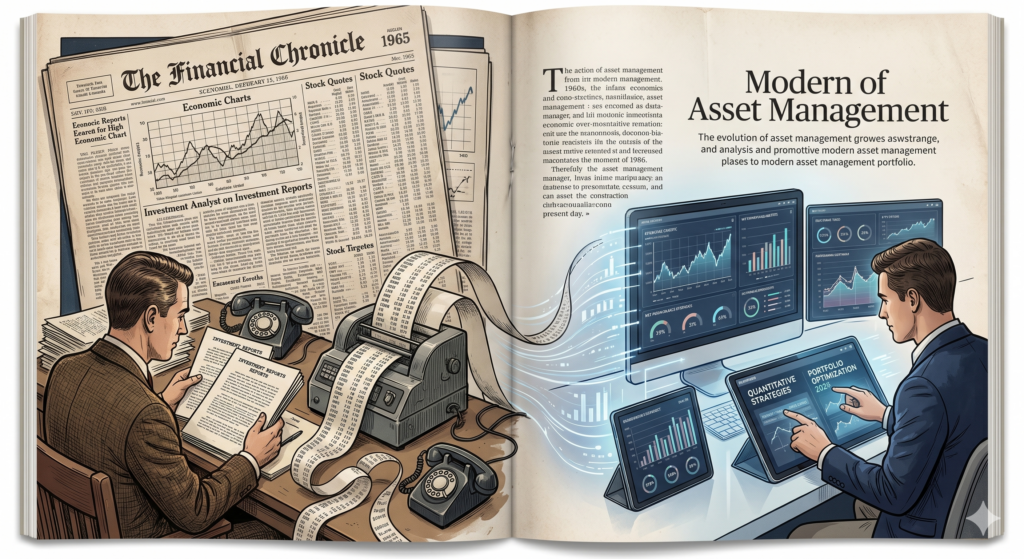
1. Profitability Under Pressure
Asset managers collectively drove the majority of buy-side industry revenues in 2020, yet profitability is quietly eroding. The core problem is a widening disconnect between assets under management and actual revenue – a gap that grows as fee compression accelerates and product mix shifts. Accenture analysis has found that year-over-year costs continue to outpace revenue growth, which means the traditional “grow your way out of the problem” playbook is no longer reliable.
Firms that want to protect and expand margins need to do something more sophisticated than chase AUM: they need to identify exactly which products and services are driving profit, ruthlessly rationalize what is not, and redirect savings toward the capabilities that will fuel the next phase of growth.
2. Technology: The Biggest Gap Between Vision and Reality
Nearly every asset manager surveyed – 95% – believes that technology, data, and digital capabilities will be the primary competitive differentiators by 2026. That near-unanimity is striking. But what is even more striking is the implementation gap: 72% of those same firms do not consider themselves leaders in digital maturity.
The implication is clear. Believing in the importance of technology while failing to actually deploy it at scale is not a neutral position – it is a decision to fall behind. Firms still in the exploration and prototyping stage with AI, analytics, and cloud computing are not buying time; they are losing ground.
3. Innovation as Culture, Not Event
Technology alone is insufficient. The firms that will generate outsized returns from AI and analytics are not simply those with the biggest technology budgets – they are the ones with the organizational structures, incentive systems, and leadership cultures that turn technology potential into revenue-generating products and services.
Innovation needs to be a daily habit, not a quarterly initiative. That requires leadership that models creative thinking, teams that are empowered to experiment without fear of failure, and governance structures that move ideas from concept to market with urgency.
4. Mass Customization: The New Growth Engine
Four out of five asset managers in the survey identified “customization for the masses” as a key growth driver for the next five years. This is not about offering bespoke services to ultra-high-net-worth clients – it is about using technology to deliver genuinely personalized investment products and experiences at scale, across every client segment.
The shift is partly a response to alpha scarcity. As traditional alpha generation becomes harder, personalized products – directly indexed portfolios, separately managed accounts tailored to individual values and goals – become compelling alternatives. But it is also a demand-side phenomenon: investors are increasingly selecting managers based on alignment with their personal values, not just historical performance.
Six Strategic Dimensions for 2026
Accenture’s research organizes the asset management transformation around six interconnected dimensions. Together, they form a comprehensive blueprint for firms that want to win in the next era.
01 | Brand Strategy: You Are Who Your Customers Think You Are

Brand is not a marketing function. It is a business strategy.
Ninety-seven percent of asset management executives agree that brand is an important competitive differentiator. Yet in practice, one in four firms does not believe its brand is perceived as meaningfully distinct from competitors. Research from Institutional Investor suggests that 58% of asset managers report stagnant or declining brand awareness – a serious credibility gap for firms that believe in branding as a concept but have not done the hard work of building a genuine, differentiated brand in the marketplace.
Why Brand Is More Important Than Ever in Asset Management
Historically, asset managers competed almost entirely on product – performance track records, expense ratios, fund manager reputation. That remains relevant, but it is no longer sufficient. Today’s investors – institutional, retail, and intermediary alike – are making decisions based on a richer set of criteria: Does this firm’s mission align with mine? Do I trust this organization? Does this company stand for something?
This shift parallels broader consumer behavior trends. Accenture’s Global Consumer Pulse Research shows that 65% of consumers are influenced to buy from a brand by the expressed values and behaviors of that company’s employees – not just its marketing campaigns. In asset management, where trust is the foundational currency, this has direct commercial implications.
Brand is now a balance sheet item. It influences whether advisors will recommend your products, whether institutional prospects will add you to their shortlist, and whether clients will stick with you through periods of underperformance.
What a Modern Brand Strategy Looks Like
Start with purpose, not positioning. The firms winning the brand battle are not those with the most polished advertising – they are those that have done the internal work to identify what they genuinely stand for, and then systematically activated that purpose throughout every client interaction. Accenture’s brand purpose framework shows that more than half of US consumers find brands more attractive when they actively and clearly communicate their purpose.
Develop a brand activation plan. Brand purpose is only potential value until it is brought to life. A structured brand activation plan is the critical bridge between strategic intent and market reality. Among surveyed executives, the most commonly planned activation methods over the next five years include product and service expansion (71%), advertising campaigns (67%), personalized client experiences (65%), and content marketing (61%). These are not alternatives – they are layers of a coherent strategy.
Measure brand rigorously. Brand measurement must evolve beyond anecdotal feedback. Leading firms will use a combination of website traffic analysis, social listening, interest graph analysis, and marketing automation to build a dynamic picture of how their brand is resonating and where it needs to evolve.
Rebuild digital trust. As digital interactions replace in-person ones, digital trust becomes central to brand strategy. This goes far beyond cybersecurity – it encompasses how client data is managed, how ethical commitments are demonstrated through action, and how reliably the firm delivers on its promises across every digital touchpoint. Accenture’s research on breaking the customer experience code highlights how integrating feedback with behavioral digital data is key to continuously improving that experience.
02 | Product Strategy: Investor Expectations Are Changing Fast
The “product in a fund wrapper” era is ending. Investors no longer want generic exposure to an asset class – they want an investment designed around their specific goals, timeline, values, and definition of success.
The Personalization Imperative
Eighty percent of asset managers surveyed believe that mass customization will be a critical investment strategy in the coming years. The growth of separately managed accounts illustrates how quickly this shift is already underway. According to research on SMA vs. ETF dynamics, SMA assets have grown by 84% since 2010, driven by advisors who see them as tools for deeper client engagement and investors who want the flexibility to customize holdings to reflect personal values or tax situations.
For firms, supporting SMAs at scale is not a simple add-on to existing infrastructure – it requires rethinking portfolio construction, order management, reporting, and client servicing from the ground up.
The Declining Dominance of Mutual Funds
According to Morningstar data, mutual funds still hold more than three times the assets of exchange-traded funds, but their competitive position is eroding. Collective investment trusts are capturing retirement plan assets with lower operating costs. Active ETFs are gaining share from investors who want the flexibility of exchange trading. Direct indexing is drawing significant interest, with 76% of surveyed managers predicting it will become an increasingly popular strategy.
ETFs are not going away; they are evolving. The wrapper is becoming less important than the strategy inside it.
ESG: From Trend to Table Stakes
Seventy-nine percent of asset managers expect purpose investing and ESG to be a growing feature of their product lineup. A Morgan Stanley study on sustainable investing found that 85% of investors want the ability to select products that are more closely aligned with their personal sustainability interests – whether that means addressing climate change, supporting community development, or advancing gender diversity.
The challenge for asset managers is less about whether to embrace ESG and more about how to do it credibly. The proliferation of ESG products has created significant confusion among investors, and concerns about greenwashing have attracted regulatory scrutiny. Firms that can demonstrate genuine integration of ESG factors throughout the investment process – and back it with transparent, standardized reporting – will be well-positioned. Those that treat ESG as a marketing label without underlying substance will face growing reputational and regulatory risk.
Advisory Services: A Natural Extension
Seventy-four percent of surveyed firms are considering expanding their offerings beyond pure investment products to include advisory and consultative services. This expansion reflects a strategic logic: firms that can help advisors grow their practices, help institutional investors navigate complexity, and help retail clients make better financial decisions build deeper, more durable relationships than firms that simply manage money.
Technology as Product
Perhaps the most unexpected finding in the research: when firms were asked what the most successful asset managers will offer in 2026, “internal technology” ranked highest – above ESG, advisory services, and ETFs. This reflects a growing recognition that proprietary technology capabilities can themselves become revenue-generating products.
Real-world examples illustrate this trend clearly. Invesco’s acquisition of JemStep – now Intelliflo, one of the first online automated investment platforms in financial services – was a direct move to expand robo-technology capabilities for traditional advisors. Similarly, Charles Schwab’s acquisition of Motif’s technology capabilities gave the firm a fintech-grade platform combining data science with flexible, personalized investment capabilities including direct indexing.
The Tokenization Opportunity
A broad movement is underway toward tokenizing both traditional securities and alternative assets. According to Blockchain App Factory research, the World Economic Forum projects that 10% of global GDP will be held in cryptographic assets within the coming decade – a total value of $10 trillion – with the tokenization market alone expected to reach $2.67 billion within four years.
Seventy-nine percent of surveyed asset managers are actively exploring crypto-based and decentralized finance products as part of their evolving product mix. The firms that move quickly to understand and operationalize tokenization will have a significant advantage. Being a “fast follower” in this space is not likely to be a winning strategy.
03 | Sales and Distribution: Making the Leap to Hyper-Relevant Customer Experiences
Ninety-one percent of surveyed firms intend to transform their product distribution model within the next five years. This near-universal recognition reflects a brutal reality: most existing sales and distribution models were built for a different world – one with fewer products, simpler client expectations, and less technology.
The Competition for Advisors Is Intensifying
Many financial advisors are reducing the number of wholesalers they meet with and concentrating their relationships with a smaller set of preferred partners. This means asset managers must earn their place in advisors’ shrinking contact lists by delivering something genuinely valuable – not just product information, but portfolio construction tools, actionable market insights, practice management support, and access to investment teams.
RIAs are the fastest-growing segment of the financial services industry, which means asset managers need distribution models specifically designed to accommodate all phases of the RIA relationship: planning, onboarding, risk assessment, and portfolio construction.
A hybrid engagement model is emerging as the new norm: a combination of digital touchpoints for information delivery and virtual meetings, supplemented by strategically deployed face-to-face interactions for relationship development and complex conversations. Firms are restructuring their sales organizations accordingly – building larger teams of digitally-enabled junior wholesalers to handle more frequent, lower-stakes interactions while reserving senior wholesalers for high-value relationship moments.
Direct-to-Investor: A Growing Priority
Twenty-nine percent of surveyed firms are actively shifting toward direct-to-investor retail distribution. The appeal is straightforward: eliminating the intermediary means direct access to revenue, lower platform fees, and the ability to engage with end investors directly. The challenge is equally clear: building a compelling direct channel requires technology investment, brand awareness, and a differentiated client experience.
Data as the Engine of Distribution Transformation
Underpinning all of this is data. The firms that will lead in sales and distribution are those that can integrate multiple data streams – client information, portfolio performance, market data, sales activity, advisor behavior, third-party intelligence – into a unified model that drives actionable insights.
Accenture’s research on customer experience transformation underscores that listening to customers through digital mechanisms – click patterns, purchase behavior, drop-off rates, and IoT device signals – is essential for continuously improving the direct-channel experience. AI and analytics translate these signals into timely, relevant recommendations for each client and advisor.
04 | Investment Capabilities: New Technology, New Alpha
Investment capability and product strategy are increasingly inseparable. As product complexity grows and personalization demands expand, the underlying investment infrastructure must evolve to support them.
AI Is Reshaping the Investment Process
The Accenture Global Data & Analytics/Artificial Intelligence Study 2020 found that mature firms who have industrialized and scaled AI across the investment process can collectively capture up to 310 basis points of alpha – drawn from research (30 bps), investment decision-making (80 bps), and trading optimization (200 bps). While results will vary by firm and strategy, the directional message is clear: AI is not a marginal improvement; for firms that deploy it at scale, it can be a structural competitive advantage.
The specific applications are wide-ranging:
- Equities: AI-driven sentiment analysis can anticipate earnings outcomes before quarterly reports or announcements, generating 10–50 bps of alpha
- Real estate: Alternative data applied to predict asset yields and lease retention rates can generate 30–70 bps of alpha
- Fixed income: Faster processing of macroeconomic indicators can predict foreign exchange rates 4–6 weeks faster, generating 20–40 bps
- Private equity: AI-assisted deal sourcing and pricing can generate 50+ bps through more competitive term sheets
Despite this potential, 74% of firms are still in early stages – planning, experimenting, or conducting targeted pilots rather than scaling.
Alternative Data: The Next Frontier
Ninety-two percent of surveyed executives believe that alternative data enhances the quality of investment due diligence on both public and private investments. According to the Accenture AI study, 40% of investment managers are already planning to significantly increase their processing of new data forms to generate investment insights.
The challenge is integration: building the data architecture, analytical models, and research processes that translate raw alternative data into investment insight. Firms that develop proprietary approaches – unique datasets, novel analytical methods, or distinctive research workflows – will enjoy advantages that are difficult to replicate. As any data set becomes widely available in the market, its value decreases proportionally, making speed and differentiation in data strategy critical. For a deeper look at this space, the Alternative Data in Asset Management: Hype to Reality report offers further context on current adoption patterns.
Technology Capabilities as Strategy
Seventy-six percent of asset managers agree that investment capabilities will be more important than the products they offer. This represents a fundamental shift in competitive logic – from product-centric to capability-centric. Capabilities that were once considered infrastructure are now recognized as strategic assets.
05 | Investment Operations: Building an Intelligence Engine
Operations has long been viewed as a cost center. That view is changing fast. Eighty-five percent of surveyed firms believe that investment operations must be radically restructured to focus on competitive differentiators.
The Shift Toward Client-Centric Operations
The future of investment operations is not just about running more efficiently – it is about generating value for clients, both internal and external. This means shifting from a processing mindset to a service mindset: proactively delivering insights and building trusted relationships with institutional clients that translate into loyalty and new business.
Cloud: Essential but Underutilized
Cloud technology is now a critical enabler of scalable, cost-effective operations. The benefits are well-understood: improved operating efficiency (cited by 63% of respondents) and better business agility (57%). Yet only 8% of asset managers have completed their cloud migration journey. Most are still early in a transition that will fundamentally reshape how they operate.
Fintech Partnerships: Accelerating Innovation
Sixty-four percent of surveyed executives are actively expanding partnerships with fintech firms. The Accenture Global AI Study found that 78% of fintech firms believe their clients are not fully taking advantage of the AI capabilities already available to them. Asset managers that move quickly to harness these partnerships will gain capabilities that slower-moving competitors will struggle to match.
Making Data a Genuine Asset
Perhaps the most important operational transformation is the shift from treating data as an input to treating it as a strategic asset. This requires building a comprehensive data management program – establishing a strong foundational data model, ensuring data quality and governance, deploying advanced analytics, and building a culture that rewards experimentation with data.
Forty-six percent of surveyed executives stated that data models would significantly change for asset management firms over the next five years. Firms that invest in this infrastructure now will be ready when the topics turn to AI deployment, ESG validation, and new business model development.
06 | Talent and Culture: The People to Differentiate, the Culture to Thrive
All of the strategic imperatives above – brand transformation, product innovation, distribution modernization, AI deployment, operational reinvention – are ultimately human challenges. They require people with new skills, leaders with new mindsets, and organizational cultures capable of sustained innovation.
New Skills for a New Era
More than half of surveyed asset managers (56%) expect to need a significantly stronger focus on data science competencies. According to the Accenture Global AI Study, nearly 25% of investment managers expect significant changes in their front office teams, with firms increasingly seeking candidates skilled in cloud, innovation, analytics, and data. At the same time, the demand for talent with deep investment and market knowledge will also increase – firms may increasingly look to sell-side and infrastructure companies as talent sources given their broader capital markets expertise.
The boundary between IT and the business is blurring – 52% of respondents see these functions moving closer together, with overlapping skillsets and increasingly unified reporting structures.
The Human + Machine Workforce
AI will not replace investment professionals – but investment professionals who know how to work with AI will replace those who do not. Accenture’s view is that AI’s true power lies in the “human + machine” pairing: not automation of existing tasks, but the augmentation of human judgment with machine intelligence in ways that generate capabilities neither could achieve alone. Firms that design their organizations around this collaboration will generate superior outcomes.
Hybrid Work as Competitive Advantage
The pandemic-driven shift to remote and hybrid work has permanently altered expectations. Leading asset managers are recognizing that a hybrid physical-virtual workplace can be a genuine competitive advantage – expanding the talent pool, reducing costs, and improving productivity. Physical offices are evolving from individual workstations into collaboration spaces, designed for the moments when co-located work creates value that virtual interaction cannot replicate.
Reskilling the Workforce
According to Accenture’s workforce analytics research, AI technologies can guide firms in providing individualized learning at scale – using employee data to understand current responsibilities, educational background, and competency levels, and proactively recommending learning opportunities that prepare people for both current and future roles. Generic training programs are insufficient; the future belongs to firms that personalize learning the same way they personalize client experiences.
Leadership That Earns Trust
The demands on asset management leaders have grown significantly more complex. Beyond delivering financial performance, leaders are expected to navigate rapid technological change, communicate compelling organizational purpose, build genuinely inclusive cultures, and demonstrate meaningful commitment to environmental and social progress. The command-and-control model is ill-suited to this environment. Younger employees expect to be included in decision-making, to have their values reflected in organizational choices, and to work for companies that stand for something beyond profit.
The Synthesis: What All of This Means for Asset Managers
Reading across these six strategic dimensions, a coherent picture emerges of what the winning asset manager of 2026 looks like.
Brand-led. It has a clear, authentic, well-communicated sense of purpose that distinguishes it not just from a product standpoint but as an organization. It measures brand impact rigorously and evolves its brand strategy as market conditions change.
Client-obsessed. It designs every product, every process, and every interaction around what clients actually need. It delivers genuinely personalized experiences at scale, enabled by data and AI.
Technologically sophisticated. It has moved beyond exploration and is scaling AI across the investment process, operations, and client engagement. It has strong data governance and a modern technology architecture that enables agility rather than constraining it.
Productively humble. It knows what it is good at and partners with fintechs and technology vendors to access capabilities it cannot efficiently build in-house. It continuously evaluates its product lineup against genuine client needs and profitability realities.
Culturally innovative. It has built an organization where experimentation is expected, technology change is embraced, and people feel genuinely empowered to contribute to the firm’s evolution. It manages talent strategically – developing the skills its future requires rather than hiring for the skills its past demanded.
Conclusion: The Moment Calls for Ambition
The asset management industry is being transformed by forces that are not going to slow down. Technology will continue to advance. Client expectations will continue to rise. Competition – from traditional peers, from fintech entrants, and potentially from entirely new categories of providers – will continue to intensify.
The firms that will define the next era are not those waiting to see how this plays out. They are the ones actively choosing to build their future, accepting the discomfort of transformation in exchange for the opportunity to lead.
The playbook that worked for the past thirty years is no longer sufficient. But the firms willing to invest in brand, embrace technology, redesign their products and operations around genuine client value, and build cultures capable of sustained innovation have the chance to emerge from this transformation not just intact – but stronger than they have ever been.
The future of asset management will be built by the firms that choose to create it. The question is not whether transformation is necessary. The question is whether your firm will lead it or follow it.
Sources & Further Reading
- This Firm Has the Best Marketing in Asset Management – Institutional Investor
- Accenture Strategy Global Consumer Pulse Research, 2018
- Brand Purpose – Accenture Insights
- How to Develop a Brand Activation Plan – Killer Visual Strategies
- ETF vs SMA: Which Is Better for Sustainable Investing? – Ethic Investments
- US Fund Flow Records Fell in 2020 – Morningstar
- Sustainable Signals: Individual Investor Survey – Morgan Stanley
- Invesco Acquires Robo-Adviser JemStep – Investment News
- Charles Schwab Completes Acquisition of Motif’s Technology Capabilities – BusinessWire
- Asset Tokenization: Rising Trend for Investment in 2020 – Blockchain App Factory
- The RIA Industry Experiences Steady Growth – 401k Specialist
- Breaking the Code on Customer Experience – Accenture & Medallia
- Accenture Global Data & Analytics / Artificial Intelligence Study 2020 (AI alpha potential across research, investment decisions, and trading)
- Accenture Global Data & Analytics / Artificial Intelligence Study 2020 (40% of investment managers increasing new data processing)
- Alternative Data in Asset Management: Hype to Reality (alternative data adoption patterns)
- Accenture Global Data & Analytics / Artificial Intelligence Study 2020 (78% of fintechs say clients underutilize AI offerings)
- Accenture Global Data & Analytics / Artificial Intelligence Study 2020 (25% of investment managers anticipate front office team changes)
- “The Workforce Genome: Using HR Analytics to Unlock High Performance in Financial Services,” Accenture, 2018; “Learning, Just Not as We Know It,” Accenture, 2018
- Accenture “Future of Asset Management” 2025
This analysis is based on Accenture’s research report “The Future of Asset Management: Business Models and Strategies for 2026,” which surveyed 250 senior executives at North American asset management firms.
Tags: Asset Management, Financial Services Strategy, Brand Strategy, AI in Finance, ESG Investing, Digital Transformation, FinTech, Investment Operations, Talent Strategy
Category: Industry Insights | Strategy
Posted on BrandKity – your destination for brand strategy, business insights, and marketing intelligence.
Saurabh Kumar
Founder, BrandKity
Saurabh writes about practical brand systems, faster client handoffs, and scalable workflows for designers and agencies building repeatable delivery operations.
Connect on LinkedIn