
How Do Agencies Unify Scattered Brand Assets Easily?
Agencies operate at the intersection of creativity and efficiency, yet many find their profitability quietly eroded by a persistent, often overlooked …
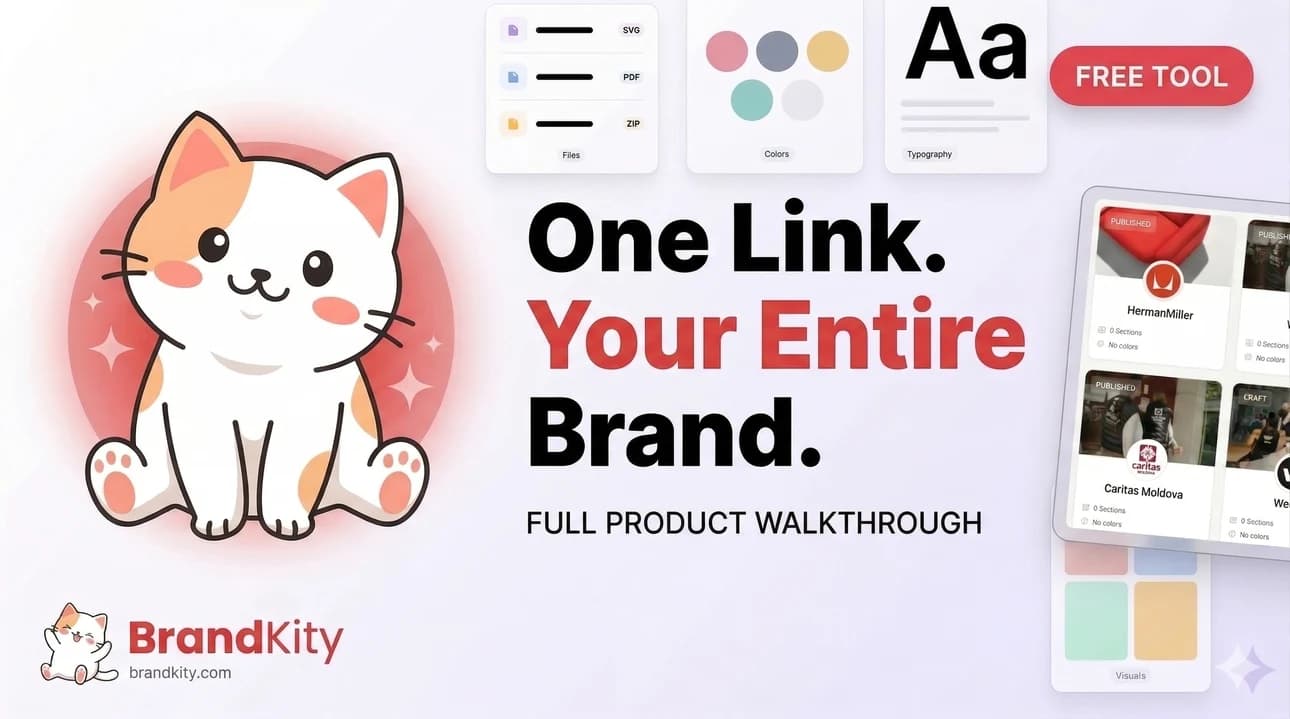
Table of contents
- The Silent Drain: Why Scattered Brand Assets Haunt Agency Profitability
- The Tangible Impact of Dispersed Logos, Guidelines, and Media
- Identifying the Symptoms: Outdated Files, Version Control Nightmares, and Wasted Hours
- Defining a True Single Source of Truth for Agency Brand Assets
- Moving Beyond Shared Drives, Email Attachments, and Local Hard Drives
- Core Principles of a Centralized and Dynamic Brand Repository
- The Blueprint for a Modern Brand Portal: More Than Just Storage
- Key Elements of an Effective Brand Portal for Agency Clients & Teams
- Why User Experience (UX) is Critical for Adoption and Brand Consistency
- Streamlining Client Delivery: A Unified Approach to Handoffs and Sharing
- Creating Single Shareable BrandKit Links for Instant Client Access
- Onboarding Clients and External Stakeholders Seamlessly with Curated Assets
- Elevating Agency Workflows with Centralized Brand Asset Management
- Accelerating Design Approvals, Feedback Cycles, and Asset Procurement
- Setting Up Your Brand Asset Management System for Agency Success
- Auditing Existing Assets: What to Keep, What to Archive, and What to Update
- Defining User Roles and Permissions for Internal Teams and External Collaborators
- Avoiding Information Overload: Curating Essential Assets for Clarity
- The Value of Enhanced Brand Consistency, Client Satisfaction, and Reputation
- Overcoming Common Pitfalls in Brand Asset Unification
- Measuring the ROI of a Unified Brand Asset Strategy for Agencies
- Practical Steps for Onboarding Your Agency to a Modern Brand Platform
- From Data Migration to Comprehensive Team Training
Agencies operate at the intersection of creativity and efficiency, yet many find their profitability quietly eroded by a persistent, often overlooked challenge: scattered brand assets. From client logos to intricate brand guidelines, the disorganization of these critical elements creates a downstream ripple effect, impacting everything from project timelines to client satisfaction.
The quest for brand consistency and operational fluidity often collides with the reality of fragmented digital files. Understanding the true cost of this disarray is the first step toward implementing a strategic solution that not only centralizes assets but fundamentally transforms agency workflows and client delivery.
The Silent Drain: Why Scattered Brand Assets Haunt Agency Profitability
The Tangible Impact of Dispersed Logos, Guidelines, and Media
The seemingly benign issue of dispersed brand assets translates directly into significant financial and reputational costs for agencies. When designers, copywriters, or account managers spend valuable time searching for the correct logo version, an approved image, or the latest brand guidelines, that time becomes a direct overhead expense. This inefficiency compounds through iterative rounds of client feedback, often triggered by the accidental use of outdated materials, leading to project delays and Scope Creep. Beyond the measurable hours, there’s the less quantifiable damage to an agency’s reputation when client deliverables exhibit inconsistent branding, eroding trust and potentially jeopardizing future engagements. The constant need for manual asset verification and re-creation can drastically reduce a project’s profit margin, turning what should be a streamlined process into a financial drain.
Identifying the Symptoms: Outdated Files, Version Control Nightmares, and Wasted Hours
Agencies grappling with scattered brand assets typically exhibit a clear set of symptoms. One of the most common is the proliferation of outdated files, where multiple versions of a logo or asset exist across different folders, cloud drives, and local machines, leading to confusion about which is authoritative. This fuels a perpetual “version control nightmare,” where “finalfinalv2.psd” becomes an all too familiar filename, making it impossible to confidently access the definitive asset. Employees inevitably spend countless hours searching through convoluted folder structures, emailing colleagues for missing files, or worse, recreating assets that already exist but cannot be found. This not only wastes creative talent on administrative tasks but also increases the risk of brand inconsistency across campaigns. The inability to quickly locate and share the correct assets often contributes to agencies struggling with brand asset client delivery, creating friction in client relationships and internal workflows.
Defining a True Single Source of Truth for Agency Brand Assets
Moving Beyond Shared Drives, Email Attachments, and Local Hard Drives
For many agencies, the default “system” for managing brand assets still revolves around a haphazard combination of generic shared drives like Google Drive or Dropbox, email attachments, and individual local hard drives. While these tools offer basic storage, they fundamentally lack the specialized features required for robust brand asset management. They fail to provide intuitive search capabilities, metadata tagging, or version control beyond simple file renaming. This results in asset silos, where critical brand elements are isolated and difficult to discover, share, or track. Relying on these outdated methods leaves agencies vulnerable to data loss, security breaches, and makes it virtually impossible to maintain brand consistency across diverse projects and client accounts. A true single source of truth requires a more purpose-built solution.
Core Principles of a Centralized and Dynamic Brand Repository
A true single source of truth for agency brand assets is not merely a central storage location; it is a dynamic, intelligent repository built on specific core principles. Firstly, it must offer centralized access, ensuring all approved assets are available from one secure platform, eliminating the need to search multiple locations. Secondly, robust metadata tagging and categorization are essential, allowing assets to be easily found via keywords, client, project, or asset type. Thirdly, comprehensive version control and audit trails track every modification, ensuring teams always access the latest, approved iteration and can revert if necessary. Lastly, granular access permissions are critical, enabling agencies to control who can view, download, or edit specific assets, safeguarding brand integrity. Embracing these principles helps agencies end scattered assets for good, providing a definitive, reliable hub for all brand-related content.
The Blueprint for a Modern Brand Portal: More Than Just Storage
Key Elements of an Effective Brand Portal for Agency Clients & Teams
A modern brand portal extends far beyond basic storage, evolving into a strategic tool for agencies to manage, distribute, and enforce brand guidelines. At its core, an effective portal features customizable brand guidelines prominently, serving as a dynamic reference for logo usage, color palettes, typography, and tone of voice. It must offer easy downloading of various asset formats (e.g., vector, raster, web-optimized) with clear usage instructions embedded. Essential elements include organized sections for specific asset types—logos, imagery, video, document templates—each with robust search and filtering capabilities. Furthermore, an integrated feedback and approval workflow streamlines collaboration, ensuring all assets meet brand standards before deployment. Think of it as a living brand bible that all stakeholders, internal or external, can reference instantly, promoting consistent brand execution. Major creative software providers, such as Adobe, frequently emphasize integrated workflows for creative asset management.
Why User Experience (UX) is Critical for Adoption and Brand Consistency
The success of any brand portal hinges significantly on its user experience (UX). An intuitive, well-designed interface encourages rapid adoption by both internal agency teams and external clients, directly impacting brand consistency. If a portal is difficult to navigate, slow to load, or requires extensive training, users will default back to familiar, albeit inefficient, methods like email or shared drives. A positive UX minimizes friction, making it effortless for users to find, understand, and correctly apply brand assets and guidelines. This reduces the number of erroneous uses, approval rounds, and ultimately, strengthens the agency’s ability to master brand consistency with marketing asset management. Prioritizing ease of use, clear categorization, and visual appeal ensures that the portal truly becomes the go-to resource, fostering widespread adherence to brand standards and maximizing operational efficiency.
Streamlining Client Delivery: A Unified Approach to Handoffs and Sharing
Creating Single Shareable BrandKit Links for Instant Client Access
One of the most impactful advancements in brand asset management for agencies is the ability to generate a single shareable BrandKit link. This feature revolutionizes client delivery by consolidating all necessary brand assets—logos, guidelines, color codes, typography, approved imagery—into one accessible, web-based portal. Instead of compiling endless folders, creating large ZIP files, or sending multiple emails, agencies can simply provide a link that grants instant, organized access. This not only significantly reduces administrative overhead but also ensures clients always access the most current and approved versions of assets. The real-time update capability means any changes made by the agency are immediately reflected for the client, eliminating version control issues. This approach exemplifies what’s the best brand asset management software for client delivery, simplifying the handoff process and enhancing the client experience.
Onboarding Clients and External Stakeholders Seamlessly with Curated Assets
Effective client onboarding is paramount for new project kickoffs, and a unified approach to asset sharing makes this process seamless and professional. Agencies can leverage brand portals to create curated asset collections specifically tailored for each client or project. This means providing new clients with immediate access to only the relevant, approved files they need, along with their specific brand guidelines, without overwhelming them with irrelevant assets. Furthermore, external stakeholders, such as media partners, PR firms, or freelance designers, can be granted limited access to specific sections of the BrandKit, ensuring they adhere to brand standards from day one. This targeted sharing eliminates back-and-forth communication, accelerates project timelines, and establishes a clear, professional foundation for collaboration. It significantly improves how modern agencies share brand assets securely and efficiently, setting clear expectations from the outset and fostering stronger client relationships.
Elevating Agency Workflows with Centralized Brand Asset Management
Accelerating Design Approvals, Feedback Cycles, and Asset Procurement
Modern creative agencies thrive on efficiency, making the acceleration of design approvals, feedback cycles, and asset procurement paramount. A centralized brand asset management (BAM) system addresses this by providing a single platform where all creative assets reside, are reviewed, and are approved. Key decision criteria for selecting such a system include robust version control, integrated commenting tools, and automated notification capabilities that alert stakeholders to new submissions or required actions. This approach drastically reduces the back-and-forth email chains and misplaced files that typically plague traditional workflows.
Without a unified system, agencies frequently encounter pitfalls such as fragmented communication, delayed client approvals, and inefficient asset sharing, which can severely impact project timelines and budgets. For example, a creative agency might find its social media campaign approval times cut from several days to mere hours by implementing a BAM platform that allows direct commenting on mockups and real-time status updates. The actionable step here involves adopting a system that supports a fluid feedback loop, ensuring designers can iterate quickly and procure necessary licensed assets without bureaucratic delays, ultimately enhancing impeccable brand consistency. The actionable strategy involves making the BAM platform the mandatory starting point for all creative endeavors, thus empowering designers with current assets and clear guidelines from the outset.
Setting Up Your Brand Asset Management System for Agency Success
Auditing Existing Assets: What to Keep, What to Archive, and What to Update
The foundational step in implementing a successful brand asset management system for an agency is a thorough audit of all existing assets. This critical phase involves systematically evaluating what to retain, what to move to an archive, and what requires updating to meet current brand standards. Decision criteria should focus on asset relevance, legal compliance (e.g., license expiration dates), usage frequency, and alignment with the client’s current brand strategy. Skipping this step can lead to a cluttered new system, perpetuating the very disorganization the BAM aims to resolve.
Agencies often face the pitfall of migrating a large volume of irrelevant or outdated assets, creating “digital clutter” within the new platform. For instance, an audit might reveal that 30% of an agency’s currently stored logos are superseded versions, yet they remain accessible, risking incorrect usage. By identifying and archiving these, the agency saves storage space and significantly reduces potential errors. An actionable approach is to categorize assets by their status—current, needs review/update, archive, or discard—and obtain client approval for all core assets designated as “current” or “updated” before migration to the new platform, effectively folder management pain points.
Defining User Roles and Permissions for Internal Teams and External Collaborators
A crucial aspect of setting up a brand asset management system for agency success is meticulously defining user roles and permissions. This ensures secure access, prevents unauthorized modifications, and streamlines workflows for both internal teams and external collaborators, including clients and freelancers. Agencies should look for systems offering granular control over access levels, custom role creation, and straightforward management of client-specific portals. This level of control is essential for maintaining asset integrity and intellectual property.
The primary pitfalls here involve either granting too much access, which can lead to accidental deletions or brand guideline violations, or too little access, which can hinder productivity and create bottlenecks. For instance, a marketing manager might grant a client “view-only” access to a specific BrandKit for final campaign asset review, while senior designers have “edit” access to approved master files within designated project folders. The actionable strategy is to map out your agency’s operational structure and client engagement models, then translate these into predefined roles (e.g., Admin, Editor, Uploader, Viewer) within the BAM system. This ensures that every user, from the creative director to an external vendor, has precisely the access they need, no more and no less, thereby enhancing both security and
The significant pitfall of neglecting change management is low adoption rates, where teams revert to old, inefficient methods, undermining the investment in the new system. For example, an agency implementing a new BAM platform can mitigate resistance by hosting interactive workshops that highlight how the system simplifies tasks like asset searching and approval routing, thereby showcasing how
Avoiding Information Overload: Curating Essential Assets for Clarity
While centralizing all brand assets is the goal, a common pitfall is creating information overload within the system, making it difficult for users to quickly find and utilize the essential assets they need. A poorly organized system, despite being centralized, can be just as inefficient as scattered folders. Agencies must prioritize curation and presentation, ensuring that the most relevant and frequently used assets are easily accessible and not buried under a mountain of auxiliary files. Effective decision criteria for a BAM platform include intuitive user interfaces, advanced search filters, and the ability to create curated collections or dedicated “BrandKits” for specific projects or clients.
The risk of information overload is that users become overwhelmed, leading to frustration, miscommunication, and a decreased likelihood of adopting the system as the true single source of truth. For instance, instead of a single, sprawling repository, an agency might create distinct client-facing portals or “BrandKits” that contain only the approved, current, and relevant assets for a particular campaign or brand identity. This streamlines the client experience and reduces confusion. The actionable strategy involves a continuous process of reviewing and pruning assets, leveraging the platform’s features to present context-specific sets of files, and focusing on excellent user experience design within the BAM to ensure clarity and foster efficient platform analytics for usage patterns, and regularly surveying team members about their perceived time savings and reduction in frustrations.
The Value of Enhanced Brand Consistency, Client Satisfaction, and Reputation
Beyond quantifiable metrics, a unified brand asset strategy significantly contributes to intangible yet powerful benefits: enhanced brand consistency, elevated client satisfaction, and a strengthened agency reputation. These elements, while harder to assign a direct monetary value, are critical drivers of long-term agency success and client retention. Decision criteria for evaluating these aspects often involve client feedback mechanisms, internal and external brand audits, and monitoring market perception of the brands managed.
The pitfall here is underestimating the cumulative impact of these “soft” benefits. A consistent brand presentation across all client deliverables, facilitated by a single source of truth, leads to greater trust and a perception of professionalism. For instance, agencies often observe a 20% increase in positive client feedback scores related to asset access and brand adherence after implementing a robust BAM solution. This enhances client satisfaction, making the agency a more valuable partner. Actionable steps include regularly gathering client testimonials and survey data focusing on ease of collaboration and brand accuracy, conducting periodic brand audits to ensure external consistency, and actively monitoring the agency’s and its clients’ reputations through various channels. This holistic approach showcases the comprehensive value of best brand asset management software for client delivery.
Overcoming Common Pitfalls in Brand Asset Unification
While the benefits of a unified brand asset strategy are clear, agencies often encounter several common pitfalls during implementation and ongoing management. Proactive identification and mitigation of these challenges are crucial for successful adoption and maximizing the system’s value. Critical decision criteria here involve assessing team readiness, process maturity, and the robustness of proposed solutions.
One primary pitfall is resistance to change from internal teams who are accustomed to existing, often fragmented, workflows. Without clear communication about the “why” and adequate support, adoption can falter. Another common challenge is the lack of clear governance and ownership, leading to outdated assets, inconsistent tagging, or a gradual return to old habits. Furthermore, insufficient initial or ongoing training can render even the most sophisticated Brand Asset Management (BAM) system ineffective. Finally, agencies may overlook the complexities of data migration or fail to integrate the BAM with other critical tools.
Actionable strategies to overcome these include:
- Championing Change: Designate internal champions who can advocate for the new system, share success stories, and provide peer-to-peer support. Highlight the individual time-saving benefits for different roles.
- Establishing Clear Governance: Define roles and responsibilities for asset owners, approvers, and administrators. Develop clear guidelines for asset submission, tagging, version control, and archival. Regularly audit content for compliance.
- Comprehensive Training: Offer tiered training sessions tailored to different user groups (creatives, account managers, executives). Provide easily accessible resources like video tutorials, FAQs, and quick-start guides.
- Phased Implementation & Integration: Don’t try to migrate everything at once. Prioritize critical assets and integrate the BAM system iteratively with existing project management or creative tools where appropriate, as detailed in discussions about
Measuring the ROI of a Unified Brand Asset Strategy for Agencies
For agencies, demonstrating a clear Return on Investment (ROI) for a unified brand asset strategy is essential to justify initial investments and secure ongoing support. While some benefits, like brand consistency, are qualitative, many can be quantified, providing a compelling business case. Decision criteria for measuring ROI should encompass both tangible cost savings and revenue-driving improvements.
Key areas for ROI measurement include:
- Time Savings & Efficiency Gains: Quantify the reduction in time spent by creative teams searching for assets, recreating lost files, or fixing incorrect versions. Account managers also save time ensuring clients use the latest branding. This can be tracked by comparing pre- and post-implementation time logs or through user surveys. For example, a creative team might report a 15-20% reduction in time spent on asset retrieval.
- Cost Reductions: Measure the decrease in costs associated with rework due to outdated assets, unnecessary licensing fees from unmanaged assets, or external storage solutions. A BAM can consolidate storage and prevent redundant purchases.
- Increased Throughput & Project Velocity: A streamlined asset workflow allows teams to complete projects faster, handle more client work, and respond more quickly to market demands. Track project turnaround times and the number of projects completed within budget and schedule.
- Improved Client Retention & Acquisition: While harder to directly attribute, enhanced brand consistency and client satisfaction (as discussed previously) contribute to higher client retention rates and a stronger reputation that attracts new business. Monitor client churn rates and new business pipeline growth.
- Reduced Risk & Compliance: Evaluate the reduction in legal risks associated with using expired licenses or non-compliant brand elements. Track the frequency of brand guideline violations before and after implementation.
To accurately measure ROI, agencies should establish baseline metrics before implementing a BAM solution and then track improvements over time. This holistic approach, combining hard data with qualitative feedback, provides a comprehensive picture of the value generated by a unified brand asset strategy, proving its worth as a strategic investment in the agency’s future and ensuring an effective brand asset management strategy implementation.
Ultimately, investing in a robust BAM solution is not just an operational expense; it’s a strategic imperative for modern creative agencies. It empowers them to streamline workflows, enhance brand consistency across all client deliverables, and achieve measurable returns that fuel growth and innovation. By centralizing and managing their digital assets effectively, agencies can unlock their full creative potential, improve client satisfaction, and solidify their position as trusted partners in a competitive market.
Practical Steps for Onboarding Your Agency to a Modern Brand Platform
From Data Migration to Comprehensive Team Training
Successfully onboarding an agency to a modern brand platform like BrandKity involves meticulous planning, starting with a robust data migration strategy. The initial step is a thorough brand asset audit, where existing files across disparate systems (local drives, cloud storage, legacy DAMs, or even scattered email attachments) are inventoried. This isn’t merely about collection; it involves identifying active, approved assets, archiving outdated versions, and flagging duplicates for cleansing. Next, focus on metadata standardization, which is crucial for discoverability and future asset management. Agencies should define a consistent tagging taxonomy, ensuring every logo, image, or document is easily searchable by client, project, asset type, and usage rights. This often overlooked step prevents future disorganization and empowers efficient client delivery, transforming a chaotic collection into a Adobe Creative Cloud, while account managers learn how to share secure BrandKit links and monitor client access. Practical, hands-on workshops that address specific agency workflows are more effective than generic platform walkthroughs. Furthermore, establishing internal platform champions who can offer peer support and gather feedback is invaluable. Pitfalls include insufficient planning for downtime during migration, neglecting asset versioning, and failing to provide ongoing support or refresh training as new features emerge. A successful rollout hinges on making the new system intuitive and demonstrably beneficial to daily operations, directly addressing issues like
Actionable steps for a phased rollout include developing a clear communication plan, outlining timelines, expected benefits, and support channels at each stage. It’s vital to clearly define the scope and objectives for each phase, ensuring that teams understand their role and how the new platform will streamline their tasks. A common pitfall is underestimating the communication effort, leading to confusion or resistance. Conversely, overcomplicating the phased approach with too many granular stages can slow down momentum. For example, an agency might first roll out BrandKity to manage internal marketing assets, then expand to a specific client with a high volume of deliverables, before making it the default for all new client onboarding. This systematic approach allows for continuous refinement, ensuring that the agency can effectively master brand consistency and client delivery without disrupting critical operations, leading to higher long-term adoption rates and a more unified brand experience across the board.
Implementing a modern brand platform requires more than just technical integration; it demands a strategic approach to data, people, and process. By meticulously planning data migration, investing in role-specific training, and adopting phased rollouts, agencies can seamlessly transition to a centralized system that elevates their brand management and client delivery capabilities, ultimately eliminating the struggles associated with scattered assets.
Saurabh Kumar
Founder, BrandKity
Saurabh writes about practical brand systems, faster client handoffs, and scalable workflows for designers and agencies building repeatable delivery operations.
Connect on LinkedIn