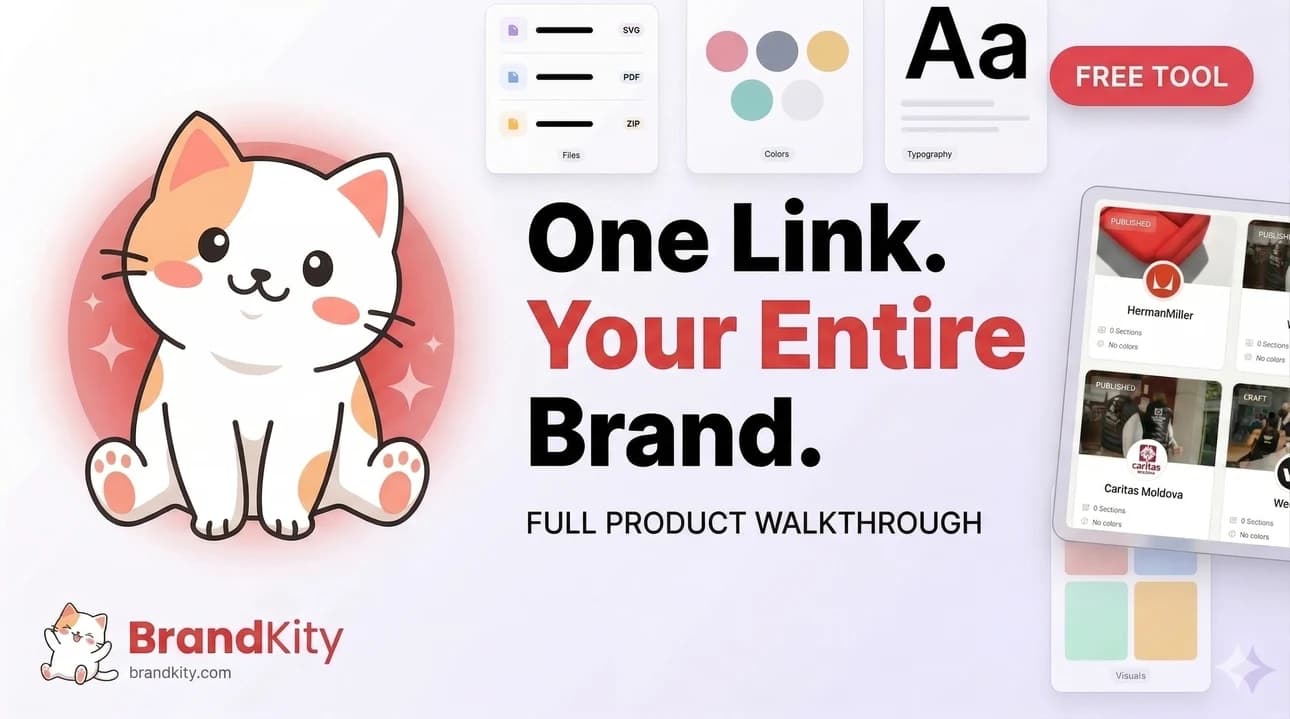
How Creative Add-Ons Are Revolutionizing Brand Asset Management Workflows
How Creative Add-Ons Are Revolutionizing Brand Asset Management Workflows Remember the days when “brand asset management” conjured images of dusty server rooms, endless spreadsheets, and a frantic search for the “right” logo file? We’ve come a long way, haven’t we? Today, brand asset management (BAM) platforms are the central nervous system for brands, housing everything

Table of contents
- How Creative Add-Ons Are Revolutionizing Brand Asset Management Workflows
- What Exactly Are Creative Add-Ons in BAM?
- The Driving Forces Behind This Revolution
- Key Categories of Creative Add-Ons and Their Impact
- 1. Integrated Content Creation Tools
- 2. AI-Powered Asset Tagging and Organization
- 3. Dynamic Template and Variation Generation
- 4. Performance Analytics and Insights
- 5. Collaboration and Workflow Automation Tools
- The Future is Integrated and Intelligent
- Making the Shift: What You Need to Consider
- Conclusion: Embrace the Augmented Creative Workflow
How Creative Add-Ons Are Revolutionizing Brand Asset Management Workflows
Remember the days when “brand asset management” conjured images of dusty server rooms, endless spreadsheets, and a frantic search for the “right” logo file? We’ve come a long way, haven’t we? Today, brand asset management (BAM) platforms are the central nervous system for brands, housing everything from logos and fonts to campaign imagery and video. But the evolution isn’t stopping there. We’re witnessing a seismic shift, driven by something incredibly exciting: creative add-ons.
These aren’t just minor tweaks or superficial features; they are powerful extensions that integrate seamlessly with your core BAM system, unlocking new levels of efficiency, creativity, and strategic advantage. Think of them as the turbochargers and GPS systems for your brand asset engine, transforming mundane tasks into streamlined, intelligent processes. At Brandkity, we’re seeing firsthand how these innovations are not just improving workflows but fundamentally revolutionizing them. Let’s dive into what these add-ons are, why they matter, and how they’re reshaping the landscape.
What Exactly Are Creative Add-Ons in BAM?
At its heart, a Brand Asset Management platform is designed to store, organize, and distribute your brand’s visual and creative assets. It’s the single source of truth. But a core BAM system, while essential, can sometimes feel like a beautifully organized library. You have all the books, but you still need to do a lot of the reading and writing yourself.
Creative add-ons are like bringing in expert librarians, illustrators, editors, and even storytellers directly into that library. They extend the functionality of your BAM platform, allowing you to do more with your assets, not just store them. These add-ons can range from sophisticated content creation tools that pull directly from your brand guidelines, to advanced analytics that tell you how your assets are performing, to intelligent automation that handles repetitive tasks.
Imagine a scenario:
- Without Add-ons: A marketing manager needs a social media graphic for a new promotion. They log into the BAM, find the logo, download it, open a separate design tool, import the logo, find brand colors, create the graphic, save it, and then upload it back to the BAM or a social media scheduler. This is time-consuming and prone to inconsistencies if colors or logos aren’t applied perfectly.
- With Add-ons: The marketing manager logs into the BAM, navigates to a “Social Media Creator” add-on. They select a pre-approved template, the add-on automatically pulls the correct logo and brand colors from the BAM’s guidelines. They add text, maybe swap out an image from a pre-approved library, and with a few clicks, the graphic is generated in the correct format and size, ready to be published, and even saved back to the BAM.
This is the power of integration. The add-on isn’t a separate silo; it’s an extension of the BAM’s intelligence, leveraging the data and assets already stored within it.
The Driving Forces Behind This Revolution
Why is this happening now? Several factors are converging:
- The Blurring Lines Between Creation and Management: In today’s fast-paced digital world, the distinction between creating content and managing assets is becoming increasingly fuzzy. Marketing teams need to produce content at an unprecedented rate, and delays in asset retrieval or creation are no longer acceptable.
- The Rise of AI and Automation: Artificial intelligence and machine learning are enabling sophisticated capabilities that were science fiction just a few years ago. Think automated tagging, content generation suggestions, and performance analysis.
- The Demand for Personalization and Speed: Consumers expect personalized experiences, and brands need to deliver relevant content quickly across numerous channels. This requires agility and tools that can adapt and scale.
- The Need for Greater Collaboration: As teams grow and work remotely, seamless collaboration becomes paramount. Add-ons can bridge gaps between creative, marketing, sales, and even external agencies.
- Platform Ecosystems: Like many tech sectors, BAM platforms are increasingly embracing an ecosystem approach, allowing third-party developers and internal teams to build specialized tools that enhance the core offering.
These forces are creating a fertile ground for creative add-ons to flourish, making BAM platforms more dynamic and indispensable than ever before.
Key Categories of Creative Add-Ons and Their Impact
Let’s break down some of the most impactful types of creative add-ons and explore how they’re revolutionizing workflows:
1. Integrated Content Creation Tools
This is perhaps the most visible and immediately impactful category. These add-ons allow users to create new content directly within or connected to their BAM platform, using pre-approved brand assets and guidelines.
- What they do: Think of tools that let you generate social media graphics, simple banners, presentations, or even basic video edits. They pull logos, fonts, color palettes, and approved imagery directly from your DAM.
- The Revolution:
- Democratized Creativity: Non-designers can create on-brand content without needing extensive design software training. This frees up designers to focus on more strategic, complex creative projects.
- Unprecedented Speed: Content creation time is drastically reduced. Instead of days or hours, simple graphics can be made in minutes.
- Ensured Brand Consistency: By enforcing brand guidelines at the point of creation, these tools eliminate the risk of off-brand logos, incorrect colors, or misapplied fonts.
Real-world Analogy: Imagine a professional kitchen. The BAM is the pantry stocked with high-quality ingredients. Without add-ons, chefs have to take ingredients to separate prep stations, assemble dishes, and then bring them back. With integrated creation tools, it’s like having specialized workstations within the kitchen itself – a pasta station that automatically uses approved flour and a sauce dispenser that dispenses only branded tomato sauce. It makes the process faster, more efficient, and guarantees the consistency of each dish.
Mini Case Study: A Fast-Moving Retailer
A large fashion retailer was struggling to keep up with the demand for social media content across dozens of product lines and seasonal campaigns. Their marketing team was bogged down creating repetitive promotional graphics. By implementing a BAM with an integrated social media creator add-on, they empowered their regional marketing teams to generate localized, on-brand social posts within minutes. This led to a 40% increase in social media output and a significant reduction in design bottlenecking, allowing the central design team to focus on high-impact campaign visuals.
2. AI-Powered Asset Tagging and Organization
Finding assets is often the biggest pain point in any BAM system. AI is stepping in to automate and enhance this process.
- What they do: These add-ons use machine learning to automatically tag assets with relevant keywords, identify objects, people, scenes, and even sentiment. They can also suggest duplicate assets or categorize similar images.
- The Revolution:
- Drastically Improved Searchability: Users can find what they need faster and more intuitively, often with natural language search queries.
- Reduced Manual Effort: The tedious and error-prone task of manual tagging is significantly reduced, saving countless hours.
- Enhanced Data Accuracy: AI can identify nuances that humans might miss, leading to more precise and comprehensive metadata.
Real-world Analogy: Think about your personal photo library on your phone. Most phones now have AI that can recognize faces, places, and objects, allowing you to search for “beach” or “dog” and find relevant photos. This is the same principle, but applied to a professional brand asset library, with much more sophisticated capabilities. It’s like having a super-powered search engine that understands the content of your assets, not just their filenames.
Mini Case Study: A Global Beverage Brand
A global beverage company managed millions of digital assets, from product shots and lifestyle imagery to historical archives. Their manual tagging process was a massive undertaking, leading to significant delays when marketing teams needed specific visuals for campaigns. By integrating an AI-powered tagging add-on, they were able to automatically tag over 80% of their existing asset library within weeks. This dramatically improved asset retrieval times, allowing them to launch new campaigns faster and with more relevant visuals.
3. Dynamic Template and Variation Generation
Brands often need multiple variations of an asset for different channels, sizes, or languages. This add-on category automates that process.
- What they do: These tools allow you to define a master template and then automatically generate variations based on predefined rules or inputs. This could include resizing for different social media platforms, swapping out text for different regions, or creating different colorways.
- The Revolution:
- Massive Time Savings: Creating dozens or hundreds of asset variations manually is incredibly inefficient. This automates it completely.
- Scale and Agility: Brands can quickly adapt campaigns for different markets or platforms without a huge production lift.
- Consistent Branding Across Variations: Ensures that all variations adhere to the core brand elements.
Real-world Analogy: Imagine you’re a baker making a custom cake order. You have a base recipe (the template). Instead of measuring out ingredients and mixing batter from scratch for each small variation (e.g., a gluten-free version, a vegan version, a chocolate chip version), you have a system where you can input “vegan” and it automatically adjusts the ingredient ratios and baking time. This add-on is that smart baking system for your brand assets.
This is particularly relevant for companies looking to empower their web hosting and domain services with seamless brand management, ensuring consistent messaging and visuals across all their digital touchpoints.
4. Performance Analytics and Insights
Knowing which assets are performing best is crucial for optimizing marketing efforts. This add-on brings data directly to your assets.
- What they do: These tools integrate with analytics platforms (like Google Analytics, social media insights, etc.) to show how specific assets are performing in the wild. You can see which images drive the most clicks, which videos have the highest engagement, or which logos appear in the most successful campaigns.
- The Revolution:
- Data-Driven Creative Decisions: Marketers and designers can understand what resonates with their audience and use that knowledge to create more effective future assets.
- ROI Justification: Provides concrete data to demonstrate the value of creative assets and the BAM system.
- Continuous Improvement: Enables an iterative process of creation, deployment, analysis, and refinement.
Real-world Analogy: Think of a sports coach reviewing game footage. The BAM is the stadium, the assets are the players. Without analytics add-ons, you’re just watching the game without understanding player performance. With these add-ons, you’re getting detailed stats on every player – who scored, who assisted, who made the most tackles. This allows you to refine your strategy and put your best players (assets) in the best positions to win.
5. Collaboration and Workflow Automation Tools
Beyond creation, add-ons are streamlining the processes around asset approval, distribution, and integration.
- What they do: This can include features like automated approval workflows, direct integrations with project management tools, and smart distribution to various channels (e.g., automatically pushing approved product images to e-commerce platforms). It also includes tools that facilitate collaboration, such as in-app annotation or version control enhancements.
- The Revolution:
- Accelerated Timelines: Approval cycles are significantly shortened, getting campaigns to market faster.
- Reduced Errors and Miscommunication: Clear, automated workflows minimize the chances of assets being sent to the wrong people or used incorrectly.
- Seamless Integration with Other Tools: Creates a more connected MarTech stack, where assets flow effortlessly between systems.
Real-world Analogy: Imagine a busy construction site. The BAM holds all the blueprints and material specifications. Without workflow automation, getting approvals for a new design change might involve physical sign-offs, lost paperwork, and endless phone calls. With workflow add-ons, it’s like having a digital project management system where changes are submitted, automatically routed to the right architects and engineers for digital sign-off, and instantly updated across all relevant teams and materials suppliers. This ensures the building project stays on track and on budget.
These kinds of integrations are essential for teams looking to master brand asset delivery workflows, ensuring a smooth and efficient process from creation to final use.
The Future is Integrated and Intelligent
The trend towards creative add-ons is not a fad; it’s the future of brand asset management. As technology continues to advance, we can expect even more sophisticated integrations:
- Hyper-Personalization at Scale: AI will enable dynamic asset generation tailored to individual user preferences in real-time.
- Predictive Asset Performance: AI will predict which assets are likely to perform best before they are launched.
- Deeper AI-Driven Content Creation: More advanced AI tools will assist in writing copy, generating video scripts, and even creating entirely new visual concepts based on brand parameters.
- Ubiquitous Integration: BAM platforms will become even more deeply embedded into the tools that creatives and marketers use daily, making brand management almost invisible yet ever-present.
This evolution is perfectly aligned with the goals of launching a robust brand management platform – focusing on key milestones and learning from the process to ensure you’re building a system that’s not just a repository but a dynamic engine for brand growth. This journey often involves understanding the technology, the people, and the processes, making it crucial to have a clear vision for how add-ons can contribute.
Making the Shift: What You Need to Consider
So, how do you harness the power of these creative add-ons for your brand? Here are a few key considerations:
- Understand Your Biggest Bottlenecks: Where are you losing the most time and effort in your current asset workflow? Is it finding assets, creating variations, getting approvals, or measuring performance?
- Evaluate Your Current Platform’s Capabilities: Does your existing BAM system support integrations and add-ons? If not, it might be time to consider an upgrade or a new platform. The ability to integrate with other tools is a hallmark of modern platforms.
- Prioritize Add-ons That Align with Your Strategic Goals: Don’t get caught up in having every shiny new feature. Focus on add-ons that will have the most significant impact on your team’s efficiency, creativity, and brand consistency.
- Involve Your Teams: Talk to your designers, marketers, and content creators. They are the ones who will use these tools daily. Their input is invaluable in selecting and implementing the right solutions. Consider how these tools can foster better collaboration, perhaps by acting as one of the 9 tools to bring designers and marketers together.
- Plan for Implementation and Training: Even the most intuitive add-ons require some onboarding. Ensure your team has the necessary training and support to leverage these new capabilities effectively.
Conclusion: Embrace the Augmented Creative Workflow
The era of the static, passive brand asset library is drawing to a close. Creative add-ons are transforming Brand Asset Management platforms from mere storage solutions into dynamic, intelligent hubs that empower creativity, ensure consistency, and drive efficiency. They are the catalysts for a more agile, responsive, and ultimately, more successful brand presence in today’s complex digital landscape.
By embracing these innovations, you’re not just updating your tools; you’re investing in a future where your brand’s creative potential is fully unleashed, where every asset works harder, and where your team can focus on what truly matters: building a powerful, resonant brand. The revolution is here, and it’s time to join it.
Saurabh Kumar
Founder, BrandKity
Saurabh writes about practical brand systems, faster client handoffs, and scalable workflows for designers and agencies building repeatable delivery operations.
Connect on LinkedIn