
Brandfolder vs BrandKity: Which Portal is Best for Agencies?
Agencies operate at the nexus of creativity and meticulous brand execution. However, the critical process of handing off brand assets to clients, part…
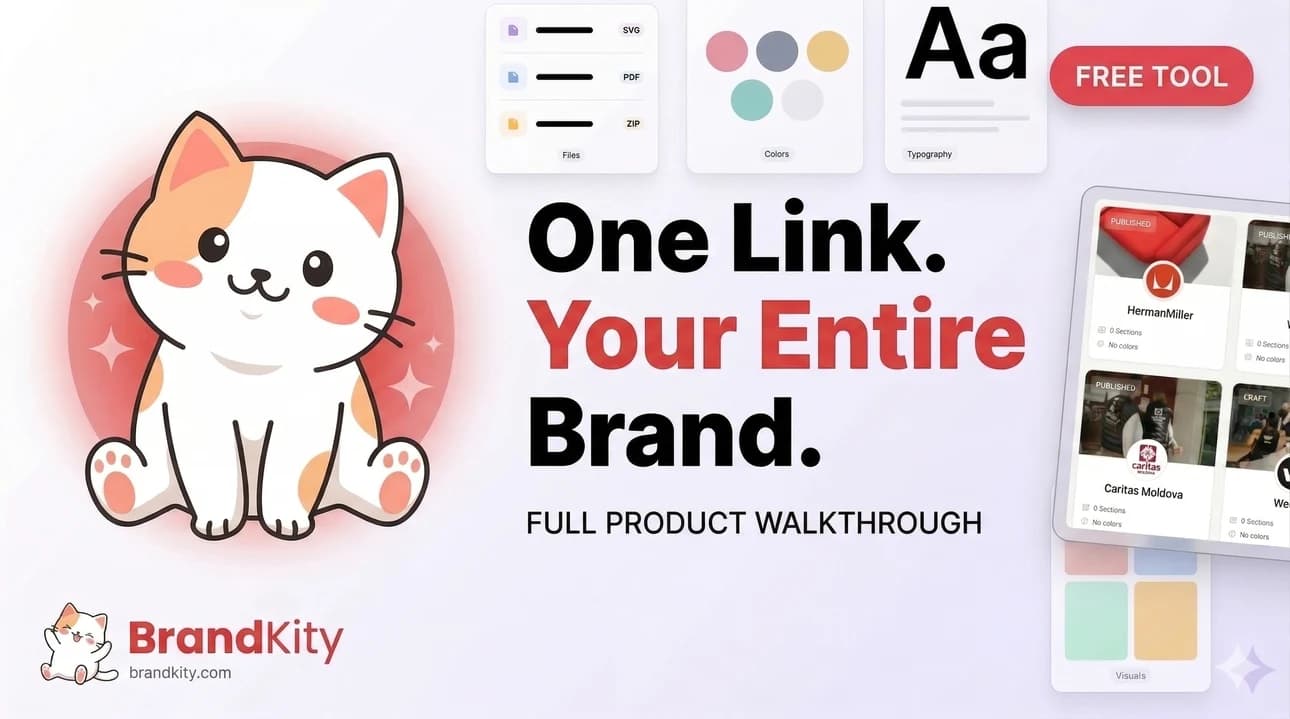
Table of contents
- Simplifying Brand Handoffs: The Agency’s Challenge with Scattered Assets
- The Cost of Inconsistent Branding and Outdated Assets for Agencies
- BrandKity’s Approach to Modern Brand Portals and Client Delivery for Agencies
- The ‘Single BrandKit Link’ Philosophy for Instant Access and Brand Organization
- Brandfolder’s Enterprise-Grade Digital Asset Management for Complex Organizations
- Comprehensive DAM Features for Large-Scale Asset Libraries and Governance
- Advanced Permissions and Brand Consistency Controls for Diverse Teams
- Integrations and Automation Capabilities for Broader Marketing Ecosystems
- Direct Comparison: Client Delivery and External Sharing Experience
- Ease of Sharing and Access for External Stakeholders and Vendors
- Managing Feedback and Revisions: Impact on Agency-Client Workflows
- Core Brand Asset Management: Organization, Search, and Version Control
- How Each Platform Structures and Categorizes Diverse Brand Assets
- Search Functionality and Discoverability for Fast Agency Operations
- Ensuring Brand Consistency Through Asset Updates and History
- Automating Usage Rules for Logos, Colors, and Typography
- Impact on Agency Workflow and Overall Brand Governance
- Workflow Integration, Collaboration, and Agency Operations Efficiency
- Fitting into Existing Creative and Marketing Project Workflows
- The Role in Reducing Creative Operations Overhead and Client Handoff Friction
- Usability, Onboarding Speed, and Practicality for Agency Teams
- Learning Curve for New Agency Users and Client Adoption Rates
- Setup Time and Migration of Existing Brand Assets for Agencies and Startups
- Support Resources and Community for Optimal Agency Performance
- Brand Guidelines and Enforcing Consistency Across Agency Campaigns
- Pricing Structures and Scalability for Growing Agencies and Startups
- Understanding Licensing Models and Feature Tiers for Agency Budgets
- Long-Term Value and Return on Investment for Creative Operations
- Ideal Use Cases and Agency Profiles for BrandKity
- Weighing the Pros and Cons of Each Portal for Agency Success (Comparison Table)
- Frequently Asked Questions About Brand Portals for Agencies
- What is the difference between a Brand Portal and a traditional DAM for agencies?
- Can Brand Portals integrate with existing agency design and marketing tools?
- Which Platform is Best for Your Agency? Making an Informed Choice
Agencies operate at the nexus of creativity and meticulous brand execution. However, the critical process of handing off brand assets to clients, partners, and vendors often becomes a labyrinth of scattered files, outdated versions, and inconsistent guidelines. This fragmentation not only strains internal resources but also jeopardizes the very brand integrity agencies are hired to uphold.
Navigating this complex landscape requires more than generic file storage; it demands a dedicated solution built for modern brand operations. This comparison delves into how Brandfolder and BrandKity address the unique challenges of agency workflows, specifically focusing on their approaches to client delivery and the strategic management of digital assets in today’s fast-paced environment.
Simplifying Brand Handoffs: The Agency’s Challenge with Scattered Assets
The Cost of Inconsistent Branding and Outdated Assets for Agencies
The ripple effects of inconsistent branding extend far beyond aesthetics, directly impacting an agency’s reputation and its clients’ market presence. When agencies deliver projects using outdated logos, incorrect color palettes, or superseded messaging, the trust built through meticulous design is eroded. This can lead to costly rework, such as reprinting marketing collateral or re-editing video assets, consuming valuable agency time and budget. More critically, it diminishes a client’s brand authority in the marketplace, potentially affecting consumer perception and sales. The cumulative financial impact of such errors, from lost billable hours to rectifying mistakes, can be substantial, often running into thousands of dollars per project if not properly managed. Agencies must prioritize brand integrity and asset accuracy to safeguard client investments.
Example: An agency working on a global campaign accidentally uses an outdated brand guideline PDF, resulting in a miscolored logo on a print ad. The cost to recall and reprint 5,000 posters across three markets was estimated at $7,500, not including the delay in campaign launch and damage to agency credibility. This highlights the severe implications of a lack of a single, organized point of access for all brand assets, guidelines, and related documentation. By offering structured organization, intelligent search capabilities, and robust version control, brand portals ensure that every stakeholder—from internal teams to external clients and vendors—always has access to the most current and approved assets. This level of control and accessibility not only minimizes errors and rework but also significantly enhances the perception of professionalism and efficiency. For agencies, a dedicated brand portal translates into reduced administrative overhead, faster project cycles, and ultimately, stronger client relationships built on trust and consistent brand representation.
BrandKity’s Approach to Modern Brand Portals and Client Delivery for Agencies
The ‘Single BrandKit Link’ Philosophy for Instant Access and Brand Organization
BrandKity revolutionizes agency-client asset delivery through its innovative ‘Single BrandKit Link’ philosophy. Instead of sending clients disparate folders, email attachments, or complex login credentials, agencies can provide one permanent, always-current link. This link leads directly to a curated brand portal (the BrandKit) that houses all essential brand assets—logos, typography, color palettes, guidelines, and more. This approach eliminates the common headaches of version control, ensuring clients and partners consistently access the latest approved assets. It simplifies brand organization dramatically, fostering a seamless experience where searching for the right file becomes instantaneous. This singular point of access accelerates client onboarding, streamlines project kick-offs, and significantly reduces the back-and-forth communication inherent in traditional asset sharing methods. It’s about providing instant access and unwavering brand consistency.
Example: An agency completes a rebrand for a client. Instead of creating a ZIP file or shared folder with hundreds of assets, they simply send a BrandKity link. Six months later, when the client needs an obscure logo variation, they revisit the same link, knowing it’s always up-to-date. This eliminates the need for the agency to resend files, saving approximately 2-3 hours of administrative time per request, while also significantly improving the client’s self-service capability and overall satisfaction. This is a core benefit of a single source of truth for every brand an agency manages. This fundamental principle eradicates the pervasive problem of scattered folders, duplicate files, and the constant hunt for missing assets that plague traditional agency workflows. By consolidating all brand elements—from logos and photography to style guides and legal documents—into a single, easily discoverable BrandKit, agencies ensure absolute consistency. Any updates made within BrandKity are immediately reflected across all shared links, guaranteeing that every user, internal or external, is always working with the most current versions. This not only significantly reduces the risk of branding errors but also dramatically improves operational efficiency and client confidence. The days of hunting through email threads or multiple cloud drives for the correct asset are over, replaced by reliable, centralized access.
Brandfolder’s Enterprise-Grade Digital Asset Management for Complex Organizations
Comprehensive DAM Features for Large-Scale Asset Libraries and Governance
Brandfolder stands out as an enterprise-grade Digital Asset Management (DAM) solution, built to handle the immense complexities of large-scale asset libraries. It offers a robust suite of features essential for managing hundreds of thousands, or even millions, of digital assets across vast organizations. Key capabilities include powerful search functionalities driven by AI tagging and custom metadata, enabling users to quickly locate specific assets within extensive collections. Brandfolder provides sophisticated version control, audit trails, and detailed analytics on asset usage, ensuring strict governance and compliance. For global enterprises with diverse creative outputs, its ability to centralize, organize, and distribute a massive volume of assets efficiently is a critical advantage. This makes it an ideal choice for organizations prioritizing scalable asset management and stringent brand control over their entire digital footprint, integrating deeply into their enterprise systems, often alongside platforms like Adobe Creative Cloud for creative workflows.
Advanced Permissions and Brand Consistency Controls for Diverse Teams
Brandfolder excels in providing granular control over asset access and usage, which is paramount for maintaining brand consistency across large, geographically dispersed teams and diverse departments. Its advanced permissions system allows administrators to define intricate user roles, granting specific access levels to individual assets, collections, or entire brand folders. This ensures that only approved personnel can view, download, or modify particular assets, significantly reducing the risk of unauthorized usage or off-brand creative. Furthermore, Brandfolder offers features like templating and asset transformations, allowing users to customize assets within predefined brand parameters without compromising core brand elements. This level of oversight is crucial for safeguarding a brand’s integrity in complex organizational structures, where hundreds or thousands of employees might interact with brand assets daily. The focus is on centralized control and a single source of truth for branding guidelines, ensuring adherence at scale.
Integrations and Automation Capabilities for Broader Marketing Ecosystems
A significant strength of Brandfolder lies in its extensive integration capabilities, designed to connect seamlessly with a broader marketing and creative technology ecosystem. It offers pre-built integrations with popular tools such such as marketing automation platforms, content management systems (CMS), product information management (PIM) systems, and CRM solutions like Salesforce. These integrations enable automated workflows, allowing assets to be pushed or pulled between platforms without manual intervention. For instance, an asset approved in Brandfolder can automatically update on a website, in an email campaign, or within a sales presentation. This level of automation streamlines content creation, distribution, and updates across all touchpoints, eliminating redundancy and ensuring consistency. For large enterprises, these robust connections are essential for maximizing operational efficiency and ensuring that brand assets are leveraged effectively across all marketing and sales channels, forming the backbone of their digital ecosystem.
Direct Comparison: Client Delivery and External Sharing Experience
Ease of Sharing and Access for External Stakeholders and Vendors
When it comes to sharing assets with external stakeholders, such as clients, freelance designers, or third-party vendors, the approaches of BrandKity and Brandfolder diverge based on their core philosophies. BrandKity’s ‘Single BrandKit Link’ prioritizes extreme simplicity and instant access. An agency provides one URL, and the client sees a clean, organized portal with all relevant assets, instantly downloadable without logins or complex navigation. This frictionless experience is ideal for efficient, elegant branding (BrandKity) and extensive, deep-level customization (Brandfolder) for highly complex requirements.
Managing Feedback and Revisions: Impact on Agency-Client Workflows
The efficiency of an agency-client workflow is heavily influenced by how effectively feedback and revisions are managed. BrandKity, while primarily focused on streamlined asset delivery and organization, supports clear communication by ensuring clients always access the most current versions, minimizing feedback on outdated files. Its direct BrandKit link facilitates easy reference, enabling clients to provide feedback on specific assets they view. Brandfolder, with its comprehensive DAM features, often includes more integrated tools for collaborative feedback and approval workflows, such as in-platform commenting, annotation tools, and formal approval routes. This allows for a structured process where stakeholders can review assets directly within the platform, track changes, and mark approvals, which is beneficial for large teams and complex projects requiring multiple layers of sign-off. Agencies need to consider whether their typical project scale demands simple, clear asset sharing or a fully integrated feedback and approval ecosystem to maintain momentum and client satisfaction.
Core Brand Asset Management: Organization, Search, and Version Control
How Each Platform Structures and Categorizes Diverse Brand Assets
Effective brand asset management hinges on how platforms allow agencies to structure and categorize their diverse content. Brandfolder, a mature digital asset management (DAM) system, often relies on a hierarchical folder structure combined with extensive tagging and metadata capabilities. This allows for granular control and sophisticated segmentation, which can be beneficial for large enterprises with complex asset libraries. However, for many agencies, this depth can introduce a steeper learning curve and require significant upfront setup. In contrast, BrandKity emphasizes a simplified, intuitive approach built around the concept of a single shareable BrandKit link. This design aims to eliminate scattered folders and outdated PDFs by providing a centralized hub where all brand assets—logos, documents, videos, and guidelines—reside. Agencies can organize assets into digestible sections within a BrandKit, making it inherently easier for clients and internal teams to navigate without requiring extensive training or navigating complex folder trees.
Search Functionality and Discoverability for Fast Agency Operations
For agencies operating under tight deadlines, the ability to quickly locate specific brand assets is paramount. Both Brandfolder and BrandKity offer robust search functionalities, but their emphasis differs. Brandfolder typically provides advanced search filters, AI-powered tagging, and faceted search options that allow users to drill down into highly specific criteria, leveraging its deep metadata capabilities. This is ideal for scenarios where an agency needs to find a very particular version of an asset used in a specific campaign year, for instance. BrandKity focuses on streamlined discoverability with a highly intuitive search bar and clear category organization within each BrandKit. Its design prioritizes speed and ease of use, ensuring that creative teams can rapidly pull the correct assets without getting lost in overly complex search parameters. The goal is to minimize the time spent searching, thereby maximizing time for creative work and client delivery.
Ensuring Brand Consistency Through Asset Updates and History
Maintaining brand consistency across numerous campaigns and client brands is a constant challenge for agencies. Version control and asset history are critical tools in this effort. Brandfolder offers comprehensive versioning, allowing users to track every iteration of an asset, revert to previous versions, and view a detailed audit trail of who made changes and when. This robust history is invaluable for compliance and internal accountability, especially in highly regulated industries or for brands with stringent asset management policies. BrandKity also provides essential version control capabilities, ensuring that agencies always have access to the latest approved assets and can understand their evolution. By offering a central repository that updates in real-time for all stakeholders accessing a BrandKit, it significantly reduces the risk of teams or clients inadvertently using outdated logos or incorrect marketing materials. This centralized update mechanism helps agencies maintain a share brand assets efficiently with clients via a single link. This approach ensures that everyone, from a new intern to an external vendor, is always referencing the most current and complete brand specifications, fostering greater clarity and adherence.
Automating Usage Rules for Logos, Colors, and Typography
Beyond simply providing guidelines, enforcing them automatically is where brand portals offer significant value to agencies. Brandfolder allows for intricate rule-setting, where assets can have specific usage rights, expiration dates, and even geo-restrictions. It supports conditional usage, meaning certain logos might only be available for specific applications, or particular color palettes can be linked to defined campaigns. This level of automation helps agencies prevent off-brand usage proactively. BrandKity, while prioritizing simplicity, also provides robust mechanisms to automate usage rules for core brand elements. Agencies can specify appropriate spacing for logos, define precise color values (HEX, RGB, CMYK), and list approved typography with downloadable files directly within the BrandKit. This direct access to correct, approved elements, coupled with clear, explicit instructions on their application, ensures that all creative outputs align perfectly with the established brand identity without constant manual oversight from the agency.
Impact on Agency Workflow and Overall Brand Governance
Integrating dynamic brand guidelines and automated usage rules profoundly impacts an agency’s operational efficiency and brand governance. With platforms like Brandfolder, agencies can establish highly controlled environments, ensuring every asset deployment adheres to strict corporate standards, minimizing legal risks and maintaining brand equity at an enterprise level. This streamlines the approval process significantly as designers and marketers can self-serve, confident they are using compliant assets. BrandKity’s approach to brand guidelines focuses on making brand governance a seamless part of the agency’s workflow, especially for client delivery. By providing a single source of truth for all brand elements and usage instructions within an easily accessible BrandKit, it drastically reduces instances of miscommunication, reworks, and asset-related errors. This efficiency gain allows agency teams to spend less time on asset validation and more time on strategic creative development, reinforcing brand consistency across all client campaigns.
Workflow Integration, Collaboration, and Agency Operations Efficiency
Fitting into Existing Creative and Marketing Project Workflows
For agencies, a brand portal isn’t an isolated tool; it must seamlessly integrate into their existing creative and marketing project workflows. Brandfolder offers extensive integrations with popular creative tools like Adobe Creative Cloud, project management systems, and marketing automation platforms. This allows designers to access assets directly from their design software, reducing friction and ensuring they’re always using the latest approved versions. Similarly, marketers can pull assets directly into their campaign management tools. BrandKity is designed with a strong focus on fitting into agile agency workflows, particularly around most current and approved assets. Its ease of use encourages widespread adoption across the agency, ensuring collaborative efforts are built upon a foundation of accuracy.
The Role in Reducing Creative Operations Overhead and Client Handoff Friction
A primary goal for any agency investing in a brand asset management solution is to reduce operational overhead and improve client relationships. Brandfolder achieves this by centralizing a vast array of assets, automating distribution, and providing analytics on asset performance, which helps optimize future creative operations. It helps agencies manage licensing and digital rights, further reducing administrative burdens. BrandKity specifically targets the reduction of creative operations overhead and client handoff friction through its core design philosophy. By eliminating scattered folders, outdated PDFs, and endless email attachments, it drastically cuts down on the time spent searching for, requesting, and confirming asset versions. Agencies can confidently provide clients with a single, branded BrandKit link that contains everything they need, from logos to guidelines, streamlining the client handover process. This ensures efficient brand delivery and enhances the client experience, making agencies appear more organized and professional.
Usability, Onboarding Speed, and Practicality for Agency Teams
Learning Curve for New Agency Users and Client Adoption Rates
The success of any brand asset management platform within an agency hinges on its usability and how quickly both internal teams and external clients can adopt it. Brandfolder, with its extensive feature set and deep DAM capabilities, often comes with a steeper learning curve. While powerful, its comprehensive nature might require dedicated training for new agency users to leverage all its functionalities effectively. This can impact initial rollout speed and overall client adoption if the client-facing portals are equally complex. BrandKity, by design, prioritizes user-friendly simplicity. Its interface is intuitive, clean, and immediately understandable, making the learning curve incredibly shallow for new agency users. More critically for agencies, this simplicity translates to higher client adoption rates. Clients can effortlessly navigate a BrandKit, find what they need, and understand usage rules without requiring any specific training, ensuring seamless brand asset delivery from day one and greatly reducing agency support requests.
Setup Time and Migration of Existing Brand Assets for Agencies and Startups
The initial setup and migration of existing brand assets can be a significant hurdle for agencies and startups adopting a new platform. Brandfolder, given its enterprise-grade capabilities, might involve a more complex setup process, especially if extensive metadata tagging, custom integrations, and permission structures need to be established. Migrating large, diverse asset libraries can also be a time-intensive project requiring careful planning and execution. Conversely, BrandKity is engineered for fast onboarding and minimal setup time. Its streamlined structure and focus on essential brand asset management features mean that agencies can create a BrandKit and begin uploading assets almost immediately. This rapid deployment is particularly advantageous for startups and smaller agencies that lack dedicated IT resources or extensive project management bandwidth. The quick transition means agencies can start experiencing the benefits of a single source of truth for their brands much faster, moving away from scattered folders and outdated assets with minimal disruption.
Support Resources and Community for Optimal Agency Performance
Ongoing support and access to resources are crucial for agencies to maximize their investment in a brand portal and ensure optimal performance. Brandfolder typically offers comprehensive support packages, including dedicated account managers, extensive documentation, online tutorials, and enterprise-level service agreements, reflecting its complex feature set and larger client base. They often have a strong community forum for advanced users. BrandKity provides accessible support resources designed for quick problem-solving and user empowerment. This includes intuitive help articles, video tutorials, and responsive customer service focused on getting agencies and their clients up and running smoothly. The emphasis is on practicality and straightforward solutions, ensuring that any agency, regardless of its technical proficiency, can achieve optimal agency performance without being bogged down by complex troubleshooting. This support approach aligns with its overall philosophy of providing a modern, easy-to-use brand asset management and delivery platform.
Brand Guidelines and Enforcing Consistency Across Agency Campaigns
Maintaining stringent brand guidelines and ensuring consistent application across all agency campaigns and client deliverables is paramount for brand integrity and recognition. Brandfolder, with its sophisticated asset management capabilities, allows agencies to upload, categorize, and link comprehensive brand guidelines directly with the associated assets. This includes detailed usage rights, prohibited uses, color palettes, typography, and messaging instructions, all within a centralized system. Its advanced features often support version control for guidelines and offer robust search functionalities, enabling agency teams to quickly reference the latest standards. However, enforcing these guidelines, especially across diverse creative teams and multiple campaigns, still relies heavily on user adherence and proper training within the platform’s extensive framework. For large agencies managing complex brand portfolios, the detailed control offered by Brandfolder can be a significant advantage, albeit one that requires consistent internal processes to leverage fully.
BrandKity approaches brand guideline enforcement with a focus on simplicity and ease of access, aiming to make consistency intuitive rather than a manual policing effort. While it may offer a less intricate system for documenting every minute detail of brand usage compared to Brandfolder’s enterprise-level depth, its design inherently promotes consistency. Agencies can upload core brand guidelines, such as logo usage, color codes, and approved fonts, and associate them directly with asset collections within a BrandKit. The platform’s primary strength lies in its ability to serve as a single, easily accessible source of truth for approved assets, minimizing the chances of incorrect or outdated materials being used. By providing a streamlined portal for clients and internal teams to access only the most current, on-brand assets, BrandKity reduces the risk of creative drift and ensures that all campaign elements, from social media graphics to print ads, adhere to the established brand identity with minimal effort. This “baked-in” consistency significantly lowers the administrative burden on agencies, allowing creative teams to focus on execution rather than guideline verification.
Pricing Structures and Scalability for Growing Agencies and Startups
Understanding Licensing Models and Feature Tiers for Agency Budgets
Navigating the diverse pricing structures of brand portal solutions is crucial for agencies and startups operating under tight budget constraints. Brandfolder typically employs a more enterprise-grade, custom pricing model that requires direct engagement with their sales team. This approach often reflects their comprehensive suite of features, including advanced AI capabilities, extensive integrations, and granular user role management, making it suitable for larger organizations with complex digital asset management needs. The cost for Brandfolder is usually tailored to factors like storage volume, number of users, specific feature sets, and required API access, often resulting in a higher investment threshold.
In contrast, BrandKity often provides a more transparent, tiered subscription model, which is generally more accessible and predictable for agencies and startups. This model is designed to offer clear value propositions at different price points, focusing on core brand portal and asset delivery features without the overwhelming complexity or associated costs of an extensive enterprise DAM. Agencies can typically choose a plan that aligns with their current client base and asset volume, with options to scale as their business grows. Key factors influencing BrandKity’s pricing usually include the number of unique brands managed, total storage capacity, and the extent of custom branding options for client portals.
Long-Term Value and Return on Investment for Creative Operations
The return on investment (ROI) for Brandfolder often materializes for larger agencies and organizations with intricate global operations. Its value stems from streamlining complex workflows, ensuring rigorous brand compliance across diverse campaigns and international markets, and providing sophisticated reporting on asset usage. While the initial investment for Brandfolder can be substantial, the long-term savings derived from reduced manual tasks, prevention of brand inconsistencies, and optimized large-scale asset distribution can be significant for enterprises managing hundreds of thousands of assets and global teams. Its robust capabilities are geared towards maximizing efficiency in large, distributed creative operations.
BrandKity, conversely, demonstrates clear ROI for agencies and startups primarily focused on efficient client delivery and rapid onboarding. Its value is driven by significantly reducing client revision cycles, accelerating project turnaround times, and simplifying client needs: Do your clients primarily require simple access to final logos and brand elements, or do they need comprehensive brand guidelines, usage instructions, and multiple file formats? How frequently do assets change, and how critical is immediate access? These factors dictate the required depth of your portal’s content and self-service capabilities.
Next, assess your agency’s workflow complexity. Are you simply sharing finished assets, or do you need integrated version control, collaborative review tools, and approval workflows directly within the platform? Evaluate your existing technology stack; do you need seamless integrations with design software like Adobe Creative Cloud, project management systems, or CRM platforms? Finally, your budget is a critical determinant, extending beyond just the subscription fee to include potential implementation costs, training for your team and clients, and ongoing maintenance. Understanding the total cost of ownership is essential for a sustainable long-term solution.
Ideal Use Cases and Agency Profiles for BrandKity
BrandKity excels in use cases centered around efficient client delivery and maintaining pristine brand organization. It is ideally suited for
Brandfolder is best suited for large enterprise-focused creative agencies, global advertising networks, and agencies managing multinational brands with complex product lines or diverse marketing campaigns. These agencies typically handle hundreds of thousands, if not millions, of assets and require a platform that can support extensive API access for custom solutions and integrate deeply into their existing sophisticated tech stacks. For instance, a global advertising agency might use Brandfolder to manage all creative assets for a major automotive client across 80+ countries, ensuring every campaign adheres to precise brand guidelines and legal compliance, while tracking asset usage across all regions to optimize future content strategies.
Weighing the Pros and Cons of Each Portal for Agency Success (Comparison Table)
Feature BrandKity (Pros) BrandKity (Cons) Brandfolder (Pros) Brandfolder (Cons) Core Focus Intuitive client delivery, brand organization, modern brand portals. Less emphasis on deep, enterprise-level DAM features (e.g., advanced AI tagging). Comprehensive enterprise DAM, robust asset management for large volumes. Can be overkill for smaller agencies with simpler needs. Usability & Setup Fast onboarding, user-friendly interface for agencies and clients. Fewer extremely specialized features for niche internal workflows. Extensive customization options, powerful for complex requirements. Steeper learning curve, longer implementation for full utilization. Cost & Scalability Cost-effective for freelancers, startups, and small to mid-sized agencies. May lack specific, high-end features desired by very large enterprises. Highly scalable for massive asset libraries and global teams. Higher investment, often custom pricing requiring sales engagement. Integrations Streamlined integrations, compatible with common agency tools for asset access. Not as many deep, pre-built integrations with a vast array of niche enterprise tools. Extensive API, wide range of pre-built integrations (e.g., CRM, marketing automation). Complex integrations might require developer resources. Support & Resources Dedicated to agency workflows, practical guidance for client delivery. Community resources might be smaller compared to enterprise platforms. Extensive documentation, enterprise-grade support and professional services. Support models often tiered, premium options can add cost. Frequently Asked Questions About Brand Portals for Agencies
What is the difference between a Brand Portal and a traditional DAM for agencies?
A traditional DAM (Digital Asset Management) system primarily focuses on the comprehensive storage, organization, retrieval, and internal management of all digital assets for an organization. It typically includes robust features for version control, extensive metadata tagging, advanced search capabilities, and complex workflow automation designed for internal creative teams. While it manages assets, its primary orientation is often inward-facing, catering to the entire asset lifecycle within a large enterprise.
In contrast, a Brand Portal, often a specialized component within a DAM or a standalone solution like BrandKity, is specifically designed for the secure and efficient external distribution of approved brand assets. Its core purpose is to act as single source of truth for all brand-related materials. When comprehensive brand guidelines, correct asset versions, and usage rules are clearly presented and easily accessible within the portal, the likelihood of clients or their internal teams using outdated materials or creating off-brand content drastically decreases. This proactive approach ensures that creative output aligns with brand standards from the outset, minimizing the need for costly and time-consuming corrections and expediting project approvals.
Can Brand Portals integrate with existing agency design and marketing tools?
Yes, most modern brand portals, including both Brandfolder and BrandKity, offer varying levels of integration with existing agency design and marketing tools, though their approaches may differ. Brandfolder, being an enterprise-grade DAM, typically provides extensive API access and numerous pre-built integrations. This allows for deep connectivity with a wide array of professional tools such as Adobe Creative Cloud applications, project management platforms (like Workfront or Asana), various CRM systems, and marketing automation software. These integrations facilitate seamless workflows, enabling users to access, use, and even upload assets directly within their preferred design or marketing environment.
BrandKity focuses on providing streamlined integrations designed to fit into common agency tools and workflows without requiring complex setup. While it might offer fewer deep, pre-built integrations than Brandfolder’s expansive ecosystem, its primary aim is to simplify asset delivery and access. This often includes direct links for easy sharing into project management tools, communication platforms, or content management systems. For specific design software like Adobe products, users typically download assets from the BrandKity portal and then utilize them within their design applications, ensuring they always work with the correct, approved versions, thereby maintaining brand consistency efficiently.
This detailed comparison illuminates the distinct strengths of Brandfolder and BrandKity, guiding agencies toward a solution that aligns with their unique operational scale, client delivery needs, and budget. By carefully evaluating features against actual agency workflows and long-term strategic goals, creative teams can confidently choose the brand portal that will propel their brand consistency and client satisfaction forward.
Which Platform is Best for Your Agency? Making an Informed Choice
Deciding between Brandfolder and BrandKity for your agency involves a careful assessment of your specific operational needs, client portfolio, and growth aspirations. Each platform offers distinct advantages tailored to different agency profiles.
Consider Brandfolder if: Your agency is large, services enterprise-level clients with complex brand guidelines, and requires extensive, deep integrations with a wide array of existing marketing, design, and project management tools. If your team frequently works on global campaigns, manages a vast volume of digital assets, and needs robust analytics on asset performance and usage, Brandfolder’s comprehensive DAM capabilities and scalability will likely be the superior choice. Its investment is justified by the scale and complexity of operations it can streamline, offering unparalleled control and integration.
Opt for BrandKity if: Your agency is small to medium-sized, focuses on delivering projects efficiently to a diverse range of clients without overly complex brand ecosystems, and prioritizes ease of use and rapid setup. If your primary need is a straightforward solution for centralizing approved brand assets, ensuring consistency, and simplifying client access and delivery without the overhead of extensive integrations or advanced DAM features, BrandKity offers an agile and cost-effective solution. It’s ideal for agencies looking to quickly improve brand compliance and client satisfaction with a user-friendly platform.
Ultimately, the best platform for your agency is the one that most closely aligns with your current workflows, future growth plans, and budget. We recommend conducting trials of both platforms, if available, and involving key stakeholders from your creative, account, and project management teams in the evaluation process. This hands-on approach will provide the clearest insight into which brand portal will most effectively empower your agency to maintain impeccable brand consistency and elevate client relationships.
Saurabh Kumar
Founder, BrandKity
Saurabh writes about practical brand systems, faster client handoffs, and scalable workflows for designers and agencies building repeatable delivery operations.
Connect on LinkedIn