
Brandfolder vs. BrandKity: Agency Workflows & Client Delivery
Navigating the complex landscape of digital assets is a perpetual challenge for creative and marketing agencies. From initial concept to final client …
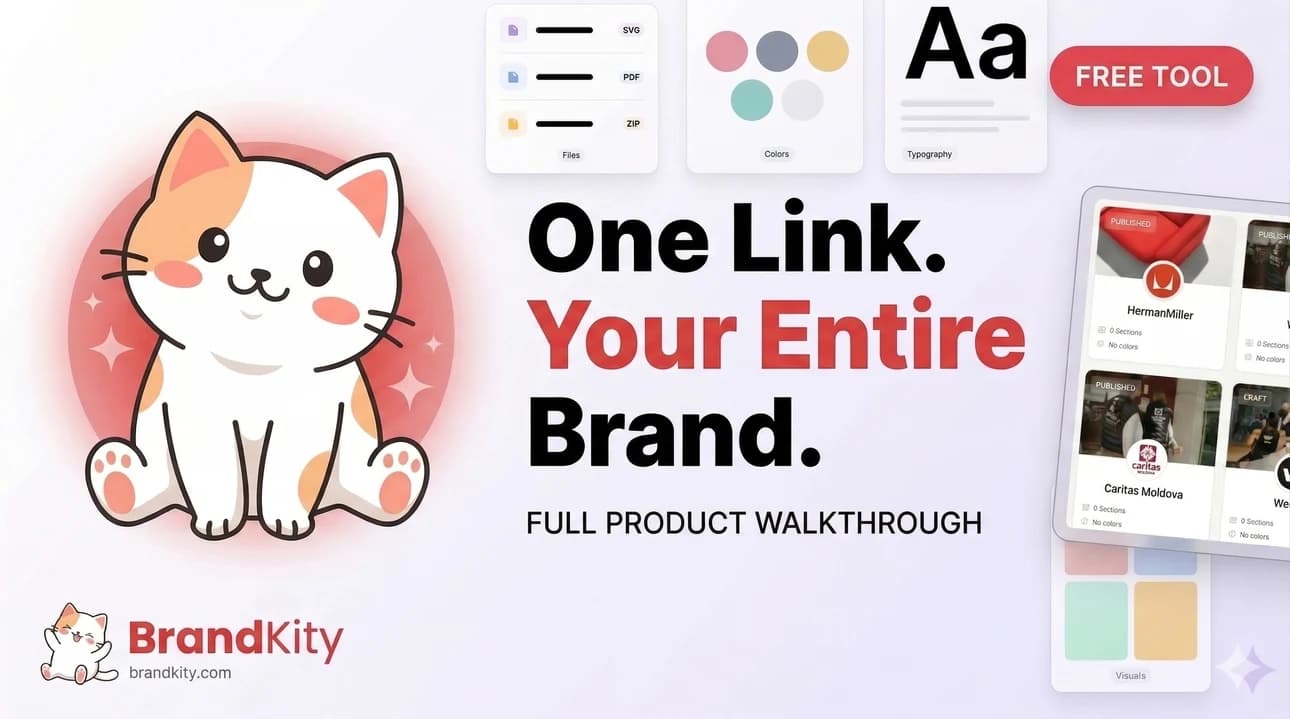
Table of contents
- The Agency Dilemma: Unifying Brand Assets for Seamless Client Delivery
- The Real Cost of Dispersed Brand Assets for Creative Teams
- Why Modern Agencies Need a Dedicated Brand Delivery Platform
- Brandfolder Deep Dive: Enterprise DAM Capabilities, Strengths & Considerations
- Key Features and Robustness for Large Organizations and Complex Needs
- Typical Use Cases: How Enterprises Leverage Brandfolder
- Understanding Brandfolder’s Ecosystem for Advanced Asset Management
- BrandKity Unpacked: Simplicity, Speed, and Agency-Centric Delivery
- Core Philosophy: Focus on Client Delivery and the Single BrandKit Link
- Workflow Efficiency: From Internal Collaboration to Client Handoff
- Managing Creative Workflows: Asset Upload, Version Control, and Approvals
- Streamlining Client Approvals and Feedback Loops
- Integrating with Existing Tools for a Cohesive Agency Workflow
- The Brand Portal Experience: Client Delivery and Governance Compared
- Ensuring Brand Consistency and Controlled Access for Stakeholders
- Measuring Client Adoption and Satisfaction with Brand Assets
- Asset Organization & Brand Guidelines: Keeping Your Brand Consistent
- Managing Logos, Typography, Color Palettes, and Usage Rules
- Dynamic vs. Static Brand Guidelines: Adapting to Change
- Ensuring Brand Governance Across All Touchpoints
- Usability, Onboarding, and Adoption Rates for Busy Teams
- The Learning Curve: Getting Your Agency and Clients Up to Speed
- Fast Onboarding: Reducing Friction and Maximizing Productivity
- Support and Resources for Ongoing Success
- Pricing Models, Scalability, and Value Proposition for Agencies & Startups
- Decoding Subscription Tiers and Feature Sets
- Return on Investment (ROI) for Streamlined Brand Delivery
- Making the Right Choice: When to Opt for Brandfolder vs. BrandKity
- Brandfolder’s Ideal User: The Enterprise with Complex DAM Needs
- BrandKity’s Sweet Spot: Agencies and Startups Prioritizing Simplicity & Client Handoff
- Decision Criteria: A Checklist for Your Brand Asset Management Needs
- Key Factors in Evaluating Brand Asset Management Alternatives
- Finding the Best Fit for Your Agency’s Unique Requirements
- Beyond Brandfolder and BrandKity: Exploring Other Brand Asset Management Solutions
- Frequently Asked Questions (FAQs) About Brand Asset Management for Agencies
- Final Recommendations for Optimizing Your Brand Delivery and Operations
This deep dive examines how two prominent platforms, Brandfolder and BrandKity, address these critical needs. While both aim to streamline brand asset management, their core philosophies and feature sets cater to distinct organizational scales and workflow priorities, making the choice dependent on an agency’s specific operational model and client engagement strategy.
The Agency Dilemma: Unifying Brand Assets for Seamless Client Delivery
The Real Cost of Dispersed Brand Assets for Creative Teams
For creative agencies, scattered brand assets are more than just an inconvenience; they represent a significant drain on resources and a threat to client relationships. Imagine a designer spending hours searching for the correct, latest version of a logo, or a project manager delivering a presentation with an outdated brand guideline. These scenarios lead directly to wasted time, increased operational costs, and the risk of significant brand inconsistency across client deliverables. Furthermore, discrepancies can erode client trust, necessitating costly re-dos and potentially causing reputational damage. The lack of a centralized “single source of truth” often results in team members creating their own informal archives, exacerbating the problem and multiplying the potential for error.
Why Modern Agencies Need a Dedicated Brand Delivery Platform
The evolution of digital marketing and branding necessitates a move beyond basic file storage. Modern agencies require a dedicated brand delivery platform that not only stores assets but actively facilitates their correct application and sharing. Such platforms elevate asset management from a mere organizational task to a strategic imperative, ensuring brand consistency across all touchpoints. They provide streamlined workflows for asset creation, approval, and distribution, significantly improving internal efficiency. For client-facing operations, a robust platform transforms the Setting the Stage: Your Guide to Comparing Brand Asset Solutions
When evaluating brand asset solutions, agencies must consider several critical criteria beyond just storage capacity. Key factors include scalability (can it grow with your agency and client base?), ease of use (will your team and clients adopt it quickly?), integration capabilities (does it connect with your existing creative and project management tools?), and robust client sharing capabilities. It’s crucial to identify platforms that minimize administrative overhead while maximizing creative output. Pitfalls to avoid include solutions with overly complex interfaces that hinder user adoption, or those with hidden costs for essential features, ultimately compromising your agency’s efficiency and budget.
Brandfolder Deep Dive: Enterprise DAM Capabilities, Strengths & Considerations
Key Features and Robustness for Large Organizations and Complex Needs
Brandfolder stands out as a powerful enterprise Digital Asset Management (DAM) solution, tailored for organizations with extensive asset libraries and complex governance requirements. Its strengths lie in its comprehensive feature set, including advanced asset organization with custom fields and metadata, robust user permissions, and granular access controls. For large teams, its version control ensures that everyone is working with the most current assets, minimizing errors. Brandfolder also leverages AI for automatic tagging and search, drastically improving asset discoverability. This level of sophistication makes it ideal for managing a vast spectrum of assets, from marketing collateral to product images, across numerous departments and global regions. Its infrastructure is built for high availability and security, a critical consideration for enterprises.
Typical Use Cases: How Enterprises Leverage Brandfolder
Enterprises deploy Brandfolder to address complex challenges related to scale, compliance, and global distribution. A typical use case involves global marketing teams managing thousands of campaigns across different markets, each requiring specific asset versions and language localizations. For a large consumer goods company, Brandfolder might serve as the central repository for all product photography, video advertisements, and packaging designs, ensuring brand compliance across all retail channels. Furthermore, it’s often integrated with product information management (PIM) systems and e-commerce platforms, providing a seamless flow of approved assets from creation to distribution, facilitating efficient content syndication and enhancing time-to-market for new products and campaigns.
Understanding Brandfolder’s Ecosystem for Advanced Asset Management
Brandfolder’s strength as an enterprise DAM is amplified by its extensive ecosystem of integrations, which connect it deeply with existing business tools. This includes robust links with creative suites like Adobe Creative Cloud, allowing designers to access and upload assets directly without leaving their applications. Beyond creative tools, it often integrates with content management systems (CMS), marketing automation platforms (MAP), and CRM systems, positioning itself as a central hub for all digital content. This comprehensive connectivity supports end-to-end workflows, enabling enterprises to maintain a cohesive digital presence, automate asset distribution, and ensure that all stakeholders have access to the appropriate, up-to-date brand materials within their familiar work environments.
BrandKity Unpacked: Simplicity, Speed, and Agency-Centric Delivery
Core Philosophy: Focus on Client Delivery and the Single BrandKit Link
BrandKity differentiates itself with a core philosophy centered on simplicity and streamlined client delivery, particularly for agencies, freelancers, and startups. Its hallmark feature is the “single shareable BrandKit link,” which consolidates all essential brand assets—logos, typography, color palettes, and guidelines—into one easily accessible, branded portal. This eliminates the need for clients to sift through cluttered folders or outdated email attachments. The emphasis is on providing an intuitive user experience for both the agency and its clients, ensuring that brand elements are always up-to-date and presented professionally. This focus enables agencies to achieve customizable, branded hubs serve as a definitive source of truth, organizing all brand assets in a logical, visually appealing manner. Clients can easily find and download the exact logo variant, font file, or guideline document they need, reducing constant requests to the agency. This not only enhances the client’s independence and satisfaction but also frees up agency time for core creative work. The intuitive organization prevents miscommunications and ensures that every interaction with the brand is consistent, reflecting a highly organized and professional approach from the agency.
Workflow Efficiency: From Internal Collaboration to Client Handoff
Managing Creative Workflows: Asset Upload, Version Control, and Approvals
Effective internal workflow management is crucial for any agency. Both Brandfolder and BrandKity offer features designed to streamline creative operations, though with differing levels of depth. Brandfolder, with its enterprise focus, provides extensive version control, detailed audit trails, and configurable approval workflows, making it suitable for highly regulated environments or large teams with complex review processes. BrandKity, while simpler, still offers essential versioning and clear asset upload capabilities, ensuring that the latest approved files are always accessible. The ability to add detailed metadata to assets in both platforms ensures discoverability and adherence to brand guidelines from the initial stages of creation, minimizing confusion and rework within the creative team.
Streamlining Client Approvals and Feedback Loops
The bridge between internal creation and client satisfaction often involves arduous approval processes. Both platforms offer mechanisms to streamline client feedback and approvals, moving beyond endless email chains. Brandfolder’s robust sharing capabilities allow for secure external access with specific permissions, enabling clients to review, comment, and approve assets directly within the platform. BrandKity’s “single BrandKit link” simplifies this immensely for agency-client interactions; by providing a centralized, always-up-to-date portal, clients can access final assets and guidelines without needing extensive training or logins. This approach fosters transparency and efficiency, allowing agencies to manage revisions and secure final sign-offs much faster, ultimately accelerating project completion.
Integrating with Existing Tools for a Cohesive Agency Workflow
No brand asset management solution operates in a vacuum; its true value is realized through seamless integration with an agency’s existing tech stack. Brandfolder excels here with its deep, extensive API and pre-built connectors for a wide range of marketing, sales, and creative applications, ensuring a cohesive agency workflow that spans from CRM to project management tools. BrandKity, while prioritizing simplicity, also understands the need for connectivity, focusing on integrations that are most relevant to agency and startup operations, such as popular project management and communication platforms. The goal for any agency is to choose a system that complements its current tools, avoiding data silos and ensuring that brand assets flow effortlessly through the entire project lifecycle, from initial brief to final delivery. This is a critical component for effective brand asset management for agencies.
The Brand Portal Experience: Client Delivery and Governance Compared
In the dynamic landscape of agency work, effectively delivering brand assets to clients and maintaining stringent brand governance are paramount. A robust brand portal acts as the central nervous system for these operations, ensuring that all stakeholders, from internal teams to external partners, access the correct, most current brand elements. Comparing platforms like Brandfolder and BrandKity reveals distinct approaches to facilitating this critical aspect of client service and
BrandKity excels in providing a truly unified ‘single source of truth’ through its intuitive, branded portals. Agencies can easily compile all essential brand elements—logos, typography, color palettes, imagery, and comprehensive guidelines—into a single, shareable BrandKit link. This approach dramatically simplifies client delivery, eliminating the common pitfalls of scattered files, outdated versions, and endless email attachments. For instance, when a new vendor requires brand assets, an agency simply shares one link, ensuring they receive a curated and consistent package. This focus reduces administrative overhead and ensures every external party always uses the most approved assets, bolstering overall brand integrity and operational efficiency.
Ensuring Brand Consistency and Controlled Access for Stakeholders
Maintaining brand consistency across diverse client projects and numerous stakeholders requires meticulous control over asset access and usage. BrandKity offers granular permission settings, allowing agencies to define who can view, download, or comment on specific assets within a portal. This ensures that a client’s social media manager only accesses approved social graphics, while a print vendor receives high-resolution print files, all within controlled parameters. The alternative of unchecked access can lead to significant brand dilution through the inadvertent use of incorrect logos or unapproved fonts. By centralizing access and providing clear usage rules, platforms empower agencies to proactively govern their clients’ brands, safeguarding their visual identity across all touchpoints.
Measuring Client Adoption and Satisfaction with Brand Assets
The true measure of a brand portal’s success lies in its adoption by clients and their satisfaction with the asset delivery experience. Platforms that offer analytics on asset downloads, portal visits, and user engagement provide valuable insights into what clients find most useful. Agencies should actively solicit feedback on the portal’s usability and the clarity of included guidelines to continuously optimize the client experience. A platform’s ease of navigation and the simplicity of locating specific assets directly correlate with higher adoption rates. For example, if clients consistently find what they need without contacting the agency, it signals a successful brand delivery system, thereby freeing up agency time and increasing client trust and independence.
Asset Organization & Brand Guidelines: Keeping Your Brand Consistent
Effective brand asset organization is the cornerstone of maintaining consistency and efficiency within an agency and for its clients. This extends beyond merely storing files; it involves structuring a system where every asset is easily locatable, properly categorized, and accompanied by its specific usage instructions. A well-organized brand asset management system, such as BrandKity, prevents the chaos of disparate folders and ensures that brand guidelines are not just documents but active, guiding principles embedded within the asset delivery process. This systematic approach is crucial for any agency aiming to scale its operations while upholding the highest standards of brand integrity.
Managing Logos, Typography, Color Palettes, and Usage Rules
Central to diluted or unrecognizable brand presence over time.
Dynamic vs. Static Brand Guidelines: Adapting to Change
The era of static, lengthy PDF brand guidelines is rapidly becoming obsolete. Modern agencies require dynamic, interactive brand guidelines that can be updated in real-time. Platforms that facilitate live guideline documents ensure that any brand refresh or minor adjustment to usage rules is immediately reflected across all shared portals. This contrasts sharply with static PDFs, which often become outdated shortly after creation, leading to version control nightmares and inconsistent application. Dynamic guidelines, like those offered by BrandKity, allow for easy embedding of videos, interactive elements, and direct links to downloadable assets, making them a truly living resource that adapts as the brand evolves. This flexibility is invaluable for brands that are constantly innovating and refining their identity.
Ensuring Brand Governance Across All Touchpoints
True brand governance goes beyond simply managing assets; it encompasses ensuring consistent brand application across all marketing materials, campaigns, and communication channels. A comprehensive brand portal acts as a central enforcer, providing clear visual and textual guidelines for everything from social media posts to large-scale advertising campaigns. Agencies can create specific sections within their portals dedicated to messaging, tone of voice, and legal disclaimers, ensuring that all content creators are aligned. This prevents off-brand messaging or visual misrepresentations that can damage a brand’s reputation. By integrating governance into the daily workflow, agencies empower their teams and clients to make informed, on-brand decisions at every touchpoint, from digital campaigns to physical collateral.
Usability, Onboarding, and Adoption Rates for Busy Teams
For agencies and their clients, the true value of any brand asset management platform lies in its usability, the speed of onboarding, and ultimately, its adoption rates. In a fast-paced environment where time is a premium, complex systems with steep learning curves often lead to frustration and underutilization. Platforms that prioritize a straightforward, intuitive user experience are far more likely to integrate seamlessly into existing workflows, thereby maximizing productivity and ensuring that all brand assets are managed and distributed effectively. This focus on user-centric design becomes a critical differentiator in an agency’s ability to maintain efficiency and client satisfaction.
The Learning Curve: Getting Your Agency and Clients Up to Speed
The time investment required to get both agency teams and clients proficient with a new platform is a significant factor in its overall success. Traditional digital asset management (DAM) systems, while powerful, can sometimes present a steeper learning curve due to their extensive features and complex interfaces. In contrast, BrandKity’s design philosophy prioritizes simplicity and ease of use, specifically tailored for efficient brand delivery workflows. This means less time spent on training and more time on creative work. Agencies must consider whether a platform’s complexity aligns with their team’s and clients’ technical proficiency, as a system that is too intricate will often result in low engagement and suboptimal utilization, ultimately costing more in lost productivity than it saves.
Fast Onboarding: Reducing Friction and Maximizing Productivity
Rapid onboarding capabilities are crucial for agencies managing multiple client brands and tight deadlines. A platform that allows for quick setup of new brand kits, bulk uploading of assets, and intuitive user invitation processes significantly reduces initial friction. For example, an agency onboarding a new client can create a fully functional brand portal in a fraction of the time it would take with a more cumbersome system, enabling the client to access essential brand assets almost immediately. This efficiency translates directly into faster project kick-offs and improved client relationships. Streamlined onboarding tools, such as pre-built templates for common asset types and guided setup wizards, ensure that teams can become productive users with minimal disruption to ongoing projects, optimizing resource allocation.
Support and Resources for Ongoing Success
Beyond initial onboarding, the availability of robust support and comprehensive resources is vital for sustained platform adoption and long-term success. Agencies need access to clear documentation, video tutorials, and responsive customer service to address questions and troubleshoot issues promptly, especially when managing multiple client accounts. A platform with an active user community or dedicated account managers can further enhance the user experience by providing peer support and strategic guidance. Without adequate support, users may struggle with advanced features or encounter unresolved issues, leading to frustration and potential abandonment of the platform. Investing in a solution that offers excellent ongoing support ensures that both agency teams and clients can fully leverage the platform’s capabilities, fostering a more self-sufficient and effective workflow for brand delivery.
Pricing Models, Scalability, and Value Proposition for Agencies & Startups
Understanding the pricing models, scalability, and overall value proposition of brand asset management platforms is crucial for agencies and startups operating on diverse budgets and with varying needs. The decision goes beyond the sticker price; it involves evaluating the return on investment (ROI) in terms of time saved, errors reduced, and brand consistency maintained. A platform’s ability to scale with an agency’s growth or a startup’s evolving brand requirements directly impacts its long-term viability as a strategic tool. Careful consideration of these factors ensures that the chosen solution not only meets current demands but also future-proofs the brand asset management strategy.
Decoding Subscription Tiers and Feature Sets
Brand asset management platforms typically offer a tiered subscription model, with pricing often correlating with storage limits, user seats, and advanced features. Agencies and startups must carefully scrutinize these tiers to identify the sweet spot between necessary functionality and cost efficiency. For example, a startup might initially require a basic tier focused on core asset organization and brand guideline creation, while a larger agency might need enterprise features such as advanced analytics, extensive API integrations, or custom branding options. Pitfalls include overpaying for features that won’t be used or, conversely, selecting a plan that quickly becomes restrictive, leading to unexpected upgrade costs. A clear understanding of what each tier offers ensures that the investment aligns with both current operational needs and anticipated future growth.
Return on Investment (ROI) for Streamlined Brand Delivery
Quantifying the ROI for a brand asset management platform involves assessing the tangible and intangible benefits. Tangible benefits include significant time savings for designers and marketers who no longer have to manually search for assets or handle version control issues. An agency might save 15 hours per week on asset requests and client communication, translating into substantial cost savings or increased capacity for billable work. Intangible benefits encompass improved brand consistency, enhanced client satisfaction due to faster access to assets, and reduced risk of off-brand content. Platforms that streamline Adobe Creative Cloud. A platform with a clear development roadmap, demonstrating a commitment to innovation and security, provides assurance that it will remain a relevant and powerful tool for years to come. Choosing a system that can evolve with your agency or startup prevents costly migrations down the line and ensures that your brand asset management strategy remains agile and responsive to market demands.
Making the Right Choice: When to Opt for Brandfolder vs. BrandKity
Selecting the optimal brand asset management (BAM) platform significantly impacts an agency’s efficiency and client satisfaction. While both Brandfolder and BrandKity centralize digital assets, their design philosophies and target user segments diverge. Understanding these distinctions is crucial for an informed choice aligned with your agency’s specific workflows and client delivery, focusing on actionable decision criteria.
Brandfolder’s Ideal User: The Enterprise with Complex DAM Needs
Brandfolder typically serves large enterprises or agencies managing extensive asset libraries for multiple, complex brands with rigorous compliance and governance. Its robust features include advanced metadata, granular permissions, elaborate workflows, and deep integrations. If your agency handles thousands of assets daily across numerous global campaigns requiring extensive API access, Brandfolder presents a powerful, albeit often more complex and costly, solution. It excels where extensive asset lifecycle management and audit trails are paramount.
BrandKity’s Sweet Spot: Agencies and Startups Prioritizing Simplicity & Client Handoff
BrandKity is engineered for the modern agency, freelancer, and startup, prioritizing simplicity, speed, and seamless client delivery. Its core strength lies in creating intuitive, branded portals—BrandKits—that act as a
Decision Criteria: A Checklist for Your Brand Asset Management Needs
To determine the best platform, consider these criteria:
- Budget & Scalability: Brandfolder has a higher price, suited for large budgets. BrandKity offers accessible plans for smaller to mid-sized agencies and startups, scaling efficiently.
- Asset Volume & Complexity: For vast libraries with intricate taxonomies and extensive file types, Brandfolder might be necessary. For focused brand kits, BrandKity offers superior ease of use.
- Client Collaboration & Delivery: If external sharing and client self-service are paramount, BrandKity’s dedicated brand portal functionality is highly advantageous for underlying philosophy and target audience, aligning with your agency’s goals for marketing resource management.
- Frontify: Excelling in brand guidelines and design system management, ideal for agencies focused on strict brand consistency. Offers robust tools for interactive brand manuals, a favorite for teams prioritizing brand governance.
- Lingo: A shared library for design systems and brand assets, primarily serving design teams. Excellent for centralizing UI components and typography, ensuring designers consistently use approved elements for design system integrity.
- Playbook: Visual cloud storage for creatives, focusing on intuitive organization and sharing of large visual asset volumes. Emphasizes creative workflow efficiency and simple asset management, a modern alternative to traditional cloud storage.
Key Factors in Evaluating Brand Asset Management Alternatives
Beyond features, agencies should scrutinize:
- Total Cost of Ownership (TCO): Consider fees, implementation, training, and integration. Low initial price might hide significant operational overhead.
- User Adoption & Training: How quickly can teams and clients adapt? An intuitive UI and minimal learning curve lead to higher adoption and greater ROI.
- Integration Ecosystem: Does it connect seamlessly with your existing tech stack (e.g., Adobe Creative Cloud, project management)? Robust integrations streamline workflows.
- Vendor Support & Community: Evaluate support quality, documentation, and user community. Strong support is invaluable.
- Scalability & Future-Proofing: Can it grow with your agency, accommodating increased assets and clients? This ensures investment remains relevant and effective.
Finding the Best Fit for Your Agency’s Unique Requirements
Finding the ideal BAM solution begins with a clear internal audit. Document current pain points in asset management and client delivery. Identify non-negotiable features, like client-specific brand portals or advanced version control. Prioritize ease of use for both internal teams and external clients. Engage stakeholders—designers, project managers—in evaluation. Request demos and leverage free trials. The best fit enhances creative output, streamlines client communication, and contributes to your agency’s bottom line by building simplicity, speed, and exceptional client delivery. Its focus on intuitive brand portals and a single shareable BrandKit link directly addresses common agency pain points related to asset organization and client handoff. When evaluating any solution, remember to weigh its learning curve, integration capabilities, and how well it supports both your internal creative teams and your external client interactions. The goal is to select a system that not only stores your brand assets but also actively accelerates your workflows, enhances brand consistency, and ultimately elevates your client delivery experience.
Ultimately, the best brand asset management solution is one that becomes an indispensable part of your operational rhythm, reducing friction and freeing up your creative teams to focus on what they do best: producing outstanding work. For many agencies, particularly those focused on agile project delivery and seamless client communication, BrandKity offers a streamlined pathway to brand excellence. For more extensive, enterprise-level digital asset management needs with deep system integrations, platforms like Brandfolder or Bynder may be more appropriate. Your agency’s specific size, client portfolio, technical capabilities, and long-term vision should guide this critical decision, ensuring your chosen platform acts as a powerful enabler for building a single source of truth and achieving optimal brand operations.
Beyond Brandfolder and BrandKity: Exploring Other Brand Asset Management Solutions
While BrandKity and Brandfolder offer compelling solutions for various agency needs, the broader landscape of Brand Asset Management (BAM) and Digital Asset Management (DAM) provides an array of powerful alternatives, each with unique strengths. Agencies should explore these options to find the perfect match for their specific scale, technical requirements, and client portfolios.
- Canto: A long-standing player in the DAM space, Canto offers robust features ideal for agencies managing vast libraries of assets across diverse clients. Its strengths lie in comprehensive metadata management, advanced search capabilities, and flexible sharing options, making it suitable for larger agencies with complex organizational structures.
- Widen Collective: For agencies requiring an enterprise-grade solution with extensive integration capabilities, Widen Collective stands out. It’s a full-featured DAM platform that goes beyond basic asset storage, offering modules for marketing resource management, product information management, and analytics. This makes it a strong contender for agencies working with large brands or managing intricate content workflows.
- Adobe Experience Manager Assets (AEM Assets): As part of the broader Adobe Experience Cloud, AEM Assets is an excellent choice for agencies deeply embedded in the Adobe ecosystem. It provides seamless integration with creative tools like Photoshop and InDesign, enabling designers to access and manage assets directly from their applications. Its AI-powered features for tagging and search further streamline operations.
- Cloudinary: While often recognized for its media optimization capabilities, Cloudinary also serves as a powerful DAM for agencies heavily involved in web and mobile content delivery. It excels in automated image and video transformations, dynamic asset delivery, and API-first integration, appealing to tech-forward agencies and those with significant digital output.
- Bynder: As mentioned previously, Bynder continues to be a top-tier choice for many agencies and brands due to its user-friendly interface, strong branding focus, and modular approach to DAM features, including creative workflow management and brand templates.
Each of these platforms, along with many others in the market, presents a unique blend of features. The key to successful selection lies in a thorough needs assessment, careful comparison of features against your agency’s non-negotiables, and a clear understanding of potential integration with existing tools and workflows. Engaging in demos and leveraging free trials where available will provide invaluable insights into the practical application of each system.
Frequently Asked Questions (FAQs) About Brand Asset Management for Agencies
- What is the primary difference between DAM and BAM?
- Digital Asset Management (DAM) is a broader category that encompasses the storage, organization, and distribution of any digital file (images, videos, documents, audio, etc.). Brand Asset Management (BAM) is a specialized subset of DAM specifically focused on managing assets critical to a brand’s identity and consistency, such as logos, fonts, color palettes, templates, and brand guidelines. While all BAM is DAM, not all DAM is BAM.
- How long does it typically take to implement a BAM solution for an agency?
- Implementation time varies significantly based on the complexity of the chosen solution, the volume of existing assets, and the agency’s internal resources. A simpler, cloud-based BAM like BrandKity might be up and running in a few days to weeks for basic setup. More extensive enterprise-level DAMs like Widen or AEM Assets could take several months, involving data migration, custom integrations, and comprehensive team training. A clear implementation plan and dedicated project management are crucial.
- Can a BAM system integrate with our existing project management tools or creative software?
- Yes, integration capabilities are a critical consideration. Most modern BAM/DAM platforms offer various integration options, including direct connectors for popular tools like Adobe Creative Cloud, Slack, Asana, Trello, and various CRM systems. Many also provide robust APIs for custom integrations. Prioritize solutions that seamlessly fit into your current tech stack to avoid creating new workflow silos.
- What are the direct benefits of BAM for our agency’s clients?
- Clients benefit immensely from BAM through enhanced brand consistency across all touchpoints, faster delivery of approved assets, and often, the ability to self-serve through secure client portals. This reduces their reliance on your agency for simple asset requests, improves communication efficiency, and ensures they always have access to the latest, approved brand elements, ultimately strengthening trust and satisfaction.
- Is Brand Asset Management only for large agencies, or can smaller agencies benefit too?
- BAM is beneficial for agencies of all sizes. While larger agencies might face more complex asset libraries and client portfolios, even small and medium-sized agencies can significantly improve efficiency, reduce errors, and enhance brand consistency with a BAM system. Scalable solutions exist that cater to varying budgets and team sizes, making the advantages of organized brand assets accessible to everyone.
Final Recommendations for Optimizing Your Brand Delivery and Operations
The journey to selecting and implementing the ideal Brand Asset Management solution is a strategic investment that pays dividends in efficiency, consistency, and client satisfaction. By taking a thoughtful approach, your agency can transform its operational rhythm and elevate its creative output. Here are our final recommendations to ensure optimal brand delivery and operations:
- Conduct a Thorough Needs Assessment: Before looking at any platform, gain absolute clarity on your agency’s specific pain points, future growth plans, and non-negotiable features. Involve all key stakeholders, from designers to project managers, to gather a comprehensive understanding of current challenges and desired functionalities.
- Prioritize User Experience: A powerful BAM system is only effective if your team and clients actually use it. Opt for platforms with intuitive interfaces, easy navigation, and streamlined workflows. A solution that requires extensive training or is cumbersome to use will face adoption challenges, negating its benefits.
- Focus on Integration Capabilities: Evaluate how well the BAM solution integrates with your existing tech stack, including creative software (Adobe CC), project management tools (Asana, Jira), and communication platforms (Slack). Seamless integration minimizes friction and ensures a smooth flow of assets throughout your agency’s ecosystem.
- Plan for Scalability and Future Growth: Choose a solution that can grow with your agency. Consider its capacity to handle increased asset volume, additional users, and new client requirements. A future-proof platform ensures your investment remains relevant and effective over the long term, adapting to evolving industry demands.
- Emphasize Client Empowerment: Select a BAM that facilitates easy and secure asset sharing with clients, ideally through custom brand portals or simple, shareable links like BrandKity’s BrandKit. Empowering clients to access approved assets on demand enhances transparency, reduces administrative burden, and strengthens client relationships.
- Invest in Training and Adoption: Once a solution is chosen, dedicate resources to comprehensive training for your team. Foster a culture of adoption by highlighting the benefits of the new system and addressing any initial resistance. Ongoing support and refreshers will ensure sustained usage and maximum ROI.
- Regularly Review and Optimize: The digital landscape and your agency’s needs are constantly evolving. Periodically review the performance of your BAM solution. Gather feedback from users, monitor key metrics, and explore new features or updates. Continuous optimization ensures your system remains a powerful enabler for your brand delivery and operations.
By following these recommendations, your agency can leverage Brand Asset Management not just as a storage tool, but as a strategic asset that streamlines workflows, maintains impeccable brand consistency, and ultimately delivers an elevated experience for both your internal teams and your valued clients.
Saurabh Kumar
Founder, BrandKity
Saurabh writes about practical brand systems, faster client handoffs, and scalable workflows for designers and agencies building repeatable delivery operations.
Connect on LinkedIn