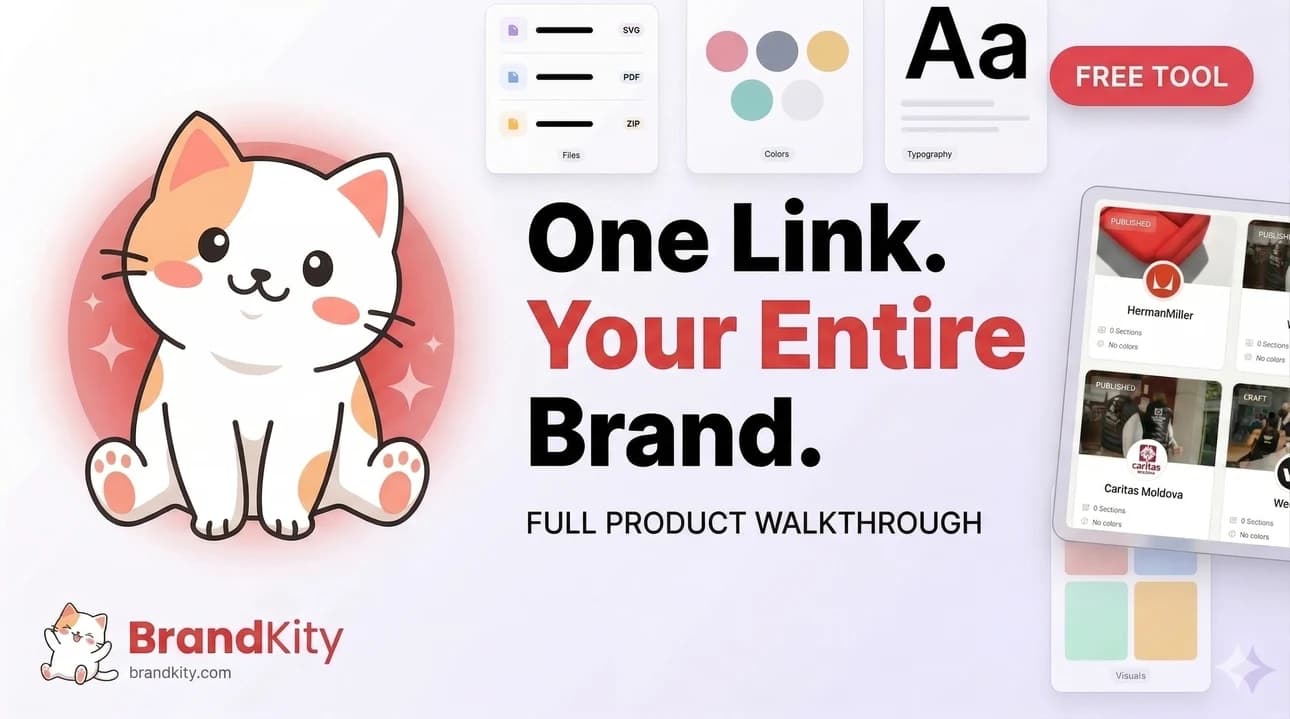
Brand Management Platforms vs PDF Brand Guidelines: Which Is Better?
Brand Management Platforms vs. PDF Brand Guidelines: Which Is Truly Better? Hey there! Let’s chat about something super important for any business, big or small: keeping your brand consistent and looking its best. You’ve probably wrestled with this question yourself: should you stick with the trusty old PDF brand guidelines, or is it time to

Table of contents
- Brand Management Platforms vs. PDF Brand Guidelines: Which Is Truly Better?
- The PDF Brand Guidelines: The Reliable Classic
- The Upsides of PDFs
- The Downsides of PDFs: Where the Cracks Appear
- The Brand Management Platform: The Modern All-in-One Solution
- The Undeniable Advantages of Platforms
- Potential Hurdles of Platforms
- So, Which One Is Better for YOU?
- Scenario 1: The Small, Lean Startup (or a very focused internal team)
- Scenario 2: The Growing Business with Multiple Teams and External Partners
- Scenario 3: The Established Enterprise with a Global Reach
- What About Hybrid Approaches?
- The Verdict: Investing in Your Brand’s Future
Brand Management Platforms vs. PDF Brand Guidelines: Which Is Truly Better?
Hey there! Let’s chat about something super important for any business, big or small: keeping your brand consistent and looking its best. You’ve probably wrestled with this question yourself: should you stick with the trusty old PDF brand guidelines, or is it time to embrace a full-blown brand management platform? It’s a decision that can have a surprisingly big impact on your team’s efficiency, your marketing efforts, and ultimately, how your brand is perceived in the world. We’re going to dive deep into both options, weigh the pros and cons, and figure out which one is the right fit for your brand’s journey. Think of me as your friendly guide, here to break it all down without the jargon.
First off, let’s acknowledge the hero of our story: the humble PDF brand guidelines. For years, these have been the go-to solution for documenting brand rules. They’re like a physical rulebook, meticulously detailing everything from logo usage to color palettes and typography. And honestly? They’ve served many brands incredibly well. They’re relatively easy to create, can be shared via email or a simple link, and when done well, they contain all the essential information. But as brands grow, as teams expand, and as the pace of digital communication accelerates, the limitations of a static PDF can start to feel… well, limiting.
On the other side of the ring, we have the shining knight: the brand management platform. These are dynamic, digital hubs designed to house, organize, and distribute all your brand assets and guidelines. They’re not just static documents; they’re living, breathing systems built to make your brand accessible, usable, and consistently applied across every touchpoint. They promise a more streamlined, collaborative, and efficient way to manage your brand’s identity. But with great power comes great complexity, right? Or at least, that’s what some might think.
So, which one is the champion? It’s not a simple knockout answer. The “better” option really depends on your brand’s specific needs, its size, its growth trajectory, and its operational maturity. Let’s break down each contender.
The PDF Brand Guidelines: The Reliable Classic
Think of your PDF brand guidelines as the well-loved encyclopedia on your bookshelf. It’s comprehensive, it contains all the core knowledge, and you know exactly where to find it. When a brand is just starting out, or perhaps has a small, tightly-knit team, a well-crafted PDF can be more than sufficient. It’s a tangible artifact that clearly lays out the brand’s DNA.
The Upsides of PDFs
- Accessibility & Ease of Creation: Let’s be honest, most design and marketing teams are comfortable working with PDF creation tools. It’s a familiar format. You can create one using standard design software, and once it’s done, it’s relatively easy to share.
- Cost-Effective (Initially): The upfront cost is often just the time and expertise it takes to create the document. There are no ongoing subscription fees to worry about.
- Tangible Record: For some, having a fixed, downloadable document feels more secure. It’s a definitive snapshot of the brand at a certain point in time.
- Offline Access: A PDF can be downloaded and accessed even without an internet connection, which can be a lifesaver in certain situations.
The Downsides of PDFs: Where the Cracks Appear
Here’s where our trusty PDF can start to feel a bit like a flip phone in a smartphone world. The limitations become more apparent as your brand scales and your team diversifies.
- Version Control Nightmares: This is a big one. How many times have you downloaded a “brand guide” only to find out it’s three versions old? Keeping track of the latest iteration, especially when multiple people might be making edits, is a constant battle. Imagine a marketing team launching a campaign with outdated logo files or incorrect color codes because they grabbed the wrong PDF. It’s a recipe for brand inconsistency.
- Static and Unwieldy: PDFs are, by nature, static. If you need to update a single logo, a font, or a color, you have to re-export the entire document. This is inefficient. Furthermore, if you need to quickly find a specific asset, like the primary logo in a transparent PNG format, you might have to scroll through pages of text and images. It’s like searching for a needle in a haystack.
- Limited Asset Management: A PDF can describe assets, but it’s not a great place to store them. Users often have to hunt down the actual logo files, image libraries, or font files separately, often from shared drives or individual designer’s desktops. This leads to more searching, more potential for using incorrect files, and more frustration.
- Poor User Experience for External Partners: For agencies, freelancers, or new hires, a PDF can be overwhelming. They have to digest a large document, and then still go find the actual files. It’s not an intuitive way to onboard someone to your brand.
- Lack of Interactivity and Searchability: You can’t click on a color code in a PDF to copy it, nor can you easily search for specific terms within the document if it’s not properly indexed. This makes it cumbersome to use as a quick reference.
- Difficult to Integrate with Workflows: A PDF lives in its own world. It doesn’t easily integrate with the tools your team uses daily, like project management software or design applications.
Real-World Analogy: Think of a restaurant. A PDF brand guideline is like a printed menu that you get at the door. It tells you what they offer, what’s in the dishes, and the prices. But if you want to see a picture of the dish, or if a dish has changed on the menu and the printed version isn’t updated, it’s not ideal. A brand management platform, on the other hand, is like a restaurant’s online ordering system or a digital menu displayed on a tablet. You can see high-quality images, read detailed descriptions, see real-time updates, and easily add items to your order.
The Brand Management Platform: The Modern All-in-One Solution
Now, let’s talk about the brand management platform. This is where things get exciting. Imagine a central, digital command center for your entire brand. It’s a place where your logos, colors, fonts, imagery, templates, and usage rules all live together, are organized, and are easily accessible to everyone who needs them, wherever they are.
These platforms go far beyond just a set of rules. They are designed to empower your team and external partners to use your brand correctly and efficiently. They are built with collaboration and consistency as their core principles. If you’re looking to scale your brand, improve your brand perception, and streamline your creative operations, this is where you’ll find your solution.
The Undeniable Advantages of Platforms
- Centralized Single Source of Truth: This is the biggest win. All your brand assets and guidelines are in one, easily accessible location. No more hunting through old emails or shared drives. The platform is always up-to-date.
- Effortless Version Control: When you update a logo or a color, the change is reflected everywhere instantly. The platform manages versions, ensuring everyone is using the latest approved assets. This dramatically reduces the risk of errors and brand dilution.
- Rich Asset Management: Platforms are built for managing digital assets. You can store logos in multiple formats (SVG, PNG, JPG), download specific sizes, access brand colors with HEX, RGB, and CMYK values, and download fonts. Many offer advanced search capabilities, tagging, and categorization, making finding the right asset a breeze.
- Interactive and User-Friendly Guidelines: Instead of a static PDF, brand guidelines within a platform are often interactive. You can click on color codes to copy them, link directly to asset downloads, and navigate through content with ease. This improves the user experience dramatically for both internal teams and external stakeholders.
- Enhanced Collaboration and Accessibility: Teams can work together more effectively. You can grant specific permissions to different users or groups, control who can access what, and even facilitate feedback loops. External partners can be given controlled access to specific brand assets and guidelines without needing to send them large, unwieldy files.
- Streamlined Workflows and Integrations: Many platforms integrate with popular design tools (like Adobe Creative Suite), project management software, and content management systems. This means assets can be pulled directly into workflows, saving time and reducing manual steps.
- Scalability and Future-Proofing: As your brand grows, a platform can grow with you. It can handle an increasing volume of assets and users, adapt to new brand elements, and support a global presence. This is crucial for maintaining a consistent brand identity across diverse markets.
- Analytics and Reporting: Some platforms offer insights into how brand assets are being used, who is accessing them, and which assets are most popular. This data can be invaluable for understanding brand adoption and identifying areas for improvement. This ties into measuring brand performance effectively.
Mini Case Study: The Expanding Startup
Imagine “Innovate Solutions,” a tech startup that has seen explosive growth in two years. Initially, their brand guidelines were a slick PDF created by their first marketing hire. As their team ballooned to over 100 people across sales, marketing, product, and customer support, and as they started working with external agencies for PR and advertising, chaos ensued. Sales decks used slightly different shades of blue. Social media posts sometimes featured an old version of the logo. The marketing team spent hours every week answering requests for “the right logo file.” They were spending more time managing brand assets than actually building the brand. Implementing a brand management platform was a game-changer. Now, anyone can log in, find the latest approved presentation template, download the correct logo for their needs, and access the color palette with a click. The marketing team went from being constant “asset librarians” to strategic brand builders. The saved time and improved consistency directly impacted their campaign effectiveness and reduced the risk of brand dilution.
Potential Hurdles of Platforms
It’s not all sunshine and rainbows. There are considerations when moving to a platform:
- Upfront Cost and Investment: Platforms typically come with a subscription fee, which can be a significant investment, especially for smaller businesses. There might also be implementation costs and the need for dedicated resources to set it up and manage it.
- Learning Curve: While designed to be user-friendly, any new system requires some training and adaptation. Your team will need to learn how to navigate and utilize the platform effectively.
- Requires Commitment: To get the full benefit, the platform needs to be actively maintained, updated, and embraced by the entire organization. If assets aren’t uploaded or guidelines aren’t kept current, the platform becomes just another piece of software that isn’t being used to its full potential.
- Finding the Right Fit: The market has many platforms, each with different features and pricing models. Choosing the one that best aligns with your specific needs can be a process in itself.
So, Which One Is Better for YOU?
The truth is, there’s no universal “better.” The decision hinges on your specific circumstances. Let’s break it down by common scenarios:
Scenario 1: The Small, Lean Startup (or a very focused internal team)
If you’re a team of 1-10 people, operate in a very niche market, and your brand touchpoints are limited and highly controlled, a well-structured and meticulously maintained PDF might still be your best friend. The key here is “well-structured” and “meticulously maintained.” Ensure it includes clear instructions and links to where the actual assets are stored (perhaps a well-organized cloud storage folder, but even then, a platform is better). Make sure everyone knows which PDF is the definitive one and commit to updating it promptly.
Scenario 2: The Growing Business with Multiple Teams and External Partners
This is where a brand management platform starts to shine and quickly becomes the superior choice. If you have more than 10-15 people involved in creating or using brand assets, if you work with freelancers, agencies, or multiple departments (marketing, sales, product, HR), and if you’re experiencing any of the pain points of version control, asset hunting, or inconsistency, then it’s time to seriously consider a platform. It’s an investment that pays dividends in efficiency, consistency, and brand integrity. Think about it as investing in the infrastructure that supports your brand’s growth. It’s essential for maintaining brand differentiation in a crowded market.
Scenario 3: The Established Enterprise with a Global Reach
For larger organizations, especially those operating globally or with a complex product suite, a brand management platform isn’t just an advantage; it’s a necessity. The sheer volume of assets, the number of users, the need for granular permissions, and the critical importance of global brand consistency make a robust platform indispensable. It enables seamless collaboration across continents, ensures compliance with regional variations, and acts as the central nervous system for the entire brand ecosystem. It’s the backbone for sophisticated content management and brand governance.
Analogy: Building a House.
For a small treehouse, a detailed blueprint (PDF) is enough. You can build it with a few people and standard tools. But for a skyscraper, you need a comprehensive, dynamic architectural system (brand management platform). It involves complex planning, ongoing updates, managing thousands of workers, and ensuring every bolt and beam is precisely where it needs to be, all coordinated through a central hub. You wouldn’t try to build a skyscraper with just a PDF blueprint.
What About Hybrid Approaches?
It’s also worth noting that many businesses find a hybrid approach works for a time. You might use a cloud storage solution like Dropbox or Google Drive for basic file sharing (though this still lacks the robust features of a dedicated platform) and supplement it with a meticulously organized PDF. However, as your needs grow, you’ll likely find yourself outgrowing the limitations of this setup. The real power comes when you consolidate everything into a single, dedicated system.
Some platforms offer a tiered approach, allowing you to start with core features and scale up as needed. This can be a good way to dip your toes in without a massive initial commitment. The core idea is to have a system that evolves with your brand.
The Verdict: Investing in Your Brand’s Future
While PDF brand guidelines have had their day and can still serve basic needs, the reality of modern business is that they are often a bottleneck. They hinder collaboration, create confusion, and ultimately, put your brand’s consistency at risk. In today’s fast-paced digital world, a brand management platform is no longer a luxury; it’s a strategic imperative for any brand that aims for growth, recognition, and a strong, unified presence.
Think about the long-term benefits: reduced errors, faster time-to-market for campaigns, improved team productivity, a stronger and more recognizable brand identity, and ultimately, a better customer experience. These are not small things. They are the building blocks of a successful, enduring brand.
The question isn’t really “Brand Management Platform vs. PDF Brand Guidelines.” It’s more about asking yourself: “How serious are we about protecting and elevating our brand’s integrity and efficiency?” If the answer is “very serious,” then it’s time to look beyond the PDF and explore the power of a dedicated brand management platform. It’s an investment in clarity, control, and the future success of your brand.
Saurabh Kumar
Founder, BrandKity
Saurabh writes about practical brand systems, faster client handoffs, and scalable workflows for designers and agencies building repeatable delivery operations.
Connect on LinkedIn