
Unlock Brand Consistency with BrandKity
In today’s fast-paced digital world, a brand’s visual identity is more than just a logo; it’s a comprehensive ecosystem of assets that communicate a consistent message across every touchpoint. As businesses scale and marketing efforts diversify, maintaining this coherence becomes an increasingly complex challenge, often leading to fragmented brand experiences that dilute impact and confuse
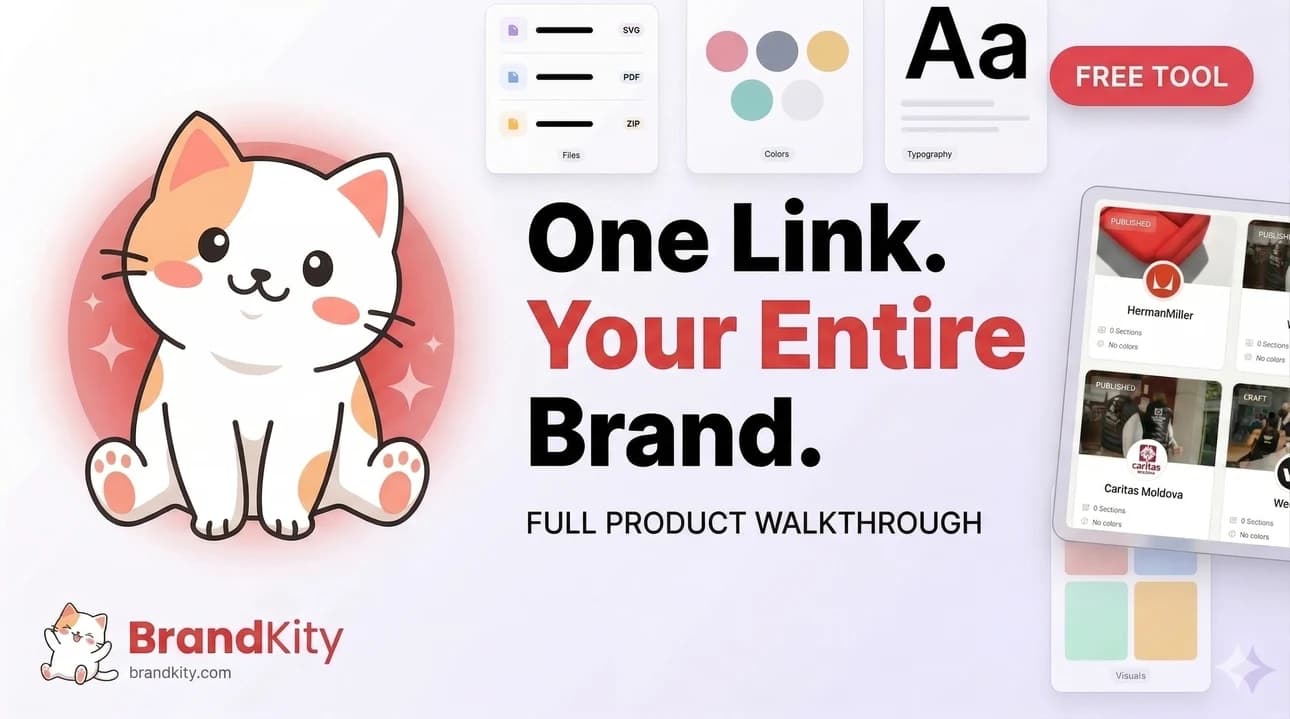
Table of contents
- The Evolving Landscape of Brand Identity in 2026 and Beyond
- Why Brand Consistency is Non-Negotiable for Modern Businesses
- The Pain Points of Disorganized Brand Assets: A Reality Check
- Introducing BrandKity: Your Centralized Hub for Brand Excellence
- Mastering Your Brand Assets: The Core Features of BrandKity
- Streamlining Client Delivery: How BrandKity Empowers Agencies
- Beyond Logos: Managing the Full Spectrum of Marketing Collateral
- Building a Single Source of Truth: The Power of the BrandKity Portal
- Practical Workflows: Implementing BrandKity for Maximum Impact
- Use Cases: How Diverse Teams Leverage BrandKity for Success
- Getting Started with BrandKity: A Seamless Onboarding Experience
- The Future of Brand Management: Embracing Scalability and Simplicity with BrandKity
In today’s fast-paced digital world, a brand’s visual identity is more than just a logo; it’s a comprehensive ecosystem of assets that communicate a consistent message across every touchpoint. As businesses scale and marketing efforts diversify, maintaining this coherence becomes an increasingly complex challenge, often leading to fragmented brand experiences that dilute impact and confuse audiences. This is where a robust strategy for brand asset management becomes paramount.
Navigating the complexities of modern branding requires more than just good design; it demands intelligent organization and accessible delivery. The digital landscape is constantly evolving, and businesses must adapt to ensure their brand presence remains strong, recognizable, and unified. Understanding the current state of brand identity and the critical role of consistency is the first step towards achieving this unified vision.
The Evolving Landscape of Brand Identity in 2026 and Beyond
By 2026, brand identity is no longer a static entity but a dynamic, multi-faceted ecosystem. The proliferation of digital channels—from social media platforms and interactive websites to emerging metaverse environments and augmented reality experiences—demands a brand presence that is not only consistent but also adaptable. This evolution necessitates a shift from traditional, often siloed, approaches to brand management towards more integrated and agile systems. Agencies and in-house teams now grapple with a wider array of asset types, including video snippets optimized for short-form content, interactive 3D models, and AI-generated design variations. The expectation is that these assets will be readily available, correctly formatted, and adhere strictly to brand guidelines, regardless of the platform or the team member accessing them. Furthermore, the demand for personalization in marketing means that brand assets must be easily customizable within defined parameters, requiring sophisticated tools that can manage these variations without compromising core brand integrity. This complexity underscores the growing need for a centralized and intelligent system to govern the creation, storage, and distribution of all brand collateral. Keeping pace with technological advancements and evolving consumer expectations is now a fundamental aspect of maintaining a relevant and powerful brand identity.
Looking ahead, the definition of a brand’s digital footprint will continue to expand. This includes not only visual and textual elements but also sonic branding, haptic feedback, and interactive experiences. Businesses must prepare for a future where a brand’s essence is conveyed through a richer, more immersive sensory palette. This requires a forward-thinking approach to brand asset management, one that can accommodate new forms of media and interaction. The ability to quickly adapt and deploy assets across these diverse channels will be a key differentiator. For instance, a brand’s visual identity will need to translate seamlessly from a static banner ad to an interactive AR filter on a popular social platform, or even to a virtual storefront in a digital world. This seamless translation hinges on having a well-organized and accessible repository of master assets that can be easily repurposed and scaled. The tools and strategies employed today must anticipate these future demands, ensuring that brand consistency is maintained even as the very nature of digital interaction transforms. Embracing a flexible and scalable brand infrastructure is therefore not just a best practice, but a strategic imperative for long-term brand vitality.
Why Brand Consistency is Non-Negotiable for Modern Businesses
In the current market, brand consistency transcends mere aesthetic alignment; it is a fundamental pillar of trust, recognition, and perceived quality. When a brand presents a unified message and visual identity across all touchpoints—from advertisements and social media posts to customer service interactions and product packaging—it builds a subconscious sense of reliability and professionalism in the minds of consumers. This predictability helps to forge stronger emotional connections with the audience, making the brand more memorable and distinguishable from competitors. Think of iconic brands whose logos or color palettes are instantly recognizable worldwide; this level of recognition is the direct result of unwavering consistency over time. Conversely, a lack of consistency can lead to confusion, erode credibility, and signal a lack of attention to detail, ultimately damaging the brand’s reputation and impacting customer loyalty. In an era of information overload, a consistent brand acts as a beacon, cutting through the noise and offering a clear, dependable point of reference for consumers.
The impact of brand consistency extends directly to the bottom line. Studies have consistently shown that consistent brands achieve higher market share and command premium pricing. This is because a strong, consistent brand narrative fosters customer loyalty, reducing churn and increasing lifetime customer value. Furthermore, for businesses undergoing mergers, acquisitions, or rebranding efforts, a well-defined and consistently applied brand identity simplifies these complex transitions. It provides a stable foundation upon which new elements can be integrated or old ones updated without alienating existing customers. For marketing and creative teams, consistency streamlines workflows and reduces redundant efforts. When brand guidelines are clear and assets are easily accessible, designers and marketers can produce collateral more efficiently, saving time and resources. This operational efficiency is crucial for maintaining a competitive edge in rapidly evolving markets. In essence, brand consistency isn’t just about looking good; it’s a strategic advantage that underpins customer engagement, operational efficiency, and long-term business success.
The Pain Points of Disorganized Brand Assets: A Reality Check
The reality for many organizations is a chaotic jumble of brand assets scattered across various cloud storage services, individual hard drives, email threads, and outdated server folders. This disorganization leads to a cascade of inefficiencies and potential brand damage. A common scenario involves a marketing team struggling to find the latest version of a logo, resorting to using an outdated one that compromises brand integrity. This not only looks unprofessional but can also lead to significant rework and missed deadlines. Another frequent issue is the inability to locate specific brand assets, such as campaign imagery or video B-roll, when needed for urgent marketing pushes, resulting in rushed stock photo purchases or hastily created, off-brand visuals. The time wasted searching for files could be better spent on strategic creative work, impacting overall productivity and innovation. This fragmentation also makes onboarding new team members or external collaborators a cumbersome process, as they are often left to piece together the brand’s visual identity from disparate sources.
Beyond mere inconvenience, disorganized brand assets pose significant risks to brand perception and compliance. When team members can’t easily access approved brand elements, they may resort to using unapproved fonts, colors, or imagery, leading to inconsistent brand experiences. This can dilute brand recognition and weaken its overall impact. For regulated industries, such as finance or healthcare, using outdated or incorrect marketing materials can have serious legal and compliance repercussions. Furthermore, the inability to quickly deploy updated brand assets means a business might miss crucial opportunities to align with new campaigns or industry trends, appearing stagnant and out of touch. The sheer volume of digital assets, from high-resolution images and videos to interactive PDFs and presentation templates, exacerbates this problem. Without a centralized system, version control becomes a nightmare, leading to confusion about which file is the most current and accurate. This lack of a single source of truth is a significant bottleneck for any business striving for professional and cohesive brand representation, ultimately hindering their ability to compete effectively.
Introducing BrandKity: Your Centralized Hub for Brand Excellence
BrandKity emerges as a pivotal solution designed to address the pervasive challenges of brand asset management and delivery in today’s complex digital environment. Recognizing that scattered files and inconsistent branding hinder growth, BrandKity offers a streamlined, intuitive platform where all your brand assets—logos, typography, color palettes, brand guidelines, marketing collateral, videos, and supporting documents—can be meticulously organized and managed. Unlike traditional Digital Asset Management (DAM) systems that can be overly complex and expensive, BrandKity prioritizes simplicity and client-focused delivery. Its core functionality revolves around creating a single, shareable ‘BrandKit’ link, transforming disparate folders into a unified, branded portal that acts as the definitive source of truth for your brand. This accessibility ensures that authorized users, whether internal team members, external partners, or clients, can quickly and easily find precisely what they need, in the correct format, every time.
For agencies and creative professionals, BrandKity redefines the client handover process and internal collaboration. It eliminates the frustration of endless email chains and shared drives filled with outdated versions. Instead, you can present clients with a beautifully branded, easily navigable portal that showcases their brand identity in a professional and organized manner. This not only enhances client satisfaction but also empowers them to manage their own brand assets effectively moving forward. Similarly, for startups and marketing teams, BrandKity acts as a foundational tool for establishing and maintaining brand integrity from the ground up. It ensures that every piece of marketing material aligns perfectly, fostering a cohesive and professional brand image that resonates with target audiences. By centralizing brand assets and simplifying delivery, BrandKity empowers businesses to unlock greater efficiency, enhance brand consistency, and ultimately, build stronger, more impactful brands.
Mastering Your Brand Assets: The Core Features of BrandKity
At its heart, BrandKity is designed to bring order to the often-chaotic world of brand assets. The platform excels in centralizing and organizing everything a brand might need, from foundational elements to campaign-specific materials. Key features include robust categorization and tagging, allowing users to sort assets by type, project, campaign, or any custom parameter. This means no more digging through endless folders or relying on vague naming conventions. A critical decision criterion for any business or agency is the need for a scalable system that can grow with their brand. BrandKity addresses this by offering flexible organizational structures that adapt to evolving needs. A common pitfall in asset management is the lack of a unified view, leading to duplicated efforts and inconsistent branding. BrandKity mitigates this by providing a single dashboard where all assets are visible and accessible, significantly improving workflow efficiency.
The platform’s asset management capabilities extend beyond simple storage. It incorporates version control, ensuring that teams are always working with the latest approved files. This is particularly important for design and marketing teams who frequently update logos, templates, or product imagery. For instance, a marketing team launching a new product can upload all approved product shots, ad creatives, and press release documents into BrandKity, ensuring everyone accesses the correct, up-to-date versions. Decision criteria for selecting a brand asset management solution often hinge on ease of use for diverse teams, including non-designers. BrandKity’s intuitive interface is a significant advantage here, reducing the learning curve and encouraging widespread adoption. A pitfall to avoid is choosing a system that requires extensive IT support or complex training; BrandKity aims for self-service accessibility for all authorized users, fostering independence and agility within teams.
Furthermore, BrandKity offers granular access control, allowing administrators to dictate who can view, download, or edit specific asset groups. This is crucial for maintaining brand integrity and preventing unauthorized use of sensitive or proprietary materials. Imagine an agency managing assets for multiple clients; access control ensures that Client A’s assets are strictly separate from Client B’s. This security and control are paramount for building trust and delivering professional services. Actionable steps for leveraging these features include developing a clear asset taxonomy before implementation and conducting regular audits to ensure compliance. By investing time in setting up a well-organized asset library, businesses can unlock significant long-term benefits in terms of time savings, reduced errors, and consistent brand representation across all touchpoints.
Streamlining Client Delivery: How BrandKity Empowers Agencies
For agencies, the process of handing over brand assets to clients can be a critical juncture that often determines client satisfaction and future project opportunities. BrandKity revolutionizes this by providing a streamlined and professional client delivery experience. Instead of sending large, unorganized zip files or relying on cloud storage links that can become outdated or difficult to navigate, agencies can present clients with a beautifully branded, easily accessible portal. This portal acts as a central hub where clients can find all their brand assets, from logos and color palettes to templates and style guides. A key decision criterion for agencies is finding a solution that enhances their perceived value and professionalism during client handoffs. BrandKity directly addresses this by offering a white-labeled experience, where the agency’s branding can be prominently displayed, reinforcing their brand identity in the client’s eyes.
The platform’s ability to create a single shareable BrandKit link is a game-changer for agency workflows. This link provides clients with immediate access to a curated selection of assets, eliminating the need for back-and-forth communication to track down specific files. For example, an agency completing a rebranding project can send a single BrandKit link to the client, containing all finalized logos in various formats, the updated brand guideline document, and any key marketing templates. This immediate accessibility reduces client frustration and saves valuable agency time. A significant pitfall agencies face is managing numerous client requests for assets post-project, which can become a drain on resources. By empowering clients to self-serve through a BrandKity portal, agencies can drastically cut down on these requests, freeing up their team to focus on new business and ongoing projects.
Moreover, BrandKity facilitates version control and clear organization within the client portal. Agencies can ensure that clients only see and download the most current and approved versions of assets, preventing the use of outdated materials that could lead to brand inconsistency. This is crucial for maintaining long-term brand health after the initial project concludes. Actionable steps for agencies include establishing a clear protocol for what assets are included in the client BrandKit link and providing clients with a brief walkthrough of how to use the portal. This proactive approach ensures clients feel supported and can confidently manage their brand assets independently. The platform’s focus on user-friendly interface design for end-clients, who may not have technical expertise, is a major advantage in ensuring successful adoption and long-term client satisfaction, making it a superior alternative to generic file-sharing services.
Beyond Logos: Managing the Full Spectrum of Marketing Collateral
While logos are foundational, a brand’s visual identity encompasses a far wider array of assets. BrandKity recognizes this complexity by extending its management capabilities beyond just primary logo files. The platform allows for the organization and distribution of a comprehensive range of marketing collateral, including typography, color palettes, imagery libraries, video assets, presentation templates, social media graphics, and even interactive elements. This holistic approach ensures that all visual components contributing to brand consistency are managed in one central location. A critical decision criterion for marketing teams is the need for a system that can handle diverse file types and formats, from high-resolution images for print to optimized videos for digital channels. BrandKity’s flexibility in accommodating various media types makes it an ideal solution for modern marketing operations.
A common pitfall in managing marketing collateral is the fragmentation of assets across different platforms and individual hard drives, leading to inconsistencies and wasted time searching for files. For example, a campaign might require a specific set of approved product images, brand icons, and a video explainer, all of which need to be easily accessible by the entire marketing team and external partners. BrandKity’s centralized asset repository eliminates this chaos. By tagging and categorizing all collateral, users can quickly find precisely what they need, ensuring that all marketing materials adhere to the established brand guidelines. This not only saves time but also significantly reduces the risk of using incorrect or off-brand assets, which can damage brand perception. The platform’s ability to manage these diverse assets is a key differentiator from simpler logo-only solutions.
The actionable step for businesses is to conduct an audit of all existing marketing collateral and establish a clear organizational structure within BrandKity before uploading. This includes defining naming conventions, creating relevant tags, and assigning ownership for different asset categories. For instance, a SaaS company can upload all approved website banners, email templates, and product demo videos into their BrandKity portal, ensuring that their marketing team can easily access and deploy these assets for ongoing campaigns and feature launches. The platform’s support for various file formats and detailed metadata ensures that every piece of collateral is not only stored but also contextually managed, allowing for efficient retrieval and application across different marketing initiatives, making it a superior choice for comprehensive marketing asset management.
Building a Single Source of Truth: The Power of the BrandKity Portal
The concept of a “single source of truth” is paramount for maintaining brand integrity and operational efficiency, especially within larger organizations or agencies serving multiple clients. BrandKity’s BrandKit portal embodies this principle by consolidating all brand-related information and assets into a single, accessible, and unified online space. This eliminates the confusion and errors that arise from having information scattered across disparate systems, emails, and shared drives. Decision criteria for adopting such a portal often revolve around its ability to serve as the definitive reference point for all brand guidelines, asset libraries, and approved collateral. For example, a new employee joining a marketing team can be directed to the BrandKity portal as their primary resource for understanding and utilizing the brand, accelerating their onboarding process and ensuring immediate adherence to brand standards.
A significant pitfall in brand management is the proliferation of outdated or unofficial brand guidelines and assets. Teams may inadvertently use old logos, incorrect color codes, or unapproved imagery, leading to a diluted or inconsistent brand experience for the audience. BrandKity’s portal directly combats this issue by acting as the centralized, curated repository. All updates and approvals are made within the platform, and users always access the most current versions. This is particularly critical for businesses that undergo regular brand refreshes or campaign-specific adjustments. Actionable steps for maximizing the portal’s effectiveness include clearly defining the content and structure of the portal, assigning responsibilities for content updates, and conducting regular training sessions for internal teams and external stakeholders who will be accessing it. This ensures that the portal remains a dynamic and reliable resource.
The benefits extend beyond mere organization; a well-structured BrandKity portal fosters brand governance and accountability. By providing clear access to approved assets and guidelines, it empowers employees and partners to act as brand stewards. For an agency, this means being able to confidently provide clients with a portal that represents their brand accurately and professionally, strengthening the agency-client relationship. The portal can include sections for brand history, mission, values, and detailed usage instructions for logos, typography, and imagery, creating a comprehensive brand bible. This ensures that everyone interacting with the brand, whether internal or external, has the necessary resources to do so effectively and consistently, making BrandKity a crucial tool for scaling brand operations and ensuring a unified brand presence across all channels, similar to the functionality offered by platforms like Adobe‘s solutions for creative professionals.
Practical Workflows: Implementing BrandKity for Maximum Impact
Seamlessly integrating BrandKity into your existing operational framework requires a strategic approach, moving beyond mere storage to active brand stewardship. The platform’s core strength lies in its ability to centralize disparate brand assets—from high-resolution logos and specific typography files to intricate brand guidelines and video collateral—into a single, accessible hub. For agencies, this means dramatically simplifying client handoffs. Instead of emailing large, unwieldy zip files or relying on clunky cloud storage links that can expire or change, you can provide a single, branded BrandKit link. This link acts as a perpetual, dynamic portal, ensuring clients and their teams always access the latest, approved versions of all brand assets. This not only prevents the embarrassing use of outdated logos but also significantly reduces back-and-forth communication regarding asset availability. Establishing clear roles and permissions within BrandKity is crucial; not every user needs access to every file. Granular control ensures that marketing teams can easily find and download necessary collateral, while design teams maintain oversight of master files. This structured approach minimizes the risk of accidental edits or misuse of core brand elements, fostering a culture of brand governance.
For internal marketing teams, BrandKity streamlines the process of creating campaign materials. When a designer or a content creator needs a specific asset, they can quickly locate it, verify its compliance with brand standards, and download it in the required format, all without leaving the BrandKity interface. This eliminates the time-consuming scavenger hunt often associated with finding approved marketing collateral, boosting overall productivity. Consider a scenario where a new product launch requires a suite of social media graphics, email banners, and website assets. With BrandKity, the marketing manager can point the design team to the relevant project folder, ensure they are using the latest approved logos and color palettes, and even pre-approve templates. This collaborative efficiency ensures all campaign elements are visually consistent and adhere strictly to brand identity, from the initial conceptualization through to final deployment across various channels. The single source of truth principle dramatically reduces errors and speeds up time-to-market for marketing initiatives.
A common pitfall in brand asset management is the lack of clear ownership and update processes. Without a centralized system like BrandKity, brand guidelines can become outdated PDFs residing on forgotten servers, and logo files might be scattered across individual hard drives. Implementing BrandKity involves defining a clear process for asset creation, approval, and archival. Who is responsible for uploading new assets? What is the review process before an asset is made live? How are older versions retired? Answering these questions proactively will make the platform’s adoption smoother. Furthermore, training is key. While BrandKity is designed for simplicity, ensuring that all relevant team members understand how to navigate the platform, utilize its search functionalities, and adhere to its organizational structure is vital. A well-implemented BrandKity transforms brand management from a chaotic, reactive process into a streamlined, proactive operation, driving consistency and efficiency across all brand touchpoints.
Use Cases: How Diverse Teams Leverage BrandKity for Success
BrandKity’s versatility makes it an indispensable tool for a wide spectrum of professional teams, each leveraging its capabilities to address specific challenges and achieve distinct goals. For branding and creative agencies, BrandKity revolutionizes client delivery and internal asset organization. Imagine an agency managing multiple clients, each with their own evolving brand identity. Instead of juggling various shared drives or cloud storage solutions, the agency can create a dedicated BrandKit for each client. This not only presents a professional, branded interface to the client but also ensures that all team members working on that account have immediate access to the most current logos, color palettes, typography, and marketing collateral. This streamlines internal workflows, reduces the risk of errors, and significantly speeds up the client handover process, a critical stage in agency project lifecycles. They can easily share new assets or updated guidelines with a simple link, ensuring clients are always working with the latest approved materials.
Startups and fast-growing companies find BrandKity to be a critical component in establishing a strong, cohesive brand identity from the outset. In the early stages, resources are often stretched thin, and managing brand assets can fall by the wayside, leading to inconsistent messaging and visual representation. BrandKity provides a structured way to organize logos, brand colors, fonts, and even foundational marketing materials. This allows new hires, freelancers, or external partners to quickly understand and implement the brand correctly, maintaining brand integrity as the company scales. For a SaaS startup preparing for a product launch or seeking investment, having a polished and consistently applied brand identity is paramount. BrandKity ensures that all pitch decks, website elements, and marketing outreach materials reflect a unified brand, building credibility and trust with potential customers and stakeholders. The simplicity of setting up a BrandKit means even non-designers can access and utilize brand-approved assets without compromising quality.
Marketing teams within larger enterprises also benefit immensely from BrandKity’s organizational power. These teams often deal with a vast array of marketing assets across numerous campaigns and product lines. BrandKity acts as a central repository, ensuring that everyone from social media managers and content writers to product marketers and regional sales teams can easily find and download the correct, approved assets. This eliminates the common problem of marketing teams using outdated logos or incorrect campaign visuals, which can dilute brand impact and confuse consumers. For example, a global marketing team might use BrandKity to manage country-specific collateral while ensuring the core brand elements remain consistent worldwide. This democratizes access to brand assets while maintaining strict control over brand consistency. By providing a single, searchable library, BrandKity significantly reduces the time spent searching for assets, freeing up marketers to focus on strategic campaign development and execution.
Getting Started with BrandKity: A Seamless Onboarding Experience
Embarking on your journey with BrandKity is designed to be as straightforward and efficient as possible, minimizing disruption and maximizing immediate value. The platform prioritizes a user-friendly interface, recognizing that not all users are technical experts. The initial setup typically involves creating your account and then beginning the process of uploading your core brand assets. This includes your primary logos in various formats (e.g., SVG, PNG, JPG), your brand color palettes with hex and RGB values, and your brand typography files. BrandKity offers intuitive drag-and-drop functionality for uploading files, making the process feel less like a chore and more like organizing a digital filing cabinet. You can create distinct folders or categories to structure your assets logically, such as “Logos,” “Typography,” “Color Palettes,” “Marketing Collateral,” and “Brand Guidelines.” This initial organization is fundamental to establishing your single source of truth from day one.
Once your foundational assets are in place, the next critical step is to develop or refine your brand guidelines within BrandKity. The platform provides flexible options for housing these guidelines, whether you have an existing comprehensive document or need to build one from scratch. You can upload PDFs, create rich text descriptions explaining logo usage, color application, and typographic hierarchy, or even embed videos demonstrating best practices. The key is to make these guidelines easily accessible alongside the assets they govern. For instance, when a user accesses the logo folder, they should also be able to easily find the associated usage rules. This context is crucial for ensuring consistent application of the brand. Granting appropriate user permissions is also a vital part of the onboarding process. You can define roles such as administrator, editor, or viewer, ensuring that different team members have access to the assets and features relevant to their responsibilities, thereby maintaining control and security over your valuable brand identity elements.
To truly leverage BrandKity, consider creating specific “BrandKits” for different projects, clients, or teams. A BrandKit is essentially a curated collection of assets and guidelines packaged into a single, shareable link. This is particularly powerful for agencies delivering assets to clients or for internal teams working on distinct campaigns. For example, an agency could create a BrandKit for a specific client, containing only that client’s approved logos, color codes, and templates. When they share this link, the client receives a branded, easy-to-navigate portal for all their brand assets. This approach not only simplifies delivery but also enhances the client’s experience. Furthermore, BrandKity often offers resources, tutorials, and customer support to assist users throughout their onboarding journey. Taking advantage of these resources can help accelerate your adoption and ensure you’re utilizing the platform’s full potential for streamlining brand management and delivery workflows.
The Future of Brand Management: Embracing Scalability and Simplicity with BrandKity
The evolution of brand management is increasingly defined by the dual imperatives of scalability and simplicity. As organizations grow, their brand assets multiply, and the complexity of maintaining consistency across diverse platforms and teams escalates exponentially. Traditional Digital Asset Management (DAM) systems, while robust, often become cumbersome and overly technical for day-to-day use, especially for marketing and design teams focused on creative output rather than IT infrastructure. BrandKity addresses this evolving landscape by offering a platform that is both powerful enough to handle extensive asset libraries and intuitive enough for everyday users. Its architecture is built to scale, accommodating an ever-increasing volume of assets and a growing number of users without compromising performance or accessibility. This ensures that as your business expands, your brand management solution can grow with you, providing a reliable foundation for maintaining brand integrity at every stage of growth.
The future of brand management hinges on making brand assets readily accessible and easy to use, without sacrificing control. BrandKity champions this philosophy through its core feature: the shareable BrandKit link. This single link acts as a dynamic, branded portal, providing instant access to curated brand assets and guidelines. This radically simplifies brand delivery, internal collaboration, and external partner onboarding. Instead of navigating complex permission structures or dealing with outdated files scattered across various cloud storage services, users are presented with a clean, organized, and always up-to-date collection of approved materials. This approach not only saves significant time and reduces errors but also fosters a stronger, more consistent brand presence across all touchpoints. The platform’s focus on a user-centric experience ensures that critical brand assets are not locked away in inaccessible archives but are instead empowering tools for creativity and communication.
Moreover, the increasing demand for agile marketing and rapid content creation necessitates brand management solutions that can keep pace. BrandKity’s emphasis on simplicity in organization and distribution allows marketing teams to react quickly to market trends and launch campaigns with unprecedented speed. By providing immediate access to approved logos, imagery, and messaging frameworks, it empowers teams to develop and deploy collateral without the usual bottlenecks. This agility is crucial in today’s fast-paced digital environment. Looking ahead, platforms like BrandKity are poised to redefine how brands are managed and delivered, moving away from complex, enterprise-level DAM solutions towards more accessible, purpose-built tools that prioritize efficiency, consistency, and user experience. Embracing such solutions means investing in a more streamlined, scalable, and ultimately more effective approach to brand operations and marketing execution.
Saurabh Kumar
Founder, BrandKity
Saurabh writes about practical brand systems, faster client handoffs, and scalable workflows for designers and agencies building repeatable delivery operations.
Connect on LinkedIn