
Does Brand Asset Management Software Simplify Client Handoff?
The exhilaration of completing a major branding or design project for a client often quickly dissolves into the frustrating reality of asset handoff. …
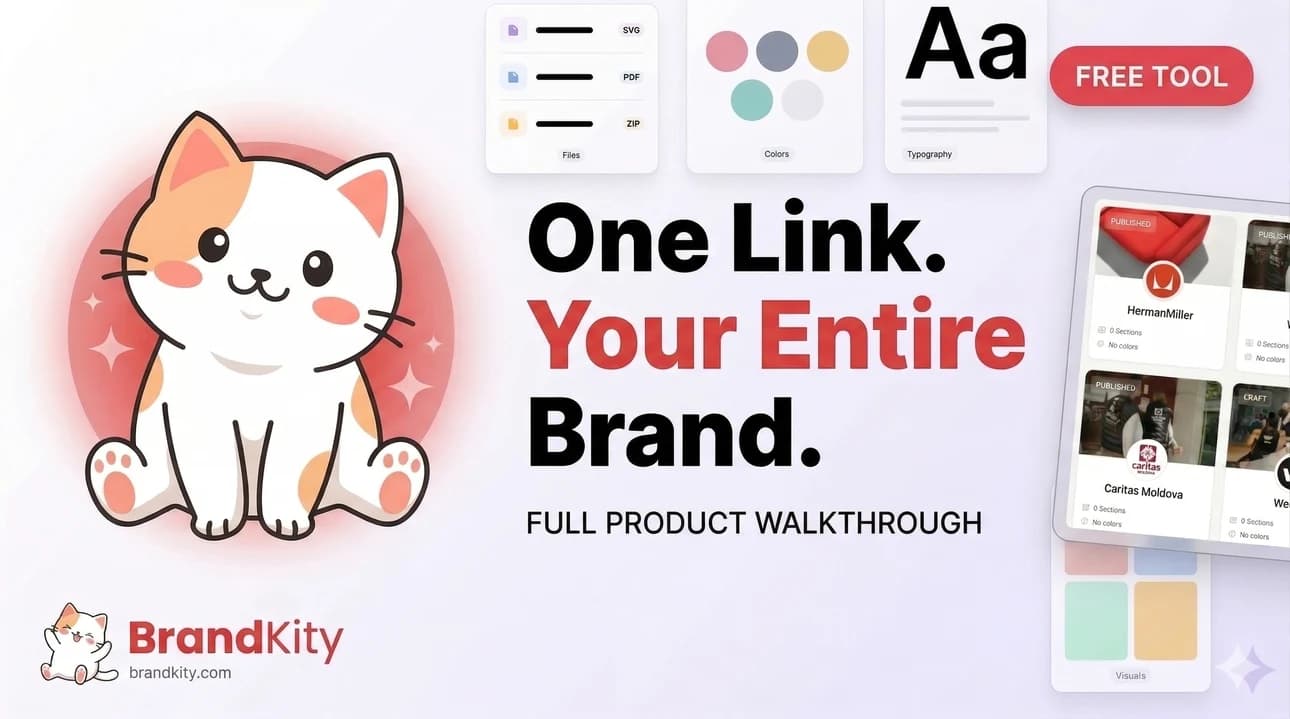
Table of contents
- Navigating the Labyrinth of Client Brand Handoffs
- The common pitfalls of traditional, manual handoffs
- Lost files, outdated versions, and endless email chains
- How Brand Asset Management Software Reinvents Client Delivery
- Defining Brand Asset Management for streamlined handoffs
- The ‘single source of truth’ principle in action
- Instant access to approved, up-to-date assets
- Guided brand usage with integrated guidelines and examples
- Empowering Agencies & Freelancers with Faster Project Wrap-ups
- Reducing revision cycles and client education time
- Automating asset sharing and permission management
- Minimizing internal resource drain during handoff
- The Modern Brand Portal as Your Client’s Self-Service Hub
- Achieving Unwavering Brand Consistency Post-Handoff
- Ensuring brand integrity across all client touchpoints
- Real-time updates that automatically cascade to clients
- The role of version control in preventing brand drift
- Essential BAM Software Features for Seamless Client Transitions
- Intuitive user interface and fast onboarding for clients
- Robust search, tagging, and organization capabilities
- Customizable access levels and shareable BrandKit links
- Overcoming Common Handoff Hurdles with Modern Brand Portals
- Bridging the communication gap between creative and client
- Eliminating scattered folders and outdated PDFs for good
- Addressing scalability for growing client rosters
- Best Practices for Integrating BAM into Your Client Onboarding Workflow
- Crafting a clear handoff process with BAM at its core
- Educating clients on maximizing their brand portal experience
- Leveraging BrandKity for different client use cases
- Quantifying the Return: Time & Cost Savings for Agencies & Startups
- Reduced administrative overhead and project delays
- Reallocating resources from administrative tasks to creative work
- Making the Strategic Choice: Why Modern BAM is Indispensable for Brand Delivery
- Beyond file storage: a strategic tool for client partnerships
- Securing your reputation as a brand-first partner
The exhilaration of completing a major branding or design project for a client often quickly dissolves into the frustrating reality of asset handoff. What should be a celebratory transfer of creative genius frequently devolves into a convoluted process of chasing files, clarifying usage, and battling outdated versions.
For agencies, freelancers, and internal marketing teams alike, the conventional client handoff poses a significant bottleneck, consuming valuable time and eroding the professional polish of an otherwise successful engagement. This section delves into the inherent complexities of these transitions and how modern solutions are transforming them.
Navigating the Labyrinth of Client Brand Handoffs
The common pitfalls of traditional, manual handoffs
Traditional client handoffs are rife with inefficiencies, primarily stemming from a lack of centralized organization and inconsistent methodologies. Agencies often rely on a patchwork of cloud storage, email attachments, and shared drives, which inevitably leads to confusion. A significant pitfall is the absence of a standardized delivery mechanism, resulting in each client receiving assets differently. This inconsistency not only complicates the internal workflow but also sets a poor precedent for client onboarding and ongoing brand management. Without a dedicated system, the burden falls on individuals to remember where every file lives and how it should be shared, making the process prone to human error and oversight.
Lost files, outdated versions, and endless email chains
The practical consequences of manual handoffs are tangible and frustrating. Clients frequently report lost files or, worse, inadvertently using outdated brand assets because they received multiple versions over time without clear differentiation. The iterative nature of creative projects means assets are constantly refined, making version control a critical challenge that traditional methods fail to address adequately. This often triggers an avalanche of email chains—clients asking for specific assets, agencies clarifying usage, and endless back-and-forths that divert focus from new projects. This scenario highlights why many agencies continue to
How Brand Asset Management Software Reinvents Client Delivery
Defining Brand Asset Management for streamlined handoffs
Brand Asset Management (BAM) software provides a centralized, intelligent platform designed specifically for organizing, storing, and distributing all brand-related assets. For client handoffs, BAM acts as a dedicated hub, ensuring every approved logo, guideline, font, color palette, image, and video is readily accessible. Unlike generic digital asset management (DAM) systems, BAM focuses intensely on brand identity and consistency. Its core function is to facilitate a smooth, comprehensive transfer of all necessary creative files and usage instructions to the client, effectively eliminating the common pain points of manual methods and making modern brand management significantly more efficient.
The ‘single source of truth’ principle in action
The cornerstone of BAM’s effectiveness in client handoffs is its adherence to the ‘single source of truth’ principle. This means that all final, approved brand assets and their associated guidelines reside in one definitive location. When a client needs a logo, they go to the BAM system, confident that they are accessing the latest, correct version. This principle eradicates ambiguity, preventing the use of outdated files and minimizing requests for clarifications. For agencies, it simplifies the asset update process; once an asset is updated in the BAM, it’s immediately updated for everyone with access. This unified approach is crucial for
Instant access to approved, up-to-date assets
Modern brand portals powered by BAM software serve as an invaluable self-service hub for clients. Once a project is completed and handed off, clients gain 24/7 instant access to all approved, up-to-date brand assets. This eliminates the dependency on agency response times for asset requests, empowering clients to retrieve what they need precisely when they need it. Whether it’s a new marketing campaign, a website update, or a presentation, the client can confidently download the correct logo, image, or document without delays. This level of accessibility fosters greater autonomy and reduces the operational overhead for both the client and the agency.
Guided brand usage with integrated guidelines and examples
A significant advantage of brand portals is the seamless integration of brand guidelines directly alongside the assets. Clients don’t just get files; they get the context. Portals often include sections detailing logo safe zones, correct color applications, typography rules, and even usage examples for various scenarios. This integrated approach means clients are always guided toward correct brand application, minimizing instances of off-brand usage. For instance, a client downloading a social media template might immediately see examples of approved copy length and image styles. This proactive guidance is a core component of
Empowering Agencies & Freelancers with Faster Project Wrap-ups
Reducing revision cycles and client education time
For agencies and freelancers, one of the most immediate benefits of adopting BAM software for client handoffs is the dramatic reduction in revision cycles. When clients have direct, guided access to a single source of truth for all brand assets and guidelines, the likelihood of them requesting revisions based on outdated files or misinterpretations of brand rules plummets. Furthermore, the need to repeatedly educate clients on correct brand usage becomes virtually obsolete. The portal acts as a perpetual training tool, ensuring clients always have the necessary context and examples at their fingertips, accelerating the overall project wrap-up process.
Automating asset sharing and permission management
Brand Asset Management software automates crucial, time-consuming aspects of client handoffs, particularly asset sharing and permission management. Agencies can set up granular access permissions, ensuring clients only see and download the assets relevant to them. For example, a client’s marketing team might have access to final campaign assets, while their development team can access specific UI elements. This eliminates the manual effort of compiling and sending files, often replaced by simply sharing a secure BrandKit link. The system also logs asset access and downloads, providing valuable insights and a clear audit trail. This automation not only saves countless hours but also enhances security and control over intellectual property.
Minimizing internal resource drain during handoff
Perhaps one of the most significant advantages for agencies and freelancers is the minimization of internal resource drain during client handoffs. Without BAM, senior staff, designers, and project managers often spend disproportionate amounts of time on administrative tasks: searching for files, compressing them, uploading to various platforms, writing accompanying emails, and then fielding follow-up questions. With a robust brand portal, these tasks are largely automated or self-served by the client. This allows valuable human capital to be reallocated to creative endeavors, client acquisition, or strategic planning, ultimately boosting agency efficiency and profitability. It shifts the paradigm from reactive support to proactive self-sufficiency for clients.
The Modern Brand Portal as Your Client’s Self-Service Hub
In today’s fast-paced digital landscape, clients expect immediate access and autonomy. A modern brand portal fulfills this expectation by transforming into a comprehensive self-service hub. Instead of relying on agencies for every asset request or guideline clarification, clients can autonomously navigate a well-organized platform to find exactly what they need, whenever they need it. This includes up-to-date logos, brand guidelines, campaign assets, imagery, copywriting samples, and even frequently asked questions regarding brand usage. This 24/7 availability significantly reduces friction in client operations, allowing their teams to move forward with projects without waiting for agency responses, fostering a sense of empowerment and efficiency.
By providing a central, intuitive interface, the brand portal minimizes the back-and-forth communication that often plagues client-agency relationships. It acts as a dynamic knowledge base, ensuring clients always have access to the latest version of brand elements and the most current rules for their application. This proactive approach not only enhances the client experience but also instills confidence, knowing that they are consistently working with approved, on-brand materials. Ultimately, this self-service model strengthens client relationships by providing convenience and fostering greater independence, allowing both parties to focus on strategic growth rather than administrative tasks.
Achieving Unwavering Brand Consistency Post-Handoff
Ensuring brand integrity across all client touchpoints
Maintaining a cohesive brand identity is paramount, especially after a creative project transitions to client ownership. Brand Asset Management (BAM) software provides a centralized repository, acting as the single source of truth for all approved brand assets. This eliminates the risk of clients using outdated logos, incorrect color palettes, or off-brand typography, which can significantly dilute brand equity. Agencies can confidently hand off projects knowing that clients have immediate and exclusive access to the most current and accurate brand files and guidelines. This commitment to a unified brand experience helps clients master brand consistency with marketing asset management.
Real-time updates that automatically cascade to clients
One of the most powerful aspects of modern BAM platforms is their ability to facilitate real-time updates. Should a brand guideline be refined, a logo variant introduced, or a new template created, these changes are instantly reflected within the brand portal. This automatic cascading mechanism means clients are always working with the latest iterations, without the need for manual distribution, email attachments, or complex version tracking. It significantly reduces administrative overhead for agencies and prevents clients from inadvertently employing superseded assets, fostering a dynamic and continuously aligned brand presence.
The role of version control in preventing brand drift
Effective version control is a cornerstone feature of any robust BAM system, playing a critical role in preventing brand drift over time. Each revision of an asset—be it a logo, image, or document—is meticulously tracked, allowing agencies and clients to review historical versions, understand changes, and even revert to previous states if necessary. This capability ensures that while brands evolve, their core identity remains intact and traceable. It provides a safety net against unintentional deviations and reinforces the disciplined application of brand standards, safeguarding the brand’s long-term integrity.
Essential BAM Software Features for Seamless Client Transitions
Intuitive user interface and fast onboarding for clients
For client handoffs to be truly seamless, the BAM software must prioritize an intuitive user interface (UI) and rapid client onboarding. A complex or unwieldy system will deter adoption, leading clients back to fragmented, less controlled methods of asset management. Platforms designed with user experience in mind offer clean layouts, clear navigation, and easy-to-understand asset categorization, enabling clients to quickly locate, download, and utilize brand assets without extensive training. This focus on simplicity ensures a smooth transition and encourages clients to fully leverage their brand portal from day one.
Robust search, tagging, and organization capabilities
The utility of a brand portal is directly tied to its ability to help users find what they need, when they need it. Robust search functionalities, coupled with comprehensive tagging and organization capabilities, are indispensable. Agencies can meticulously tag assets with relevant keywords, attributes, and categories, creating a highly searchable database. This systematic approach allows clients to effortlessly filter by asset type, project, usage rights, or department, ensuring efficient asset discovery. Without these features, even a fully stocked brand library can become a disorganized and frustrating experience for clients, negating the benefits of centralization.
Customizable access levels and shareable BrandKit links
Modern BAM solutions offer granular control over who sees what, enabling agencies to establish customizable access levels for different client users or departments. This ensures that sensitive or internal assets remain private while relevant materials are readily available. Crucially, platforms like BrandKity provide a single, shareable BrandKit link, simplifying the entire delivery process. Instead of managing multiple folders or sending numerous attachments, agencies can share one comprehensive link that acts as the client’s gateway to all approved brand assets and guidelines, significantly enhancing client delivery efficiency.
Overcoming Common Handoff Hurdles with Modern Brand Portals
Bridging the communication gap between creative and client
One of the persistent challenges in client handoffs is the inherent communication gap between creative teams and clients, often leading to misunderstandings regarding asset usage or brand application. Modern brand portals bridge this gap by serving as a transparent, collaborative hub. They provide a visual, definitive reference for all brand elements, accompanied by explicit usage guidelines and contextual explanations directly alongside the assets. This fosters clearer communication by reducing subjective interpretations and providing a shared understanding of brand expectations, minimizing revisions and accelerating project cycles.
Eliminating scattered folders and outdated PDFs for good
The days of relying on disparate cloud storage folders, email attachments, and static, outdated PDF brand guides are now truly obsolete. These antiquated methods are a primary source of brand inconsistency and operational friction. Brand portals fundamentally transform this process by providing a unified brand repository that centralizes every approved asset and guideline. This strategic shift not only prevents clients from encountering missing assets or using incorrect versions but also liberates agencies from the administrative burden of constantly updating and redistributing files, effectively ending scattered brand assets for good.
Addressing scalability for growing client rosters
As agencies expand, so does the complexity of managing and delivering brand assets for an increasing number of clients. A manual, ad-hoc handoff process quickly becomes unsustainable, hindering growth and impacting service quality. Modern brand portals are built with scalability in mind. They offer robust frameworks for adding new clients, assigning dedicated brand kits, and managing permissions efficiently, regardless of volume. This infrastructure allows agencies to grow their client rosters without compromising the integrity of brand delivery or increasing their administrative overhead proportionally, ensuring consistent service as operations scale.
Best Practices for Integrating BAM into Your Client Onboarding Workflow
Crafting a clear handoff process with BAM at its core
Successful BAM implementation begins with defining a structured client handoff process that places the brand portal at its very core. Agencies should establish clear steps: from initial project completion to final asset upload, guideline integration, and client invitation. This includes standardizing how assets are tagged, organized, and presented within the portal. By making the brand portal the primary and exclusive method for asset delivery, agencies solidify its role as the definitive brand resource, streamlining the entire workflow and reinforcing client reliance on the system.
Educating clients on maximizing their brand portal experience
Simply providing access to a brand portal isn’t enough; clients must be educated on how to maximize its value. Agencies should schedule a dedicated onboarding session, offering a guided tour of the BrandKit, demonstrating search functionalities, explaining version control, and highlighting key features like usage guidelines. Providing simple tutorials or an FAQ section within the portal can further empower clients. This proactive approach ensures clients feel confident and competent in navigating their assets, fostering higher adoption rates and enabling them to fully leverage their brand portal experience for ongoing marketing and design needs.
Leveraging BrandKity for different client use cases
BrandKity, with its focus on simple client delivery and modern brand portals, offers versatile solutions suitable for various client use cases. For a startup client, a compact BrandKit containing essential logos, color codes, and a basic style guide accessible via a single shareable link simplifies their initial brand launch. For a larger enterprise, BrandKity can host extensive guidelines, video assets, marketing templates, and provide different access levels for their numerous internal teams or external vendors. This adaptability allows agencies to provide tailored brand delivery experiences, ensuring that each client receives precisely what they need in an easily consumable format. For example, an agency handling a new product launch for a SaaS company could use BrandKity to share not just brand assets, but also campaign-specific creative and copy guidelines, all updated in real-time.
Quantifying the Return: Time & Cost Savings for Agencies & Startups
Reduced administrative overhead and project delays
Implementing Brand Asset Management (BAM) software significantly slashes the administrative burden associated with managing and sharing brand assets. Agencies and startups often spend countless hours searching for correct logos, updated guidelines, or approved imagery across disparate folders and communication channels. A centralized BAM platform eliminates this inefficiency, providing instant access to the brand asset client delivery ensures clients feel valued and well-supported.
Reallocating resources from administrative tasks to creative work
One of the most compelling returns on investment for BAM adoption is the ability to reallocate valuable human resources. By automating tedious administrative tasks like file organization, version control, and access management, creative professionals are freed up to concentrate on their core competencies. Instead of chasing approvals or correcting off-brand usages, designers can dedicate more time to innovative concepts, strategists can delve deeper into market analysis, and project managers can focus on client growth initiatives. This strategic shift not only boosts team morale but also enhances the overall quality of creative output and strategic thinking. For example, a startup might find that their design team can take on an additional 15% more creative projects per quarter by leveraging BAM to manage their brand assets more effectively, directly impacting revenue-generating activities.
Making the Strategic Choice: Why Modern BAM is Indispensable for Brand Delivery
Beyond file storage: a strategic tool for client partnerships
While traditional Digital Asset Management (DAM) systems primarily focus on file storage and retrieval, modern Brand Asset Management (BAM) elevates this functionality into a strategic asset for client partnerships. It’s not merely about having files accessible; it’s about ensuring those files are consistently applied, governed by clear guidelines, and presented within a unified brand narrative. BAM empowers agencies to act as true brand stewards, offering clients not just creative output, but a comprehensive system for maintaining brand integrity post-handoff. This strategic approach transforms the client-agency dynamic from transactional to a collaborative partnership, fostering deeper trust and demonstrating a sophisticated understanding of
BrandKity is specifically engineered to streamline the complexities of brand delivery, offering a refreshing alternative to cumbersome traditional DAM platforms. Its unique value lies in its focus on simplicity and client-centric workflows. With BrandKity, agencies and startups can generate a single, shareable BrandKit link that acts as the definitive single source of truth for all brand assets – logos, typography, color palettes, and guidelines. This eradicates the problem of scattered folders, outdated PDFs, and missing assets that plague traditional handoff processes. By providing intuitive, modern brand portals, BrandKity ensures fast onboarding for clients, allowing them to access exactly what they need instantly, thereby transforming brand delivery into a seamless, professional experience and securing true brand organization.
Securing your reputation as a brand-first partner
In today’s competitive landscape, an agency’s or startup’s reputation is intrinsically linked to its ability to deliver consistent, high-quality brand experiences. Adopting a robust BAM solution like BrandKity signals to clients and the market that you are a “brand-first” partner. It demonstrates a proactive commitment to brand governance, consistency, and professional delivery, setting you apart from competitors who still rely on fragmented, manual processes. By presenting a meticulously organized and easily accessible brand portal, you instill confidence, reinforce your expertise, and build a lasting perception as a reliable and strategic partner who deeply understands and values their client’s brand. This commitment ultimately helps agencies master brand consistency for their clients.
The tangible benefits of Brand Asset Management software extend beyond mere convenience, delivering quantifiable time and cost savings while strategically positioning agencies and startups as indispensable brand stewards. By prioritizing efficient asset delivery and upholding brand integrity, these platforms become crucial for fostering strong client relationships and driving sustained business growth in a competitive marketplace.
Saurabh Kumar
Founder, BrandKity
Saurabh writes about practical brand systems, faster client handoffs, and scalable workflows for designers and agencies building repeatable delivery operations.
Connect on LinkedIn